
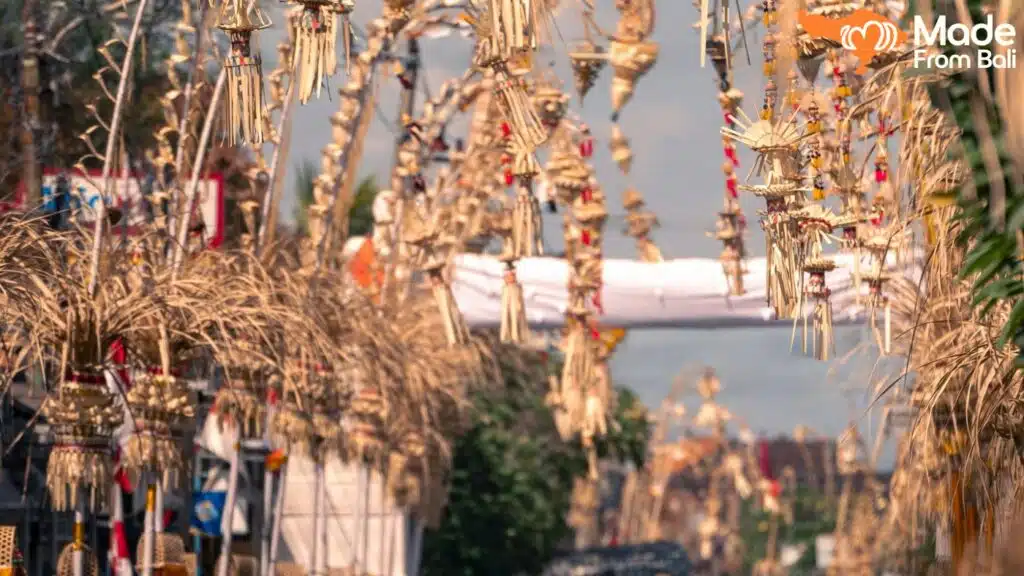
If you’re in Bali in the days leading up to Galungan, you’ll notice tall, gracefully curved bamboo poles lining the streets, standing in front of homes, temples, and village pathways. These are penjor, one of the most iconic symbols of Balinese tradition. Many visitors assume they are festive decorations, but for Balinese Hindus, a penjor is a visual expression of gratitude, prayer, and harmony between humans, nature, and the divine.
What Is a Penjor? A Sacred Symbol, Not Just Decoration
A penjor is a 7–10 meter bamboo pole decorated with young coconut leaves (janur), crops, flowers, and ritual elements. The tip curves downward, and at the base sits a small shrine for offerings.
The structure may look simple, but the meaning is profound: a penjor represents prosperity, purity, and reverence for Sang Hyang Widhi Wasa.
Penjor are installed on Penampahan Galungan (the day before Galungan) and remain standing until Kuningan, when the ancestors are believed to have returned to the heavenly realm. They are removed shortly after Kuningan. This timeframe follows the belief that ancestral spirits descend to the human world during Galungan and return on Kuningan.
Why Must Penjor Be Installed?
Here are the key meanings behind the tradition:
1. The Penjor symbolizes Mount Agung, Bali’s spiritual axis
The curved shape of the bamboo represents the majesty of Mount Agung, the sacred mountain where the divine dwells. A penjor stands as a bridge between the earthly and the heavenly realms, reminding people of God’s presence in all aspects of life.
2. A gesture of gratitude for prosperity and harvest
Decorations such as rice, corn, tubers, and fruits symbolize abundance. Installing a penjor is an offering of thanks to God for blessings of food, rain, and fertility.
3. A symbol of Dharma’s victory over Adharma
Galungan celebrates the triumph of good over evil. Penjor mark this victory visually, standing tall in front of every home as symbols of purity, virtue, and hope.
4. A representation of the Tri Hita Karana philosophy
Penjor embody harmony in three major relationships:
- Parahyangan: humans with God
- Pawongan: humans with one another
- Palemahan: humans with nature
Made from natural materials—bamboo, janur, flowers, and crops, penjor remind the Balinese that a balanced life is rooted in respect for both spirituality and the environment.
Parts of a Penjor and What They Represent
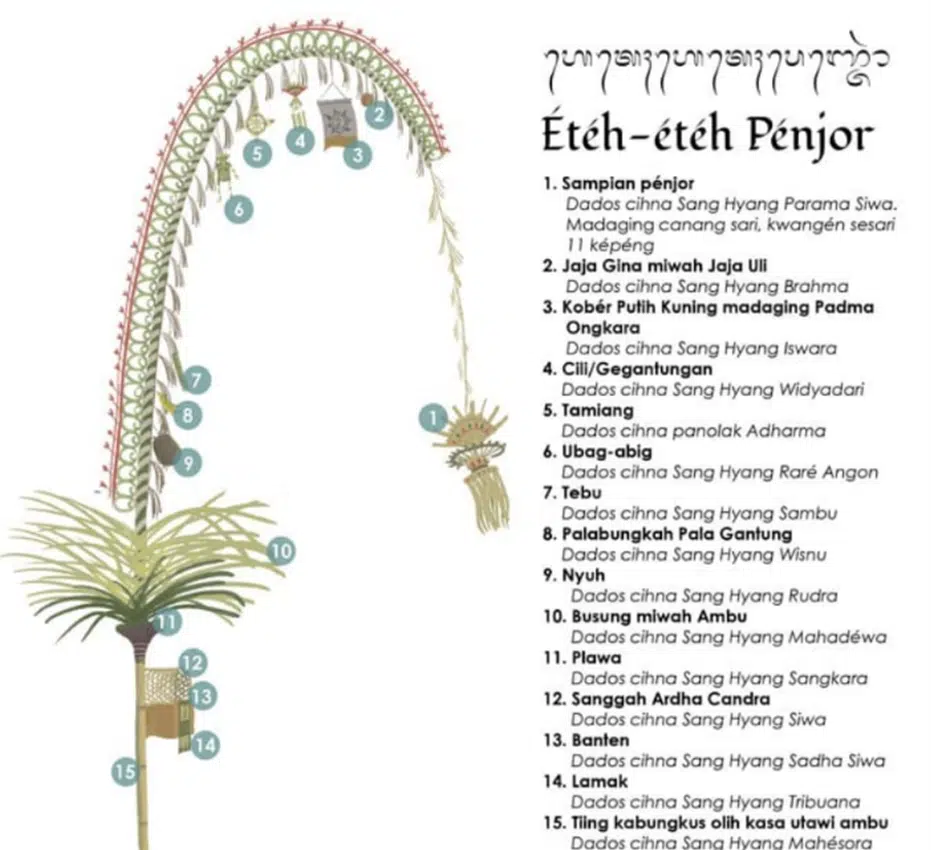
Although each village may have variations, a penjor typically includes:
- Bamboo, symbol of the sacred mountain and divine power of Hyang Brahma. Bamboo wrapping (ambu/kasa), strength of Maheswara
- White-yellow cloth, strength of Iswara
- Sampian, power of Parama Siwa
- Janur, power of Mahadewa
- Rice cakes (jaja uli + gina), power of Brahma
- Coconut, power of Rudra
- Root crops & fruits, power of Wisnu
- Sugarcane, strength of Dewa Sambu
- Plawa leaves, power of Sangkara
- Sanggah cucuk, power of Siwa
- Lamak, symbol of the Tribhuana
- Upakara offerings, power of Sadha Siwa
- Klukuh with bananas, tape, jaja, power of Dewa Boga
- Ubag-abig, symbol of Rare Angon
- Cili or hanging ornaments, symbol of celestial maidens
- Tamiang, protector against negative forces
Each item is not merely decoration, it is a symbol of life, hope, and gratitude.
Etiquette for Visitors
If you’re visiting Bali during Galungan–Kuningan, keep these guidelines in mind:
- Do not touch or shake a penjor.
- Avoid standing too close to the sanggah penjor (the offering shrine at the base).
- Be respectful when taking photos; do not block people who are praying.
- Never step over canang sari or offerings placed beneath the penjor.
For the Balinese, a penjor is a sacred object, respecting it means respecting the culture.
Penjor: A Tradition That Keeps Bali in Harmony
A penjor is more than a festive decoration adorning Bali’s streets. It is a visual philosophy about gratitude, balance, and the triumph of goodness. When you see rows of penjor swaying gently in the wind, you’re witnessing a living heritage passed down through generations.
If you’re visiting Bali during this time, take a moment to observe and appreciate the meaning behind each penjor. By doing so, you’re not only admiring the beauty of Balinese culture, you’re also feeling the spiritual depth that makes Bali unlike anywhere else.
Sources
- Dinas Kebudayaan Kabupaten Buleleng (2025). Makna dan Fungsi Penjor dalam Tradisi Galungan–Kuningan.
- Parisada Hindu Dharma Indonesia (PHDI). Pedoman Hari Raya Galungan dan Kuningan.
- Pemerintah Provinsi Bali – Dinas Kebudayaan (2024). Penjor dan Simbol Tri Hita Karana dalam Upacara Hindu Bali.
- Wikipedia (2024). Penjor – Komponen dan Simbolisasi.