
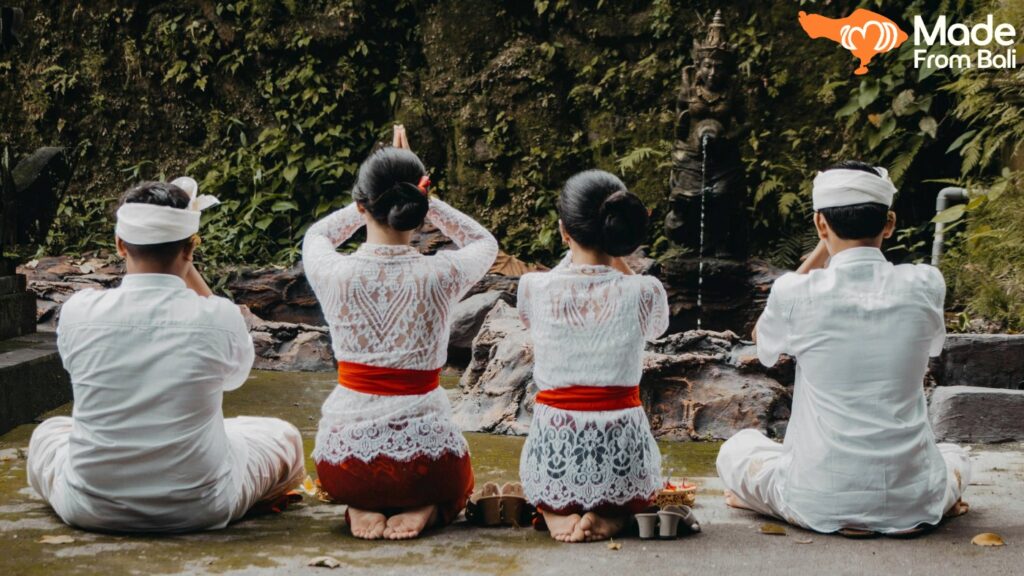
In Bali, traditional attire is not merely ceremonial clothing, it is an essential part of identity and daily life for Balinese Hindus. The kebaya, kamen, saput, and selendang you see during religious days or village ceremonies carry meanings far deeper than their outward appearance. Every piece is chosen with intention: to honor sacred spaces, maintain modesty, and balance the spiritual elements within oneself.
To truly understand Bali, learning the philosophy behind its traditional dress is an important step. Below is a complete explanation of why Balinese people wear kebaya, kamen, and other elements of adat attire, and the cultural values woven into each detail.
What Is Traditional Balinese Clothing?
Traditional Balinese clothing is worn for religious, ceremonial, and certain social activities. It consists of several components for men and women, all serving one core purpose: to maintain purity when encountering the sacred.
Key elements include:
- Kebaya (women)
- Kamen / lower cloth (men & women)
- Saput (outer cloth layer)
- Selendang (sash)
- Udeng (men)
In general, traditional attire is worn when entering holy areas, attending ceremonies, or performing yadnya (ritual offerings).
Why Do Balinese People Wear Traditional Clothing?
There are several reasons, all rooted in Balinese Hindu philosophy and ritual practice.
1. A Form of Self-Offering to God
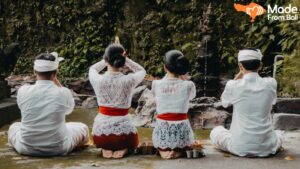
When entering a temple or joining a ceremony, traditional clothing is worn as an act of inward cleansing and mental readiness. Dressing respectfully is a way of showing devotion before facing Sang Hyang Widhi.
2. Balancing the Physical and Spiritual Self
In Balinese Hindu belief, the human body consists of both physical and subtle energy. The wrapping of cloth, the knot of the sash, and the choice of color create harmony between:
- sekala (the seen world)
- niskala (the unseen world)
This is why clothing style is never just aesthetic; it carries spiritual intent.
3. A Symbol of Modesty and Humility
Traditional attire covers the body modestly. For women, the kebaya symbolizes grace and gentleness; for men, the udeng represents clarity of mind. Together, they convey respect toward sacred surroundings and the community.
4. Strengthening Communal Unity
When an entire village wears similar attire, a sense of togetherness emerges. Ceremonies become spaces where Balinese identity is preserved and passed down through generations.
The Meaning Behind Each Element
1. Kebaya (Women)
For Balinese women, the kebaya is part of life’s rhythm—worn during joyful ceremonies, mourning rituals, and daily prayers. Materials vary, but lace and bright colors are common, symbolizing joy, elegance, and purity.
Color choices follow the context of the ceremony:
- Bright colors for festive or joyful rituals
- Dark tones for mourning, reflecting grief and reverence
During temple visits or piodalan, women usually choose simpler, more comfortable kebaya since the rituals involve movement and carrying offerings.
2. Kamen / Lower Cloth
The kamen is wrapped around the waist down to the ankles.
Its meanings include:
- self-control
- modesty
- symbol of “enveloping” the body in purity
Men usually wrap the cloth from right to left, while women wrap it from left to right, representing the different roles of masculine and feminine energy in Balinese philosophy.
3. Saput
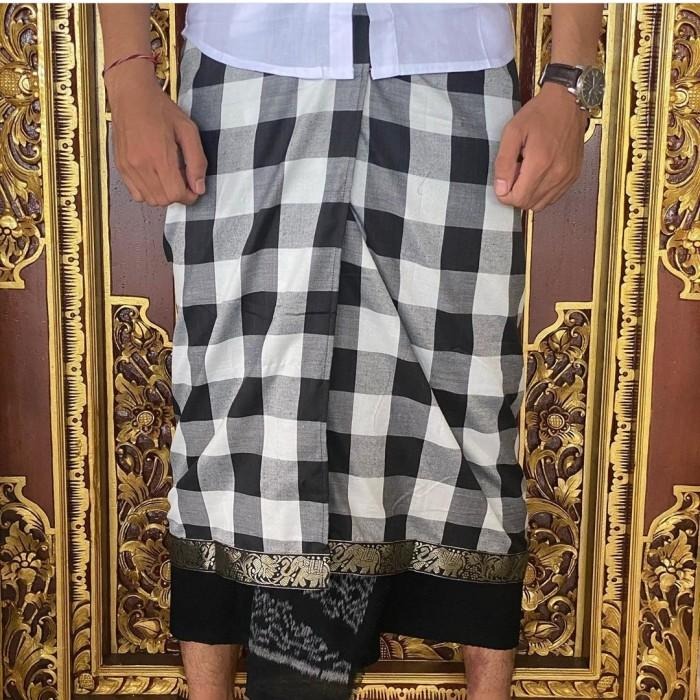
The saput is a second cloth layer worn over the kamen. In Balinese tradition, it represents protection, inner strength, and shielding the wearer from negative energy.
Some saput come in poleng patterns—black-and-white checks symbolizing Rwa Bhineda, the balance between opposites such as good and bad or light and dark. Other variations include:
- poleng sudhamala (white–gray–black): representing harmonization
- poleng tridatu (white–black–red): connected to Triguna—wisdom, energy, and inertia
Poleng motifs are also commonly seen on statues, sacred trees, shrines, and ceremonial umbrellas, marking places of spiritual significance.
4. Selendang (Sash)
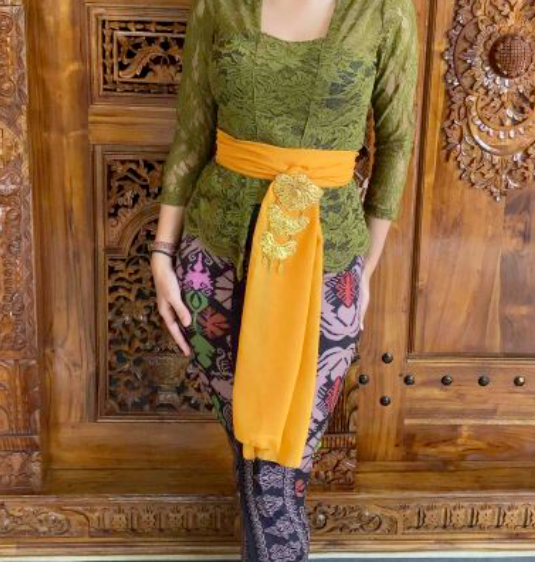
The selendang is more than an accessory—it is a symbol of self-control.
It is tied around the waist (the body’s energy center) or draped across the shoulder.
Its meanings include:
- inner strength
- presence of self-awareness
- a reminder to stay on the righteous path
5. Udeng (Laki-Laki)
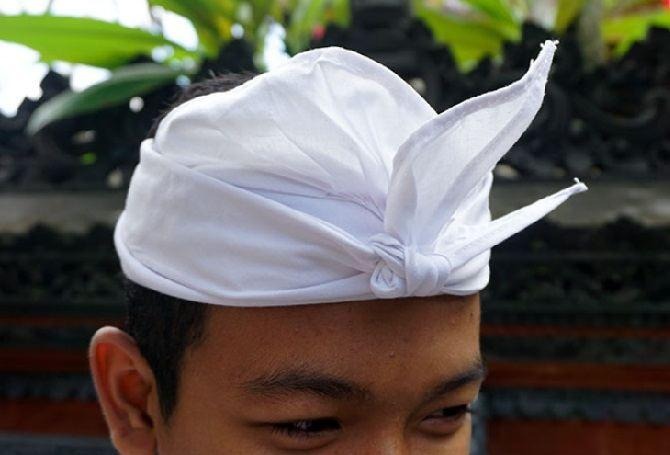
The udeng is a headcloth symbolizing clarity of mind and self-discipline.
The front knot represents focus, while the white color signifies purity, reminding the wearer to enter ceremonies with sincere intention. Its upward shape symbolizes spiritual readiness.
Behind its simple form lies deep meaning: the folded cloth on the right and left meeting in the center represents the merging of positive and negative forces into neutrality—reflecting the Balinese belief in mental balance.
Common types of udeng include:
- Udeng jejateran – worn for temple visits and social activities
- Udeng kepak dara – traditionally worn by kings
- Udeng beblatukan – worn by religious leaders
Balinese attire continues to be worn today not merely out of obligation, but because it aligns with the way the Balinese view life:
- it teaches modesty
- it reflects gratitude
- it reminds people to live in balance
Traditional clothing is a living narrative—about humans, nature, community, and God—woven into every layer.
A Heritage Worn with Pride
When you see Balinese women walking gracefully in kebaya or men standing tall with udeng and saput, you’re not just seeing clothing—you’re witnessing a living heritage thriving in the midst of modern life.
Balinese traditional attire is a reminder that simplicity can hold profound meaning, and that spirituality can be expressed through the way one dresses.
Understanding its significance will make your time in Bali feel richer, warmer, and filled with appreciation.
Sources:
- Gramedia Literasi (2024). Pakaian Adat Bali — Tradisi dan Filosofinya.