

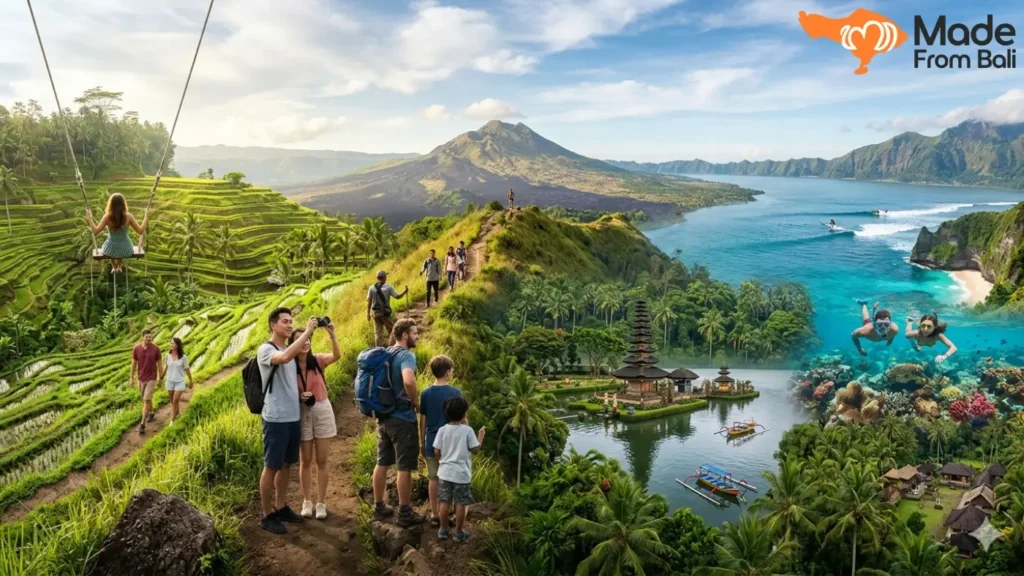
There are very few places in the world where you can watch the sun rise over an active volcano, wander through thousand-year-old temple corridors, swim beside manta rays, and end the evening with cocktails at a clifftop beach club. Bali somehow fits all of that into one island, and it does it without feeling like it’s trying too hard.
But the sheer volume of things to do in Bali is exactly the problem most travelers run into. You open five tabs, get overwhelmed by fifty identical lists, and still have no idea whether you should base yourself in Ubud or Canggu, whether the Gates of Heaven is worth a four-hour drive, or whether you even have enough days to do any of it justice. That confusion is expensive. People either pack too much into their trip and exhaust themselves, or they stick to the obvious and miss the experiences that would have defined the whole trip.
This guide is organized differently. Rather than listing fifty things in random order, it’s built around what kind of traveler you are, what you’re actually looking for, and how to make your specific version of Bali actually work. There’s also honest guidance on crowds, timing, and which famous attractions are genuinely worth your time. Bali was named the world’s number one travel destination in TripAdvisor’s 2026 Travelers’ Choice Awards, beating London, Dubai, and Rome. That kind of recognition doesn’t happen by accident, and this guide will help you understand exactly why.
Why Bali Is Still the World’s Best Travel Destination in 2026
Plenty of destinations get called “magical.” Bali has actually earned it, consistently, across millions of independent traveler reviews.
In TripAdvisor’s Travelers’ Choice Awards for 2026, Bali was ranked number one as the world’s best tourist destination, marking the highest position the island has ever achieved in the history of the rankings. This is not a marketing campaign or a tourism board announcement. The winners are determined directly by platform users, real travelers from across the globe who share their experiences and stories, and out of millions of listings, less than one percent achieve this recognition. Bali UntoldDU Global
Alongside its position as the world’s top destination, Bali was also ranked the number one honeymoon destination and placed ninth among the best destinations globally for solo travel. That combination is rare. Most destinations appeal strongly to one type of traveler. Bali genuinely works for almost everyone. Tripadvisor
What actually drives that loyalty is harder to explain with a list. It’s the fact that the island has a living spiritual culture, not just old temples for tourists to photograph. It’s the density of quality experiences within short distances of each other. It’s the food, the landscape, the warmth of the people, and a pace of life that somehow adjusts to match whatever kind of trip you need.
How to Use This Guide to Plan the Perfect Bali Trip
Before diving into what to do, it helps to spend two minutes on how to approach this guide, because the way most people plan a Bali trip is the reason they end up exhausted, disappointed, or both.
Match Your Travel Style to the Right Experiences
Not everything in Bali is for everyone, and pretending otherwise produces generic itineraries that leave people underwhelmed. A couple on a honeymoon has different priorities than a solo backpacker, and a family with young children needs completely different logic than an adventure traveler who wants to dive every day.
This guide is organized by experience category: nature and adventure, culture and temples, beaches, Ubud, food and nightlife, hidden gems, and practical planning. Read the sections that match what actually excites you, not all of them. If the idea of waking up at 3am to hike a volcano genuinely appeals to you, read that section carefully. If it doesn’t, skip it entirely and spend that energy finding the right beach club.
How Long You Need in Bali and What That Means for Your List
Three days is enough to see a few highlights. Five days lets you choose a base and explore properly. A week gives you room to breathe, combine regions, and not feel like you’re rushing. Ten days or more is when Bali really opens up, when you can go north, east, and out to the islands without sacrificing depth.
The most common mistake is treating Bali like a city break, packing five hours of activities into each day and driving across the island twice. Traffic in South Bali, particularly around Kuta, Seminyak, and Canggu, can be genuinely brutal between 8am and 10am and again in the late afternoon. That alone should influence how you plan your days. Cluster activities geographically rather than trying to hit one thing in the north and one in the south on the same day.
The Honest Truth About Crowds and Timing
Bali’s popularity comes with a trade-off. The most photographed spots, like the Gates of Heaven at Lempuyang Temple, Tegalalang Rice Terrace, and the Sacred Monkey Forest in Ubud, attract massive crowds, especially on weekends and during peak months of July, August, and the Christmas holiday season. If you arrive at Tegalalang at 10am expecting peaceful rice fields, you’ll find selfie sticks and tour groups.
The solution is almost always the same: go early. Arriving at major attractions before 8am changes the experience dramatically. Alternatively, several lesser-known spots covered later in this guide offer similar beauty with a fraction of the foot traffic. The dry season from April to October gives the best weather and visibility, but April and May tend to hit that sweet spot of good conditions without the peak-season crowds.
Nature and Adventure in Bali
Bali’s landscape is extraordinary in a way that photos genuinely cannot prepare you for. There are active volcanoes, ancient river valleys, jungle-covered hillsides, and waterfall systems spread across the island’s interior. If outdoor experiences are what draw you to Bali, the island will not disappoint. It will, however, require some planning to experience these places properly rather than showing up to crowds and disappointment.
Sunrise Trek to Mount Batur
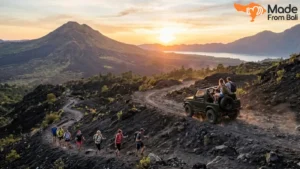
Of all the things to do in Bali, the Mount Batur sunrise trek tends to generate the most unqualified enthusiasm from people who have done it. The volcano sits at 1,717 metres above sea level in the Kintamani highlands, and you hike it in the dark, starting around 3am from the base village of Toya Bungkah. The summit view is genuinely spectacular, not in an Instagram photo way, but in a way that makes you stand still and forget about the two hours of uphill walking that got you there. Torntackies
The climb takes roughly two hours at a moderate pace and finishes at the crater rim just as the sky begins to shift from black to deep orange. From the top, you can see Mount Agung standing across the caldera on clear days, Lake Batur shimmering in the valley below, and occasionally Lombok’s Mount Rinjani in the far distance. Guides cook a simple summit breakfast using volcanic steam, usually eggs, bananas, and coffee or tea, and somehow that meal tastes better than most restaurant meals you’ll have all week.
Difficulty-wise, it’s classified as moderate. The first section is relatively gentle, passing through farmland before the trail steepens onto loose volcanic gravel. A guide is required by law. All hikes on Mount Batur must be done with a registered guide from the PPPGB local trekking association, and there are checkpoints at the base where unaccompanied hikers are turned back. Tour prices start around IDR 600,000 to 800,000 per person and most include hotel pickup, which saves you the stress of navigating mountain roads alone at 2am. After the hike, a soak in the Batur Natural Hot Springs on the lake shore is one of the better recovery experiences the island offers. Best time: April to October for clearer skies. Crowd level: high at the summit, but it doesn’t diminish the experience much. TravelHost
White Water Rafting on the Ayung River
Bali’s longest river, the Ayung, cuts through dense tropical jungle just outside Ubud. The rafting route runs for roughly nine kilometres through a canyon filled with carved stone carvings on the riverbanks, overhanging trees, and a handful of genuine rapids. It takes around two hours on the water and is suitable for beginners, including those who have never rafted before.
What makes this experience stand out from rafting elsewhere is the scenery. You’re moving through a gorge that feels genuinely remote even though you’re twenty minutes from central Ubud. There are no roads visible, no buildings, just jungle walls on both sides and the sound of the river. Several operators run this route and most include lunch, equipment, and changing facilities in the price, which typically sits around USD 35 to 50 per person. If you’re based in Ubud, this is one of the easiest adventure activities to combine with a morning at the rice terraces or an afternoon at a temple.
Snorkeling and Diving in Nusa Penida
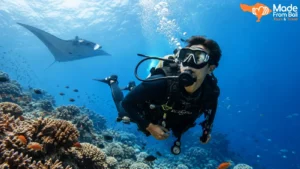
Nusa Penida sits about 45 minutes by fast boat from Sanur on Bali’s east coast. The waters surrounding the island are some of the most biodiverse in Bali, with visibility regularly exceeding twenty metres and a marine life density that genuinely surprises first-time visitors. Manta rays are the headline attraction, and Manta Point on the island’s southwest coast sees year-round sightings. Getting into the water and gliding alongside a four-metre manta ray is an experience that stays with you.
For divers, Crystal Bay is where things get serious. It’s one of the few places in the world where you have a realistic chance of encountering the Mola Mola, or ocean sunfish, one of the ocean’s most bizarre-looking creatures. Mola Mola season runs roughly from July to October, when cooler deep-water upwellings bring them to shallower depths. The dive sites around Nusa Penida require experienced guides given the currents, but there are qualified dive operators on both the island and in Bali’s main dive hubs like Sanur and Padang Bai who run excellent day trips. Even for non-divers, snorkeling at sites like Gamat Bay offers outstanding coral gardens and fish life without needing certification.
Chasing Waterfalls: Sekumpul, Tukad Cepung, and Banyumala
Bali has a waterfall for almost every mood. Sekumpul in the north is widely considered the most spectacular on the island, featuring multiple cascades dropping into a jungle canyon that requires a 20 to 30 minute hike and river crossing to reach. The effort is entirely worth it. Fewer tourists make it this far north, which means the experience feels personal in a way that closer-to-Ubud waterfalls rarely do.
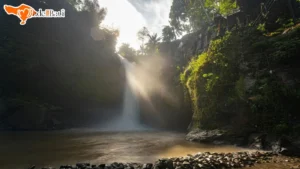
Tukad Cepung, near the village of Kemenuh about 30 minutes from Ubud, is a completely different kind of waterfall. It sits inside a narrow cave, and when morning sunlight streams through the opening above, the entire space fills with golden rays cutting through the mist. Arriving before 9am captures this effect. After that, the light changes and the moment is gone. Banyumala Twin Waterfalls in North Bali is another underrated find, twin cascades falling into a clear pool where swimming is actually permitted and the surroundings stay genuinely quiet most of the year. Each of these waterfalls offers something different, and none of them requires advanced fitness, just a willingness to walk a bit and get wet.
Paragliding Over the Cliffs of Uluwatu
Tandem paragliding from the cliffs above Nunggalan Beach in Uluwatu is one of those Bali experiences that sounds extreme but is actually accessible to almost anyone. You fly with a certified instructor, reach heights of around 150 metres above the Indian Ocean, and have roughly fifteen to twenty minutes of flight time over some of Bali’s most dramatic coastline. The Bukit Peninsula’s cliff faces make for extraordinary aerial views that no beach club or viewpoint can replicate. Most operators include video footage of the flight, and the cost typically runs around USD 80 to 100 per person. Recommended for afternoon sessions when thermal conditions are most stable and the light over the ocean is genuinely beautiful.
ATV Rides and Jungle Trekking Around Ubud
For those who want some adrenaline but without the pre-dawn alarm, ATV rides through the rice fields and jungle tracks surrounding Ubud are a consistently popular option. Most routes take one to two hours and pass through villages, banana plantations, and muddy jungle paths. It’s not exactly a wilderness experience, guides lead the way on established tracks, but it’s genuinely fun and gives you a perspective on the agricultural landscape that walking tours don’t quite replicate. Jungle trekking on foot through the Campuhan Ridge Walk or the hills above Sidemen offers something quieter and more meditative. The Campuhan Ridge Walk starts right in Ubud, is free, and is at its most peaceful early in the morning before the rest of the town wakes up.
Culture and Temples Worth the Journey
Bali’s spiritual life is not a tourist attraction that happens to be photogenic. It’s a living, daily practice woven into the fabric of ordinary Balinese life. Offerings appear on doorsteps every morning, temple ceremonies happen constantly throughout the year, and the island’s layout, from its villages to its rice fields, reflects a philosophy called Tri Hita Karana: the harmony between humans, nature, and the divine. Understanding even a little of this context transforms a temple visit from a photo stop into something genuinely moving.
Uluwatu Temple and the Kecak Fire Dance at Sunset
Pura Luhur Uluwatu sits on the edge of a 70-metre cliff on Bali’s southwestern tip, and it is one of six temples considered to be the spiritual pillars of the island. The temple itself is beautiful in the way old stone structures become beautiful when they’ve been worn by salt air and centuries. But the timing of your visit matters enormously here.
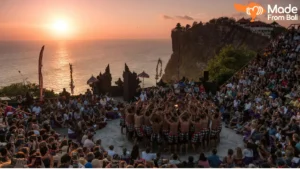
Arrive in the late afternoon, around 5pm, and you’ll catch the grounds in soft golden light with fewer people than the midday rush. The Kecak fire dance performance begins at sunset and runs for roughly one hour. Seventy or more performers chant in hypnotic unison, representing an ancient Ramayana story while a fire torch burns at the centre. With the Indian Ocean glowing orange behind the stage, it’s one of the most atmospheric cultural performances you’ll find anywhere in Southeast Asia. Get there early and choose seats toward the back for the best vantage point over the ocean. Tickets for the Kecak performance are purchased separately from temple entry, usually around IDR 100,000 per person.
One thing worth knowing: Uluwatu has a large population of macaque monkeys who have learned that tourists carry valuables. Glasses, phones, and anything loose in your hands are at risk. Keep them secured.
Tanah Lot: Why Timing Changes Everything
Tanah Lot is arguably Bali’s most recognizable image, a 15th-century Hindu temple perched on a black rock outcrop that juts into the sea. During the day, especially between 10am and 3pm, it draws thousands of visitors at once and can feel more like a theme park entrance than a spiritual site. That version of Tanah Lot is fine but forgettable.
Sunset Tanah Lot is something else entirely. Arrive two hours before sundown, when the light starts to drop and the crowds thin slightly, and the temple silhouetted against a fading orange sky becomes genuinely extraordinary. At low tide you can walk down toward the rock base and get close to the shoreline, which adds a completely different perspective. The surrounding area has restaurants and cafes where you can wait for the light to change. It’s one of those experiences that rewards patience.
Tirta Empul: Bali’s Sacred Purification Temple
About 30 minutes north of Ubud, Tirta Empul is a Hindu temple built around a natural spring whose waters are believed to have healing properties. The name translates roughly to “holy water spring,” and the temple has been a place of purification since the 10th century. What makes it different from most temples is that visitors can actually participate in a purification ritual alongside local Balinese pilgrims.
You change into a sarong, enter a long stone pool fed by spring water pouring through a series of carved fountains, and move through each fountain in order, immersing yourself in the flow. It’s not a performance staged for tourists. Balinese people come here regularly as part of their genuine spiritual practice, and sharing the pool with them creates a sense of participation rather than observation. Go on a weekday morning to experience it at its most peaceful. Weekends see larger crowds and more tour groups, which changes the atmosphere considerably.
Besakih: The Mother Temple of Bali
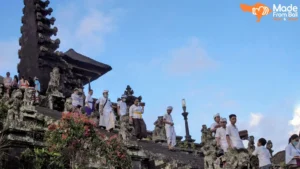
Besakih sits on the slopes of Mount Agung, Bali’s highest and most sacred volcano, at an elevation of around 900 metres. It’s the largest and holiest temple complex on the island, comprising more than 80 temples spread across the mountainside. The scale of it is immediately apparent when you arrive. This isn’t a single temple building but an entire sacred landscape.
Visiting Besakih requires working with a local guide, both for context and navigation. The complex is large enough that wandering independently leads to missing much of what makes it significant. A good guide will explain which temples correspond to which aspects of Balinese spiritual life, and when ceremonial activity is happening, which varies by the Balinese calendar. Dress modestly, a sarong is provided at entry but a respectful attitude matters more than the sarong.
Gunung Kawi and the Royal Tombs Near Ubud
About 30 minutes from Ubud in the Tampaksiring area, Gunung Kawi is a temple complex centered around royal tombs carved directly into stone cliffs along a river gorge. The approach involves descending hundreds of stone steps through terraced rice fields, which becomes part of the experience rather than a prelude to it. At the bottom, the carved rock shrines stand in a natural amphitheatre that feels genuinely ancient and secluded.
This is one of the most impressive archaeological sites in Bali and one of the least crowded major temples, which is somewhat baffling given how extraordinary it is. If your itinerary includes Tirta Empul, both are close enough to visit in the same morning.
Penglipuran: The Traditional Village That Time Forgot
Penglipuran in the Bangli regency is one of Bali’s best-preserved traditional villages, where residents still live according to the original Balinese village structure. The main street is lined with identical gated family compounds, each with a small garden, and motorbikes and modern vehicles are not permitted inside the village boundaries. It creates an atmosphere of quiet that’s almost jarring after South Bali’s constant energy.
Walking through Penglipuran takes about one to two hours. There’s a small entry fee, and local residents are often willing to talk about village life if approached respectfully. The surrounding bamboo forest is worth walking through as well. It’s about 45 minutes from Ubud and works well as a half-day trip combined with other Bangli-area attractions like Kintamani.
Understanding Balinese Temple Etiquette Before You Visit
A few practical things will make every temple visit better and more respectful. A sarong is required at most temples and is available to borrow or rent at entry. Women who are menstruating are traditionally asked not to enter the innermost sanctums of major temples. Shoes should be removed when entering inner compounds. Climbing on temple structures for photos is considered deeply disrespectful and increasingly results in removal from the site. Pointing your feet toward shrines or sitting higher than the shrines themselves also goes against local custom.
These are not bureaucratic rules. They reflect a living spiritual culture where the temples are not historic museums but active places of worship. Treating them accordingly not only shows respect to Balinese communities but also produces a richer, more genuine experience for the visitor.
Beaches and Ocean Experiences for Every Mood
Bali’s coastline is remarkable for its variety. The island’s different coastal regions have completely distinct personalities, wave patterns, crowd levels, and atmospheres. The beach that’s perfect for one type of traveler can be genuinely wrong for another. Knowing which beach actually matches what you’re after saves a lot of travel time and disappointment.
Uluwatu and the Bukit Peninsula: Best for Dramatic Scenery and Surf
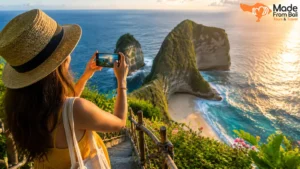
The Bukit Peninsula in Bali’s south is where the island’s cliff-edge geography creates its most dramatic coastal scenery. Beaches like Padang Padang, Suluban, Green Bowl, Nyang Nyang, and Melasti sit at the base of limestone cliffs, reached by staircases cut into the rock. The water is clear, the settings are striking, and the surf breaks here are world-class.
Uluwatu itself is one of the most respected surf breaks in Bali, a left-hand reef break that works on south and southwest swells and produces waves that experienced surfers travel specifically to ride. The annual Rip Curl Cup is held at Padang Padang, another reef break a few minutes away. For beginners, these waves are not suitable. But for experienced surfers, the Bukit is Bali’s best and most consistent area.
Canggu: Best for Laid-Back Vibes and Beach Clubs
Canggu has become Bali’s social hub over the past several years, drawing digital nomads, young travelers, and surf enthusiasts who want something between the party energy of Kuta and the cultural depth of Ubud. The main beach area around Batu Bolong works for beginner surfers, and the surrounding streets are dense with cafes, yoga studios, health food restaurants, and boutique shops.
The beach clubs in Canggu are genuinely excellent. La Brisa has a driftwood-and-castaway aesthetic that makes it one of the more photogenic settings in Bali. Finns Beach Club draws larger weekend crowds. The vibe throughout Canggu is relaxed but social, afternoon pool parties are common, and the stretch between Old Man’s bar and the main beach road stays lively from midday until late evening.
Seminyak: Best for Sunsets and Premium Beach Lounging
Seminyak sits north of Kuta and has a distinctly more upscale feel: wider beaches, longer stretches of sand, and beach clubs that invest seriously in their design and food offering. Potato Head Beach Club is probably the most architecturally interesting, with a facade made from hundreds of reclaimed wooden doors and a pool that extends toward the sea. Ku De Ta, now rebranded as Kaum, has been a fixture of Bali’s beach club scene for decades. Both offer full-day service, proper food menus, and sunset views that justify the minimum spend.
The Seminyak beach itself is one of Bali’s better spots for a long afternoon walk. The sand is wide enough to feel genuinely spacious even during busy periods, and the sunsets, especially between May and October, produce that deep orange and pink sky that has become synonymous with Bali in people’s imaginations.
Sanur: Best for Families and Calm Waters
Sanur is Bali’s original beach resort area and remains one of the most pleasant and underrated coastal neighborhoods on the island. The beach runs along a protected lagoon, which means the water is calm, shallow, and safe for children. There’s a long paved path along the shore that makes for a wonderful early morning walk or cycle. The pace here is noticeably slower than Seminyak or Canggu, and the cafe and restaurant scene along the beachfront road is varied and genuinely good.
Sanur is also the departure point for fast boats to Nusa Penida, Nusa Lembongan, and Nusa Ceningan, which makes it a practical base if island hopping is part of your plan. Families in particular find Sanur’s combination of calm beaches, good food, and central location makes it one of the easier places to be based in Bali.
Nyang Nyang and Balangan: Best for Escaping the Crowds
Both of these beaches require more effort to reach than Bali’s more accessible coastal spots, and that effort is exactly what keeps them quieter. Nyang Nyang sits at the end of a steep descending path that takes around 20 minutes to walk down. The reward is a long stretch of white sand, crashing waves, and rarely more than a handful of other people. It’s raw in the best possible sense: no beach clubs, no vendors, just the ocean and the cliffs.
Balangan is slightly easier to access and has a small warung and a consistent left-hand surf break that draws a loyal crowd of surfers in the mornings. Outside those hours, it settles into something quietly beautiful. Arriving at Balangan before 8am, when the light is still golden and the wave riders are already in the water, is one of the more peaceful ways to spend a morning in Bali.
Nusa Lembongan: The Quieter Alternative to Nusa Penida
Most travelers who go to the islands off Bali’s southeast coast head straight to Nusa Penida for the dramatic cliff beaches and manta rays. Nusa Lembongan, the smaller island just to the north, offers something different: a relaxed atmosphere, manageable size, clear shallow lagoons, and good snorkeling around the mangrove areas. The island takes perhaps two hours to explore by scooter, and the quieter west-coast beaches like Sandy Bay are genuinely lovely.
Spending a night or two on Lembongan rather than treating it as a day trip changes the experience entirely. After the tour groups leave in the late afternoon, the island settles into a pace that feels almost impossibly calm by comparison to mainland Bali.
Ubud and the Cultural Heart of Bali
Ubud sits in Bali’s central highlands, surrounded by rice fields, ravines, and jungle, and it functions as the island’s creative and spiritual center in a way that no other region quite manages. The food is better here, the art market is more interesting, the yoga and wellness scene is more developed, and the surrounding landscape provides the kind of setting that makes people extend their planned two-night stay to a week.
Rice Terraces That Are Actually Worth Visiting
Tegalalang Rice Terrace, about twenty minutes north of central Ubud, is the one that appears in every photograph. It’s genuinely beautiful: deep green step-like fields carved into a valley, with Mount Agung visible on clear days in the background. It’s also genuinely crowded from around 9am onwards, and local businesses along the ridge have introduced paid access for the best viewpoints and swing experiences. If you go at all, go early.
For something closer to what people imagine when they picture Bali’s rice fields, the area around Jatiluwih in the Tabanan regency is a UNESCO World Heritage Site and the most expansive rice terrace landscape on the island. It takes longer to get to, about 1.5 hours from Ubud, but the payoff is a vast, rolling agricultural landscape with virtually no Instagram installations and a fraction of the visitor numbers. The subak irrigation system that feeds these terraces is itself a UNESCO-recognized cultural heritage, a community-managed water distribution network that has operated for over a thousand years.
The Campuhan Ridge Walk for Early Risers
The Campuhan Ridge Walk starts near the center of Ubud, just past the Ibah Luxury Villas, and follows a narrow ridge between two rivers through open grassland and light jungle for about two kilometers before looping back. It’s free, it requires no transport, and in the early morning it’s one of the most peaceful walking experiences available anywhere near a major Bali tourist area.
The walk takes around 45 minutes to an hour at a comfortable pace. By 8am the temperature starts to rise and the path gets busier. By 10am it’s noticeably hotter and less pleasant. The sweet spot is anywhere between 6am and 7:30am, when the light is soft and the path is almost empty.
Balinese Cooking Classes: What to Expect and How to Choose
Cooking classes in and around Ubud are one of the more genuinely educational experiences Bali offers, and they vary significantly in quality and depth. The best ones start with a visit to a traditional market to source ingredients, which on its own teaches you more about Balinese food culture than an hour in a kitchen. You then learn to prepare four to six dishes, eat what you’ve made, and leave with a printed recipe guide.
What you’re actually learning is the logic of Balinese cooking: the base spice paste called base genep, the layering of aromatics like galangal, lemongrass, and kaffir lime, the balance between sweet coconut and sharp tamarind. This context makes it possible to understand and appreciate Balinese food you eat for the rest of your trip. Prices range from around USD 35 to 65 per person. Classes run mornings and, less commonly, afternoons. Morning classes are better because they include the market visit in cooler temperatures.
Ubud’s Art Markets, Galleries, and Creative Scene
The Ubud Art Market at the corner of Jalan Raya Ubud sells batik fabrics, handmade jewelry, wooden carvings, and silk scarves. The ground floor tends toward more tourist-oriented goods while the upper levels have a wider range and slightly more interesting craftsmanship. Prices are negotiable, and the skill is in identifying pieces that are genuinely handmade rather than mass-produced in workshops outside Bali.
The surrounding streets, particularly Jalan Hanoman and Jalan Monkey Forest, are lined with independent galleries and craft shops where quality is generally higher and prices are fixed. The Neka Art Museum and ARMA (Agung Rai Museum of Art) are both excellent introductions to the history and development of Balinese painting across different periods. If you have a genuine interest in art, either or both of these museums are worth a few hours.
Yoga, Wellness, and Retreat Experiences in and Around Ubud
Ubud’s reputation as a wellness destination has roots going back decades, long before Eat Pray Love made it famous internationally. The town has genuine depth in this area: skilled practitioners, serious retreat centers, and a surrounding environment that’s actually conducive to the kind of mental reset that wellness experiences are supposed to produce.
Day classes at studios like The Yoga Barn run multiple sessions per day across different styles, from dynamic vinyasa to gentle yin, and are accessible to absolute beginners. Multi-day retreats range from dedicated meditation and yoga programs to more comprehensive healing experiences that incorporate traditional Balinese healing practices. Some travelers build an entire Ubud trip around wellness, and the region supports that completely. For others, a single morning yoga class followed by a traditional Balinese massage at a local spa is more than enough to make the body and mind feel significantly better.
Food, Nightlife, and Beach Club Culture
Bali eats well. The combination of local Balinese cuisine, Indonesian dishes from across the archipelago, and an international food scene shaped by years of upscale tourism has produced a restaurant landscape that genuinely surprises visitors who arrive expecting only rice and satay.
The Best Beach Clubs in Bali by Region
Beach clubs are a defining feature of Bali’s social landscape, particularly in the south, and they exist on a spectrum from casual afternoon hang-outs to full-day luxury experiences with reservation requirements and significant minimum spends. In Seminyak and Canggu, Potato Head and La Brisa set the standard for design-led beach clubs with good food programs. In Uluwatu, Savaya, formerly known as Omnia, is the most exclusive offering with an infinity pool positioned on the cliff edge and internationally recognized DJ bookings on weekends. Sundays Beach Club at the base of the Ungasan cliffs is beloved for its more intimate, beachside atmosphere. El Kabron, also in Uluwatu, runs daily sunset parties with live musicians in a clifftop setting that delivers the kind of evening that justifies a long flight to Bali.
Most beach clubs charge a minimum spend or day pass fee rather than a cover charge. These range from around USD 15 in more casual settings to USD 75 or more at premium venues. It’s worth checking the policy before you arrive, especially for popular venues that require reservations on weekends.
Jimbaran Seafood Dining on the Beach
Jimbaran Bay on Bali’s west coast is home to a collection of open-air seafood restaurants that let you eat fresh fish, prawns, squid, and grilled corn at low tables on the sand, directly on the beach, with the Indian Ocean a few metres away. The concept is simple: you choose your seafood from the display, it’s weighed, grilled over coconut husks, and brought to your table. As the sun drops, the bay fills with candlelight and the sound of the waves.
It’s not the cheapest meal in Bali, and pricing transparency varies between operators. Going with a recommended restaurant rather than accepting invitations from touts in the parking area produces a better experience. The combination of fresh seafood, the beach setting, and a Bali sunset makes this one of the more memorable dinner experiences the island offers.
Where to Eat Like a Local Without Getting Lost
Warung dining is the foundation of eating well in Bali without spending much. A warung is a small family-run restaurant, usually with a short handwritten menu, plastic chairs, and prices that seem impossibly low by most tourists’ standards. Nasi campur, a plate of rice with small portions of multiple dishes including lawar, sate lilit, and various vegetables, is the dish to order when you’re not sure what to eat. It gives you the broadest introduction to Balinese flavors in a single sitting.
Nasi pedas, or spicy rice, is another distinctly Balinese experience. The sambal matah, a raw shallot and chilli condiment, appears alongside most Balinese dishes and has a freshness and heat that’s quite different from cooked sambal. Babi guling, the famous Balinese suckling pig, is a non-halal dish that Balinese Hindus serve at ceremonial occasions and that several restaurants in Ubud and Denpasar have elevated into a proper dining experience. For Muslim travelers, there are genuinely excellent halal options throughout the island, particularly in Canggu, Seminyak, and Ubud, where restaurant labeling has become more consistent in response to the diversity of travelers visiting.
Bali Nightlife: What It Is and Is Not
Kuta and Legian have the island’s most active nightlife scene, centered on Jalan Legian and the surrounding streets. It’s loud, accessible, and energetic in a way that suits some travelers and exhausts others. Seminyak’s bars and clubs skew slightly older and more design-conscious. Canggu’s nightlife is more social than clubbing-focused, built around bar-hopping and live music in smaller venues. Ubud, predictably, closes early and is better suited to cocktails on a terrace than nightclub-style evenings.
The important thing to understand is that Bali’s nightlife exists on a spectrum from genuinely excellent to tourist-trap awful. The best evenings tend to involve choosing a beach club for the sunset, moving to a bar for dinner and drinks, and finishing at a smaller venue with live music rather than trying to replicate a European clubbing experience in a tropical setting.
Hidden Gems and Off the Beaten Path Experiences
The version of Bali that most travelers experience is concentrated in a relatively small area of the island. South Bali, Ubud, and the handful of attractions that appear in every guidebook represent perhaps 30 percent of the island geographically. The other 70 percent contains quieter landscapes, authentic village life, and experiences that feel genuinely personal in a way that heavily touristed spots rarely do.
Sidemen: Rice Terraces Without the Tour Buses
Sidemen sits in the foothills of East Bali, about 90 minutes from Ubud. It looks like what people imagine when they think of Bali’s rice terrace landscape: rolling green fields, palm trees, and Mount Agung dominating the background, visible without obstruction from most viewpoints in the area. And it does this without the entry fees, swing installations, or selfie infrastructure that have appeared at Tegalalang.
The village itself is known for traditional handwoven fabrics, and you can visit family weaving workshops where the cloth is produced on backstrap looms using techniques passed down through generations. Trekking the rice fields with a local guide from Sidemen is worth doing specifically because guides from the area know the land and have relationships with the farming families, which makes moving through working rice paddies feel like being welcomed rather than tolerated. White water rafting on the Telaga Waja River, which runs through the gorge below Sidemen, is one of Bali’s better-kept secrets for adventure travelers.
Amed: Black Sand Beaches and the USAT Liberty Wreck
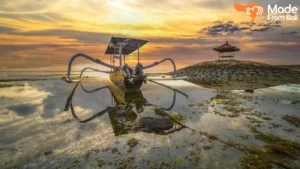
Amed is a string of fishing villages along East Bali’s coast, about three hours from the airport. The beaches here are volcanic black sand, striking against the turquoise water, and the pace of life is slow in a way that feels genuinely different from the commercial energy of South Bali. Mornings in Amed, watching traditional jukung fishing boats being launched into glassy water with Mount Agung rising behind them, produce some of the most quietly beautiful moments Bali offers.
The diving in the area is exceptional. A short drive south, in Tulamben, lies the USAT Liberty shipwreck, a World War II cargo ship sunk by a Japanese torpedo that now sits at depths from five to thirty metres and is accessible directly from the beach. It’s one of the most visited dive sites in Asia for good reason: the wreck is enormous, completely colonized by coral and marine life, and accessible enough for beginner divers to explore shallower sections while advanced divers find more complexity at depth.
Munduk: Waterfalls and Highland Villages in North Bali
Munduk is a small highland village in North Bali, sitting at around 900 metres elevation in an area of coffee plantations, clove trees, and rainforest. The air here is noticeably cooler than South Bali, the light is different, and the landscape has a misty, quiet quality that travelers who burn out on Bali’s beaches and temples find genuinely restorative.
The village is surrounded by hiking trails leading to multiple waterfalls, most notably Munduk Waterfall itself, which drops through a lush green cliff face, and the less-visited Git Git Waterfall system further north. Coffee and cacao plantation tours run daily and offer a more genuine agricultural experience than the heavily commercialized plantation stops near Ubud. Munduk is most easily visited as part of a North Bali road trip that combines it with the Handara Gate, Ulun Danu Beratan Temple on Lake Beratan, and Lovina Beach.
Lovina and the Dolphin Coast
Lovina is the main town on Bali’s north coast, quieter and less developed than any comparable coastal area in the south. The main draw is early morning dolphin watching: traditional boats leave before sunrise and head into the Bali Sea where spinner dolphins and bottlenose dolphins are regularly spotted playing in the bow waves. It’s a straightforward, unscripted wildlife experience, not a show but an encounter, and on good mornings it produces genuine moments of unexpected wonder.
The black sand beaches around Lovina are calm and family-friendly. The Banjar Hot Springs, a short drive west of town, are fed by warm volcanic water that flows through carved stone dragon statues into tiered pools set in a tropical garden. It’s one of the more serene natural bathing experiences in Bali and almost entirely off the main tourist circuit.
East Bali and the Road Less Traveled
The eastern part of Bali, centering on Karangasem regency, holds some of the island’s most interesting and least visited cultural sites. The Tirta Gangga water palace, built in 1948 by the last Raja of Karangasem, features tiered fountains, ornamental pools, and stepping stones across the water set against a backdrop of rice fields and Mount Agung. It’s beautiful without being famous, which means you can explore it slowly without feeling like you’re fighting for space.
Candidasa, further along the east coast, serves as a quiet base for diving the offshore islands, which have excellent reef systems and calmer currents than Nusa Penida. The Amlapura area contains the Taman Ujung water palace, older and slightly more ruined than Tirta Gangga, which gives it a melancholy elegance that more polished tourist sites lack.
Practical Tips That Make a Real Difference
The gap between a good Bali trip and a great one is often not about which attractions you visit but about the practical decisions that shape every day on the ground.
When Is the Best Time to Visit Bali
The dry season, April to October, produces the most reliable weather for outdoor activities, beach days, hiking, and diving. May and early June are particularly good because conditions are excellent but the peak-season crowds from July and August haven’t fully arrived yet. September and October are also excellent months with lower visitor numbers than midsummer.
The wet season, November to March, brings daily rain, usually in concentrated afternoon showers rather than all-day downpours. Waterfalls are more dramatic, landscapes are greener, and prices are lower. Surfing on the east coast actually improves during this period. Nyepi, Bali’s Hindu Day of Silence, falls in March and involves a complete island-wide shutdown for 24 hours: no flights, no vehicles, no lights, no public activity. If you happen to be in Bali for Nyepi, it’s a genuinely profound experience. If you’re arriving or departing on that date, it’s a logistical problem requiring careful advance planning.
Getting Around Bali: Scooter, Driver, or Grab
Grab, the Southeast Asian rideshare app, operates throughout South Bali and Ubud and is the most transparent and predictable way to arrange short-distance transport. For day trips to multiple destinations, hiring a private driver is the best option. A full day with a driver typically costs between USD 40 and 60 and gives you flexibility to adjust the itinerary, add stops, and travel at your own pace. Most drivers in tourist areas speak enough English for practical communication.
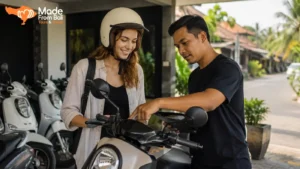
Scooter rental offers the most freedom but requires honest self-assessment of your riding ability and a valid International Driving Permit in the appropriate category. Traffic in Kuta and Seminyak can be intense, and road conditions in rural areas range from good to genuinely challenging. For confident riders, a scooter in Ubud or East Bali transforms what you can explore in a day. For those without experience on two wheels, a driver is a better investment than an ER visit.
How Much Does Bali Actually Cost Per Day
Bali operates across a very wide price range. A genuine budget traveler staying in guesthouses, eating at warungs, and using Grab can manage on USD 30 to 50 per day. A mid-range traveler in a comfortable villa or hotel with one or two activities and restaurant meals will spend USD 100 to 200 per day. Luxury travel, with private pool villas and premium experiences, can go to USD 500 or significantly beyond.
The most common financial mistake is mixing budget accommodation with premium activities and finding that the total doesn’t match either extreme comfortably. Being clear about which category you’re in and spending accordingly produces a more satisfying experience than trying to economize in the wrong places.
What to Know About Balinese Ceremonies if You Travel During One
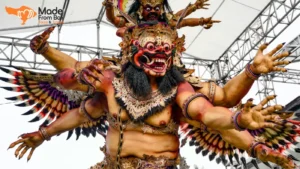
Bali’s Hindu calendar is dense with ceremonies, and major events like Galungan, when ancestors are believed to return to earth, and Kuningan, the day they depart again, transform the island in visible ways. Roads fill with tall bamboo penjor poles hung with offerings, villages hold ceremonies, and entire communities dress in traditional white and yellow clothing. Traveling during these periods is genuinely special and offers an unscripted view of Balinese spiritual culture that no temple tour can replicate.
The important thing to know is that these are actual religious events, not cultural performances. Being a respectful, quiet observer at a roadside ceremony is welcomed. Walking into a private family ceremony uninvited is not. If you encounter a ceremony in a public space, slowing down to watch from a respectful distance is appropriate. Asking a local guide about the significance of what you’re seeing produces context that makes the experience much richer.
Common Mistakes First-Time Visitors Make in Bali
The most consistent mistake is underestimating travel time between regions. What looks like a 30-minute drive on a map can take 90 minutes in mid-morning or late-afternoon traffic. Plan your days around geographic clusters rather than building itineraries that zigzag across the island.
The second is arriving at famous spots without checking timing. Tegalalang at 10am is a crowd. Tegalalang at 7am is a completely different experience. The same applies to Lempuyang Gates of Heaven, where queues for the photograph can stretch for hours by mid-morning, and to Monkey Forest Ubud, which gets genuinely chaotic by midday.
Trusting random transport touts outside tourist sites is another common issue. Using Grab, asking your accommodation to arrange drivers, or booking through reputable tour operators eliminates most of the negotiation stress and overcharging that some travelers experience. Finally, underestimating the heat is a mistake that catches people who are used to walking tours in European cities. Bali at midday in the dry season is hot and humid enough to make any sustained outdoor activity feel significantly harder than it looks on a schedule.
Building Your Bali Itinerary from This Guide
Bali rewards those who arrive with a framework rather than a rigid schedule. The sections above have covered what to do, when to go, who it suits, and what to realistically expect. The final step is combining those pieces in a way that actually matches your trip length, your travel style, and your genuine priorities.
A useful approach is to anchor your itinerary around one or two non-negotiable experiences, the Mount Batur trek, a day trip to Nusa Penida, or a specific cultural experience you’ve been thinking about, and then build the rest of your days around those anchors geographically. That means if you’re doing Batur, spend a night before in Ubud or Kintamani. If you’re going to Nusa Penida, base yourself in Sanur the night before so the boat transfer is a ten-minute walk rather than an hour’s drive. If Uluwatu is your focus for an evening, plan the afternoon in the area rather than traveling from Ubud.
The final honest observation about Bali is this: the island has a way of making you want to come back. Travelers who give themselves enough time, build in rest days, and resist the urge to tick every famous site typically leave feeling like they’ve actually experienced something. Those who rush through the greatest hits in four days often leave thinking they need to return to find what they missed. You probably do. But this guide should get you much closer to the version of Bali that makes the most sense for you.
REFERENSI
- TripAdvisor Travelers’ Choice Awards 2026. “Bali Named No. 1 Travel Destination in the World.” Reported by The Bali Sun. https://thebalisun.com/bali-named-no-1-travel-destination-in-the-world-for-2026-by-tripadvisor/
- Come2Indonesia. “Tripadvisor Travelers’ Choice Awards 2026: Bali Wins It Again.” https://come2indonesia.com/bali-named-as-best-travel-destination-for-2026-in-tripadvisor-travelers-choice-awards/
- Seven Stones Indonesia. “Bali Tops TripAdvisor’s Best of the Best Destinations 2026.” https://sevenstonesindonesia.com/blog/bali-tops-tripadvisors-best-of-the-best-destinations-2026/
- Travel Market Report. “Bali High: TripAdvisor Names Best of the Best Destinations for 2026.” https://www.travelmarketreport.com/canada/destinations/articles/bali-high-tripadvisor-names-best-of-the-best-destinations-for-2026
- Ohana Agency. “Mount Batur Sunrise Trek: Complete Guide by a Local.” https://www.ohana-agency.com/blog/mount-batur-sunrise-trek
- Bali Holiday Secrets. “Mount Batur Hike in 2026: Sunrise Trek, Tips and Booking Guide.” https://www.baliholidaysecrets.com/mount-batur-hike/
- Bali Untold. “34 Best Things to Do in Bali, Indonesia 2026.” https://baliuntold.com/things-to-do/
- Sunshine Seeker. “33 Epic Things to Do in Bali: The Ultimate Bali Bucket List 2026.” https://www.sunshineseeker.com/destinations/ultimate-bali-bucket-list-100-things-to-do/
- The Broke Backpacker. “15 Epic Hidden Gems in Bali: 2026 Insider Guide.” https://www.thebrokebackpacker.com/hidden-gems-in-bali/
- Kura-Kura Bus Blog. “Bali Travel Guide 2026: Top Destinations to Explore.” https://kura2bus.com/blog/bali-travel-guide-2026-top-destinations-to-explore-in-bali/