

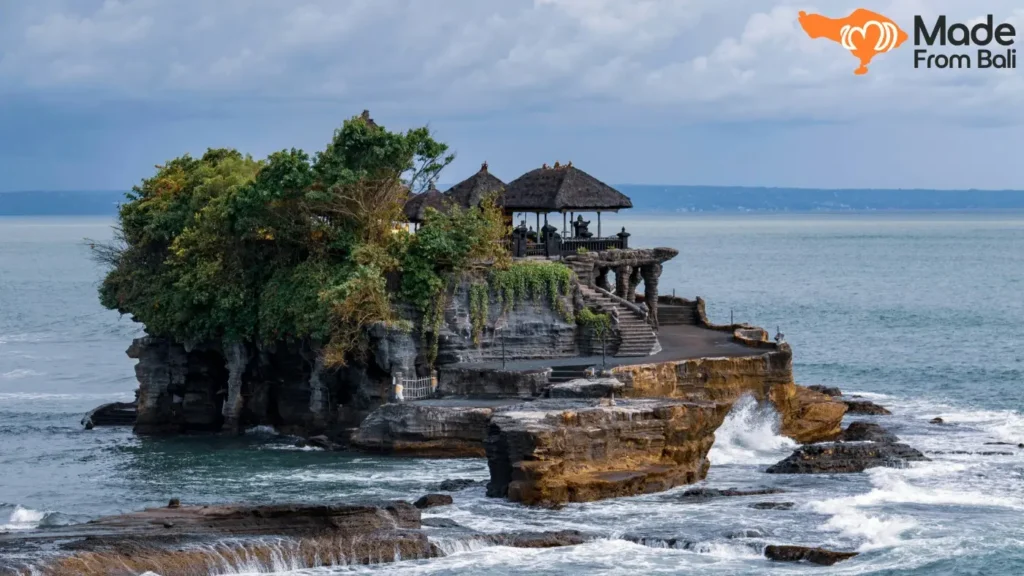
Most people arrive at Tanah Lot expecting the photograph: the sea temple silhouetted against a burning orange sky, water all around, the light doing exactly what it does in every travel feed they have ever scrolled through. What they do not expect is the vendor strip they walk through before reaching any viewpoint, the crowd that has assembled two hours before sunset, or the realization that the famous angle is shared by several hundred other cameras at the exact same moment. This is not a reason to skip Tanah Lot. It is a reason to understand it better before you arrive.
The experience of Tanah Lot, at the right time, in the right conditions, from the right position around the complex, is genuinely extraordinary. The temple on its rock in the sea has a presence that no photograph fully communicates, partly because photographs cannot capture the sound of the ocean against the stone, the smell of incense drifting from the complex, or the quality of the light in the thirty minutes before the sun actually reaches the horizon. But none of that happens by accident. It happens because the visitor understood when to arrive, where to stand, what the tide would be doing, and why this place has held sacred significance for Balinese Hindus for five centuries.
This guide provides all of that. The timing framework, the tide reality, the viewpoint positions, the cultural identity, the practical details, and the combination itinerary logic. By the time you finish reading, Tanah Lot will feel like a plan rather than a hope.
Why Tanah Lot Is More Than a Sunset Viewpoint
The temptation with Tanah Lot is to treat it as a backdrop. The rock in the sea is visually perfect, the sunset timing is convenient for day trips from south Bali, and the logistical ease of the visit makes it feel like something you complete rather than something you experience. But the site has layers that genuinely reward the visitor who arrives with even basic knowledge of what they are looking at.
The Spiritual Identity of the Temple and Its Place in Balinese Religion
Pura Tanah Lot is not simply a photogenic temple. It is one of Bali’s Sad Kahyangan, the six directional sea temples whose spiritual function is to protect the island from harmful forces entering from the ocean. These six temples are strategically positioned around Bali’s coastline and are considered among the most sacred sites in Balinese Hindu tradition. Their placement follows a cosmological logic rooted in the belief that the sea represents both the source of life and the origin of spiritual danger, and that maintaining the correct relationship with ocean forces requires active, ongoing spiritual presence at the boundaries.
Tanah Lot’s specific role within this network is as a guardian of the southwestern sea. The temple complex has been an active site of Balinese Hindu worship for centuries, and the ceremonies held there are not performances for tourists. They are genuine religious observances that continue regardless of how many visitors are present. Understanding this transforms the experience of standing at the viewpoint. What you are looking at is not a decorative rock formation with a temple on top. It is a living sacred site that has been maintained by the local community of Beraban village for generations, a place where the relationship between Balinese Hinduism and the natural world is expressed in architectural and ritual form.
The Legend of Nirartha and the Holy Sea Snake
The founding of Pura Tanah Lot is attributed to Dang Hyang Nirartha, a Javanese Hindu priest who traveled through Bali in the sixteenth century and is credited with establishing or reinvigorating several of the island’s most significant temples. According to the tradition associated with the site, Nirartha rested on the rock now occupied by the temple during his coastal journey and experienced a spiritual vision that convinced him of the rock’s sacred potential. He instructed the local fishermen to build a temple there, and before departing, he transformed his own clothing into the sea snakes that are said to guard the temple to this day.
These sea snakes are not a legend in the abstract sense. Banded sea kraits do inhabit the caves and rock formations at the base of the Tanah Lot rock, and they can occasionally be seen at low tide by visitors who make the short walk to the base of the formation. They are venomous, and close contact should obviously be avoided, but their presence at the site is considered sacred rather than alarming in the local cultural context. Balinese Hindus view them as genuine guardians of the temple, and local priests maintain a ritual relationship with them. Knowing this before you arrive gives the site a dimension that no photograph conveys.
When to Visit Tanah Lot and Why Timing Changes Everything
Tanah Lot is a site where timing is not a minor planning consideration. It is the central variable that determines whether the visit is memorable or merely completed. The difference between arriving at the right moment and arriving at the wrong one is the difference between a genuinely moving experience and an expensive queue for a viewpoint you could have photographed from a postcard.
The Sunrise and Morning Visit Option
Visiting Tanah Lot in the early morning is the most underused option among tourists and the most rewarding for those who choose it. The site opens early, the light in the morning comes from the east and illuminates the temple complex from the front rather than silhouetting it against the sky, and the number of visitors before 9am is a fraction of what builds through the afternoon.
At low tide in the morning, the rock formation is accessible on foot across the exposed sand and rock between the shore and the temple base. This allows visitors to walk closer to the temple than any afternoon visit permits, and the experience of standing near the base of the rock with the sound of the ocean on three sides and almost nobody else around is completely different from the famous sunset moment. The light at this hour on the rock and the surrounding tide pools is warm and directional, and for photographers who want an image of Tanah Lot that does not look like every other image of Tanah Lot, the morning provides conditions that the afternoon physically cannot.
Morning visitors also have the surrounding complex to themselves in a way that afternoon visitors never do. The temple grounds, the secondary shrines, and the cliff paths that wrap around the headland north of the main rock are all more accessible and more peaceful in the early hours.
The Ninety-Minute Window Before Sunset
If sunset is the priority, and for many travelers it genuinely is, the optimal arrival time is ninety minutes before the scheduled sunset rather than thirty minutes before. This is the single most useful Tanah Lot timing insight and the one most consistently ignored by travelers who arrive in the final forty-five minutes and find every viewpoint position already occupied.
Arriving ninety minutes early accomplishes several things simultaneously. The crowd is still building rather than fully assembled, which means viewpoint positions are available and moveable. The light in this window is often the most interesting of the entire visit, with the sun still high enough to produce warm side-lighting rather than direct backlight, making the temple more visually three-dimensional than it appears in the final pre-sunset silhouette. There is time to walk the complex properly, visit the secondary viewpoints, and find the position that suits the experience you want before the crowd density makes movement difficult.
The actual sunset moment, when the sun reaches the horizon, is usually a ten to fifteen minute window. Arriving ninety minutes before it means the visit is a two-hour experience rather than a frantic final approach to a crowded viewpoint.
What Happens When You Arrive at the Wrong Time
The wrong time at Tanah Lot is between approximately 4:00pm and the thirty minutes before sunset during peak season, particularly July, August, and the Christmas to New Year period. In this window, the main viewing platforms are at maximum capacity, the path through the surrounding market becomes difficult to move through, and the experience of the site shifts from atmospheric to logistical. The famous viewpoint position, looking directly at the temple from the western side, becomes so crowded that the photograph most visitors want requires either patience of twenty to thirty minutes or accepting other visitors in the frame.
This is not a reason to avoid Tanah Lot at sunset. It is a reason to arrive before 4:30pm rather than at 5:30pm. The experience is salvageable with the right timing. It is difficult to recover once the crowd has built to capacity.
Understanding the Tide and What It Means for Your Visit
The tide at Tanah Lot is not a background detail. It actively changes what the site looks and feels like, and it determines whether certain experiences, particularly the walk to the base of the rock, are possible at all. Most visitors arrive without knowing what the tide will be doing, which means they miss opportunities that a small amount of advance knowledge would have made available.
When the Rock Is Accessible and What Low Tide Access Involves
At low tide, the area between the shore and the Tanah Lot rock becomes exposed, and visitors can walk across the sand and rock to the base of the temple formation. This access point is where the holy sea snakes mentioned earlier can occasionally be seen in the cave formations at the rock’s base, where a freshwater spring considered sacred by Balinese Hindus emerges from the rock, and where local priests offer blessings to visitors who approach respectfully.
The experience of standing at the base of the Tanah Lot rock at low tide, looking up at the temple above and out at the ocean on three sides, is entirely different from any clifftop viewpoint experience. The scale of the rock formation becomes apparent in a way that photographs from a distance cannot communicate, and the proximity to the ocean at this level produces a quality of sensory immersion that the elevated viewpoints do not.
Low tide access is not always available and is weather-dependent in addition to being tide-dependent. When swell is running or when waves are breaking over the rock path, access is restricted for safety reasons. Even in calm conditions, the rock surface near the base is irregular and can be slippery, so appropriate footwear matters here as it does at many Bali coastal sites.
How to Check Tide Timing Before You Go
Checking the tide at Tanah Lot before your visit is straightforward and worth doing the evening before. Tide prediction apps and websites provide accurate tide charts for the Tabanan coastal area where Tanah Lot is located. Searching for “tide chart Tabanan” or “tide chart Tanah Lot” returns reliable results from meteorological and coastal services.
The practical goal is identifying whether your planned visit coincides with low tide, which enables rock access, or high tide, which covers the approach and removes that option. If you have flexibility in your timing, aligning a morning visit with a low tide window provides the richest combination of experiences available at the site. If your visit is fixed at sunset, knowing the tide in advance simply helps you calibrate expectations and understand what will and will not be accessible.
Navigating the Temple Complex and Finding the Best Viewpoints
Tanah Lot’s complex is larger and more varied than most visitors realize from the entrance. The famous viewpoint is one of several positions around the site, and knowing the others exists means you can make a deliberate choice about where to stand rather than defaulting to wherever the crowd leads.
The Main Viewpoint and Where the Crowds Concentrate
The primary viewpoint at Tanah Lot is on the western side of the rock, looking directly at the temple with the ocean and the setting sun behind it. This is where the famous silhouette photograph is taken, and it is consequently where the highest concentration of visitors assembles in the pre-sunset period. The viewing platform in this position is elevated above the beach level and provides a clear line of sight to the temple.
This viewpoint is worth occupying, but occupying it early. The best positions in this area fill from approximately 4:30pm onward on busy days. Arriving before 4:00pm means you can choose your position rather than accepting whatever remains. Standing slightly to the north or south of the central axis shifts the composition of the photograph and often means standing in a less dense section of the crowd.
The Quieter Positions Around the Complex
Two positions around the Tanah Lot complex are consistently less crowded than the main western viewpoint and offer different qualities of experience.
The northern cliff path, which follows the headland above the temple from the main entrance area, provides elevated views looking down at the temple from a different angle. The perspective here shows the rock’s relationship to the sea more fully than the western viewpoint does, and the light in the late afternoon falls differently across the temple structure. The crowd density along this path is typically lower because it requires a short walk beyond the main viewing area, and many visitors do not venture this far.
The beach level to the southwest, accessible by descending from the main complex toward the ocean side, positions visitors closer to the waterline with the temple visible across the water and the western horizon visible in the background. At sunset, this position captures the reflection of the light on the water surface in a way that the elevated viewpoint does not, and the atmosphere at this level, with the sound of waves and the texture of the sand and rock, is more immersive than the platform viewpoints above.
What You Can and Cannot Enter as a Non-Worshipper
Non-Hindu visitors cannot enter the inner temple on the rock itself, which is accessible only to those participating in active worship. This is a consistent and respectful boundary, and it applies at virtually all major Balinese Hindu temples. The experience of Tanah Lot for most tourists is therefore the complex on the shore, the viewing areas around the headland, and the low tide access to the rock’s base.
Within the shore complex, there is a temple area that non-Hindus should not enter without permission, typically marked by a rope or sign at the entrance. The surrounding grounds, the viewpoint paths, and the approach to the rock base are all accessible with appropriate dress. Wearing a sarong is required throughout the complex, and sarongs with the sash are available for rental at the entrance for a small fee if you did not bring one.
How Long to Spend at Tanah Lot and What the Visit Involves
One of the most common questions about Tanah Lot is how long to allocate. The honest answer depends on what you want from the visit, but most travelers either spend too little time and feel they rushed, or allocate so much time that the final portion of the visit is spent waiting for a sunset that has already been photographed from every angle.
A Realistic Timeline From Arrival to Departure
A well-paced Tanah Lot visit takes between ninety minutes and two and a half hours depending on whether you are there for the sunset or for a morning exploration. The following timeline applies to a sunset visit beginning ninety minutes before sunset.
- Arrival and entry: Park, enter the complex, orient yourself. Ten to fifteen minutes including ticket purchase and sarong rental if needed.
- Exploration of the complex: Walk the northern cliff path, visit the secondary shrines, and assess the tide level and rock access before the crowd builds. This is the best use of the first forty-five minutes before the light begins to shift.
- Positioning for sunset: Move to your chosen viewpoint position approximately forty-five to sixty minutes before sunset. This is when the light starts becoming interesting and before the best positions are fully occupied.
- Sunset observation: The fifteen to twenty minutes around actual sunset are the most atmospheric. Stay through the last of the color rather than leaving immediately when the sun drops.
- Departure: The crowd begins moving toward the exit immediately after sunset. Staying an additional ten to fifteen minutes as the sky transitions through its post-sunset colors means departing into a thinning crowd rather than a concentrated one.
The Surrounding Market and Whether It Is Worth Your Time
The path between the parking area and the temple complex passes through a corridor of vendor stalls selling sarongs, souvenirs, snacks, and drinks. This market strip is not avoidable, and visitor opinions of it range from genuinely enjoyable to mildly overwhelming. The practical guidance is to pass through it with purpose on the way in, when the priority is reaching the temple before the light changes, and to browse on the way out if you have interest and time remaining.
Prices in the market are negotiable but not dramatically so, and quality varies. The sarongs and fabric items tend to be better value than the standard souvenir items. The food and drinks available in the market area are perfectly adequate for a snack between the market and the viewpoint, but the main temple complex also has cafes and warungs within it for those who prefer to eat within sight of the ocean.
What to Wear and What to Bring
Tanah Lot has a dress code that applies throughout the complex and is enforced at the entrance. Coming prepared means no delays at the gate and no need to rent a sarong that may not fit well.
The Dress Code, Sarongs, and What the Entrance Provides
A sarong is required for entry, worn wrapped around the waist and covering the legs. A sash tied around the waist over the sarong is also required at most sacred areas within the complex. Both are available for rental at the entrance for a small fee in IDR, typically around 10,000 to 20,000 IDR, and the rental is returned when you exit. If you bring your own sarong, make sure it is long enough to cover below the knee.
Shoulders do not need to be covered by a specific policy at Tanah Lot, though a light top is practical for sun protection given the exposed position of the viewpoints. Closed shoes or sandals with ankle straps are preferable to flip-flops if you plan to walk to the rock base at low tide, where the surface is irregular.
Bringing a hat and sunscreen is worth doing regardless of what time you visit. The viewpoints at Tanah Lot are largely unshaded, and the afternoon sun before sunset is still strong enough to produce noticeable sunburn over a two-hour visit.
Photography, Crowds, and the Practical Details That Matter
For photography, the most useful practical information is about position and patience rather than equipment. The famous silhouette photograph requires the sun to be low and behind the temple, which means it is only possible in the thirty minutes or so around sunset. Outside of this window, the temple is better lit and more three-dimensional, which produces images that are less iconic but often more interesting.
A small tripod or a phone stabilizer is useful if long-exposure photography of the waves around the rock is the goal. Hand-held photography works perfectly well for the main viewpoint shots. The light shifts quickly in the final twenty minutes before sunset, and checking exposure settings every few minutes rather than locking them in at the start of the observation period produces better results.
Cash in IDR is needed for parking, entry fees, sarong rental if required, and any market purchases. The entry fee as of recent years is approximately 60,000 IDR per person for foreigners, and parking is additional. Confirm the current fee on arrival as these are subject to adjustment.
Combining Tanah Lot With Other Sites in the Area
Tanah Lot sits in the Tabanan regency in northwest Bali, a region that contains some of the island’s most rewarding and least crowded cultural and agricultural sites. The temple is rarely visited as a standalone destination by travelers who know the area, and combining it intelligently with nearby sites produces one of Bali’s most satisfying day trips.
The Northwest Bali Circuit With Jatiluwih and Pura Taman Ayun
The northwest Bali circuit is the combination that most local guides consider the ideal pairing for Tanah Lot. It begins in the morning at Pura Taman Ayun, the royal temple of Mengwi, which is one of the most architecturally refined temples in Bali and is UNESCO-recognized as part of the Balinese Cultural Landscape alongside the subak irrigation system. The temple is set within a moat, its multiple-roofed meru towers rising above the surrounding water, and it draws a fraction of the visitors that Tanah Lot receives despite being equally significant in the Balinese temple hierarchy.
From Taman Ayun, the circuit continues north and west to Jatiluwih, the UNESCO-listed rice terrace landscape that covers a dramatically larger area than Tegallalang and receives significantly fewer visitors. The drive through the Tabanan highlands to reach Jatiluwih is through agricultural and forested terrain that feels genuinely rural despite being accessible on reasonably maintained roads. The terraces at Jatiluwih can be walked on foot along paths that wind through the working landscape, and the combination of elevation, clean air, and visual scale makes it one of the most restorative experiences available in Bali.
The circuit concludes at Tanah Lot for the sunset, arriving via the western road that connects Jatiluwih through Tabanan town to the coast. The geographic logic of this route is clean: north to south through the Tabanan region, ending at the coast for the day’s most atmospheric moment.
The Half-Day Tabanan Loop for Shorter Itineraries
For travelers whose Bali itinerary cannot accommodate a full day in the northwest, a half-day loop combining Tanah Lot with either Pura Taman Ayun or a brief stop at the Tabanan coast road viewpoints is viable from south Bali in an afternoon. Departing from Seminyak at around 2:30pm allows time to visit Taman Ayun briefly, arrive at Tanah Lot by 4:30pm for the pre-sunset window, and return to south Bali by 8:00 to 8:30pm accounting for traffic.
This is a compressed version of the experience and works best for travelers who specifically want the sunset and are less focused on the broader northwest Bali landscape. The full day circuit is the superior version, but the half-day loop is a legitimate option for certain itinerary constraints.
Tanah Lot and Uluwatu on Separate Days
A question that comes up consistently in Bali planning is whether Tanah Lot and Uluwatu should be combined in a single day. Both are sea temples with famous sunset views, and the instinct to put them together is understandable. The practical reality is that combining them in a single afternoon produces a rushed version of both experiences rather than a full version of either.
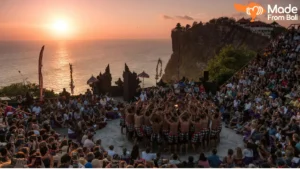
Uluwatu sits at the southern tip of the Bukit Peninsula, approximately ninety minutes to two hours from Tanah Lot depending on traffic. Getting from one to the other in time for both sunsets is not possible since they happen simultaneously. Getting from Uluwatu’s afternoon Kecak fire dance performance to Tanah Lot at sunset involves a drive through traffic that makes the timing extremely tight and stressful.
The recommendation from anyone with ground-level knowledge of both sites is to visit Tanah Lot on one day and Uluwatu on another, allowing each to receive the pre-arrival exploration and unhurried observation that makes them genuinely rewarding rather than merely visited.
Getting to Tanah Lot and How Tour Formats Work
Tanah Lot is accessible from all major south Bali tourist areas and does not require specialist logistics to reach. The primary decisions are about transport format and whether a guided tour adds value for your specific visit.
Self-Drive vs Private Tour vs Group Tour
The three main ways to visit Tanah Lot each have a specific use case.
| Format | Suits | Limitation |
|---|---|---|
| Self-drive or scooter | Confident drivers who know Bali roads and want flexibility | Traffic from south Bali to Tanah Lot at peak afternoon can be slow; parking at the site requires a fee and can fill on busy evenings |
| Private day tour | Couples, families, and small groups who want Tanah Lot combined with northwest Bali sites like Jatiluwih and Taman Ayun | Higher cost than group tour, though the per-person cost for a group of three or four is comparable |
| Group tour | Budget travelers or solo visitors who want structure and a set itinerary | Less flexibility on timing and combination stops; group tours to Tanah Lot often arrive exactly when crowds peak |
For travelers who want the full northwest Bali circuit, a private day tour with a driver who knows the region is the most efficient and enjoyable format. For travelers whose only goal is the Tanah Lot sunset and who are comfortable self-driving in Bali, arriving independently and managing their own timing is entirely viable.
How Far Tanah Lot Is From the Main Bali Tourist Areas
Distance from south Bali to Tanah Lot is manageable but affected significantly by traffic, particularly in the late afternoon when both tourist traffic and local commuter traffic overlap on the main roads through the Kuta and Seminyak corridor.
- From Seminyak: approximately 45 minutes to 1 hour in normal conditions, up to 90 minutes in peak afternoon traffic
- From Canggu: approximately 30 to 45 minutes, with a slightly less congested route available via the coastal road
- From Ubud: approximately 1.5 to 2 hours, making it feasible as a western stop on a circular day trip
- From Kuta and Legian: approximately 45 minutes to 1 hour, similar to Seminyak routing
Building these drive times into the departure calculation is essential. Travelers who leave Seminyak at 5:00pm expecting to arrive at Tanah Lot for sunset at 6:15pm are operating with no buffer for traffic. Leaving at 3:30pm for a 4:30pm arrival gives ninety minutes at the site before sunset and adequate buffer for road conditions.
Making the Most of the Experience When You Arrive
Tanah Lot rewards the visitor who arrives with knowledge, a realistic timeline, and a willingness to look beyond the famous viewpoint. The temple on the rock is genuinely sacred, genuinely beautiful, and genuinely capable of producing an experience that stays with you long after the photographs have been sorted and shared. Getting there early enough, understanding the tide, knowing where to stand, and carrying even a basic awareness of what the site means to the people who built and maintain it changes what the visit returns.
Made From Bali’s Tanah Lot tours are built on exactly this understanding. The northwest Bali circuit that combines Jatiluwih, Pura Taman Ayun, and Tanah Lot at sunset is one of the most consistently praised day experiences among travelers who use it, because the geographic and cultural logic of the route gives each site room to breathe and connects them in a way that makes the day feel purposeful rather than assembled. Whether you visit independently or through a guided tour, the difference between a good Tanah Lot visit and a great one is almost entirely in the preparation, and everything you need for that preparation is in this guide.