

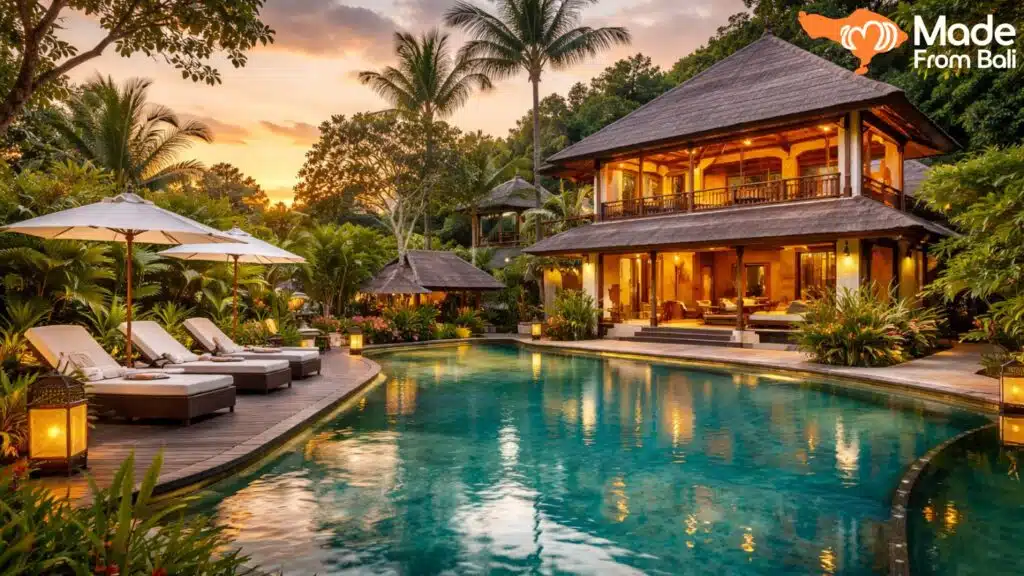
Bali has thousands of villas. That number is not hyperbole; estimates place the island’s private villa inventory somewhere above ten thousand, and the figure grows every year as new properties open across established zones and in corners of the island that international tourism is only beginning to reach. The abundance is part of the appeal and part of the problem.
A list of twenty recommended villas without context is not a guide. It is an overwhelming set of choices that looks helpful on the surface but leaves you no closer to knowing which one belongs to your particular trip. This article is built differently. Before any property is named, you will understand what type of villa experience you are actually looking for, which zone of Bali suits your travel priorities, and which traveler profile each cluster of properties is best matched to.
The 2026 angle matters here too. Several significant properties opened or completed major developments in the past twelve months, and a number of the most interesting villas now available were absent from every guide published in 2024 and early 2025. This guide reflects the current landscape, not the one that existed when most of Bali’s “best of” lists were written.
Why Staying in a Villa Changes How You Experience Bali
The decision to stay in a villa rather than a hotel is not simply a preference for more space or a private pool. It is a decision about what kind of Bali you want to wake up inside each morning. Hotels, even exceptional ones, mediate your experience of the island through their own infrastructure. A villa places you inside Bali’s landscape, neighbourhoods, and daily rhythms in a way that no hotel corridor can replicate.
From a rice field villa in Ubud, your first sound each morning is likely to be a cockerel, the distant percussion of a temple ceremony, or the particular stillness of the jungle at 6am before the world wakes up. From a cliffside villa in Uluwatu, you fall asleep to the sound of the Indian Ocean sixty metres below and open your shutters to a horizon with nothing between you and Antarctica. These are not amenity upgrades. They are entirely different relationships with the place.
The Difference Between a Resort Villa and a Private Rental Villa
The Bali villa market contains two distinct categories that travel guides regularly conflate, and the difference matters before you book anything.
A resort villa is a private accommodation unit within a larger hospitality property. The Bulgari Resort Bali, the Four Seasons at Sayan, Alila Villas Uluwatu: these are hotels that happen to house their guests in individual villa structures rather than a single hotel block. You get private space, your own pool in many cases, and the full service infrastructure of a five-star resort surrounding you. The experience is exceptional but controlled; you are a guest within someone else’s highly designed world.
A private rental villa is a standalone property, typically owned by an individual or managed by a villa rental company, which you rent in its entirety. This is the more intimate and genuinely Balinese model: your own compound, your own staff who are there specifically for your group, your own kitchen, your own schedule. A six-bedroom private villa in Seminyak sleeping twelve people with a dedicated butler and in-house chef is a fundamentally different experience from checking into a resort, and it is also typically far better value per person at larger group sizes.
Both models are represented in this guide. Where the distinction matters for a particular traveler profile, it is noted.
What a Staffed Villa Actually Means in Bali
Staffed villas are one of the most misunderstood aspects of Bali accommodation. The amenity bullet point reads “private staff” and conjures different images depending on where you are from and what you expect. Here is what it actually means in practice.
Most private rental villas in Bali above a certain price point include a villa manager who coordinates your requests and serves as the point of contact for everything from restaurant reservations to temple visit arrangements. A housekeeper maintains the property and makes up rooms daily. Many mid-range and premium villas include a private chef who will prepare breakfast, and for additional arrangements can produce multi-course lunches and dinners using ingredients sourced from the local market that morning.
The relationship with villa staff in Bali is one of the most culturally specific aspects of the stay. Balinese hospitality operates from a place of genuine warmth rather than professional performance, and the staff at most privately managed villas have been with the property for years. Tipping is expected and appreciated; the standard range is 50,000 to 100,000 IDR per day per staff member for a group of four to six people, adjusted upward for exceptional service or a larger group.
The single most consistent piece of feedback from repeat Bali villa guests is this: communicate your preferences clearly on arrival and the experience will exceed your expectations. Leave staff to guess and you will get the default rather than what you actually wanted.
The Six Villa Types You Will Find in Bali
Understanding what type of villa you want before you search for one is the step that most travel guides skip entirely. It is also the step that prevents the most common booking disappointment: arriving at a technically excellent property that is simply wrong for your trip.
Rice Field and Jungle Villas
The defining physical feature of these properties is their relationship with Bali’s agricultural and natural landscape. Rice field villas, concentrated primarily around Ubud, Tegalalang, and the Payangan highlands, open directly onto the island’s most iconic scenery: the terraced green geometry of the Subak irrigation system, a UNESCO-recognised cultural landscape that has shaped this part of Bali for over a thousand years. The light in these locations, particularly in the early morning and late afternoon, is extraordinary, and the silence has a particular quality that urban visitors find genuinely restorative.
Jungle villas occupy the river valleys and forested hillsides of the interior, sometimes at altitude, always with a density of vegetation and sound that creates a complete separation from the coastal tourist infrastructure. These are the most appropriate choice for travelers whose primary goal is recovery, creative work, or genuine immersion in Bali’s natural environment.
Cliffside and Ocean-View Villas
The Bukit Peninsula and Uluwatu area is where Bali’s most dramatic villa architecture sits. Cliffside villas are built into or over the limestone escarpment, with infinity pools, terraces, and bedroom windows positioned to frame the Indian Ocean at maximum visual impact. The experience of waking in one of these properties during a clear morning, when the ocean is flat and the horizon is crisp, is difficult to overstate.
These villas command premium pricing and tend to require longer advance bookings during peak season. The trade-off for the visual drama is a relative remoteness from Bali’s restaurant and nightlife infrastructure, though many of the Uluwatu cliffside villas have developed strong in-house food and beverage programs precisely because guests do not want to leave.
Beachfront and Coastal Villas
True beachfront villas in Bali are rare and expensive. The Seminyak and Petitenget coastline, where most of the established beachfront inventory sits, has very limited remaining development land, meaning existing properties hold their value and their rates accordingly. A genuinely beachfront villa in Seminyak, where you can walk from the garden directly onto the sand, is among the most sought-after accommodation experiences on the island and books months in advance during July, August, and the December holiday period.
Coastal villas, which offer ocean proximity without direct beach access, are more widely available and represent better value for travelers who want the feeling of the coast without the premium attached to the front row.
Compound and Heritage Villas
The Balinese compound model, a collection of individual pavilions (bale) arranged around a central garden and pool, with separate sleeping, living, and bathing structures rather than a single building, is the architectural template from which Bali’s villa industry emerged. Well-executed compound villas feel like small private villages: intimate, layered with detail, and deeply rooted in the island’s spatial culture.
Heritage villas are those that have incorporated antique Javanese and Balinese architectural elements, reclaimed teak structures, traditional stonework, and hand-carved details that took craftspeople months to produce. Staying in one is a distinctly different experience from staying in a contemporary tropical property, and the best examples in Ubud and Seminyak are genuinely irreplaceable as physical objects.
Eco and Sustainably Designed Villas
The most interesting development in the Bali villa market over the past five years has been the emergence of properties that treat sustainability as a design brief rather than a marketing claim. These villas use bamboo construction, reclaimed materials, solar power, greywater recycling, and locally sourced food programs not as add-ons but as foundational decisions. Properties like Theanna Eco Villa in Canggu and Elevate Bali in Munduk represent a category of accommodation that did not meaningfully exist in Bali a decade ago and is now producing some of the most architecturally distinctive stays on the island.
Design-Led Boutique Villas
A growing category of Bali villas has emerged from the intersection of hospitality investment and serious architectural ambition. These are properties where the design is the point: where the brief given to the architect was not “build a comfortable villa” but “make something that has never existed before in this place.” Ulu Cliffhouse, Freebird Villas in Canggu, and several of the 2026 new openings fall into this category. They attract a guest who cares about the built environment as part of the travel experience and who will notice the thought behind a courtyard layout or the choice of a particular volcanic stone for a bathroom floor.
Choosing the Right Zone Before You Book
Bali is not a small island. The drive from Ubud to Uluwatu takes over an hour in good traffic and considerably longer in the afternoon. Choosing a villa in the wrong zone for your planned activities is one of the most consistent sources of travel frustration, and it is entirely avoidable with a small amount of geographic orientation before you book.
Ubud and Payangan: Culture, Silence, and the Jungle Interior
Ubud is Bali’s cultural capital in the fullest sense: the home of its most significant arts institutions, its traditional dance and music, its healing practitioners, its rice field landscape, and its most sophisticated restaurant scene outside the southern coast. The town itself has grown considerably and carries the inevitable texture of mass tourism in its central streets, but the villa landscape surrounding Ubud, extending north into Payangan and west along the Campuhan Ridge, remains extraordinary.
Stay here if: your priorities include culture, nature, quiet, wellness, and cuisine. Ubud is also the natural base for temple visits across central and east Bali, for trekking on volcanic slopes, and for the kind of contemplative travel that the southern beach zones cannot easily provide. It is not the right choice if nightlife, beach access, or the beach club scene are central to your trip.
Seminyak and Petitenget: Proximity, Polish, and the Original Luxury Strip
Seminyak and its northward extension into Petitenget and Kerobokan represent Bali’s most concentrated luxury hospitality corridor. The zone has been the island’s premium address for international visitors for over two decades and shows no signs of yielding that position. The best restaurants, the most established beach clubs, the highest concentration of world-class villas and resort properties, and the most direct access to Bali’s international airport all sit within or adjacent to this zone.
Stay here if: you want maximum access to Bali’s curated hospitality infrastructure, you are on a shorter trip that does not allow for extensive travel between zones, or you are combining Bali with other Indonesian destinations and need airport proximity. The trade-off is density and noise; Seminyak is urban in its intensity by Balinese standards.
Canggu, Berawa, and Umalas: Creative Energy and the Surf Lifestyle
The Canggu zone, spanning the beachside villages of Batu Bolong and Berawa south toward the quieter inland area of Umalas, has become the island’s most energetically creative district. The architecture here is eclectic, the restaurant and cafe scene rivals Seminyak in quality while exceeding it in variety, and the surf culture that has defined this coastline since the 1980s still shapes the rhythm of daily life in ways that prevent the zone from feeling purely commercial.
Stay here if: you are drawn to the creative and social energy of a villa neighbourhood that feels genuinely alive, you surf or want to learn, you are a digital nomad or remote worker who needs cafe infrastructure alongside villa accommodation, or you are traveling with a group that wants variety in its daily choices.
Uluwatu, Bingin, and the Bukit Peninsula: Cliffs, Drama, and Seclusion
The Bukit Peninsula, the limestone plateau that forms Bali’s southern tip, is the island’s most geographically distinctive zone. The cliffs that define its western and southern edges drop straight to the Indian Ocean, producing a coastal scenery that has no equivalent anywhere else in Bali. The surf breaks at the base of those cliffs, Uluwatu, Padang Padang, Bingin, Dreamland, are among the most celebrated in Asia.
Stay here if: visual drama and seclusion are your highest priorities, you are traveling as a couple and the Savaya pool at sunset is on your list, you surf at a serious level and want proximity to world-class breaks, or you simply want a Bali stay that looks and feels unlike anywhere else. Be prepared for longer drives to the northern beach zones and to Ubud.
Jimbaran and Nusa Dua: Calm Waters and Resort Scale
Jimbaran’s bay offers the calmest swimming in Bali’s southern zone, sheltered from the Indian Ocean swell that defines the western coast. The zone combines this beach quality with proximity to the airport, a long-established seafood dining tradition along its shore, and the presence of several of Bali’s most formally excellent resort properties. Nusa Dua, immediately south, is the island’s most controlled and manicured hospitality zone, built around a gated resort corridor that prioritises safety and quiet over character.
Stay here if: you are traveling with young children who need calm swimming water, you value resort infrastructure and formal service standards, or you are combining a Bali stay with an onward flight and need to minimise airport transfer stress.
North Bali: Munduk, Lovina, and the Villas Most Travelers Have Not Found Yet
North Bali is the most underestimated region on the island for villa accommodation. The journey from the airport takes two to three hours along roads that cross the volcanic spine of Bali’s interior, passing through rice field landscapes, clove and coffee plantations, and highland villages that operate almost entirely outside the southern tourist economy. Munduk, the most established villa destination in the north, sits at approximately 850 metres elevation in the hills above Lovina, with a cooler climate, waterfalls, and lake views that make it feel like a different island entirely.
Stay here if: you have been to Bali before and want a version of the island that has not yet been packaged for mass consumption, you are interested in trekking, volcanic landscapes, and traditional village culture, or you are travelling slowly and have time to settle into a destination rather than just pass through it.
East Bali: Sidemen, Amed, and Candidasa for the Off-the-Beaten-Path Stay
East Bali contains some of the most beautiful landscapes on the island and the smallest concentration of international tourism. Sidemen valley, running north from the coast toward the slopes of Gunung Agung (Bali’s sacred volcano and highest peak), has a small collection of exceptional villas set against rice field and mountain scenery that photographs have made famous even as the valley itself remains quiet. Amed, on the east coast, is Bali’s primary diving destination, with black sand beaches and direct access to the USAT Liberty shipwreck at Tulamben, one of Asia’s best wreck dives.
Stay here if: diving, snorkelling, and underwater exploration are central to your trip, you want to be close to Gunung Agung for a sunrise trek, or you are looking for a Bali stay where the ratio of natural landscape to tourism infrastructure is still overwhelmingly in favour of the former.
Which Villa Suits Your Trip Profile
If You Are Traveling as a Couple or on Honeymoon
Prioritise the cliffside villa experience in Uluwatu for maximum visual impact, or a rice field compound villa in Ubud for a more intimate and culturally immersive experience. The key features to look for: a pool position that allows sunset viewing from the water, an outdoor bathing area (ideally a sunken garden tub or open-air shower), a strong in-house food program so you are not required to leave the property every evening, and a property size that feels intimate rather than large-group oriented. Properties to consider: Savaya Bali’s villa tier, Viceroy Bali, Hanging Gardens of Bali, Villa Khajuraho in Bingin, and the Bulgari Ocean Cliff villas.
If You Are Traveling with Family and Young Children
Zone choice here is the most critical decision: Jimbaran bay for calm swimming, Nusa Dua for the gated resort safety infrastructure, or Seminyak for a combination of beach access and proximity to child-appropriate dining. Features to prioritise: shallow pool entry (avoid infinity edge pools where young children are present), a layout that allows adult supervision of the pool area from living and kitchen spaces, proximity to a reliable supermarket (Pepito or Bintang in Seminyak, Circle K in most zones), and a villa manager who can arrange car seats and driver bookings without friction. The Four Seasons Jimbaran Bay villas and AYANA Villas Bali are the two most family-adapted premium options on the island.
If You Are Coming with a Group of Friends
The private rental villa model is at its best for groups of six or more. At this scale, a fully staffed six to eight bedroom villa in Seminyak or Canggu frequently costs less per person per night than a comparable hotel room while delivering a shared living experience that a hotel cannot provide. Features to prioritise: a pool large enough for group use, a covered outdoor dining area for group meals, a villa manager experienced in coordinating group bookings and event nights, and proximity to the beach clubs and restaurant zones where your group will spend time. Budget at least 15% of the villa cost for food, staff tips, and in-villa dining, which for groups is typically better value than eating out every meal.
If You Are a Solo Traveler or Digital Nomad
Solo travelers rarely need a large villa, but a smaller private villa or boutique villa suite in Canggu or Ubud provides working infrastructure that a standard hotel room cannot match. Look for: dedicated desk workspace with reliable WiFi (ask for the Mbps speed, not just confirmation that WiFi exists), proximity to coworking spaces for days when you want human contact without leaving your working rhythm, a neighbourhoodthat operates during the day rather than only coming alive at night, and a lease structure that accommodates monthly or multi-week stays at reduced rates. Canggu and the Penestanan quarter of Ubud are the two most established digital nomad villa zones on the island.
If Wellness and Cultural Immersion Are Your Priority
Bali has developed one of the world’s most sophisticated wellness infrastructure landscapes, and the villas best suited to this travel motivation are those that connect directly to it. In Ubud, this means properties with in-villa yoga pavilions, relationships with local healing practitioners for on-site treatments, proximity to the town’s meditation and Jamu wellness institutions, and access to guided experiences in the rice fields and temples surrounding the valley. Look for villas that offer Wariga wellness consultations (Balinese holistic health assessment), melukat purification ceremonies arranged through the villa concierge, and kitchen programs that extend to Indonesian herbal tonic preparation. Samsara Ubud, Shamballa Moon, and Kayon Resort are the three properties that most completely integrate this layer into the villa experience.
The Best Villas in Ubud and the Jungle Interior
Viceroy Bali
The Viceroy occupies its own river valley in Nagi village, a short drive north of central Ubud, in a setting so theatrically beautiful that “Valley of the Kings” is not a marketing exaggeration but a reasonably accurate description of what you see from the main terrace. Twenty-five private pool villas are arranged across the valley’s hillside, each with views across the forested gorge below. The food and beverage program at Cascades restaurant is genuinely among the best on the island, and the pool and spa infrastructure is resort-grade.
| Best for | Couples, special occasions, guests who want resort-quality service in a private villa format |
| Villa type | Resort villa (valley-facing private pool villas) |
| Standout detail | The infinity pool’s view across the Nagi valley at sunrise is one of the defining Ubud experiences |
| Price range | Premium; USD 600 to 1,200 per night depending on villa category and season |
Four Seasons Resort Bali at Sayan
The Four Seasons Sayan is widely regarded as one of the finest resort experiences in Southeast Asia, and the villa tier here justifies that reputation. The property is built into the Ayung River valley, with the main reception located in an elliptical structure suspended above the rice fields and the villas cascading down toward the river below. The Riverfront Villas, which sit directly above the Ayung, deliver the most complete immersion in Ubud’s landscape available within a formal hospitality context.
| Best for | Travelers who want Five-Star service standards within a rice field and river setting |
| Villa type | Resort villa (hillside and riverfront categories) |
| Standout detail | The Ayung River Spa, accessible from villa level via a jungle path, is among the most experientially considered spa environments in Asia |
| Price range | Luxury; USD 900 to 2,500+ per night for villa categories |
Kayon Resort Ubud
Kayon sits above the Petanu River valley with a design philosophy that takes Ubud’s natural landscape seriously as a building partner rather than a backdrop. The property uses local stone, reclaimed teak, and Balinese craft throughout in a way that feels genuinely rooted rather than decorative. The infinity pool, shared by guests but sized for quiet enjoyment rather than crowd management, is one of the most satisfying in Ubud.
| Best for | Couples and small groups who want cultural authenticity alongside comfort |
| Villa type | Resort villa (jungle and valley-view categories) |
| Standout detail | The breakfast program sources ingredients from the resort’s garden and from local Ubud markets, producing menus that change with the season |
Hanging Gardens of Bali
The Hanging Gardens has one of the most photographed infinity pools in Asia, a double-tiered structure descending the valley wall toward the Ayung River below in a cascade that resembles the rice terraces it was designed to echo. The villas are private, each with its own pool and jungle view, and the degree of seclusion is near-total; the valley location ensures that the only sounds reaching you are natural ones. This is the right choice for travelers who have specifically come to Bali for quiet and who want the island’s natural drama at maximum concentration.
| Best for | Couples, honeymoons, and solo travelers prioritising immersive seclusion |
| Villa type | Resort villa (jungle cliff villas with private pools) |
| Standout detail | The valley-floor spa pavilion, reached by private funicular, is one of the most physically extraordinary spa environments in the world |
Manipura Ubud
Manipura operates at a more intimate scale than the large resort properties, with a small number of villas arranged around rice field views north of Ubud. The property prioritises wellness programming, with in-villa yoga, Jamu consultation, and traditional Balinese healing practices available through a structured daily offering rather than as optional extras. For travelers whose primary reason for visiting Bali is restorative, Manipura is one of the most focused options available.
| Best for | Solo wellness travelers, couples on retreat, anyone for whom the physical and mental reset is the primary travel objective |
| Villa type | Boutique resort villa (rice field-facing, wellness-integrated) |
Samsara Ubud
Samsara positions itself explicitly at the intersection of luxury and wellness and makes a more credible case for that positioning than most properties using the same language. The villa design integrates treatment spaces directly into the accommodation rather than locating the spa as a separate facility. The cultural programming, including guided rice field walks, traditional cooking classes using produce from the property’s own garden, and Wariga wellness consultations, is the most developed of any villa property in the Ubud zone.
| Best for | Wellness-focused travelers, couples integrating cultural immersion, Bali returnees wanting a different kind of experience |
| Villa type | Boutique resort villa (wellness-integrated private villas) |
| Standout detail | The in-villa dining program works with a local Ibu (traditional Balinese cook) for specific menu nights rather than a purely restaurant-trained kitchen team |
Shamballa Moon Ubud
Shamballa Moon occupies a narrow valley position between Ubud and Payangan, with a design that has received international architectural recognition for its integration of bamboo, volcanic stone, and the river landscape below. The property is small, adults-only, and has developed a reputation among Bali’s design-conscious visitor community for producing an experience that is harder to categorise than “luxury resort” and more accurate described as “serious place with a serious design response to a serious landscape.”
| Best for | Design-focused travelers, adults who value architectural intelligence in their accommodation, Bali returnees |
| Villa type | Design-led boutique villa (bamboo and stone construction, valley-facing) |
Akohara (New for 2026)
Akohara opened in late 2025 as one of Ubud’s most anticipated new properties, an adults-only retreat built around a philosophy of deliberate slowness. The architecture draws on the wabi-sabi aesthetic that has influenced Bali’s design community over the past decade, using imperfect natural materials, dark volcanic stone, and open-air structures that dissolve the boundary between interior and the rice field landscape outside. The programming is light by design: no scheduled activities, no curated experiences unless requested, and a kitchen that produces one daily menu reflecting what arrived from the market that morning.
| Best for | Adults seeking genuine disconnection, creative travelers, couples who find conventional resort programming intrusive |
| Villa type | New 2026 adults-only boutique villa (wabi-sabi design, adults-only) |
| Standout detail | Akohara does not have a spa menu in the conventional sense; instead, a single Balinese healer works with guests on a consultation basis, producing treatments specific to each visitor |
Wapa di Ume Sidemen
Sidemen valley, in east Bali’s Karangasem regency, contains some of the most compelling rice field and mountain scenery on the island, set against the slopes of Gunung Agung in a way that creates a constant awareness of the volcano’s presence. Wapa di Ume is the most established quality property in this valley, with a small number of villas and bungalows designed to sit within the agricultural landscape rather than above it. For travelers who want the Ubud rice field experience but without the density of Ubud’s tourism infrastructure, Sidemen and Wapa di Ume represent a meaningful alternative.
| Best for | Bali returnees, travelers interested in east Bali’s temple culture and Gunung Agung trekking, those seeking genuine off-the-beaten-path quality |
| Villa type | Boutique lodge villa (rice field-immersed, east Bali) |
The Best Villas in Seminyak and Petitenget
The Oberoi Bali
The Oberoi Seminyak is the original luxury address on the Bali coast, opened in 1971 and still occupying its beachfront position on Seminyak’s most valuable stretch of sand. The thatched-roof villa structures, arranged around a central garden in the Balinese compound tradition, have been updated while retaining the architectural character that makes the property feel rooted rather than renovated. The Oberoi is the right choice for travelers who want historical prestige alongside genuine beach access in the zone where both are hardest to find.
| Best for | Couples, travelers who value heritage and historical positioning, beach-proximity priority |
| Villa type | Resort villa (beachfront compound villas, Balinese thatched design) |
| Standout detail | The Oberoi’s beachfront position remains among the best in Seminyak; direct sand access from villa-level is increasingly rare in this zone |
Grand Daha Luxury Villas
Grand Daha occupies a quiet lane in Petitenget and represents the private rental villa model at a high standard: a small number of individually designed two to four bedroom villas with private pools, strong staff-to-guest ratios, and a location that puts you within walking distance of Seminyak’s best restaurants and a short scooter ride from the beach. For couples or small groups who want the intimacy of a private villa rather than a resort structure, with Seminyak’s infrastructure close at hand, Grand Daha consistently delivers.
| Best for | Small groups, couples wanting private villa format in central Seminyak |
| Villa type | Private rental villa (2 to 4 bedrooms, Petitenget location) |
Uma Sapna Seminyak
Uma Sapna is a well-regarded boutique property in Seminyak that has developed a specific identity around Balinese design craft: the antique joglo structures from Java that form its main pavilions, the hand-carved stone work, and the reclaimed teak floors tell a material story that generic contemporary villas cannot offer. The food and beverage program is strong for a property of its size, and the team’s knowledge of the local restaurant and cultural scene is one of the better concierge resources in the zone.
| Best for | Travelers who care about architectural and cultural authenticity, design-interested couples and groups |
| Villa type | Boutique resort villa (Balinese compound design with heritage elements) |
KLEO Seminyak (New for 2026)
KLEO opened in 2025 as one of Seminyak’s most deliberately contemporary villa properties, and its arrival signals a generational shift in what the zone’s hospitality market is producing. The design draws on Mediterranean and Southeast Asian coastal architecture simultaneously, without the awkward result that hybridisation often produces, and the rooftop pool and sunset terrace have rapidly become one of the zone’s more photographed spaces. KLEO targets a younger luxury traveler than the Oberoi or Uma Sapna and delivers accordingly: higher energy, better integration with Seminyak’s nightlife infrastructure, and a food and beverage program that runs late.
| Best for | Younger luxury travelers, groups wanting design-forward accommodation with nightlife proximity |
| Villa type | New 2026 design-led boutique villa (contemporary coastal, rooftop pool) |
| Standout detail | KLEO’s booking model allows villa-level and suite-level accommodation within the same property structure, offering flexibility in group size without losing the boutique character |
The Best Villas in Canggu, Berawa, and Umalas
Theanna Eco Villa and Spa
Theanna is the most architecturally interesting eco villa in the Canggu zone and makes a genuinely convincing case that sustainability and design quality can occupy the same property. The bamboo and reclaimed wood structure was designed with solar integration and water recycling as foundational constraints rather than afterthoughts, and the result has a visual and spatial character that feels genuinely unlike the surrounding villa market. The spa program is strong, the pool is designed for actual swimming rather than photography, and the breakfasts are the most food-serious in this category.
| Best for | Sustainability-focused travelers, design-interested guests, wellness-oriented visits to Canggu |
| Villa type | Eco-designed boutique villa (bamboo construction, Canggu) |
| Standout detail | Theanna holds Green Globe certification, one of very few Bali villas to have completed the formal accreditation process rather than using eco language without documentation |
Freebird Villas Canggu
Freebird represents the design-led boutique villa category at its most focused. The property was conceived as an architectural statement about what a contemporary Canggu villa could be: dark volcanic stone, curved plunge pools, an interior design language that references Balinese craft without reproducing it, and a scale small enough that every guest interaction feels personal rather than managed. The location in the quieter Berawa area of Canggu keeps it out of the noise of the main Batu Bolong strip while maintaining easy access to the zone’s best cafes and beach clubs.
| Best for | Design-conscious travelers, couples, and small groups who have moved beyond the standard villa aesthetic |
| Villa type | Design-led boutique villa (volcanic stone construction, Berawa) |
Villa Bersama Batubelig
Villa Bersama is one of Canggu’s best examples of the larger private rental villa model done properly: a six-bedroom compound in the quieter Batubelig area, with a generous pool, a fully staffed kitchen, and a villa manager whose local knowledge extends well beyond standard restaurant recommendations. For groups of eight to twelve who want a base in the Canggu zone with genuine communal living infrastructure, Villa Bersama consistently delivers a quality that the zone’s more visible boutique properties cannot match for larger numbers.
| Best for | Groups of 6 to 12, celebrations and milestone trips, visitors wanting the private rental villa model in Canggu |
| Villa type | Private rental villa (6 bedrooms, staffed, Batubelig area) |
The Best Villas in Uluwatu and the Bukit Peninsula
Bulgari Resort Bali Ocean Cliff Villas
The Bulgari Resort Bali sits at the very top of the island’s luxury hierarchy and has maintained that position since opening in 2006. The Ocean Cliff Villas are the property’s most extraordinary accommodation: private structures cantilevered over the cliff edge at Uluwatu, with private pools that appear to float above the Indian Ocean sixty metres below. The Bulgari’s approach to materials and craft, Italian marble, polished volcanic stone, teak from sustainably managed Indonesian sources, produces interiors that feel as considered as the architecture.
| Best for | Ultra-luxury couples, special occasions, travelers for whom the finest available accommodation is the appropriate choice |
| Villa type | Resort villa (cliffside, cantilevered ocean view) |
| Standout detail | The Bulgari’s cliff-edge restaurant is one of the most physically spectacular dining rooms in Asia; dinner here should be planned alongside any villa booking at this property |
| Price range | Ultra-luxury; USD 2,000 to 5,000+ per night for villa categories |
Alila Villas Uluwatu
Alila Villas Uluwatu opened in 2009 and is still regarded as one of Asia’s most architecturally significant hospitality projects. Designed by WOHA, the Singapore practice responsible for some of the region’s most discussed buildings, the property uses local limestone, open-air structures, and a passive cooling approach that reflects serious engagement with both the Balinese climate and the ethics of building on a sensitive cliff ecosystem. The all-villa format means every guest has a private pool, and the quality of physical environment at Alila is consistently considered one of the best on the island.
| Best for | Architecturally aware travelers, couples, guests who want design pedigree alongside luxury service |
| Villa type | Resort villa (WOHA-designed, limestone and teak, all-villa format) |
| Standout detail | Alila’s Spa Alila at Uluwatu is one of the most programmatically serious wellness facilities in Bali, with a treatment menu that draws on Balinese and Indian Ayurvedic traditions at a depth most resort spas do not achieve |
Jumeirah Bali Private Residences
Jumeirah’s Bali property brings the brand’s Middle Eastern service philosophy to the Uluwatu clifftop in a format that manages, more successfully than most international brand arrivals, to feel specific to its location. The private residence tier is the strongest argument for the property: larger formats, dedicated butler teams, and a concierge program with the resources of the Jumeirah network behind it. For guests who travel frequently and want the consistency of a known brand alongside the visual drama of the Uluwatu setting, this is the most appropriate choice in the zone.
| Best for | Frequent luxury travelers, larger groups or families wanting brand-backed service reliability |
| Villa type | Resort villa (Jumeirah-managed cliff residences) |
Mandarin Oriental Uluwatu Estate (New for 2026)
The Mandarin Oriental Uluwatu Estate completed its final development phase in 2025 and represents the most significant new opening in Bali’s luxury villa market in several years. The Estate category, a large private villa compound with dedicated staff team, private pool, garden, and kitchen, sits within the Mandarin Oriental property but operates with a degree of independence that positions it closer to the private rental villa model than a standard resort. The physical setting on the Bukit cliff is exceptional, and the service infrastructure behind it is the most formally capable of any property in this guide.
| Best for | Multi-generational families, corporate groups, ultra-luxury travelers wanting both private compound living and resort backup |
| Villa type | New 2026 resort villa estate (Mandarin Oriental managed, Uluwatu cliff) |
| Standout detail | The Estate can accommodate up to 14 guests across its villa structures while maintaining the privacy of a standalone compound; a configuration no other Uluwatu property currently matches |
Villa Khajuraho Bingin
Bingin is the most intimate of Uluwatu’s sub-areas, a small community of surfers and long-term visitors built into the cliff above one of Bali’s most beautiful and consistently excellent surf breaks. Villa Khajuraho sits at the cliff’s edge with a small private pool, a design rooted in traditional Balinese stonework, and an absence of hotel infrastructure that makes it feel genuinely removed from the resort tourism economy below it. For couples who want the cliff experience without the resort price tag or scale, Khajuraho is the most authentic version available.
| Best for | Couples, surfers, travelers wanting cliff seclusion without resort pricing |
| Villa type | Private rental villa (cliff-edge, Bingin, intimate scale) |
The Best Villas in Jimbaran and Nusa Dua
Four Seasons Resort Bali at Jimbaran Bay
The Four Seasons Jimbaran occupies a hillside above the bay with 147 thatched private villas cascading down toward the beach. The format is the same as the Sayan property: resort-level service, private villa accommodation, exceptional food and beverage program, and the specific Four Seasons ability to make a very large resort feel intimate. Jimbaran’s bay location means the swimming is calmer here than anywhere else on Bali’s south coast, making this the most family-suitable of the island’s major resort villa properties.
| Best for | Families, couples wanting calm water access, guests who have experienced Four Seasons standards elsewhere and trust the brand |
| Villa type | Resort villa (hillside, bayfront thatched villas) |
| Standout detail | The Four Seasons’ twice-daily tidal pool program, where staff guide children through rock pool exploration below the property, is one of the most genuinely well-considered family activities available at any Bali resort |
AYANA Villas Bali
AYANA Resort and Spa Bali is the island’s largest resort property and its villa tier represents the best argument for the resort villa model within a large hospitality complex. The private pool villas are clustered in a section of the property away from the resort’s main hotel infrastructure, creating a sense of separation that the AYANA manages better than most comparably scaled resorts. The Rock Bar, cantilevered over the ocean on a natural rock formation, is one of Bali’s most celebrated sunset experiences and is accessible from the villas on foot.
| Best for | Guests who want the security and infrastructure of a large resort with private villa accommodation |
| Villa type | Resort villa within large resort complex (private pool cluster) |
| Standout detail | AYANA’s spa is one of the largest in Asia and operates a specific Jamu wellness program using Indonesian traditional herbal medicine that is more developed than most resort spa offerings |
RIMBA by AYANA
RIMBA is AYANA’s design-forward younger sibling, a separate property sharing the resort’s cliff and beach infrastructure while operating with a significantly different aesthetic: darker, more contemporary, less thatched-roof tropicalia and more volcanic stone and glass. The RIMBA villa tier attracts a younger guest than the main AYANA property and benefits from access to all of the AYANA’s facilities while maintaining its own distinct identity.
| Best for | Younger luxury travelers, guests wanting contemporary design within a large resort’s service structure |
| Villa type | Resort villa (contemporary design, shared AYANA infrastructure) |
Villas Worth Knowing in North and East Bali
Elevate Bali Munduk
Elevate is the most architecturally serious villa property in North Bali and has generated a level of international design and travel press attention that its remote location would not have predicted five years ago. The property sits at 850 metres elevation in the Munduk highlands, with views across the twin crater lakes of Tamblingan and Buyan that on clear mornings extend to the north coast and the Java Sea beyond. The accommodation uses bamboo and local timber in a genuinely experimental structural format, and the temperature at this altitude means you will need a blanket at night in a way that no southern Bali property can promise.
| Best for | Design-conscious travelers, those specifically seeking North Bali’s highland landscape, adventurous couples and pairs |
| Villa type | Eco-designed boutique villa (highland bamboo construction, Munduk) |
| Standout detail | The walk to Munduk’s most significant waterfall begins directly from the property; no transport required |
The Griya Villas and Spa Amed
The Griya is the best-established quality villa property on Bali’s east coast, positioned in the Amed area that serves as the island’s primary base for diving and snorkelling. The USAT Liberty shipwreck at Tulamben, one of Asia’s best recreational dives, is twenty minutes north by road. The villas are simple by the standards of the southern luxury market, which is precisely their appeal: clean, comfortable, direct beach access, a garden that leads to the black sand shore, and a staff team that has arranged more dive trips than any property in Bali’s interior.
| Best for | Divers, snorkellers, travelers wanting east Bali’s quiet coast and the Liberty Wreck |
| Villa type | Boutique villa (beachfront, black sand coast, Amed) |
Senetan Villas and Spa Resort Payangan
Senetan occupies a dramatic position in the Payangan river gorge north of Ubud, with villas built into a cliff face above the river below. The property is smaller and less formally structured than the Ubud resort villas, which gives it a character that sits somewhere between a private rental and a boutique resort. For travelers who want the Ubud interior landscape at its most wild and the spa experience without the formality of a large resort, Senetan is one of the most interesting alternatives to the standard Ubud villa recommendations.
| Best for | Ubud travelers wanting a wilder, less resort-formatted version of the jungle interior |
| Villa type | Boutique cliff villa (river gorge, Payangan) |
How to Book a Villa in Bali Without the Stress
Direct Booking vs Villa Agency vs Airbnb
The three primary channels for booking a Bali villa each have distinct advantages and risks, and the best choice depends on your budget, your tolerance for uncertainty, and how much help you want during the booking process.
Direct booking, whether through the villa’s own website or via WhatsApp with the villa manager, typically produces the best rate and the most direct relationship with the people who will be hosting you. The risk is that smaller private villas may not have professional-grade contracts and you are dependent on the owner’s responsiveness if problems arise. Direct booking is most appropriate for established boutique properties with a verifiable online presence and positive review history.
Villa rental agencies, of which there are several operating across Bali’s major zones, charge a service fee but provide contract protection, professional photography verification, and a point of escalation if the villa does not match its listing. For first-time Bali villa visitors or for bookings at high budget levels where the financial exposure is significant, using a reputable agency is the more prudent approach. Established Bali villa agencies include Elite Havens, Bali Private Villas, and Prestige Villas.
Airbnb works for Bali villa bookings and provides the platform’s standard guest protection framework, but the search algorithm tends to surface properties by review volume and pricing competitiveness rather than quality, meaning the best private villas in Bali are frequently not on Airbnb at all. Use Airbnb for properties in the middle market; for premium and ultra-luxury villas, the agency and direct booking routes will give you access to inventory that does not appear on the platform.
What to Check Before You Confirm a Booking
Before paying any deposit, confirm the following in writing: the exact number and configuration of bedrooms, the pool dimensions and type (infinity edge pools require extra caution if traveling with young children), whether the listed minimum spend or nightly rate is inclusive of service charge and government tax (pajak) or exclusive of these (Bali tax and service typically adds 15 to 21% to base rates), the full list of included staff and their hours, the WiFi speed in Mbps, the parking and vehicle access situation, and the villa’s policy on external guests visiting (some villas have strict no-visitor policies that will conflict with groups planning social evenings).
Minimum Stay, Cancellation Terms, and What to Ask Before Paying
Most private rental villas in Bali operate a minimum three to seven night stay, with longer minimums during peak season (July, August, and December). Confirm the minimum stay requirement before investing time in a property that cannot accommodate your dates.
Cancellation policies in the Bali villa market are less standardised than hotel platforms. Many private rental villas apply a tiered forfeiture schedule: 30% deposit non-refundable upon booking, full payment non-refundable within 30 days of arrival. For high-value bookings, consider travel insurance that specifically covers villa accommodation cancellation.
The most important question to ask before paying: whether the photography on the listing was taken within the past two years. Bali’s villa landscape evolves quickly and properties that looked excellent in 2021 photography may have changed ownership, management, or physical condition since. Ask for recent photographs and, for premium bookings, for a video call walkthrough of the property.
Getting to Your Villa from the Airport
Ngurah Rai International Airport in Denpasar is the arrival point for the vast majority of international visitors to Bali. The ground transport situation from the airport is the single most consistently confusing logistics challenge for first-time visitors.
Official metered taxis from the airport operate from a dedicated rank and are the most reliable option for solo travelers and couples with manageable luggage. The rate to Seminyak is approximately 150,000 to 180,000 IDR; to Canggu, 200,000 to 250,000 IDR; to Ubud, 350,000 to 450,000 IDR depending on traffic; to Uluwatu, 180,000 to 220,000 IDR.
For groups, or for villa arrivals where a specific vehicle is needed, arrange a private driver pickup through your villa in advance. Most villa managers can organise airport pickup with a named driver holding a sign at arrivals; the cost is slightly higher than the metered taxi but the experience is significantly smoother, and the driver’s familiarity with your villa’s specific location will prevent the navigation confusion that affects visitors relying on rideshare apps for their first arrival.
Grab and Gojek (Indonesia’s primary rideshare platforms) operate from outside the airport’s arrival terminal building but cannot pick up from inside the designated taxi zone. They are useful for subsequent journeys during your stay but not recommended for first-arrival transport with heavy luggage.
What to Expect When You Arrive at a Staffed Villa
Your First Evening and How It Sets the Tone
The first evening at a Balinese staffed villa is the most important interaction you will have with your accommodation, and it deserves more attention than most guests give it. This is when the villa manager will brief you on the property, introduce the staff team, and ask about your preferences for the following day. Use this conversation to communicate everything that matters to you: your preferred breakfast time and what you want to eat, whether you want the housekeeping team to work around your schedule or to a fixed time, whether you will be using the villa for group dinners and what those numbers look like, and any specific experiences you want to arrange during your stay.
A villa manager who has heard nothing specific from you will default to a polite, minimal service model that delivers competently but without the kind of personalisation that makes a Bali villa stay genuinely memorable. A villa manager who knows on the first evening that you want your breakfast served poolside at 8am, that you want to arrange a cooking class on day two, and that you want to visit a local market on day three will produce a stay that feels orchestrated rather than accidental.
Working with Your Villa Staff
Bali’s villa staff culture operates within a specific set of cultural norms that are worth understanding before you arrive. Directness is appreciated and will never be taken as rudeness; a clear request is much easier to act on than a vague hint. Balinese staff are unlikely to volunteer that something is unavailable or that a request is difficult; instead they will attempt it and occasionally fail silently. If something matters to you, follow up explicitly rather than assuming silence means confirmation.
Tipping is the most important practical aspect of the staff relationship. In a staffed villa of two to three staff members, a daily tip of 100,000 to 150,000 IDR per person per day (distributed between staff at the end of the stay, or daily if you prefer) is the standard that reflects genuine appreciation for good service. For larger staff teams or for stays where specific staff members have gone significantly beyond their role, tip accordingly and specifically rather than distributing equally.
One cultural note that most guides omit: Balinese staff at private villas observe their own Hindu religious obligations, and you will likely be aware of temple ceremonies in the villa’s neighbourhood during your stay. If a staff member needs a few hours for a significant ceremony, this is normal and appropriate; your villa manager will ensure coverage and will never leave the property unstaffed without prior communication.
How the Right Villa Connects You to Bali Beyond the Pool
The most consistent observation made by experienced Bali villa guests is that the physical quality of the villa is only part of what makes the stay significant. The other part is how the villa connects you to the island outside its walls.
In Ubud, the best villa concierges function as personal guides to a cultural landscape that is both vast and genuinely deep. They know which temples hold their most important ceremonies during your visit period. They know the Ibu Oka or the local warung that locals eat at rather than tourists. They know the rice field walking route that begins before dawn and returns you to the villa just as your breakfast is being laid. These are not services listed in a brochure. They are the product of a staff team that is genuinely rooted in its place.
In the beach zones, the connection looks different but is equally valuable. A villa in Canggu whose manager knows the Surf Goddess school, the best time to be at Batu Bolong beach for uncrowded surfing, the mechanic who will fix your scooter without the tourist markup, and the family-run warung on the back road to Berawa where the nasi campur is better than anything on the main strip: this knowledge is the invisible amenity that no room rate captures.
Bali has been welcoming international visitors for over a century and has developed a finely tuned instinct for what different kinds of travelers need from it. A staffed villa is the format in which the island’s hospitality is most directly and personally expressed. The pool is where you spend your afternoons. The relationship with your villa team is what you will actually remember.
Choose your zone carefully. Choose your villa type based on what you came to feel, not on what photographs well. And when you arrive, communicate clearly, tip generously, and give the island enough time to show you what it does to people who pay attention.