


Picking the wrong base in Bali does not just mean a slightly disappointing hotel. It means waking up every morning in a place that does not match what you actually came here for. Spend a week in Canggu when you really wanted culture and quiet, and you will feel restless and overstimulated. Spend five days in Ubud when your heart was set on beach sunsets and nightlife, and you will feel landlocked and a little bored by day three.
Both areas are genuinely wonderful. The problem is they are wonderful in completely different ways, and most articles about this comparison do not go far enough to help you tell the difference at a practical level. They describe the places. They do not help you decide.
This guide does things differently. It is built around how real travelers actually think through this choice: what kind of trip they want, how long they have, what they are willing to trade off, and what logistics they need to plan around. By the end, you should know not just which area fits you better, but how to structure your time around it.
They Are Only an Hour Apart, but They Feel Like Different Worlds
The distance between central Canggu and central Ubud is roughly 30 to 35 kilometers. On a map, that looks like nothing. In practice, you are crossing into a completely different atmosphere, and for many travelers, the shift feels surprisingly dramatic.
What Canggu Actually Feels Like Day to Day
Canggu is coastal, busy, and social in a way that feels effortless if that is your style and slightly exhausting if it is not. The area runs along Bali’s southwestern coast and is defined by a mix of black sand beaches, surf breaks, cafe-lined streets, and a visible international crowd that skews young and energetic.
A typical day here starts late. Most people are not up before 8 or 9am, and the streets fill up gradually. By late morning, the popular cafes on Batu Bolong and Jalan Nelayan are buzzing. Afternoons drift toward the beach. Sunset at Echo Beach or around Batu Bolong beach draws a crowd every single evening, and that energy carries into the night at bars and beach clubs. Canggu does not really slow down before midnight on weekends.
The rhythm is spontaneous. Plans form over coffee. People move between surfing, working from a co-working space, eating well, and going out without much of a schedule. If that sounds like your kind of trip, Canggu will feel immediately comfortable.
What Ubud Actually Feels Like Day to Day
Ubud works on an entirely different clock. The area sits roughly 600 meters above sea level in Bali’s interior, surrounded by rice terraces, jungle, and river valleys. The air is cooler, noticeably so in the mornings and after rain. The whole place moves slower, and that is by design.
A typical Ubud morning starts early and rewards it. The Campuhan Ridge Walk before 7am, when the mist is still settling over the jungle below, is something that no beach club experience in Canggu can replicate. Temples open quietly. Traditional markets run in the early hours. Yoga classes start at sunrise. By midday the streets around Monkey Forest Road are busier with day-trippers, but the overall energy never reaches the intensity of Canggu.
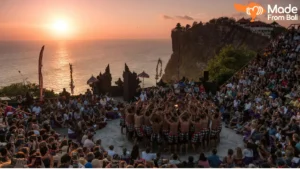
Evenings in Ubud center around food, traditional dance performances, and early bedtimes. The kecak fire dance at Uluwatu (a common day trip from Ubud) is one of the most memorable experiences available in Bali, but Ubud itself does not offer much beyond dinner and a quiet walk after dark. The town switches off early, and that is part of its appeal.
Why the Difference Matters More Than Most People Expect
The gap between these two places is not just a vibe preference. It changes the structure of your entire trip. In Canggu, your days bend around surf sessions, beach timing, and social energy. In Ubud, your days bend around early starts, temple and nature timing, and intentional quiet.
Choosing the area that matches how you actually travel, not the area that looks best in photos, is what makes a Bali trip feel right rather than slightly off the whole time.
The Part That Usually Decides It: What Kind of Traveler Are You?
Before comparing activities and budgets in detail, it helps to match your traveler profile to the right area directly. The honest answer is that most people instinctively know which fits them better; they just need confirmation.
First-Time Visitors to Bali
First-timers are in the most interesting position. They often want both: beach and culture, social energy and spiritual depth, surfing and rice terraces. The instinct is to split the stay, and for most trips of seven days or more, that instinct is correct.
That said, if you only have five or six days and genuinely cannot decide, Ubud is the slightly safer starting choice. It is harder to appreciate Ubud’s slower pace after you have already been running on Canggu energy. The transition from Ubud to Canggu is easier emotionally and logistically than the reverse. You land, settle in, adjust to Bali time, absorb the culture, and then move toward the coast.
If beach access is a non-negotiable and the idea of going days without the ocean sounds frustrating, start in Canggu and plan Ubud as a day trip or a two-night extension at the end.
Couples and Honeymoon Travelers
Bali is one of the world’s most popular honeymoon destinations, and both Canggu and Ubud cater to couples. The experience, though, is quite different.
Ubud is the more classically romantic option. Private pool villas overlooking rice terraces, couples’ spa treatments at places like Komaneka or COMO Shambhala, candlelit dinners above river valleys, and a quiet pace that makes space for each other. Ubud has a concentration of genuinely luxurious, intimate resorts that Canggu does not quite match. The Mandapa by the Ritz-Carlton and the Four Seasons Sayan are in Ubud for a reason.
Canggu suits couples who define romance as shared energy rather than quiet escape. Watching a sunset together at a beach club, taking a surf lesson, exploring new restaurants every night, going dancing. It is a more active, social version of a romantic trip and works beautifully for the right couple.
Solo Travelers
Canggu is one of the easiest places in Southeast Asia to meet people as a solo traveler. The co-working spaces, social hostels, beach clubs, and regular yoga or surf group sessions create a constant flow of social opportunity. If you are traveling alone and do not want to feel alone, Canggu solves that almost immediately.
Ubud is a different kind of solo experience. It is deeply comfortable for solo travelers who are comfortable with their own company, interested in self-reflection or wellness, and enjoy moving at their own pace through temples, markets, and rice terraces. Yoga retreats in Ubud often attract solo travelers specifically for this reason. It is just less social by nature, and worth knowing going in.
Surfers and Beach-First Travelers
This one is straightforward. Canggu is where you want to be. Echo Beach and Batu Bolong both have reliable surf breaks ranging from beginner to intermediate, and surf schools operate along the coast daily. The beach infrastructure, from board rentals to surf camps to beach clubs for after-session recovery, is all in place.
Ubud has no beach. The nearest beach from central Ubud is roughly an hour’s drive south toward Sanur or further toward Nusa Dua. Some travelers make it work as a day trip, but choosing Ubud as your base when surfing is your main priority adds friction to every beach day that adds up quickly.
Wellness and Retreat Seekers
Ubud is arguably the wellness capital of Bali, and many people would argue it is one of the most serious wellness destinations in all of Southeast Asia. Yoga studios, traditional Balinese healers, meditation centers, raw food cafes, sound healing sessions, and holistic retreat programs are woven into the fabric of the place. The Yoga Barn alone offers dozens of classes a week across multiple disciplines.
Canggu has wellness too. The Practice, Serenity, and Samadhi Bali are well-regarded studios, and the town has no shortage of health-conscious cafes. But the overall environment in Canggu does not support a deeply inward, restorative retreat in the same way. There are too many distractions, and the social energy works against stillness.
If wellness is the main reason you are coming to Bali, Ubud is the right call.
Families with Young Children
Families often find Canggu more practical day to day. The beaches are accessible, there are more modern amenities, family-friendly restaurants are easy to find, and the area is closer to the airport in southern Bali which means less time in a car with tired children. Canggu is also close to Seminyak and Kuta, which have larger supermarkets, medical facilities, and shopping options that families might need.
Ubud is a beautiful family experience for slightly older children who can engage with cultural sites, nature walks, and the Monkey Forest. For younger children or babies, the early mornings, narrower roads, and generally more physically demanding activities can make Ubud a harder base to manage. It is absolutely doable, but Canggu gives families more flexibility without as much logistics overhead.
Activities Worth Planning Around in Each Area
The activity gap between Canggu and Ubud is significant, and choosing an area based on what you want to actually do each day leads to fewer compromises than choosing based on vibe alone.
What Canggu Does Well for Active and Social Days
Canggu’s activity list is built around the coast and the cafe culture surrounding it. Surfing is the anchor activity, and even complete beginners can take a lesson and be on a board within a few hours of arriving. Beyond surfing, the area offers:
- Beach club days at FINNS Beach Club, La Brisa, or Pretty Poison, each with its own crowd and energy
- Yoga sessions with ocean views at studios like The Practice or Serenity
- Sunset walks or bike rides along Batu Bolong beach and the surrounding rice paddy paths
- Cooking classes, though Ubud does this better
- Day trips to Tanah Lot Temple, which is only about 20 minutes from central Canggu and is one of Bali’s most visually striking sunset temples
The social scene in Canggu is also its own kind of activity. The coffee shop culture is genuine; places like Crate Cafe and Betelnut are as much a part of the experience as any formal attraction.
Where Ubud Shines for Cultural and Nature Experiences
Ubud’s activity list is broader and more varied than many travelers expect. The area is often reduced to rice terraces and the Monkey Forest in travel shorthand, but there is considerably more:
- The Sacred Monkey Forest Sanctuary is worth a visit, though it is best experienced early morning before tour groups arrive
- Tegallalang Rice Terraces offer the classic Bali photography moment, about 20 minutes north of central Ubud
- The Campuhan Ridge Walk through jungle and rice fields costs nothing and is one of the most peaceful hours available in Bali
- Traditional kecak fire dance performances at Pura Dalem Ubud run most evenings and are a genuinely moving cultural experience
- Tirta Empul Temple, Bali’s most sacred water purification site, is about 30 minutes from Ubud center
- The Ayung River white water rafting is a half-day adventure popular with active travelers
- Cooking classes using local market produce are widely available and are among the most highly rated experiences in Ubud
Day Trips You Can Realistically Do from Each Base
Both areas work as bases for day trips, but they offer access to different parts of the island.
From Canggu, realistic day trips include:
- Tanah Lot Temple (20 to 30 minutes)
- Seminyak and Kuta for shopping and beach variety (15 to 25 minutes)
- Uluwatu Temple and Kecak dance at sunset (45 to 60 minutes)
- Ubud itself as a full-day cultural excursion (about 1 to 1.5 hours each way)
From Ubud, realistic day trips include:
- Tegallalang and northern Bali waterfalls like Gitgit or Sekumpul (60 to 90 minutes)
- Tirta Empul and surrounding temples
- Mount Batur sunrise trek (2 to 2.5 hours from central Ubud, best done with an overnight or very early departure)
- Nungnung Waterfall, one of Bali’s most powerful, accessible in about 45 minutes
- Besakih Temple, the largest in Bali, sitting on the slopes of Mount Agung (about 1.5 hours)
Ubud generally gives you better access to Bali’s natural and cultural interior. Canggu gives you better access to southern Bali’s beach and coastal circuits.
The Budget Gap Between Canggu and Ubud Is Wider Than It Looks
Both areas span a wide price range, from budget to genuinely luxurious. But the average baseline in Canggu is noticeably higher than in Ubud, and that gap adds up over a week.
What Accommodation Actually Costs in Each Area
| Accommodation Type | Canggu (approx. per night) | Ubud (approx. per night) |
|---|---|---|
| Budget hostel or guesthouse | USD 15 to 30 | USD 12 to 25 |
| Mid-range hotel or small villa | USD 55 to 100 | USD 35 to 75 |
| Private pool villa | USD 120 to 250+ | USD 80 to 200+ |
| Luxury resort | USD 250 to 500+ | USD 200 to 600+ |
Canggu’s popularity, particularly among long-term visitors and digital nomads, has pushed prices upward in recent years. Trendy neighborhoods around Batu Bolong and Berawa now command premiums that would have seemed unusual five years ago. Budget travelers can still find affordable options, but they will be further from the main areas or in simpler rooms.
Ubud offers better value across most categories. A mid-range villa in Ubud with a private pool and rice terrace views often costs less than a comparable room in central Canggu. The luxury end of Ubud reaches very high, but the floor is lower, which makes Ubud genuinely more accessible for travelers watching their budget.
Daily Spending: Food, Transport, and Activities
Food costs follow a similar pattern. Ubud has a thriving warung culture with excellent local Indonesian food available for well under USD 5 a meal. Canggu has local food too, but the trendy cafe scene drives expectations upward, and it is easy to spend USD 15 to 25 per person for brunch without thinking much about it.
A rough daily budget comparison for a comfortable but not extravagant traveler:
- In Canggu: USD 60 to 100 per day for accommodation, three meals, local transport, and one activity
- In Ubud: USD 40 to 70 per day for accommodation, three meals, local transport, and one activity
Transportation costs are similar between the two areas. Grab and GoJek are available in both, with short trips costing IDR 15,000 to 50,000. Renting a scooter costs roughly IDR 60,000 to 80,000 per day in either location. Hiring a private driver for a full day of temple or nature touring runs between IDR 450,000 and 700,000 depending on the itinerary.
Canggu Has Traffic Problems That Can Genuinely Affect Your Plans
Traffic in Bali is something most first-time visitors dramatically underestimate, and nowhere is this more true than in and around Canggu. This is not a minor inconvenience. On a bad day, it is a real constraint on what you can actually do.
How Traffic Between the Two Areas Actually Works
The route between Canggu and Ubud passes through a series of smaller towns, rice paddies, and winding local roads. The road itself is not complicated, but the volume of vehicles using it has grown significantly as both areas have become more popular.
Under good conditions, the drive from central Canggu to central Ubud takes about 1 to 1.5 hours. During peak periods, which include school hours, late morning, and any holiday or ceremony day, that same drive can stretch to 2 or even 2.5 hours. The worst congestion tends to build up at the entry and exit points of each town, not along the connecting roads.
Ubud itself has its own traffic issue. Narrow village roads were designed for a fraction of the tourist volume they now carry. Tour buses, delivery trucks, motorbikes, and private cars all compress into lanes that barely fit them. During the day, certain stretches near the central market and Monkey Forest Road move very slowly.
The Best Time to Travel Between Canggu and Ubud
Timing your transfer correctly makes a meaningful difference. Based on local experience and traffic patterns:
- Leaving either area before 8:30am gives you the best chance of a smooth journey
- Departing after 6pm also works reasonably well as tourist activity drops
- Avoid leaving between 9am and 2pm if possible; this is consistently the heaviest period
- Weekends are generally worse than weekdays
- Ceremony days and national holidays create unpredictable congestion at various points along the route
If you are moving your luggage from one area to the other, factor in extra time and avoid scheduling anything important for the hour after you plan to arrive.
What to Expect from the Transfer and Whether to Stop Along the Way
The journey between Canggu and Ubud does not have to be a dead hour in a car. Several worthwhile stops sit naturally along or near the route:
- Tegallalang Rice Terraces are roughly 20 minutes north of Ubud center and work well as a stop if you are traveling Canggu to Ubud in the morning
- Pura Taman Saraswati in central Ubud is worth a few minutes as you settle in
- The Ubud Traditional Art Market is a good first stop after arrival to get oriented and pick up small souvenirs
A private car and driver for this transfer costs between IDR 300,000 and 450,000 (roughly USD 18 to 28) depending on the pickup and destination points and how much luggage you have. Shared shuttle vans are available for less but run on fixed schedules and pick up from set points, which adds inconvenience if you are staying in a less central location.
Does It Make Sense to Visit Both?
For many travelers, the most satisfying Bali trip is not choosing between Canggu and Ubud. It is visiting both. The real question is whether your trip length, budget, and energy support a split stay without it feeling rushed.
When a Split Stay Works Well
A split stay makes sense when you have at least seven days in Bali and are comfortable with the logistics of moving between areas once during your trip. If you have less than five days, splitting your time usually leaves you feeling like you did not fully experience either place. Short trips are better served by picking one area and exploring it well, including a day trip to the other.
The split stay works best when you treat each area as its own experience rather than trying to shuttle back and forth. Moving once, settling in, and exploring from a stable base is far more enjoyable than trying to cover both on day trips from a single location.
How Many Days to Allocate to Each Area
| Total Trip Length | Recommended Split |
|---|---|
| 4 to 5 days | Choose one area; add a day trip to the other |
| 6 to 7 days | 3 to 4 nights in one area, 2 to 3 nights in the other |
| 8 to 10 days | 4 to 5 nights in each area comfortably |
| 11 days or more | Full immersion in both; add day trips to outer Bali |
These are starting points, not rules. If Ubud is the main reason you came to Bali and Canggu is a secondary interest, weight your nights accordingly.
Which Area to Start in and Which to End With
The most commonly recommended sequence for first-time visitors is Ubud first, then Canggu. This works well for several reasons:
Ubud helps you slow down and adjust to Bali after the energy of arrival. The pace encourages early mornings, good food, and unhurried exploration, which is ideal for the beginning of a trip when you are still finding your rhythm.
Moving to Canggu toward the end brings the energy up. Sunset beach sessions, dinner at a good restaurant, a final night out before flying home, these things feel like a natural ending. Canggu also sits much closer to Ngurah Rai International Airport, which makes a departure-day checkout significantly easier.
If you are arriving late or flying out early, Canggu’s proximity to the airport saves real time and stress. From central Canggu to the airport is roughly 30 to 40 minutes without traffic. From Ubud, you are looking at 1.5 to 2 hours.
How Rainy Season Changes the Experience in Each Area
Bali’s rainy season runs from November through March, with the heaviest rainfall typically falling in December and January. Most general travel advice treats the rainy season as a uniform condition across the island. In practice, the wet season affects Canggu and Ubud quite differently, and it matters for planning.
Canggu in the Wet Season
Canggu’s appeal is closely tied to outdoor living. Beaches, beach clubs, outdoor cafe terraces, sunrise surf sessions: all of these depend significantly on good weather. During the rainy season, rain often arrives in the late afternoon and can last for several hours. Beach days get interrupted. Surf conditions become less predictable. The outdoor social energy that defines Canggu at its best is noticeably dimmed.
That said, rain in Canggu rarely lasts all day. Mornings are often clear and warm, and the town remains functional and enjoyable. Prices drop, crowds thin out, and finding a good villa is far easier. If your Canggu goals center on cafes, coworking, and some beach time rather than full beach days, the wet season is workable.
Ubud in the Wet Season
Ubud actually transforms beautifully during the rainy season in a way that Canggu does not. The rain feeds the rice terraces and jungle, turning the landscape an almost impossibly vivid green. Waterfalls run fuller and more dramatically. The mist over the river valleys in the early morning becomes theatrical.
Rain in Ubud also tends to follow a pattern: heavy showers often arrive in the late afternoon or early evening, leaving mornings and middays clear for temple visits, nature walks, and cultural activities. If you plan your days around this rhythm and keep your evenings free anyway, the wet season in Ubud is surprisingly pleasant.
Prices in Ubud drop meaningfully during the wet season, and popular sites like Tegallalang and the Campuhan Ridge Walk feel far less crowded. For travelers who want the real Ubud experience without fighting through tour groups, November and early December offer a compelling window.
When to Visit for the Best Balance of Weather and Crowds
| Period | Condition | Recommendation |
|---|---|---|
| April to June | Dry season beginning, lower crowds than peak | Excellent for both areas |
| July to August | Peak season, dry and busy | Great weather, book accommodation early |
| September to October | Shoulder season, still mostly dry | One of the best times to visit; fewer crowds |
| November to March | Wet season | Ubud holds up better; Canggu is more weather-dependent |
| December to January | Heaviest rain and peak holiday pricing | Busy despite rain; book well ahead |
Some Things Competitors Never Mention but Actually Matter
Most comparison articles treat Canggu and Ubud as if each is a single, uniform place. In practice, where you stay within each area changes the trip considerably, and a few honest realities about both destinations tend to get smoothed over in travel content.
Canggu Is Not One Uniform Place
Canggu covers a larger area than most visitors realize, and the different neighborhoods feel meaningfully different from each other.
Batu Bolong is the social center. This is where the highest concentration of cafes, surf shops, yoga studios, and restaurants sit. Staying here puts you in the middle of everything, which is great if you want that and tiring if you do not.
Berawa is slightly quieter and more upscale, home to FINNS Beach Club and a growing number of higher-end villas. It attracts a slightly older crowd and has a more settled, residential feel despite still being part of the Canggu area.
Echo Beach sits further north and has a noticeably calmer personality. The surf is stronger here, the crowds are smaller, and the beach club scene is less intense. Travelers who want the Canggu coastal experience without being in the middle of it often end up preferring Echo Beach.
Choosing your neighborhood within Canggu based on your priorities, not just based on what is cheapest or closest to a reference point, makes a real difference.
Ubud’s Central Area and Quieter Outskirts Feel Very Different
Central Ubud, particularly along Monkey Forest Road and Jalan Raya Ubud, is genuinely crowded during peak hours. Souvenir shops line the streets, tour groups move in clusters, and the commercial layer can feel overwhelming if you arrived expecting a quiet Balinese village.
That same central Ubud at 6am is a different place entirely. Empty lanes, offerings being placed at temple gates, the sound of roosters and distant gamelan. Time matters here more than location.
The outskirts of Ubud, areas like Penestanan, Sayan, and Kedewatan, are quieter and often more beautiful. Many of Ubud’s best resorts are deliberately set away from the center, positioned above river gorges or beside rice terraces where the commercial energy does not reach. If your goal in Ubud is genuine peace and immersion, looking at accommodation outside the central zone is worth the extra five minutes of travel.
Honest Downsides That Are Worth Knowing Before You Book
Every destination has realities that brochures do not mention. For both areas, here is what honest travelers should know before committing:
Canggu downsides worth knowing:
- Traffic into and out of Canggu is consistently the worst in the area; what looks like a short drive can take three times as long during busy periods
- The area has changed significantly in recent years and the original surf-village character has largely been replaced by a more commercial, expat-focused atmosphere
- Prices have risen faster here than almost anywhere else in Bali; budget travelers will find options but need to look harder
- The beaches are black sand, which is beautiful but also means they absorb heat and are darker than many visitors picture
Ubud downsides worth knowing:
- There is no beach; reaching any beach from Ubud requires a full commitment to a day trip
- Nightlife is minimal; after dinner, the town essentially closes
- The central area can feel overcrowded with tour groups between 10am and 4pm, which is exactly the time most visitors are out exploring
- Some sellers in the central market can be aggressive, which is surprising for first-time visitors expecting a calm cultural experience
Being clear-eyed about these things helps you arrive with realistic expectations and actually enjoy the place for what it is rather than being disappointed by what it is not.
Making the Choice That Actually Fits Your Trip
Choosing between Canggu and Ubud ultimately comes down to one honest question: what do you most want to feel during your time in Bali?
If the answer is energized, social, beach-connected, and spontaneous, Canggu is your area. If the answer is grounded, culturally rich, naturally immersed, and quietly restored, Ubud is the one. If the honest answer is both, and you have the time, you do not have to choose.
A well-planned split stay with Ubud first and Canggu last, moving between them on a weekday morning before 9am, gives you the full range of what makes Bali worth the trip. You get the early morning rice terraces and the kecak fire dance. You also get the sunset at the beach and a final dinner somewhere you felt at home.
The practical details in this guide, the costs, the traffic timing, the traveler type matching, the sub-area nuance, and the seasonal considerations, are meant to remove the uncertainty that makes this choice feel harder than it needs to be. Both areas are ready to give you a great Bali experience. The only variable is whether the area you pick matches who you actually are as a traveler.
If you would like help building a Bali itinerary around your specific travel style, Made From Bali Tour and Travel offers local, experience-based trip planning and guided tours across both Canggu, Ubud, and the wider island. Planning is easier when you have someone on the ground.