

There is a version of a Bali tour that feels like standing in a queue with thirty strangers at a temple you were not that interested in, watching someone wave a flag at the front. There is also a version that feels like having an entire side of the island to yourself, moving at your own pace, eating where the locals eat, and leaving a site when you feel ready rather than when the schedule says so. Both are technically “Bali tours.” The difference between them has almost nothing to do with which destinations are on the itinerary.
Most travelers make the mistake of searching for the best places to visit in Bali and then choosing a tour based on which one ticks the most boxes. The format of the tour, how it is structured, who leads it, and whether it was built around your interests or around commission stops, shapes the entire experience far more than the destination list does. A mediocre tour of Ubud will leave you underwhelmed. A well-designed tour of somewhere you have never heard of can be one of the best days of your trip.
This guide walks you through everything you need to make a genuinely informed decision: what each tour type feels like from the inside, which format suits which kind of traveler, what honest pricing looks like, how to vet a provider before you commit, and what red flags to watch for. By the end, you will not just know what tours exist in Bali. You will know which one is right for you.
Why the Type of Tour You Choose Matters More Than the Places You Visit
Most travel content focuses heavily on destinations. Ubud, Tirta Empul, Tegallalang, Tanah Lot. These names appear on virtually every Bali tour list, and for good reason. They are remarkable places. But the same site can produce completely different experiences depending on how you arrive, who you are with, how much time you spend there, and whether someone explains the significance of what you are looking at. The tour format is the container that determines all of that.
The Difference Between Seeing Bali and Actually Experiencing It
Seeing a temple means standing near it, taking a photograph, and moving on. Experiencing one means arriving when the light is right, having enough time to walk through it properly, understanding what the offerings at the entrance represent, and leaving with something that genuinely shifts how you think about Balinese life. The first outcome is what happens when tour logistics take priority over experience design. The second is what happens when the format is built around the traveler rather than around efficiency.
This distinction sounds obvious but it is consistently underestimated when people book. The destination draws them in. The format determines what they actually get.
How Tour Format Shapes the Entire Day
Tour format affects nearly every practical element of how a day unfolds. It determines what time you leave, how many people you share a vehicle with, whether you can linger at a site or must leave at a fixed time, where you eat lunch and whether that restaurant pays the guide a commission, and how much of the day involves waiting for others. These are not minor details. They are the texture of the experience.
A traveler who books a group tour expecting flexibility will feel frustrated. A traveler who books a private tour expecting it to work like a group tour and then does not use the flexibility will feel like they overpaid. Understanding what each format delivers in practice is what allows you to match it to what you actually want.
Every Type of Bali Tour Explained
Bali’s tour market is large and varied, which is both its strength and the source of most traveler confusion. Knowing the category names is not enough. What matters is understanding what each format actually feels like from the inside and who each one genuinely serves.
Private Day Tours and Why Most Experienced Travelers Prefer Them
A private day tour means the vehicle, the driver or guide, and the itinerary are entirely yours. Nobody else is in the car. No fixed departure point. No standardized route that twenty other groups are following that same day. You leave from your accommodation, and the day is structured around your interests and pace.
The practical implication of this is significant. If you arrive at a temple and want to spend an extra thirty minutes sitting quietly rather than rushing through for photographs, you can. If you discover a roadside market on the way to your next stop and want to explore it, the day adapts. If you are traveling with someone who needs to rest mid-afternoon, you build that in. This is the format that most experienced Bali travelers use, and the reasons are consistent: flexibility, personal attention, and the absence of compromise.
Private tours are not exclusively a luxury product. The per-person cost for a couple sharing a private day tour is often comparable to a quality group tour, and the experience difference is substantial.
Group Tours and When They Actually Make Sense
Group tours in Bali typically involve a vehicle shared between eight to twenty travelers, a fixed departure point, a set itinerary, and timed stops at each location. The price per person is lower, which is the primary appeal, and for certain travelers and certain situations, they are genuinely the right choice.
Group tours work well when:
- You are a solo traveler who wants to meet other people and is comfortable with a shared schedule
- You are on a very tight budget and the cost difference is meaningful to your trip
- You are visiting Bali for a short time and just want to see the major highlights without the planning
- You are comfortable with fixed timing and do not need flexibility
Where group tours consistently underdeliver is in depth. Timed stops mean you leave when the clock says so, not when you feel ready. Lunch spots are almost always selected for logistical convenience or commission relationships rather than quality. And the guide is managing multiple people with different interests and energy levels, which means the experience is designed for the average of the group rather than for you specifically.
Driver-Guide Tours and the Hybrid Experience
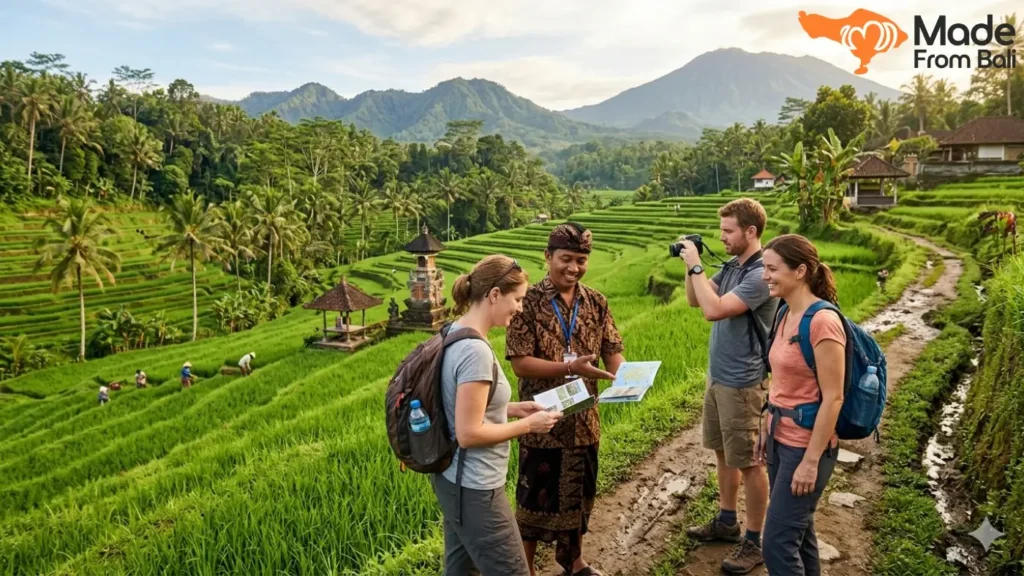
A driver-guide is not simply someone who drives and then explains things. A skilled driver-guide is a Balinese local who has accumulated years of knowledge about the island, understands the cultural and historical context of the sites on your itinerary, and can navigate the day’s logistics while also enriching the experience at each stop. This hybrid format sits between a pure logistics driver and a formal trained guide, and for many traveler types it is the sweet spot.
With a driver-guide, you get the flexibility of a private vehicle combined with a level of cultural insight that a driver alone cannot provide. They can explain why a particular temple faces a certain direction, what the different caste systems mean for the villages you pass through, and which roadside warungs are worth stopping at for a genuinely local meal. Made From Bali’s approach to tour design leans into this format specifically because it reflects how Balinese hospitality and local knowledge naturally combine: less formal than a guided tour, more meaningful than a driver-only service.
Themed and Specialist Tours Worth Knowing About
Beyond the format question, Bali also offers a wide range of tours built around specific interests or experiences rather than general sightseeing. These tend to attract travelers who have either visited Bali before and want something different, or who have a clear passion they want to explore on the island.
Some of the most valuable specialist tour categories include:
- Culinary tours: Market visits, cooking classes, and guided eating experiences in local warungs that most tourists never find independently
- Photography tours: Timed for golden hour, structured around lesser-known locations, led by guides who understand light and composition in the Bali context
- Wellness and spiritual tours: Visits to water temples for purification ceremonies, interactions with traditional healers, or guided meditation experiences
- Cycling and trekking tours: Active exploration of rice terraces, village paths, and volcanic landscapes with knowledgeable local guides
- Craft and culture tours: Visits to silversmith workshops in Celuk, woodcarving villages in Mas, and batik studios in areas most tour itineraries skip
Specialist tours typically cost more than standard day tours but deliver a quality of experience that is difficult to replicate independently, particularly when the guide has genuine expertise in the subject rather than a surface-level script.
Multi-Day Tours for Deeper Exploration
A single day is enough to sample Bali, but the island is diverse enough that a single day in any one region leaves significant territory unexplored. Multi-day tours are designed for travelers who want to move beyond the well-worn south Bali circuit and spend meaningful time in areas that reveal a different character of the island entirely.
Multi-day tours typically involve a dedicated driver or guide for two to five days, accommodation either arranged by the provider or selected by the traveler, and an itinerary that builds logically from one region to the next. North Bali, the eastern highlands, and the quieter villages of the interior are the areas where multi-day formats most clearly outperform one-day visits. Arriving somewhere the evening before and experiencing it in the morning light, before the day-trippers arrive, changes the experience entirely.
The Most Popular Bali Tour Destinations and What Each Delivers
Knowing where to go is only part of the planning equation. Understanding what each region genuinely delivers, including what it does well and where it can disappoint, helps you choose a tour itinerary that matches your actual expectations rather than a curated photograph.
Ubud and the Cultural Heartland
Ubud is Bali’s cultural center, and no itinerary description does it full justice. It sits in the inland highlands surrounded by rice terraces, rivers, and villages that have maintained artistic and spiritual traditions for centuries. The Ubud area contains some of Bali’s most significant temples, the most concentrated collection of traditional crafts, and the kind of landscape that rewards slow exploration far more than it rewards rushing.
The challenge with Ubud is its popularity. The central market area and sites like the Sacred Monkey Forest can feel genuinely crowded during peak hours. The solution is timing. Tours that arrive at key Ubud sites before 9am, or that move through less-visited areas of the Ubud region rather than concentrating entirely on the center, consistently produce better experiences than those that follow the standard circuit. A quality provider will know this and build it into the itinerary without being asked.
East Bali and the Quieter Side of the Island
East Bali is where the island shows a different face. The landscape becomes more dramatic, the villages feel less touched by the tourist economy, and sites like Tirta Gangga, Pura Lempuyang, and Taman Ujung offer a quality of experience that is genuinely distinct from anything in the south or central regions. The drive through the eastern highlands, with views of Gunung Agung framing the horizon, is one of the most visually striking stretches of road in Bali.
Tirta Gangga, the former royal water garden built in 1948, is one of Bali’s more underrated sites. Most tourists who make it this far are rewarded with smaller crowds and a more peaceful atmosphere than anything they find closer to the airport. The east is also where some of Bali’s most beautiful rice terrace landscapes exist, in areas like Sidemen and the Karangasem regency, without the commercial infrastructure that now surrounds Tegallalang.
North Bali and the Road Less Traveled
North Bali requires commitment. It is further from the main tourist centers, the drive takes significantly longer, and most travelers skip it entirely in favor of easier options. This is precisely what makes it worth going to. The landscape around Lovina, Munduk, and Singaraja is cooler, quieter, and shaped by a different history than the south. The Buddhist temples at Brahma Vihara Arama sit in the hills above the north coast, and the twin lakes of Buyan and Tamblingan offer some of the most serene scenery on the island.
A north Bali day tour from the south is long. A multi-day format that allows you to stay in the region overnight and experience it in the morning, when mist is still sitting over the lakes and the roads are nearly empty, is a different experience entirely. This is the kind of destination that makes multi-day tours genuinely worthwhile rather than simply convenient.
South Bali Temples and Coastal Landscapes
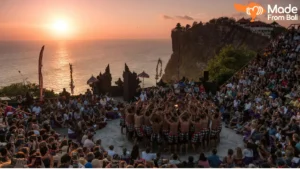
The south is where most visitors spend most of their time, and it contains some of Bali’s most iconic sites for good reason. Tanah Lot, built on a rock formation rising from the sea, is extraordinary at sunset when the light turns the water orange and the temple silhouette is sharp against the sky. Uluwatu sits on a clifftop above crashing Indian Ocean swells and hosts a Kecak fire dance performance in the early evening that remains one of Bali’s most genuinely atmospheric cultural experiences.
The south also benefits from proximity. For travelers based in Seminyak, Canggu, or Jimbaran, the drive to these sites is short, which makes half-day tour options viable for those who want a morning or afternoon experience without committing to a full day. A good provider will help you time these visits intelligently, particularly Tanah Lot and Uluwatu, where the difference between arriving an hour too early and arriving at the right moment is significant.
Matching the Right Tour to Your Travel Style
The tour format question and the destination question are both secondary to a more fundamental one: what kind of traveler are you on this trip? The answer to that question determines everything else more reliably than any itinerary comparison.
Couples and Honeymoon Travelers
Couples traveling to Bali, particularly those on honeymoon or celebrating a special occasion, typically want the combination of beautiful scenery, cultural depth, and personal space that group tours cannot provide. A private day tour or driver-guide format delivers all three. The ability to set your own pace, choose quieter sites over famous ones, and build in a riverside lunch or sunset stop that is meaningful rather than logistically convenient makes the private format particularly well-suited.
For honeymoon travelers specifically, communicating the occasion to your provider in advance is worthwhile. A thoughtful local provider will factor it into the experience, suggesting timing, locations, and stops that are genuinely romantic rather than merely popular.
Solo Travelers and First-Timers
Solo travelers face a specific economic challenge with private tours: the full cost of the vehicle and guide falls on one person. For budget-conscious solo travelers, a quality group tour is a reasonable solution, particularly for the classic highlights circuit that covers Ubud, the rice terraces, and a temple or two. The social dimension of a group tour is also genuinely appealing for solo travelers who want to share the experience with others.
First-timers to Bali, regardless of whether they are traveling solo or with others, benefit particularly from tours that include cultural explanation rather than pure logistics. Bali’s Hindu traditions, temple etiquette, and the meaning behind the ceremonies and offerings that appear everywhere are things that significantly enrich the experience when you understand them and that pass largely unnoticed when you do not.
Families With Children
Family travel in Bali requires practical considerations that standard tour formats often do not account for. Children need breaks, flexible timing, appropriate food options, and activities that hold their attention without overwhelming them. A private day tour with a driver-guide who has experience with families is the most functional format here. The itinerary can be adjusted on the day based on how children are doing, rest stops can be built in, and the pace is responsive to the family rather than fixed by a schedule.
Sites that tend to work particularly well for families include the rice terrace landscapes where children can walk and explore, animal sanctuaries and conservation centers, cultural experiences like watching traditional dance, and water temple sites where the environment is visually striking without requiring extensive walking. A good local provider will help build a family itinerary that is genuinely engaging for children rather than defaulting to the adult-focused highlights circuit.
Small Groups and Friends Traveling Together
Groups of four to eight friends represent one of the best use cases for private tour formats. The cost per person drops significantly when a private vehicle is shared across a larger group, often making it comparable to or cheaper than a quality group tour. The flexibility remains entirely intact, the group dynamic stays intimate, and the day can be built around the specific interests of the people involved rather than a generic mix designed for strangers.
Friend groups also tend to have stronger opinions about what they want from a Bali trip. Some are there for culture and temples. Some want waterfalls and nature. Some are primarily interested in food and local life. A private format allows an itinerary to be genuinely tailored to those preferences in a way that no group tour can accommodate.
What a Good Bali Tour Actually Includes
Understanding what a tour costs and what it genuinely includes are two different things, and the gap between them is where most disappointment happens. Knowing what to expect and what questions to ask before you book removes the most common sources of frustration.
Pricing, Inclusions, and What You Should Expect to Pay
Bali tour pricing varies significantly depending on format, duration, group size, and provider quality. The figures below reflect realistic 2024 and 2025 market rates in both IDR and approximate USD.
| Tour Type | Duration | Approx. Price (IDR) | Approx. Price (USD) | Typically Includes |
|---|---|---|---|---|
| Group Day Tour | 8-10 hours | 350,000 – 600,000 per person | 22 – 38 USD | Transport, guide, some entrance fees |
| Private Day Tour | 8-10 hours | 600,000 – 900,000 per vehicle | 38 – 57 USD | Transport, driver, flexible itinerary |
| Driver-Guide Tour | 8-10 hours | 700,000 – 1,100,000 per vehicle | 44 – 70 USD | Transport, cultural guidance, flexibility |
| Specialist Tour | 4-8 hours | 500,000 – 1,500,000 per person | 32 – 95 USD | Varies significantly by activity type |
| Multi-Day Tour | 2-5 days | 1,500,000 – 4,000,000 per day | 95 – 254 USD | Transport, guide, sometimes accommodation |
Nearly all Bali tours list a base price that does not include temple entrance fees, which typically range from 30,000 to 150,000 IDR per site, or the driver’s meal allowance, which is standard practice and usually around 50,000 to 75,000 IDR per day. Lunch for the traveler may or may not be included depending on the provider, so this is always worth confirming before booking.
Questions to Ask Before You Book Anything
A few direct questions before booking will tell you more about a provider’s quality than any marketing description. Ask these specifically and pay attention to how clearly they are answered.
- Is the quoted price per person or for the entire vehicle? This eliminates the most common source of pricing confusion immediately.
- Which entrance fees are included and which are extra? A specific answer demonstrates provider transparency. Vague answers suggest the opposite.
- Can the itinerary be adjusted based on my interests? The answer to this reveals whether the tour is genuinely private or just marketed as such.
- Where does the driver eat lunch, and is there a separate meal allowance? This signals cultural awareness and honest dealing.
- How does the provider handle it if a site is closed due to a ceremony? A good answer involves an alternative, not an apology.
- Can you give me specific examples of tours you have run for travelers with similar preferences? Specificity here indicates real experience.
The Warning Signs of a Low-Quality or Commission-Driven Tour
Commission-based tour routing is one of the most consistent complaints among experienced Bali travelers, and it is worth understanding how it works before you book. Guides who earn commission from shops, factories, and restaurants are financially incentivized to route your day through those locations regardless of whether they align with your interests. A batik factory visit that appears on your itinerary as a “cultural experience” is often a commission stop. A silversmith workshop that takes forty-five minutes is similarly motivated. The stops themselves are not necessarily bad, but when they are not chosen for your benefit, they consume time that could have been spent on things you actually wanted to see.
Specific warning signs to watch for include:
- Itineraries that include shopping stops listed vaguely as cultural experiences
- Providers who cannot give you a clear breakdown of exactly where the day will go and why
- Prices that are significantly below market rate, which often indicate commission income is subsidizing the tour cost
- Reviews that mention being taken to shops or factories unexpectedly
- Guides who become uncomfortable or evasive when you ask to skip a particular stop
A provider like Made From Bali builds itineraries around traveler interests rather than commission relationships. This is not a minor distinction. It is the difference between a day that feels genuinely curated for you and a day that feels like it was designed for someone else.
Sample Tour Day Itineraries to Help You Plan
Abstract descriptions of tour types are useful up to a point. Real itinerary examples show what a well-designed Bali tour day actually looks like in practice, including the timing, the reasoning behind the sequence, and the honest notes about what each stop delivers.
A Full Day in the Cultural Heart of Bali
This itinerary is designed for travelers staying in the south Bali area who want a rich, culturally layered day in the Ubud region.
- 7:00am: Depart from south Bali to get ahead of traffic heading inland
- 8:30am: Tirta Empul water temple near Tampaksiring, arriving early when the atmosphere is most peaceful and the purification ritual is easiest to observe respectfully
- 10:00am: Drive through the Tegallalang Rice Terraces, walking the terraced path and understanding the subak irrigation system that UNESCO recognized as a cultural landscape
- 11:30am: Ubud town, visiting the Ubud Palace and the central market area, with time to explore the surrounding streets independently
- 1:00pm: Lunch at a locally recommended warung in Ubud, away from the main tourist strip
- 2:30pm: Puri Saren Agung or a traditional Balinese painting gallery in the Ubud area
- 4:00pm: Drive toward Tanah Lot for sunset arrival
- 6:00pm: Sunset at Tanah Lot, one of the few sites where the timing genuinely transforms the experience
- 7:30pm: Return to accommodation
This sequence works because it moves through the day logically, hitting the most atmospheric sites at the times that suit them, rather than following the crowds.
An East Bali Day Built Around Nature and Temples
This itinerary suits travelers who want to move beyond the standard Ubud circuit and experience a different dimension of the island.
- 7:00am: Early departure to allow enough time for the distance
- 9:30am: Tirta Gangga royal water gardens, exploring the pools, stone carvings, and surrounding rice fields at a relaxed pace
- 11:00am: Drive through Sidemen valley, one of the most visually stunning agricultural landscapes in Bali, with a stop at a local village
- 12:30pm: Lunch at a locally recommended restaurant with views across the valley toward Gunung Agung
- 2:00pm: Pura Lempuyang temple, famous for its gateway framing the volcanic peak beyond, with enough time to walk the site properly
- 4:00pm: Drive back west through the coastal road, passing through Candidasa and Padangbai with potential stops depending on timing
- 6:30pm: Return to accommodation
The east Bali circuit consistently surprises travelers who expected it to be similar to the more familiar areas. The landscape is more dramatic, the crowds are significantly thinner, and the combination of water temples, rice fields, and volcanic scenery delivers something that feels genuinely different.
A North and Central Bali Loop for the Curious Traveler
This itinerary is best suited to a multi-day format or for travelers staying in central Bali who want to explore the north without the lengthy return journey from the south.
- 7:30am: Depart toward the central highlands
- 9:00am: Jatiluwih Rice Terraces, the UNESCO-recognized alternative to Tegallalang with significantly fewer visitors and a more authentic agricultural atmosphere
- 11:00am: Continue north through the mountain road, with views across the caldera lake of Danau Bratan
- 12:00pm: Pura Ulun Danu Beratan, the iconic lake temple that appears on the 50,000 rupiah note, visited at midday when the light is clean and the crowds are manageable
- 1:30pm: Lunch in the Bedugul area, cooler air and a different pace from the coastal towns
- 3:00pm: Munduk village and the surrounding waterfalls, a short walk into the jungle to reach cascades that most south Bali visitors never see
- 5:00pm: Begin the return journey south, or check into accommodation in the north for a second day of exploration
The north reveals a version of Bali that is cooler, quieter, and shaped by a different agricultural and cultural tradition from the island’s more visited south. Traveling here requires time investment, but the return on that investment is consistent.
How to Read Bali Through the Tours You Take
The best Bali tour is not the one with the most famous sites on the itinerary. It is the one designed for how you specifically travel, led by someone who genuinely knows the island, and structured so that the experience accumulates into something meaningful rather than evaporating the moment you return to your accommodation.
Bali has a quality that rewards curiosity over efficiency. The travelers who come away feeling like they truly experienced the island are almost always the ones who slowed down, asked questions, chose depth over breadth, and trusted a local provider who built the day around them rather than around a standardized template. The island has extraordinary things to show you. The tour you choose determines how much of that you actually get to see.
Made From Bali’s tour experiences are designed from this perspective: Balinese-led, experience-first, built around the traveler rather than the itinerary. Whether you are planning a single day in Ubud or a multi-day exploration of the island’s quieter regions, starting with the right format and the right provider changes what Bali means to you when the trip is over.