

density creates a problem most travel guides refuse to acknowledge. A list of twenty venues tells you that every place exists. It does not tell you which one belongs to your trip. This guide is different. Before you encounter a single recommendation, you will understand why location determines your entire experience, which club personality matches your travel style, and what no other guide bothers to explain about how these places actually work.
Whether you are arriving in Bali for the first time or returning for the fifth, the beach club scene here deserves more than a numbered list. It deserves a strategy.
What Makes a Bali Beach Club Different from Anywhere Else in the World
Most beach clubs around the world are defined by their view. Bali’s are defined by something harder to manufacture: a convergence of geography, culture, and a particular mood that the island produces almost by default.
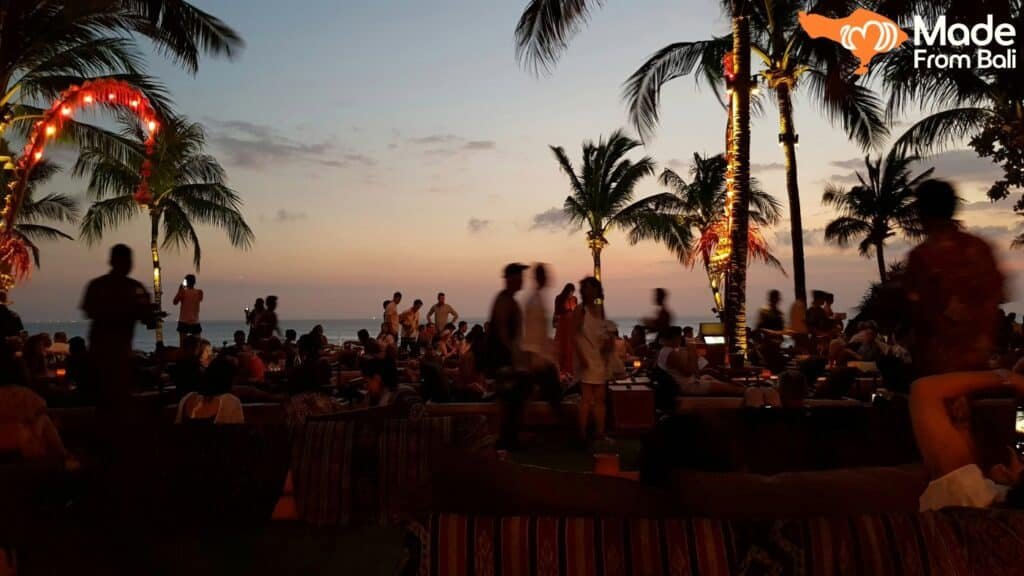
The Indian Ocean along Bali’s southern coast is not the calm, turquoise water of the Maldives. It is muscular and rhythmic, with a swell that has attracted surfers for decades and a horizon that seems to sit lower than anywhere else at golden hour. That specific quality of evening light, the way it turns everything amber and then deep pink within the space of twenty minutes, is why sunset has become a near-religious event at clubs from Seminyak to Uluwatu.
Balinese Hinduism runs quietly through the texture of even the most globally designed beach clubs. A daily canang sari offering placed near the pool entrance. A split gate carved from local volcanic stone framing the entrance to a venue worth five million dollars. The sound of a gamelan instrument woven into an otherwise standard lounge playlist. These are not decoration. They are evidence of an island that has absorbed international hospitality investment without losing its own cultural grammar.
Then there is the geological reality. Much of Canggu’s coast is black volcanic sand, a dramatic contrast to the white powder of Nusa Dua. Black sand absorbs heat differently, the ocean feels different against it, and the clubs built along it have leaned into that rawness rather than fighting it. In Uluwatu, the cliffs drop sixty metres to the water below, meaning clubs there have no beach at all. They have altitude, drama, and some of the most extraordinary sightlines on the island.
Understanding the physical character of each zone before you book a daybed is what separates a good Bali beach club day from an exceptional one.
The Three Zones You Need to Know Before Picking a Beach Club
Bali’s major beach clubs are concentrated in three distinct coastal zones. Each has a completely different atmosphere, crowd profile, traffic pattern, and physical character. Choosing a club without understanding the zone it sits in is one of the most common planning mistakes visitors make.
Canggu: Where the Party Meets the Black Sand
Canggu is Bali’s most energetic beach zone and has been for the better part of a decade. It runs roughly from Berawa Beach in the north down through Batu Bolong and Echo Beach, a stretch of black sand coast lined with rice fields, surf breaks, and an ever-denser cluster of bars, cafes, and beach clubs.
The crowd here skews young, international, and loud in the best possible way. Digital nomads share pool space with Australian surfers and European backpackers on their first proper trip to Asia. The clubs reflect this energy: larger pools, harder music, longer opening hours, and a culture of staying until the sky goes dark and then some.
Traffic in Canggu during peak hours (roughly 4pm to 7pm) is serious. A journey from Seminyak that should take fifteen minutes can stretch to forty-five. If you are basing yourself in Seminyak and want a Canggu beach club day, plan to arrive by early afternoon and leave after dinner, avoiding the worst of the evening rush.
Seminyak: Sophistication, Sunsets, and Iconic History
Seminyak was Bali’s original beach club corridor. The Petitenget strip and the stretch of coast running south toward Legian established the template that every other zone has since followed: premium daybeds facing west, cocktails calibrated to the sunset, food serious enough to be a destination in itself.
The clubs here are generally more polished and slightly less raucous than Canggu. The crowd includes more couples, more guests staying in the area’s upscale villas, and more visitors who want a refined afternoon rather than a full party. It is also the zone with the longest operating history, meaning venues here have had more time to develop their identity and iron out the operational details that newer clubs still struggle with.
Seminyak beach clubs are closest to Kuta and the international airport, making them the most accessible for visitors on shorter trips or those who want to combine a beach club visit with dinner in the area.
Uluwatu: Clifftop Drama and the Surf Culture Clubs
Uluwatu sits on the Bukit Peninsula, a limestone plateau that juts south from the main body of Bali like a geological afterthought. The cliffs here are extraordinary: sheer, white, dropping straight to a cobalt ocean below. The beaches at the base of these cliffs, Padang Padang, Bingin, Dreamland, are among the most photographed in the world.
The beach clubs of Uluwatu divide into two personalities. The first is pure luxury: venues like Savaya Bali and Ulu Cliffhouse that have turned clifftop hospitality into an art form, with infinity pools that seem to merge with the ocean, architecture that photographs like a fashion editorial, and price points to match. The second is the surf culture underground: Single Fin and its counterparts that feel genuinely rooted in the Uluwatu surf community, with a crowd that mixes visiting surfers with Bali’s longstanding expat community.
Getting to Uluwatu from Canggu or Seminyak takes thirty to fifty minutes in reasonable traffic, but the road down into the peninsula and the parking situation near the cliff clubs requires patience and ideally a local driver who knows which back road to take.
How to Choose the Right Beach Club for Your Trip
The question is not which beach club is best. The question is which beach club is best for you, on your specific trip, with your specific group and budget. Here is a clear framework.
If You Are Visiting Bali for the First Time
Start in Seminyak. The zone is central, the clubs are well-established, and you will get a clean version of the Bali beach club experience without having to navigate Canggu’s traffic or Uluwatu’s logistics. Potato Head Beach Club and Ku De Ta are both appropriate choices: famous enough to be worth experiencing, polished enough to deliver reliably. Do not try to visit multiple beach clubs in a single day on your first trip. One club, arrived at early afternoon, with time to settle into the rhythm of the place, is far more valuable than a rushed circuit.
If You Are Traveling as a Couple
Uluwatu’s cliff clubs offer the most dramatic setting for a couples experience. Savaya Bali in particular has built its entire identity around the kind of visual impact that justifies the price of a daybed simply as an experience in itself. For couples who want beauty over party energy, arriving at Savaya or Ulu Cliffhouse at 3pm, watching the sunset from a clifftop infinity pool, and staying for dinner is one of the genuinely memorable things Bali offers. In Seminyak, Potato Head and Mano Beach House also suit couples well, with a more intimate scale than the large Canggu clubs.
If You Are Traveling with Family or Children
FINNS Beach Club in Canggu is the clearest family choice on the island. It operates at a scale that makes it almost a destination rather than a club: multiple pools, a dedicated waterpark area, restaurants covering every preference, and enough space that children can do their own thing while adults have a genuine adult experience nearby. Mrs Sippy in Seminyak also has family-friendly infrastructure with a strong pool program and an atmosphere that does not turn aggressively adult until the late evening. Avoid Savaya, Single Fin, and the Uluwatu cliff clubs for family trips; the setting is dramatic but the facilities do not suit children and the atmosphere is calibrated for adults.
If You Want the Full Party Experience
Canggu is your answer, and specifically the Atlas Beach Club or FINNS on a weekend. Atlas holds the Guinness World Record for the world’s largest beach club, a designation that captures something real about the scale of the experience: multiple stages, thousands of square metres of pool space, international DJ bookings that rival mid-sized festival lineups, and a crowd that reaches its peak energy around 4pm and sustains it well into the night. Check the Atlas events calendar before your visit, as specific event nights will define the experience more than any particular day of the week.
If You Prefer a Relaxed, Low-Key Day
La Brisa in Canggu or The Lawn Canggu offer the most genuinely relaxed version of the beach club experience. La Brisa is built from reclaimed fishing boat wood, with a structure that feels more like an organic village than a purpose-built club. The music stays at a conversational volume for most of the day, the daybeds are set back in shaded bohemian structures rather than exposed pool-side layouts, and the food is seriously good. The Lawn sits directly on the beachfront with a more open, airy design and a crowd that tends to arrive for the afternoon rather than the full-day commitment. In Uluwatu, El Kabron offers an adult-only, intimate experience with exceptional Mediterranean food and a crowd that values atmosphere over volume.
The Best Beach Clubs in Canggu
FINNS Beach Club
FINNS is Bali’s most complete beach club experience, and has been operating long enough to have removed almost every operational rough edge. The main pool stretches for over 55 metres. There is a second wave pool. A waterpark section runs alongside. Four restaurants cover everything from Indonesian street food to wood-fired pizza. Multiple bars serve different sections of the property, which spans several acres of beachfront land on Berawa Beach.
Best for: Families, groups with mixed preferences, first-time visitors who want reliability above all else.
Minimum spend: Applies to daybed reservations; varies by zone and season. Walk-in pool access has a separate entry fee.
Standout detail: The Sunday sessions here have developed into one of Canggu’s most reliable social events, drawing a mixed crowd of long-term expats and visitors who have discovered the formula works.
Atlas Beach Club
Atlas opened in 2021 and immediately reset expectations for what a beach club in Bali could be at scale. The Guinness World Record for the largest beach club in the world is not a gimmick; the property is genuinely enormous. Five pools, seven bars, and multiple restaurant concepts operate simultaneously across a beachfront site in Berawa. The club books international DJ acts for its main stage events, and on those event nights the energy approaches something closer to a music festival than a traditional beach club.
Best for: Party-focused visitors, groups who want scale and energy, event nights with international DJ bookings.
Minimum spend: Higher than most Canggu clubs; daybed booking recommended well in advance for weekends and event days.
Standout detail: The main pool’s layout, with its tiered seating areas and central stage, is designed for spectacle in a way that most clubs are not. Arrive mid-afternoon on an event day to experience it building toward its peak.
La Brisa
La Brisa is the antidote to the scale of FINNS and Atlas. Built entirely from the reclaimed wood of 500 Indonesian fishing boats, the structure has a deliberately organic, almost nautical character that sets it apart from every other club in Canggu. The design philosophy is bohemian but not careless: every detail has been considered, from the macrame-draped daybeds to the hand-painted ceramic tiles in the restaurant. The food and cocktail program is genuinely strong, not an afterthought.
Best for: Couples, creative travelers, those who prioritize aesthetic experience and food quality over party energy.
Minimum spend: Moderate; among the more accessible of the premium Canggu clubs.
Standout detail: La Brisa faces directly onto Echo Beach, one of the most consistent surf breaks in Canggu, meaning the view here includes both the Indian Ocean horizon and an ongoing display of surfing that most pool-facing venues cannot offer.
Cafe del Mar Bali
The Bali outpost of the legendary Ibiza brand brings a recognizable Mediterranean aesthetic to Berawa Beach, but the team has been careful to anchor it in Bali rather than simply transplanting a European formula. The programming includes the sunset sessions for which the original Cafe del Mar is famous, translated into a Balinese context with local musical collaborations alongside the brand’s signature deep house sound. The pool is designed for aesthetic impact, with views that extend across the beachfront without obstruction.
Best for: Visitors familiar with the Cafe del Mar brand, music-led afternoon experiences, those who want international quality with a Balinese setting.
Minimum spend: Premium tier; consistent with the brand’s positioning.
The Lawn Canggu
The Lawn occupies a beachfront position on Echo Beach with a design that prioritizes open space over density. The grass lawn areas that give the club its name create a genuinely relaxed environment that larger clubs cannot replicate: room to spread out, to walk around, to feel the ocean breeze without competition from a thousand bodies in a narrow pool corridor. The food program focuses on Australian-influenced casual dining, well executed and reasonably priced for the setting.
Best for: Visitors who want a beach experience alongside pool access, relaxed afternoon gatherings, groups who find large clubs overwhelming.
Minimum spend: Lower than most comparable Canggu clubs; one of the better-value beach club experiences in the zone.
Luna Beach Club Canggu
Luna has emerged as one of Canggu’s more interesting newer additions, building its identity around a nighttime program that extends beyond the standard sunset-and-done format of most beach clubs. The pool design uses lighting dramatically after dark, and the music programming shifts accordingly from ambient afternoon sound into something more deliberate and event-like as the evening progresses. For visitors who want to experience Canggu’s beach club scene through into the night rather than departing at 8pm, Luna is currently one of the best options.
Best for: Night owls, visitors who want to extend the beach club experience into evening entertainment, those looking for less saturated coverage in travel guides.
Mari Beach Club
Mari operates at a more intimate scale than its Canggu neighbors and has used that scale intelligently. Rather than competing with Atlas or FINNS on size, it has focused on food quality, service ratio, and a design that feels personal rather than monumental. The result is a club that regulars return to because the experience feels consistent and considered, not because it offers the biggest pool or the loudest DJ.
Best for: Return visitors who have already done the major clubs, those who prioritize service and food quality, visitors staying in northern Canggu.
The Best Beach Clubs in Seminyak
Ku De Ta
Ku De Ta is the origin story of Bali’s modern beach club scene. It opened in 2000 and spent the following decade defining what a Bali beach club could be, attracting international recognition at a time when the concept barely existed in Southeast Asia. The brand has expanded since, with outposts in Singapore and other cities, but the original Seminyak location remains the founding text against which everything else is measured.
What Ku De Ta offers today is less about being the most spectacular club on the island, which it no longer is, and more about a sense of earned credibility. The kitchen is consistently one of the best in the beach club category. The service is practiced. The sunset view from the main terrace retains the quality that made the venue famous. Visiting Ku De Ta once is both a historical act and a genuinely good afternoon out.
Best for: First-time visitors wanting to experience the original, food-focused beach club days, those who appreciate a venue with genuine history.
Minimum spend: Moderate; consistent with its mid-premium positioning.
Potato Head Beach Club
Potato Head, now rebranded as part of the wider Desa Potato Head complex, occupies an unusual position in the Bali beach club hierarchy. It is simultaneously one of the best-designed venues in Southeast Asia and one of the most culturally serious beach clubs in the world. The structure itself, built partly from recycled windows collected across Java and Bali, has been featured in global architecture publications. The approach to sustainability, from building materials to the food program sourcing, is the most developed and genuinely documented of any club on the island.
The design creates an experience that rewards time: the more slowly you move through the space, the more detail becomes visible. The rooftop bar, the central amphitheater, the pool level with its extraordinary beachfront wall, each area functions as a distinct environment within the larger complex.
Best for: Design-conscious travelers, sustainability-focused visitors, couples and groups who want depth of experience over pure party energy.
Minimum spend: Premium tier; worth understanding the full booking options for the complex as some areas require separate reservations.
Standout detail: Potato Head hosts a serious arts and music program under its Desa umbrella that extends well beyond standard beach club entertainment. Check programming in advance if cultural events interest you.
Mrs Sippy
Mrs Sippy built its reputation on two things: an exceptionally well-designed dive pool that became one of the most photographed spots in Seminyak, and a programming approach that emphasized music quality over volume. The club occupies a villa-adjacent setting slightly back from the beachfront, which means it trades direct ocean access for a more intimate, managed atmosphere. The cocktail program is strong, and the food menu covers the kind of shareable Mediterranean-influenced dishes that work well for group beach eating.
Best for: Groups of friends, music-focused visitors, those who want pool culture without the beachfront exposure.
Mano Beach House
Mano positions itself at the sophisticated end of the Seminyak spectrum, with a food and beverage program that takes clear influence from the better European beach clubs rather than the Southeast Asian circuit. The design is restrained and elegant, the crowd tends to be mature, and the experience is calibrated more toward a long, civilized lunch or afternoon than toward peak party energy. For couples and pairs of friends who want quality over scale, Mano is one of Seminyak’s most satisfying options.
Best for: Couples, visitors who want a quieter, more refined beach club experience, food-first travelers.
Ocean Grand Seminyak
Ocean Grand has emerged as one of Seminyak’s stronger newer entries, with a beachfront position, a pool layout designed for both swimming and socializing, and a food program that has received consistent positive feedback since opening. It fills the gap between the historical prestige of Ku De Ta and Potato Head and the party-focused energy of the Canggu clubs, offering a reliable premium experience without the extremes of either end of the spectrum.
Best for: Visitors looking for a quality Seminyak experience beyond the established heavyweights, those staying in central Seminyak hotels.
The Best Beach Clubs in Uluwatu
Savaya Bali
Savaya, formerly known as Omnia Dayclub, has positioned itself as the most visually spectacular beach club in Bali and makes a credible claim to that title. The property sits at the edge of a cliff in Ungasan, with a glass-edged infinity pool that extends over a sheer drop to the Indian Ocean below. At sunset, the visual impact is difficult to overstate: the pool appears to pour directly into the ocean sixty metres beneath it, with nothing between the water and the horizon.
The experience is premium in every dimension. Daybed minimum spends are among the highest on the island. The crowd is international and fashion-forward. The music programming is serious. The food and cocktail quality matches the setting. For a single standout Bali experience that you will continue to describe to people for years afterward, Savaya makes a strong case.
Best for: Special occasions, couples, visitors for whom one extraordinary experience is worth concentrated spending.
Minimum spend: High; book well in advance, particularly for weekend visits during peak season (July, August, December).
Single Fin
Single Fin is what happens when a beach club grows organically from a community rather than being engineered by investors. Perched above Suluban Beach and one of the world’s great left-hand surf breaks, Single Fin started as a bar for the Uluwatu surf community and evolved into something larger without losing the character that made it worth visiting in the first place. The Sunday Sessions here have been running for over a decade and remain one of the most genuinely local events on the Bali social calendar: a mix of visiting surfers, long-term expats, Indonesian surf industry workers, and travelers who have done their research.
The view from the terrace, directly over Uluwatu’s famous break, is one you cannot replicate anywhere else on the island. When a serious swell is running, watching the sets come through from a cold Bintang on the upper deck is a specifically Balinese pleasure that has nothing to do with infinity pools or minimum spends.
Best for: Surf culture enthusiasts, visitors who want authenticity over polish, Sunday afternoon sessions that feel genuinely local.
Minimum spend: Low; one of the most accessible entry points in the Uluwatu zone.
Ulu Cliffhouse
Ulu Cliffhouse combines the cliff setting of Uluwatu with an artistic sensibility that elevates it beyond pure beach club territory. The property incorporates gallery spaces, artist residency programs, and an events calendar that treats culture as part of the core offering rather than a marketing add-on. The pool design is exceptional, the food program is Mediterranean-influenced with strong execution, and the overall aesthetic is what design publications call considered: nothing here was included without intention.
Best for: Design and art-focused visitors, couples who want depth of experience, those who find purely party-focused clubs unsatisfying.
El Kabron
El Kabron is the quietest recommendation in this guide and perhaps the most rewarding for the right visitor. This small, adult-only cliff club in Bingin offers a Mediterranean restaurant experience in a setting that would cost three times as much to replicate in Mykonos or Positano. The food is genuinely excellent, the cliffside setting is dramatic without the spectacle of Savaya, and the absence of a party program means the crowd is uniformly there for the quality of the experience rather than the event. Tables book out weeks in advance during peak season.
Best for: Couples seeking a food-forward experience, travelers who want intimacy and quality over scale, adults who find large clubs exhausting.
Karma Beach Club
Karma Beach is reached by funicular from the clifftop hotel above, which immediately communicates something about the experience: it is secluded by design. The beach below, a small white sand cove, is one of the few genuinely sheltered swimming spots in Uluwatu, and the club that occupies it benefits from a captive, intentional crowd who have made the conscious decision to descend. The calm water makes it the best beach swimming option in an area otherwise dominated by surf breaks and cliff drops.
Best for: Beach swimmers, couples wanting seclusion, visitors who find Uluwatu’s cliff clubs too exposed.
Klive Beach Club
Klive holds an unusual distinction: it bills itself as the world’s first seven-deck beach club, a vertically organized structure that uses Uluwatu’s cliff topography to create a stack of distinct venue levels, each with its own character. The concept is ambitious and, in practice, delivers a variety of experiences within a single visit that most clubs cannot match. Different decks suit different moods and times of day, making Klive a club worth spending a full day at rather than a few hours.
Best for: Experience-hunters, visitors who have already done the major clubs and want something structurally different, groups with varied preferences.
Palmilla Beach Club
Palmilla occupies a site above Melasti Beach, one of the most visually striking stretches of coastline on the Bukit Peninsula. The beach below is famous for the Hindu religious processions that use it for purification ceremonies, lending the setting a cultural weight that purpose-built tourist developments rarely carry. Palmilla’s design uses this context well, with terraces that look down toward the beach and ocean without interrupting the sight lines or the sense of the place.
Best for: Visitors interested in Bali’s cultural landscape alongside their beach club experience, those who want a less saturated Uluwatu option.
Tropical Temptation
Tropical Temptation operates at the more accessible end of the Uluwatu market, with a cliff view and pool experience that delivers the essential Uluwatu quality at a lower price point than Savaya or Ulu Cliffhouse. For visitors who want to understand what the cliff club experience is about without committing to premium minimum spends, Tropical Temptation is a credible introduction.
Best for: Budget-conscious visitors who still want the Uluwatu cliff experience, backpackers and younger travelers.
Beach Clubs Worth Knowing in Jimbaran and Nusa Dua
Sundara Beach Club (Four Seasons Jimbaran)
Sundara operates within the Four Seasons Jimbaran Bay property and carries that hotel’s standard of service and physical environment into its beach club offering. The setting is among the most beautiful in the Jimbaran zone: a long stretch of white sand facing a calm bay, with the volcanic silhouette of Bali’s interior mountains visible on clear mornings. The food and cocktail program is Four Seasons quality, making this the most refined lunch or afternoon experience available south of Seminyak. The crowd tends toward hotel guests and visitors who have specifically sought it out; it does not draw walk-in tourists in the way the Canggu clubs do, which is largely the point.
Best for: Luxury travelers, food-focused visitors, families staying in Jimbaran who want a premium beach day.
Locca Sea House
Locca offers a quieter Jimbaran experience with a design that borrows from Mediterranean coastline architecture without feeling transplanted. The seafood program is strong, which is appropriate given Jimbaran’s longstanding identity as Bali’s seafood coast. For visitors who find the Canggu and Uluwatu club scenes too intense and want something genuinely calm with good food and an ocean view, Locca is one of the best answers on the island.
Best for: Those seeking a calm, food-forward alternative to the main club zones, visitors based in Jimbaran or Nusa Dua.
Practical Guide to Visiting a Beach Club in Bali
How Minimum Spend and Entry Fees Actually Work
Almost every beach club in Bali operates on either an entry fee model, a minimum spend model, or a combination of both. Understanding how this works before you arrive prevents the most common source of visitor frustration.
A minimum spend means that when you reserve a daybed or cabana, you commit to spending a set amount in food and beverages during your visit. That amount is not an additional charge on top of your bill; it is the floor of what your bill must reach. If your minimum spend is 500,000 IDR (approximately 30 USD) and you spend 600,000 IDR in food and drinks, you pay 600,000 IDR. If you spend only 300,000 IDR, you pay 500,000 IDR regardless.
Entry fees, which some clubs charge in addition to or instead of minimum spend, are non-refundable access charges that grant you pool use without a guaranteed daybed. They are typically lower than minimum spend amounts and suit visitors who plan to arrive late, stay briefly, or prefer a sunlounger to a reserved daybed.
Minimum spend amounts vary dramatically across the clubs covered in this guide, from around 150,000 IDR at accessible Canggu venues to several million IDR for the best weekend daybeds at Savaya or Atlas during peak season. Always check the club’s current rates directly, as pricing is dynamic and most published figures in travel guides become outdated quickly.
When to Book a Daybed and How to Do It
For weekend visits to any major club during July, August, or December, book your daybed at least two weeks in advance. For Atlas and Savaya during peak weekends, four weeks is more realistic. Most clubs now handle daybed reservations through their own websites or through WhatsApp booking systems. When booking directly via WhatsApp (a common Bali practice), ask for written confirmation of your minimum spend amount, your daybed location, and your arrival window. Screenshot the conversation.
If you are visiting during the shoulder season (March through June, or September through November), walk-in access is often possible at most clubs. Arriving before noon on a weekday gives you the best chance of securing a good daybed without a reservation.
What to Wear and What to Bring
Dress codes at Bali beach clubs exist on a spectrum. The Canggu clubs are genuinely relaxed about beachwear throughout the day, with most requiring only that guests cover up for restaurant seating. Seminyak’s Ku De Ta and Potato Head expect a slightly more polished beach aesthetic in the late afternoon. The cliff clubs of Uluwatu, particularly Savaya and Ulu Cliffhouse, have explicit dress codes for afternoon and evening periods: no wet swimwear after a certain hour, cover-ups required, and some clubs actively managing entry based on presentation.
What to bring: reef-safe sunscreen (Bali’s coral reef protection regulations make this both legally and ethically important), IDR cash for any non-card transactions or tips, a light cover-up for both dress code purposes and the significant sun exposure during peak hours, and a waterproof case for your phone if you plan to use the pool.
Getting There Without Wasting Half Your Day in Traffic
Traffic is the single most underestimated practical challenge of the Bali beach club experience. The island’s road network has not kept pace with its tourism growth, and the narrow lanes connecting Canggu, Seminyak, and the Bukit Peninsula become genuinely difficult between roughly 3pm and 7pm.
For Canggu clubs, arrive before 1pm to avoid midday traffic and to secure an uncrowded early start at the pool. For Uluwatu, the drive from Seminyak takes thirty to forty minutes in the morning but can reach ninety minutes on a busy Saturday evening. Book a private driver rather than a rideshare app for Uluwatu trips; a local driver will know the back roads. Many visitors rent a scooter for Canggu, which is viable if you are confident riding one, but not recommended for the Uluwatu cliff roads, which are steep and sometimes poorly maintained.
Best Time of Day to Arrive for Sunset
Bali’s sunsets occur between approximately 6pm and 6:45pm year-round, with minimal seasonal variation. To have a settled daybed and a functioning cocktail in hand by sunset, you need to arrive at least two hours earlier. For Savaya and the Uluwatu cliff clubs, 3pm arrival is the safe standard. For Seminyak clubs, 2pm. Arriving at 5:30pm for a sunset view is a common mistake that results in no daybed, a crowded bar, and a rushed experience.
The Bali sunset is a twenty-minute event. Everything before it is the preparation that makes those twenty minutes extraordinary.
What First-Time Visitors Should Know About the Bali Beach Club Scene
The beach club scene in Bali is larger, more varied, and more operationally complex than most travel guides communicate. Here is what takes most first-time visitors by surprise.
Currency matters more than you expect. While major clubs accept cards, many of the best food and drink experiences at beach club adjacent markets, the beach vendors, the warung meals afterward, run on cash. Carry IDR. The most common denominations you will use are 50,000 and 100,000 notes.
The ‘vibe’ descriptions in most travel content flatten real differences. ‘Laid-back’ at La Brisa means ambient music and a genuinely relaxed crowd. ‘Laid-back’ at Single Fin means a surfer crowd that knows each other and has been coming to the same cliff for ten years. These are not the same experience and are not interchangeable based on personality type.
Weather deserves more attention than most guides give it. Bali’s rainy season runs from roughly November through March. Afternoon rainstorms during this period are common and can be heavy. Most large clubs have covered areas, but the experience of a roofless daybed in a Bali downpour is not romantic. Check the forecast before you leave. The rainy season does not make beach clubs impossible; it makes timing more important.
The Indonesian concept of jam karet, meaning rubber time, applies to some elements of the beach club experience. Service can be leisurely in a way that frustrates visitors expecting European or Australian hospitality standards. This is not incompetence; it is a different relationship with urgency. Adjust your expectations accordingly and the experience improves immediately.
How the Beach Club Culture Has Shaped Bali as a Destination
Bali’s beach clubs did not arrive from outside the island’s culture. They emerged from a conversation between international hospitality investment and the particular qualities of the place: its light, its water, its Balinese sense of ceremony around natural events like sunsets, and its long history of absorbing external influence while retaining a core identity.
The clubs at their best are expressions of that conversation. Potato Head’s recycled materials program employs Balinese craftspeople and draws on Javanese architectural traditions. La Brisa’s fishing boat wood came from communities along the Indonesian archipelago. Single Fin’s Sunday Sessions have become a fixture of the expat-local social calendar in a way that genuinely bridges communities rather than simply extracting experiences from them.
At their worst, beach clubs are pure extraction: global aesthetics applied to a Balinese coastal setting, serving visitors who could be anywhere and have no particular interest in where they are. The most thoughtful visitors to Bali’s beach club scene will notice the difference and seek the former.
What is certain is that these venues have shifted Bali’s tourism economy in lasting ways. The beach club corridor of Canggu did not exist in its current form a decade ago. Uluwatu’s cliff clubs were, fifteen years ago, largely the domain of surfers sleeping in basic accommodation near the breaks. The transformation has brought economic development, job creation in hospitality, and international recognition that has made Bali a year-round destination rather than a seasonal one.
Whether that transformation is net positive for Bali is a question the island is actively working through. For visitors, the most honest contribution you can make to its answer is to visit thoughtfully: choose clubs that demonstrate genuine investment in local culture and sustainability, tip the staff who make the experience possible, and spend time in the island beyond the beachfront. Bali’s beach clubs are one of the world’s great hospitality experiences. They are not the whole island.