

Every travel guide to Bali promises to show you the island beyond the tourist trail. Most of them deliver the same twelve locations that have been appearing on every hidden gem list since 2018, framed as secret discoveries with no mention of the fact that the spot in the photograph had a tour bus parked outside when the picture was taken.
This guide is an honest attempt at something more useful. Every location here is assessed for its current crowd status. Some are genuinely still quiet. Some have become more popular but remain worth visiting if you time your arrival correctly. A handful are worth the effort even when they are busy because no amount of other visitors can reduce what they offer. All of them represent a version of Bali that exists outside the Seminyak beach club and the Tegalalang rice terrace queue.
Why This List Is Different From Most Hidden Gem Guides
The problem with most “hidden Bali” articles is that they were written when the spots they cover were genuinely undiscovered, and nobody updated them when that changed. Tukad Cepung Waterfall was a secret in 2016. Nyang Nyang Beach was genuinely quiet in 2019. Penglipuran Village was a local ceremony site before it became a ticketed attraction on every driver’s tour menu.
This does not make those places bad or not worth visiting. It means the honest question is no longer “is this hidden?” but rather “is this still worth it, and if so, how do I get the best version of the experience?”
That is the question this guide answers for each location.
How to Use This Guide
Each location in this article is assigned one of three crowd-status labels so you can make an informed decision before you commit a morning or a full day to getting there.
Still Genuinely Quiet
These spots receive limited tourist traffic as of early 2026. They may require more effort to reach, offer fewer facilities, or sit in parts of Bali that visitors rarely explore without local knowledge. The reward is an experience that still feels like a discovery.
Trending but Manageable With Timing
These locations have gained more attention in recent years but still offer a meaningful, crowd-light experience if you arrive at the right time, usually early morning on a weekday. The window is real and worth using.
Worth It Despite the Crowds
Some places earn their reputation so thoroughly that even a queue or a crowd cannot diminish what they offer. These are the spots where the experience is robust enough to survive popularity. The key is managing your expectations before you arrive.
East Bali Hidden Gems
East Bali is the part of the island that most visitors see only as a blur through a car window on the way to Ubud or a detour toward Amed for a snorkeling day. That is a significant oversight. The east holds the most textured landscape in Bali: volcanic black sand coastlines, rice terraces that have never appeared on a postcard, and a traditional Balinese cultural life that runs with less interruption here than almost anywhere else on the island.
Sidemen Valley
Crowd Status: Trending but Manageable With Timing
Sidemen is not undiscovered. It has been appearing on thoughtful traveller itineraries for several years now, and the guesthouses and warung that line the valley road reflect that. But it has not yet crossed into mass tourism, and the reason is straightforward: there is no single attraction to drive visitors here. There is no famous waterfall or photogenic temple gate. There is only the valley itself, which is one of the most beautiful stretches of landscape in Bali.
The rice terraces around Sidemen belong to the Subak irrigation system, a UNESCO-recognised cooperative water management tradition that has shaped Bali’s agricultural landscape for over a thousand years. The fields here are maintained by community farming groups called seka, and the terracing is the result of centuries of collective labour rather than any designed tourist amenity. Walking through Sidemen in the early morning before the heat builds and before any other visitors have made it to the valley is an experience that justifies a longer stay in East Bali than most itineraries allow.
Stay at least one night. The valley looks entirely different in the late afternoon light, and the area around Desa Sidemen has enough good accommodation to reward a two-night base.
Getting there: 45 minutes east of Ubud by private driver or scooter. The road through Klungkung is straightforward. Grab does not reliably operate this far east; arrange a private driver from Ubud if you are not comfortable on a scooter.
Best time to visit: 6am to 9am any day of the week
Average spend: IDR 50,000 to 150,000 per day for food at local warung (approx. USD 3 to 9); accommodation from IDR 300,000 per night (approx. USD 18)
Tirta Gangga Water Palace
Crowd Status: Trending but Manageable With Timing
Built in 1948 by the last Raja of Karangasem, Tirta Gangga is a royal water garden of tiered fountains, ornamental ponds, stepping stones, and stone-carved figures set against a backdrop of rice fields and the distant silhouette of Mount Agung. It is one of the most quietly grand places in Bali and still significantly less visited than the Ubud-circuit equivalents.
It appears on enough lists that it sees visitor traffic, particularly in the late morning, but the garden is large enough to absorb a moderate crowd without losing its atmosphere. The spring-fed swimming pools in the lower section are open to visitors and are genuinely refreshing on a hot afternoon.
Getting there: 20 minutes north of Amlapura by scooter or car. From Ubud, approximately 1.5 hours east.
Entrance fee: IDR 50,000 per person (approx. USD 3); swimming pool access costs extra Hours: 7am to 6pm daily
Best time to visit: 7am to 9am for the garden; mid-afternoon for the pools when morning tour groups have cleared
Good for: Couples, history-focused visitors, photography, families with older children
Kusamba Salt Flats
Crowd Status: Still Genuinely Quiet
Along the black sand coast near the village of Kusamba, about 500 metres east of Pura Goa Lawah, a small number of farming families still practice one of Bali’s oldest and most labour-intensive crafts: traditional sea salt production. The process uses hollowed-out coconut palm trunks, ocean water, and the dry east coast sun. Salt water is collected, filtered through these trunks, and then evaporated in shallow clay pans set out on the dark sand. The result is a coarse, mineral-rich sea salt that tastes entirely different from the industrial table salt most people use at home.
This is not a staged cultural experience. These are working families doing a difficult job under the sun. Approach respectfully, ask before photographing, and buy a bag of salt before you leave. One family near the main beach access point has English-speaking members who can explain the process if you arrive during working hours, typically early morning until midday during the dry season. Outside of the dry months from April to October, production slows or pauses depending on weather.
Very few tourists stop here. Most drive past on the way to Padang Bai or Candi Dasa without knowing it exists.
Getting there: On the coastal road between Klungkung and Padang Bai; accessible by scooter or as a stop on a private driver route
Entrance: Free; buy a bag of salt as the appropriate gesture
Best time to visit: 7am to 11am during dry season (April to October)
Cash required: Yes, no card facilities
Gembleng Waterfall and Rock Pools
Crowd Status: Still Genuinely Quiet
East Bali’s waterfall offering is almost entirely overlooked in favour of the Ubud-circuit waterfalls. Gembleng, located above the Sidemen valley, is the most rewarding of these overlooked spots. The trail leads through rice paddies and bamboo forest before arriving at a tiered waterfall system with natural rock pools suitable for swimming. The scenery is the kind that makes the Ubud-area waterfalls feel overcrowded by comparison, and on a weekday morning it is possible to have the whole system to yourself.
A local guide from Sidemen village is recommended, less because the trail is technically difficult and more because the path is not clearly signed and a guide ensures you arrive at the right pools rather than wandering into someone’s rice farm.
Getting there: From Desa Sidemen village, accessible by scooter with a short walk; local guides bookable through most Sidemen accommodation
Entrance fee: IDR 15,000 to 20,000 per person (approx. USD 1 to 1.50)
Best time to visit: 7am to 10am
Bring: Sturdy footwear, swimwear, cash only
Jemeluk Bay in Amed
Crowd Status: Trending but Manageable With Timing
Amed is no longer a secret, and Jemeluk Bay is the part of Amed that people who have heard the name usually visit first. What makes it worth including here is the quality of the snorkeling directly off the beach, which remains genuinely exceptional: a healthy coral reef accessible within a ten-metre swim from shore, consistent visibility, and jukung fishing boats painted in primary colours resting on the black sand that provide the kind of foreground that reminds you you are not in the Maldives but somewhere more interesting.
Jemeluk is quietest before 8am and after 3pm. The middle of the day brings tour groups from the southern resorts, but they clear by mid-afternoon. Amed as a whole rewards a two-night stay far more than a day trip.
Getting there: 2 to 2.5 hours east of Ubud, or 1 hour north of Padang Bai; not accessible by Grab; private driver or scooter required
Snorkeling equipment: Rentable on the beach for IDR 50,000 to 100,000 per set (approx. USD 3 to 6)
Best time to visit: Before 8am or after 3pm
Good for: Snorkeling, underwater photography, traditional Balinese fishing culture observation
North Bali Hidden Gems
North Bali rewards effort more than almost any other region of the island. The drive up from the south takes two to three hours through the mountains, which is enough to filter out visitors who are not genuinely curious. The region has a distinct character: cooler, greener, quieter, with a slower quality of life in the villages that has not yet been reshaped by tourism income and the behaviours that follow it.
Munduk and the Banyumala Twin Waterfalls
Crowd Status: Trending but Manageable With Timing
Munduk village, perched at around 1,000 metres in the North Bali highlands, is one of the best base camps for exploring the island’s waterfall network. The clove and coffee plantations that line the mountain road into the village, the cool air, and the absence of beach club noise make it feel like a different island entirely.
The Banyumala Twin Waterfalls, located near the village of Wanagiri about 30 minutes from Munduk centre, are the highlight of the area. Two cascades of roughly 50 metres drop into a shared pool that is clear, cold, and swimmable. The trail down from the parking area takes 15 to 20 minutes and is steep and sometimes muddy, with concrete steps giving way to a dirt path at the lower section. Wear shoes you do not mind getting wet. The path is straightforward without a guide.
Arrive before 9am on weekdays for the best chance of quiet. By late morning the spot picks up visitors on organised waterfall tour circuits. The dry season from April to October is the recommended visit window; the trail becomes significantly more treacherous during the wet season.
Getting there: 2 hours from Ubud or Canggu by private driver or scooter; from Munduk village, 30 minutes south by scooter; the turn-off on Jl Raya Wanagiri is easy to miss, use offline maps
Entrance fee: IDR 30,000 per person (approx. USD 2); parking IDR 2,000
Hours: 8am to 6pm
Best time to visit: Before 9:30am on weekdays, April to October
Good for: Nature seekers, swimmers, photographers
Banjar Hot Springs
Crowd Status: Trending but Manageable With Timing
The hot springs at Banjar, a short drive from the north coast near Lovina, are fed by geothermal vents that produce sulphur-rich water at a temperature warm enough to fully relax muscles. The pools are set in a manicured garden of tropical plants, with tiered pools at different temperatures and carved naga dragon head spouts that funnel the spring water into the bathing areas.
Unlike the commercialised hot spring experiences that have been developed elsewhere in Bali, Banjar remains accessible, genuinely pleasant, and attended mostly by Balinese families on weekends and by the occasional visiting tourist on weekdays.
Getting there: 15 minutes south of Lovina by scooter; accessible as a day trip from Munduk (30 minutes)
Entrance fee: IDR 30,000 per person (approx. USD 2)
Hours: 8am to 6pm
Bring: Swimwear, flip-flops, a change of clothes; basic changing facilities are on site
Good for: Families, couples, post-hiking recovery
The Seven Waterfalls Network Near Gobleg
Crowd Status: Still Genuinely Quiet
Within the Sekumpul-Lemukih waterfall district near the villages of Gobleg and Lemukih in the hills above North Bali, there is a network of seven distinct waterfalls that most visitors do not know exists as a navigable system. The most famous component is Sekumpul, which at 80 metres is the tallest waterfall in Bali. The surrounding waterfalls, accessed through rice paddies and river crossings on guided treks, include the Fiji Falls cluster and the Grombong group, and each has its own distinct character.
The trek takes between three and five hours depending on how many falls you include and your fitness level. A local guide is genuinely necessary here: the network crosses private farming land, rivers, and unmarked trails. Guides are bookable through Sekumpul village and cost approximately IDR 200,000 to 300,000 per person (approx. USD 12 to 18) including the entrance fee.
Getting there: 3 hours from Ubud; 1 hour from Munduk; accessible by private driver or experienced scooter riders; the road to Sekumpul is paved
Entrance fee: IDR 30,000 per person from the main entrance; guides are additional
Best time to visit: 7am start recommended; bring water and snacks as there are no facilities inside the trek
Good for: Active travellers, nature seekers, serious hikers
Lemukih Natural Water Slide
Crowd Status: Still Genuinely Quiet
Immediately above the Sekumpul waterfall system sits one of the most genuinely fun and still-obscure natural experiences in Bali: a 45-metre natural water slide formed by the river current over smoothed volcanic rock, running through the rainforest at a speed that makes it both exhilarating and slightly terrifying. It is rough, fast, and entirely natural.
Most visitors to Sekumpul waterfall do not know the slide exists or do not make the additional effort to reach it. It is typically included in the longer guided seven-waterfall trek but can also be accessed as a standalone experience with a local guide from Lemukih village.
Access: Only with a local guide; bookable through Lemukih village accommodation or at the Sekumpul waterfall entrance
Physical requirements: A reasonable level of physical fitness; the approach involves a multi-hour trek
Good for: Adventure travellers, younger visitors, active explorers
Twin Lakes Tamblingan and Buyan
Crowd Status: Still Genuinely Quiet
The two crater lakes of Tamblingan and Buyan sit side by side in the central highlands of North Bali, separated by a forested ridge and surrounded by mist in the early morning. Lake Tamblingan is the quieter of the two and the one most worth prioritising. The lake is accessed through a dense forest of bamboo and strangler figs, and there is a small water temple called Pura Dalem Tamblingan at the water’s edge where ceremonies are still held regularly.
Kayaking on Lake Tamblingan at dawn, when the mist sits on the surface and the forest sounds replace all other noise, is one of the quieter pleasures available anywhere in Bali. A handful of local operators offer morning kayak tours for IDR 100,000 to 200,000 per person (approx. USD 6 to 12).
The ridge walk between Tamblingan and Buyan takes approximately two hours and offers views across both lakes and toward the northern coast.
Getting there: 30 minutes from Munduk; 2 hours from Ubud or Canggu
Best time to visit: Before 8am for the mist and stillness
Good for: Nature seekers, photographers, kayaking enthusiasts, spiritual experience
Central Bali Hidden Gems Near Ubud
The area around Ubud is the most thoroughly documented region of Bali from a tourism perspective, which makes finding genuinely overlooked spots harder here than elsewhere. But several locations within an hour of Ubud remain meaningfully quiet precisely because visitors default to the same four or five anchor attractions and rarely deviate.
Pura Gunung Kawi Sebatu
Crowd Status: Trending but Manageable With Timing
This is the most important location in this entire guide for visitors staying in the Ubud area. Pura Gunung Kawi Sebatu is a sacred spring-water temple set in a steep, forested valley in Sebatu village, Tegallalang. The temple complex is built around a series of natural spring pools of extraordinary clarity, surrounded by carved stone shrines, lotus-filled ponds, and free-roaming deer and rare bird breeds kept within the garden. The mist that settles in the valley in the early morning and the sound of spring water running through carved stone channels create an atmosphere that the more famous Tirta Empul, with its coach park and constant tour group flow, cannot replicate.
The melukat purification ceremony, which involves bathing in the sacred spring fountains guided by a Balinese priest and accompanied by prayer and offerings, can be arranged at Sebatu with advance notice. This is a genuine spiritual practice of the Balinese Hindu tradition, not a tourist product. If you participate, do so with that understanding and follow the dress code and protocol guidance offered at the temple.
Note: Pura Gunung Kawi Sebatu is not the same as Gunung Kawi, the 11th-century rock-cut royal memorial site near Tampaksiring that requires a descent of several hundred steps. They are different temples entirely and are frequently confused.
Address: Jl. Gn. Kawi, Sebatu Village, Tegallalang, Gianyar Regency
Getting there: 12 kilometres north of Ubud; 30 minutes by scooter or car; Grab accessible from Ubud
Entrance fee: IDR 50,000 per person including sarong hire (approx. USD 3)
Hours: 8am to 6pm
Best time to visit: 8am to 9:30am on weekdays
Dress code: Sarong and sash required; provided with entry
Cash required: Yes at the gate
Subak Juwuk Manis Rice Fields
Crowd Status: Still Genuinely Quiet
The Subak Juwuk Manis irrigation cooperative maintains a network of rice terraces in the Gianyar regency between Ubud and the highland regions that looks, in the early morning light, exactly as Bali’s rice terraces looked before the Tegalalang photo spot was built with its swings and cafes. There are no swings positioned over the fields here. There is no tiered cafe for selfie purposes. There are only the fields, the water channels of the Subak system, and the farmers working them.
The Subak system is both a functional irrigation infrastructure and a spiritual framework. The Balinese concept of tri hita karana, a philosophy of harmony between people, nature, and the divine, is expressed in Subak design: the placement of small field temples at irrigation points, the collective maintenance rituals that ensure water flows equitably across the cooperative, and the relationship between the planting calendar and the Balinese ceremonial calendar. Understanding this context before you walk through the fields changes how the landscape reads.
Getting there: 15 to 20 minutes from central Ubud by scooter; ask your accommodation for the specific access point as GPS navigation to rice field areas is often imprecise
Entrance: Free or minimal local donation
Best time to visit: 6am to 9am
Tukad Cepung Waterfall
Crowd Status: Worth It Despite the Crowds
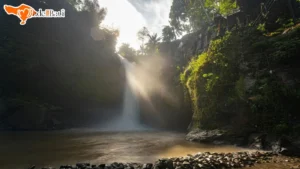
Let us be honest: Tukad Cepung is not a hidden gem in 2026. It is on every tour circuit, every Bali bucket list, and every Instagram location tag near Ubud. But it remains on this list because the experience it delivers, a waterfall revealed through a narrow slot in the rock face with shafts of light penetrating from above and the cave walls draped in moss and fern, is singular enough to justify visiting even when other people are also there.
The practical advice is straightforward. Arrive when it opens at 8am. The best light enters the canyon between 9am and 11am. A local guide from the entrance can take you through the cave approach safely and quickly for approximately IDR 30,000 extra and avoids the very real possibility of a twisted ankle in the dark.
Address: Near Tembuku, Bangli Regency; 30 to 40 minutes northeast of Ubud
Entrance fee: IDR 20,000 per person (approx. USD 1.25)
Hours: 8am to 5pm
Best time to visit: 9am to 11am for the best light inside the canyon; weekdays to reduce crowd volume
Bring: Waterproof footwear; you will wade through shallow water
Penglipuran Village
Crowd Status: Worth It Despite the Crowds
Penglipuran is a traditional Balinese village in the Bangli regency that has maintained its original spatial layout, bamboo forest borders, and communal architecture with remarkable integrity. Every household in the village follows the same structural logic: a gate, a courtyard, a family temple. The main street is lined with identical bamboo-gated entrances. The bamboo forest behind the village is one of the most peaceful ten-minute walks available anywhere near the Ubud circuit.
It has an entrance fee and opening hours, which means it is a managed tourist attraction rather than an organic village experience. Accept that framing and the visit is genuinely rewarding. Resist it and you will feel cheated by something that is exactly what it says it is.
Address: Bangli Regency, approximately 45 minutes northeast of Ubud
Entrance fee: IDR 30,000 per person (approx. USD 2)
Hours: 8am to 6pm
Best time to visit: 8am before tour groups arrive; or late afternoon after 3pm
Good for: Cultural immersion, village architecture, bamboo forest walk
Kanto Lampo Waterfall
Crowd Status: Trending but Manageable With Timing
Kanto Lampo sits in a river canyon about 20 minutes east of Ubud and is accessible via a short steep walk from the road. The waterfall fans across a wide basalt face in a curtain shape rather than a single plunge, which makes it visually distinctive from most of Bali’s waterfall types. The wide rock shelf in front of it is the reason for its popularity among photographers: the fan of water behind a standing figure produces the most-replicated waterfall photograph in the Ubud area.
It is busier than it used to be, particularly between 9am and noon on weekends. Arrive before 8:30am or after 2pm for a manageable experience.
Getting there: 20 minutes east of Ubud; Grab accessible
Entrance fee: IDR 20,000 per person (approx. USD 1.25)
Best time to visit: Before 8:30am or after 2pm
Bring: Waterproof sandals; the approach involves river rocks
South Bali and Uluwatu Hidden Gems
The Bukit Peninsula south of Jimbaran has the highest concentration of genuinely still-quiet spots in the south of Bali, primarily because most of them require either a long walk down a cliff or the knowledge that they exist in the first place.
Nyang Nyang Beach
Crowd Status: Trending but Manageable With Timing
The effort required to reach Nyang Nyang is, at this point, its primary protection. From the road above the cliff, the descent to the beach takes approximately 20 to 30 minutes on a steep and sometimes loose path. The beach at the bottom is over two kilometres long, almost entirely white sand, and receives a fraction of the visitors that Padang Padang or Dreamland absorbs daily.
Nyang Nyang has appeared on enough hidden gem lists to have lost the complete obscurity it had five years ago, and on a busy weekend the descent path will have other walkers. But the beach is long enough that crowd density per kilometre remains low even when multiple groups have made the effort.
Bring everything you need. There are no facilities at the beach: no warungs, no toilets, no rental gear. The walk back up is harder than the walk down.
Getting there: South of Uluwatu, accessible by scooter; the trailhead is near Pura Uluwatu on the cliff road
Entrance: Free
Bring: Water, food, sunscreen; cash is irrelevant as there is nothing to buy at the beach
Best time to visit: Weekday mornings before 10am
Good for: Long beach walks, solitude, ocean swimming (check conditions; currents can be strong)
Suluban Beach Cave and Rock Pools
Crowd Status: Trending but Manageable With Timing
Suluban is the beach accessed through the cave system below the cliffs at Uluwatu, well known among the surfing community as the approach to the left-hand reef break. The experience of walking down through the layered limestone cave at low tide, emerging onto the rock shelves with the ocean visible through the cave mouth, is one of the most dramatic landscape transitions anywhere in south Bali.
At high tide the cave floods and the access closes. Check the tide chart before you go. The small warungs built into the cave walls for waiting surfers are one of the stranger and more pleasant places to have a coffee in Bali.
Getting there: Below the cliff road near Uluwatu; accessible by scooter; steps are steep and require reasonable physical ability Access: Tide-dependent; low tide required for full access Best time to visit: Early morning at low tide for the best light through the cave
Melasti Beach at Ungasan
Crowd Status: Trending but Manageable With Timing
Melasti is one of the longest white sand beaches on the Bukit Peninsula and one of the most visually dramatic: tall limestone cliffs frame both ends of the beach, the water is clear turquoise, and the length of the bay absorbs visitors without feeling overcrowded. It has been discovered enough to have a modest facility infrastructure at the top of the cliff stairs, but the beach itself remains spacious and genuinely beautiful.
The name comes from the Melasti ceremony, a purification ritual performed by Balinese Hindu communities before Nyepi in which sacred objects from local temples are brought to the sea. If you visit during the Melasti period in early March, you may witness this ceremony at the shoreline, which is one of the most moving public ritual experiences available to visitors in Bali.
Getting there: Near Ungasan in the south Bukit; accessible by scooter from Uluwatu in 15 minutes or from Jimbaran in 20 minutes
Entrance fee: IDR 10,000 per person (approx. USD 0.60)
Best time to visit: Early morning on weekdays; the beach fills up by mid-morning on weekends
West Bali Hidden Gems
West Bali is the least visited region of the island and the one that feels most removed from the tourism economy that has transformed the south and centre. The national park and the reefs around Menjangan Island represent the best diving and snorkeling in Bali by a significant margin.
West Bali National Park
Crowd Status: Still Genuinely Quiet
The Bali Starling, one of the world’s rarest birds, is the most famous resident of West Bali National Park, and the park’s primary conservation focus is protecting its remaining wild population. The park itself covers 190 square kilometres of monsoon forest, savanna, and mangrove coastline. Trekking permits and a mandatory local guide are required for forest entry; both are arranged at the park headquarters in Cekik village.
Most visitors to this part of Bali are divers heading to Menjangan Island, and the national park’s terrestrial interior sees very few tourists. A morning guided forest trek for a chance at sighting the Bali Starling or one of the park’s endemic deer species is a genuinely rare experience on an island where genuine wildlife encounters are hard to find.
Getting there: 3 to 4 hours from Seminyak or Ubud; most accessible as part of a Pemuteran-based stay
Permits and guides: Required and arranged at park headquarters; guide cost approximately IDR 200,000 to 400,000 per group (approx. USD 12 to 24)
Good for: Birdwatchers, wildlife enthusiasts, hikers
Menjangan Island
Crowd Status: Trending but Manageable With Timing
Menjangan, accessible by boat from Labuhan Lalang jetty on the northwest coast, offers the best wall diving in Bali and coral reefs in significantly better condition than the dive sites more easily reached from the south. The underwater walls drop to 70 metres and are draped in sea fans and hard coral. The snorkeling directly off the beach in the shallows is also exceptional and accessible to non-divers without a guide.
Day trips from Pemuteran take 30 minutes by boat. For diving specifically, staying in Pemuteran for two nights and making two or three dives at Menjangan is the intelligent approach.
Getting there: Boat from Labuhan Lalang jetty; day trips from Pemuteran (IDR 300,000 to 500,000 per person for the boat, approx. USD 18 to 30)
Entrance fee: National park day pass applies; arranged by the dive or snorkel operator
Good for: Divers, snorkelers, marine life photographers
Pemuteran and the Bio Rock Reef Project
Crowd Status: Still Genuinely Quiet
Pemuteran is a small fishing and diving village on the northwest coast that has developed into one of the most sustainable tourism examples in Bali, largely because of the Bio Rock Project: a coral restoration initiative that uses low-voltage electrical current to accelerate the growth of coral structures on damaged reef sections. The artificial reef structures are now well-established and host a diverse marine population that makes snorkeling in the bay genuinely interesting even without a dive certification.
The village itself is one of the quietest places to stay in Bali: small, locally run, and without the noise and light pollution that characterises most of the island’s accommodation corridors.
Getting there: 3.5 to 4 hours from Seminyak; no Grab service; private driver or car required Snorkeling gear rental: Available from beach operators for IDR 50,000 to 80,000 per set (approx. USD 3 to 5) Good for: Divers, eco-conscious travellers, couples, anyone wanting genuine quiet
Hidden Cultural Experiences Most Tourists Skip
The most common regret expressed by visitors who return to Bali a second or third time is not about a beach they missed or a viewpoint they skipped. It is that they did not make enough effort to understand the cultural life happening around them during their first visit. These experiences are available on a first trip if you look for them.
Melukat Purification at Pura Gunung Kawi Sebatu
The melukat ceremony is a Balinese Hindu purification ritual involving a guided sequence of prayer, intention-setting, and bathing under sacred spring water fountains while accompanied by a priest. It is most commonly associated with Tirta Empul, which now offers tourist-facing versions at scale. At Pura Gunung Kawi Sebatu, the ceremony is conducted in a quieter setting with fewer simultaneous participants, making the experience more personal and more meaningful. Arrange it through your accommodation the night before or directly at the temple on arrival, and be clear that you want to participate respectfully rather than observe from a distance.
Salt Farming in Kusamba
The working families at Kusamba do not offer formal tours. What they offer is access to an honest conversation about what they do and why fewer families practice it each year as industrial salt imports make the economics increasingly difficult. Spending an hour at the beach in the early morning watching the process, asking questions through English-speaking family members, and leaving with a bag of salt is a cultural encounter with a practice that may not survive the next generation.
Canang Sari Offering Making in a Local Village
Canang sari are the small woven palm leaf offerings placed at temple entrances, on shrines, on the ground outside homes and businesses, and on the dashboards of vehicles across Bali every single day. Making them is a daily act of devotion that Balinese women perform as part of the tri hita karana philosophy of maintaining harmony through offering and intention. Several community homestays in villages around Sidemen, Penestanan, and Pererenan facilitate morning canang sari making sessions with local families for a small fee or in exchange for a shared meal. Ask your accommodation to connect you.
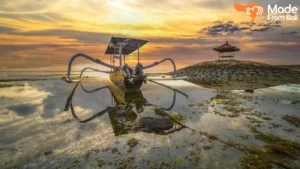
Jukung Fishing Boat Morning in Amed
The traditional double-outrigger jukung boats used by fishing families in Amed and Jemeluk Bay are among the last working examples of a Balinese boat design that predates the colonial period. Several fishermen in the area accept passengers for their early morning runs, typically departing between 5am and 6am and returning by 9am. The experience is functional rather than curated: you are a passenger on a working boat, not a guest on a tour. Ask at your guesthouse the evening before if any of the local fishing families take visitors out.
How to Match These Hidden Gems to Your Trip
For Nature and Waterfall Seekers
Prioritise the North Bali cluster: Banyumala Twin Waterfalls plus the Sekumpul-Lemukih seven waterfall network as a two-day programme based in Munduk. Add Twin Lakes Tamblingan for a morning kayak and Banjar Hot Springs as an afternoon close. For East Bali waterfalls with fewer visitors than the Ubud circuit, Gembleng above Sidemen is the best option.
For Cultural and Village Experiences
Sidemen Valley for rice terrace walking and the Subak system context, Penglipuran for traditional village architecture, Kusamba for salt farming, and Pura Gunung Kawi Sebatu for the melukat ceremony. These four make a coherent two-day East and Central Bali cultural itinerary.
For Diving and Snorkeling Away From the Crowds
Menjangan Island and the Bio Rock Project at Pemuteran are in an entirely different category from Nusa Penida or the Amed dive sites in terms of coral quality and crowd density. Two nights in Pemuteran with two days of Menjangan diving is the best underwater itinerary in Bali for visitors who are serious about what they see underwater.
For Photography and Viewpoints
Tukad Cepung waterfall at 9am for the canyon light, Kanto Lampo for the curtain waterfall image, Tirta Gangga Water Palace in the early morning before tour groups, and Sidemen Valley at dawn for rice field mist and the Mount Agung silhouette behind it.
For Families and Relaxed Explorers
Banjar Hot Springs, Penglipuran Village, Tirta Gangga Water Palace, and Melasti Beach offer experiences accessible to families with children of most ages without long treks or physically demanding approaches. Banyumala Twin Waterfalls is achievable with children above approximately ten years old who are comfortable with steep, muddy paths.
Getting to Remote Spots in Bali Without Getting Lost
Grab and GoJek operate reliably in the Ubud area and in the Bukit Peninsula. They are not consistently available in East Bali, North Bali, or West Bali. For any location east of Gianyar, north of Bedugul, or west of Tabanan, the practical options are a private driver arranged through your accommodation or a scooter rental with offline maps downloaded before you leave your base.
Download Maps.me or OsmAnd before your trip and save the offline Bali map files. Google Maps works in most areas but requires mobile data. In Amed, Sidemen, and around Pemuteran, data coverage can be slow or absent for stretches of the road.
Road quality varies significantly. The roads to Banyumala Twin Waterfalls are manageable by scooter with care. Access roads to some waterfall trailheads in the Sekumpul area include short unpaved sections that are straightforward in dry conditions and genuinely difficult in the wet. The road to Nyang Nyang Beach is fine by scooter; the beach itself requires a steep foot descent with no vehicle access.
Always carry cash when travelling outside the main tourist corridors. IDR 300,000 to 500,000 in small denominations is sufficient for a full day including entrance fees, food, water, and a guide where needed. Most remote locations have no card payment infrastructure.
The Bali tourist levy introduced in 2024 applies to all international visitors and is payable online before arrival or at the airport. It is separate from your accommodation tax and from individual site entrance fees.
What Bali’s Hidden Side Tells You About the Island
There is a specific kind of moment that only becomes available when you move away from the infrastructure built for tourists and into the parts of Bali that exist for the Balinese. It is the moment you realise that the ceremony at the side of a quiet village road was not arranged for you, that the fisherman who took you out at 5am did not think of his morning as a tourism product, and that the family making canang sari in the courtyard was not doing it because you were watching.
Bali is a profoundly functional spiritual culture. The ceremonies, the offerings, the temple systems, the Subak irrigation rituals, the relationship between the farming calendar and the religious calendar: these are not aesthetics preserved for the tourism industry. They are an active way of life that predates tourism by several centuries and continues in the villages, valleys, and highland communities that most visitors pass through too quickly to notice.
The hidden gems in this guide are worth visiting not primarily because they are quiet or photogenic or uncrowded, though many are all three. They are worth visiting because they offer access to a more honest version of what Bali is, and that version does not require advance booking or a photography drone or a resort package. It requires only the willingness to go a little further than most guides say you need to.