

Most Uluwatu day trip itineraries you’ll find online read like a checklist. Temple, beach, sunset, dance, dinner. That works fine on paper, until you’re standing at Padang Padang at one in the afternoon wondering why you’re already exhausted, or sitting in traffic at seven that evening wondering if you’ll make it back to your hotel before nine. Uluwatu isn’t a single stop you tick off in an hour. It’s the whole southern edge of Bali, spread across cliffs, beaches, and one narrow road that gets busier as the day goes on.
Squeeze too much in, misjudge the timing, or pick the wrong way to get around, and a day that should feel like one of the best of your trip ends up feeling like a long errand instead. None of that has to happen. The things that make Uluwatu worth a full day, the temple, the cliffside beaches, the Kecak fire dance at sunset, fit together comfortably once the plan is built around how the day actually flows rather than just what to see. That’s what this covers: where Uluwatu really starts, how to get around it without losing hours, what time to leave depending on where you’re staying, and the specific mistakes that turn a relaxed day into a rushed one.
How Much Of South Bali Actually Falls Under A Uluwatu Day Trip
Search for a Uluwatu day trip and you’ll find itineraries that also include the Garuda Wisnu Kencana statue, Melasti Beach, Pandawa Beach, and sometimes even Nusa Dua, all folded into the same trip. Technically, most of that isn’t Uluwatu at all. Knowing this before you plan anything changes how much driving you’re actually signing up for, and it explains why some “one day in Uluwatu” itineraries feel rushed from the first stop.
Where Uluwatu Ends And Jimbaran, Ungasan, And Nusa Dua Begin
Uluwatu itself refers to the southwestern tip of the Bukit Peninsula, centered on Pecatu village, where the cliffside temple sits. Jimbaran sits further north along the coast and is better known for its beachfront seafood restaurants than for cliffs or surf. Ungasan is the stretch south of Jimbaran where Melasti and Pandawa beaches sit, closer to the Nusa Dua side of the peninsula than to Uluwatu Temple. Nusa Dua itself is a separate resort area further east again. When a blog or tour groups Uluwatu Temple, GWK, Melasti, and a Jimbaran dinner into one “Uluwatu day trip,” what they’re really describing is a loop around the entire southern peninsula, not a day centered on Uluwatu.
Why This Matters Before You Build Your Route
This isn’t just a naming detail. If you plan a day expecting only Uluwatu and then add Ungasan beaches and GWK into the mix, you’re adding real driving distance, not just a couple of extra stops that look close together on a map. On a phone screen, Melasti Beach and Uluwatu Temple can look like a ten minute difference. In practice, depending on traffic and the road taken, it’s closer to thirty or forty five minutes each way. Knowing this upfront helps you decide how many stops genuinely fit into one day without stretching it past a comfortable pace.
Scooter, Private Driver, Or Tour, What Actually Works For This Route
How you get around shapes almost everything else about this day, more than which specific beach you end up choosing. Uluwatu doesn’t have one easy way to reach everywhere. The roads are hilly, some areas restrict app based pickups, and the distance between stops adds up faster than it looks. Before locking in a stop by stop plan, it helps to decide how you’ll actually be moving between those stops.
When Renting A Scooter Makes Sense
Scooter rental in the area typically runs between IDR 80,000 and 120,000 per day, and it makes sense if you’re comfortable riding on hilly, occasionally narrow roads, want the flexibility to change plans mid-day, and are travelling solo or as a couple who both ride. The downside is real heat exposure over a full day, difficulty finding secure parking near packed beach entrances during high season, and genuine fatigue by late afternoon, right before the ride home in fading light. If the Kecak dance is part of your plan, riding a scooter back on unlit rural roads after dark is worth thinking through honestly rather than assuming it’ll be fine.
Why Most First-Time Visitors End Up Hiring A Driver Instead
A private driver for roughly an eight hour day typically costs around IDR 600,000 to 700,000, split between however many people are in the car, which often works out cheaper per person than it sounds for two or more travellers. The practical value goes beyond comfort. A driver who knows the area already knows which parking areas fill up first, doesn’t need directions between stops, and critically, drives you back after dark when traffic is heaviest and visibility is worst. It’s also worth knowing that Grab and Gojek are restricted in several parts of Uluwatu, especially near beach entrances and temple grounds, so even a smooth ride there doesn’t guarantee an easy pickup for the return trip, especially right after a show lets out and hundreds of people are trying to leave at once.
What A Booked Tour Adds That DIY Transport Doesn’t
Booking a tour or private driver package bundles a fixed route with someone who already understands the temple’s ticketing setup, the timing around the Kecak show, and the exit traffic pattern that follows it. For travellers who’d rather not research ticket types or negotiate parking on the day, this removes that decision-making almost entirely. The trade off is less room to improvise beyond the planned stops. It tends to suit first-timers, families with young kids, or anyone who’d rather spend their mental effort enjoying the day than managing logistics.
| Option | Typical Cost | Best For | Real Tradeoff |
|---|---|---|---|
| Scooter rental | IDR 80,000 to 120,000 per day | Confident riders, solo travellers or couples wanting flexibility | Riding back after dark, fatigue by late afternoon |
| Private driver, self-arranged | IDR 600,000 to 700,000 for around 8 hours, shared across passengers | Small groups wanting comfort without a fixed itinerary | You still plan the stops and timing yourself |
| Booked tour or driver package | Varies by operator and inclusions | First-timers, families, anyone who’d rather skip the logistics | Less room to improvise beyond the set route |
The Time You Leave Changes More Than People Expect
Most itineraries tell you to “start early” without explaining why that matters specifically here. In Uluwatu, the reason isn’t just heat. It’s the way crowds and traffic both build toward the same late afternoon window, so the time you leave in the morning quietly decides how the whole evening plays out.
Starting At Sunrise Versus Starting Mid-Morning
Leaving around seven or eight in the morning means the beaches are close to empty, the temperature is still manageable for the stairs and descents at spots like Padang Padang and Suluban, and you get a real buffer before the midday heat peaks between noon and two. Starting mid-morning, around nine or ten, still works, but usually means condensing beach time or treating one stop as optional rather than fixed. If you’re starting later, it’s worth deciding in advance which stop you’re willing to drop, rather than discovering the day has run out of time while you’re still at the beach.
Why The Bukit Peninsula Gets Harder To Navigate After 4 PM
Most day-trippers converge on the temple in the same window, roughly between four and five thirty in the afternoon, to catch sunset and secure a seat for the Kecak dance. That means the roads around Pecatu get noticeably busier as the afternoon progresses, separate entirely from the traffic jam that follows the show later. In practical terms, this means leaving earlier than you’d think for the temple leg specifically, even if the rest of your day has been relaxed and unhurried.
A Uluwatu Day That Doesn’t Feel Rushed, Stop By Stop
With transport and timing settled, here’s a sequence that works well, built around the reasoning behind the order rather than just a list of places to see.
Starting At The Cliffs Before The Heat And Crowds Arrive
An early stop at a cliffside beach like Suluban or Padang Padang makes the most of cooler temperatures and lower crowds. Both involve stairs and, at some entrances, a narrow cave passage down to the sand, which is genuinely easier to manage with more energy and less heat weighing on you. Entry fees sit around IDR 10,000 to 15,000, and the stone steps can get slippery after rain, so footwear matters more than it might seem. Worth knowing before you arrive: these beaches don’t have full facilities at every entrance, so don’t expect showers or loungers everywhere.
Choosing A Midday Beach That Matches Your Pace
By midday, the heat is intense enough that a beach with easier access and better facilities usually makes more sense than another cliffside descent. If a surf lesson is part of the plan, Bingin or Dreamland work well for that. If the goal is simply a straightforward swim without a steep walk down, look for a beach with more direct vehicle access closer to the entrance. Matching the midday stop to your group’s energy level at that point in the day matters more than picking the most photogenic option on a list.
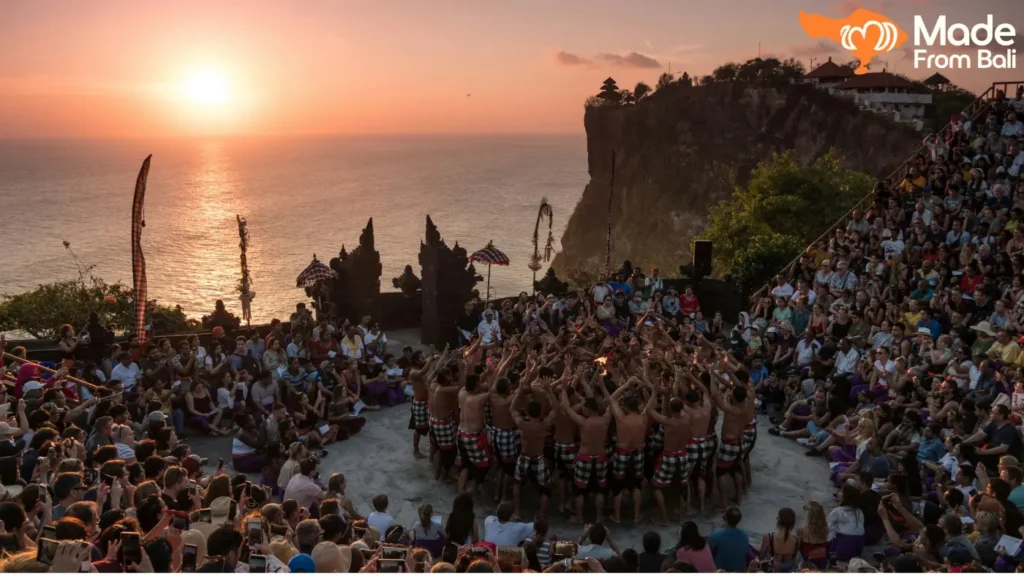
Timing Uluwatu Temple And The Kecak Dance Around Sunset
Arriving at the temple around 4:00 to 4:30 in the afternoon leaves enough time to walk the clifftop paths, use the free sarong provided at entry, and queue for a Kecak ticket before seats fill up. Sunset itself typically falls around six to six thirty depending on the season, and the temple grounds are open daily from 7:00 AM to 7:00 PM. Getting this window right is the single biggest factor in whether the evening feels smooth or scrambled.
Eating In Jimbaran Without Cutting Into Your Sunset Window
Many day trips end with seafood on Jimbaran beach, and the real decision is whether to eat before or after the Kecak show. Eating afterward tends to work better logistically, since it also gives the worst of the exit traffic time to clear, which the next section covers in more detail. Reservations usually aren’t necessary at the casual beachfront seafood spots, but arriving right at sunset means competing with Jimbaran’s own separate sunset dinner crowd, so a slightly later arrival often means a shorter wait for a table.
Why The Kecak Dance Isn’t As Simple As Just Showing Up
Most first-time visitors assume one ticket covers the whole temple visit, dance included. It doesn’t, and this misunderstanding causes more confusion at the gate than almost anything else on this itinerary.
The Two Ticket Types Nobody Explains Clearly
Temple entrance and the Kecak performance are sold as two separate tickets. The dance itself is priced at around IDR 150,000 per adult, whether bought at the gate or online in advance, though booking ahead can save a small percentage and guarantees a seat rather than relying on first come, first served access. It’s also worth knowing that the performance rotates between two different community groups on alternating days, which affects box office hours. Rather than assuming a fixed schedule every day, it’s worth checking the specific day’s timing if the dance is a priority for your trip.
What Happens When It Rains During Sunset Season
Between roughly November and March, rain is common enough that the outdoor evening performance can be delayed, moved to a covered area, or cancelled outright. If travelling during this window, it’s worth having a backup plan for the evening and understanding the refund or reschedule terms before paying, since policies can vary depending on which group is performing that day.
Getting Stuck In Uluwatu’s Traffic Is More Common Than Getting Lost
After the sunset show ends, hundreds of visitors exit the temple parking area at once, funnelling onto the same narrow road back toward Kuta and the rest of South Bali. Departing right after the show can mean sitting in traffic for close to two hours on the way out, which is arguably a bigger source of a frustrating evening than getting lost ever is, since GPS handles navigation fine but nothing clears a jammed exit road any faster. A few things help:
- Leave promptly when the show ends rather than lingering to explore the grounds further, since every extra ten minutes at that point compounds into far more time stuck on the road
- Have dinner in Jimbaran instead of driving straight back, letting the worst of the congestion thin out while you eat
- If self-driving a scooter, plan for the return ride to happen in the dark, alongside a lot of other vehicles doing exactly the same thing at exactly the same time
Planning This Day Differently For Couples, Families, And Solo Travelers
The same itinerary can feel completely different depending on who’s doing it, and a few adjustments make a real difference depending on your group.
What Changes When You’re Traveling With Kids
The stairs at Suluban and Padang Padang can be steep and occasionally slippery, which is harder to manage with young children or a stroller. Melasti Beach, with its easier walking access, is a more forgiving swap. Treating a shaded midday stop, such as the GWK amphitheater area if it’s part of your route, as a break from the sun also helps, since kids tend to feel the heat over a full day more than adults do. The Kecak dance itself holds most kids’ attention well thanks to the fire and chanting, though the fire finale can be loud and intense for very young toddlers, so sitting a little further back is worth considering if that’s a concern.
Why Solo Travelers Often Prefer A Different Pace
Solo travellers on a scooter get the most flexibility to linger somewhere unexpectedly good, or skip a stop that doesn’t interest them, without needing to coordinate with anyone else. The trade off is exactly what was covered earlier: riding back after the sunset show, alone, on a busier road, is a genuinely different experience than doing it as a passenger, and it’s worth planning for rather than assuming it’ll sort itself out.
What A Uluwatu Day Trip Actually Costs
Costs here vary by choices made earlier in the day, but a rough picture helps with planning.
Temple, Dance, And Parking Fees
| Item | Approximate Cost |
|---|---|
| Temple entrance, adult | IDR 60,000 |
| Temple entrance, child | IDR 40,000 |
| Kecak dance ticket, adult | around IDR 150,000 |
| Parking, car | IDR 4,000 |
| Parking, motorbike | IDR 2,000 |
Prices at the gate are the final reference on the day you visit, since entrance fees have changed more than once in recent years and can shift again without much notice.
Transport Costs By Method
Combining the transport figures from earlier with the temple, dance, and food costs, a full day for two people using a private driver realistically lands somewhere between roughly IDR 800,000 and 1,500,000 total, excluding accommodation, and varying quite a bit depending on where you eat and whether you book a package deal instead of arranging transport separately. A scooter based day trims the transport cost significantly, but doesn’t remove the entrance, dance, or food costs, which stay roughly the same regardless of how you get there.
Mistakes That Turn A Relaxed Uluwatu Day Into A Rushed One
A handful of avoidable mistakes account for most of the “we barely saw anything and got home exhausted” stories from this trip.
- Adding Ungasan and Jimbaran stops on top of a Uluwatu day without accounting for the extra driving time between areas, which is the single most common reason days feel rushed
- Skipping breakfast and pushing to see everything before lunch, which usually backfires as fatigue hits hard by mid-afternoon
- Assuming the Kecak ticket is included with temple entry and discovering otherwise at the gate, sometimes after tickets have already sold out for the day
- Leaving the temple parking area at exactly the same moment as everyone else instead of building in even a short buffer
- Riding a scooter without honestly considering whether you’re comfortable navigating unlit roads after dark, which is a different experience than riding the same roads in daylight
Uluwatu Day Trip From Canggu, Seminyak, Or Ubud, Does Your Base Change The Plan
Where you’re staying changes how early the day genuinely needs to start, not just as a suggestion but as a real constraint on how much fits comfortably.
| Starting Base | Approx One-Way Drive Time | Suggested Departure |
|---|---|---|
| Seminyak | 1 to 1.5 hours | 8:00 to 8:30 AM |
| Canggu | 1.5 to 2 hours | 7:30 to 8:00 AM |
| Ubud | around 2 to 2.5 hours | 7:00 AM |
From Ubud, an earlier departure is closer to necessary than optional, since the extra driving time eats directly into the buffer that keeps the rest of the day from feeling rushed. From Seminyak, there’s more flexibility to start a little later, though it’s still worth allowing for traffic through Kuta on the way down. Canggu sits somewhere between the two, and the same traffic through Kuta applies.
Making This Day Work On Your Own Terms
A Uluwatu day trip doesn’t need a rigid, minute by minute schedule to work well. What it needs is a realistic sense of scope, a transport choice that matches how you actually want to spend the day, and a little buffer time built in around sunset, since that’s where nearly every rushed day trip actually goes wrong. Whether you’re riding a scooter down to Padang Padang at sunrise or letting a driver handle the whole loop while you focus on the temple and the show, the difference between a relaxed day and a stressful one usually comes down to these decisions, not which specific beach makes the final list.
If juggling ticket types, parking, and traffic timing isn’t how you’d rather spend the day, Made From Bali runs a South Bali tour and a combined ATV and Uluwatu Temple tour out of Jimbaran, built around the same timing and route considerations covered here. Either way, what’s above gives you what you need to build a day that actually feels like one of the better ones of the trip, rather than a rushed errand between stops.