


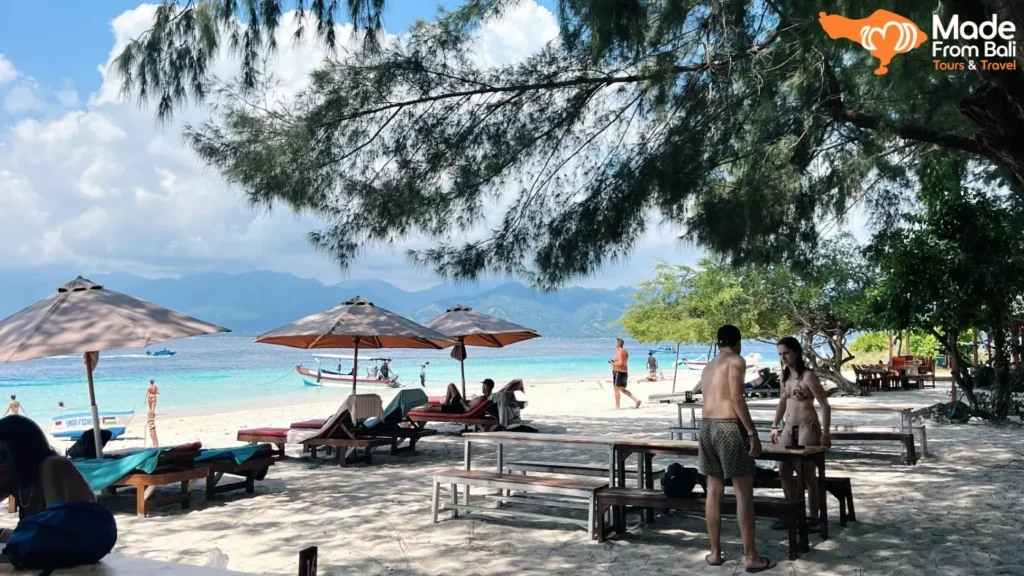
If you have searched for a gili islands day trip from bali, you have probably run into two very different answers. Tour operators tell you it is easy: book a boat, spend a few hours on white sand, come home with great photos. Travel forums tell you the opposite, sometimes bluntly, saying a single day barely gives you time to step off the boat before you need to turn around and get back on it.
Both are half right, and that gap is exactly why the question keeps coming up. The Gili Islands sit off the coast of Lombok, not off Bali itself, so the crossing takes real time, and the quality of your day depends almost entirely on the port you choose, the island you pick, and how tightly your transfers are planned. Get those three things wrong and you spend more of your day traveling than actually being there. Get them right and a day trip genuinely works, even if it is not a leisurely one.
This guide walks through the actual hour by hour math, compares your port and island options honestly, and flags the specific mistakes that turn this trip from a good idea into a long, tiring day. By the end, you should know whether it fits your itinerary at all, and if it does, exactly how to structure it.
The Boat Ride Takes Longer Than Most Itineraries Assume
Most people planning this trip picture the boat ride as the main event. In practice, it is only one leg of a longer chain that starts before sunrise and does not finish until the evening. The Gili Islands are roughly 35 kilometers from Bali’s coastline, and getting there involves a hotel pickup, a drive to the harbour, a check in window, the sea crossing itself, and then the same sequence in reverse a few hours later.
The reason so many travelers underestimate this trip is that boat operators quote the crossing time, which sounds short, without mentioning everything that happens around it. A one and a half hour boat ride can easily sit inside a twelve to thirteen hour day once you count the full loop.
A Realistic Hour by Hour Breakdown From Wake Up to Return
Here is roughly how the day plays out if you depart from Padang Bai, currently the fastest and most common route:
| Time | What is happening |
|---|---|
| 05:30 to 06:30 | Hotel pickup, timing depends on how far you are from the port |
| 07:00 to 07:45 | Arrival at the harbour, check in, boarding |
| 08:00 to 09:30 | Sea crossing to Gili Trawangan, typically 1.5 to 2.5 hours depending on the operator and sea conditions |
| 09:30 to 14:30 or 15:00 | Time on the island |
| 15:00 to 15:30 | Boarding for the return boat |
| 15:30 to 17:00 | Return crossing |
| 17:30 to 19:00 | Drive back to your hotel |
That leaves you with roughly four to five hours actually on the island, which lines up with what more careful guides on this route report as the realistic window once you factor in the 1.5 to 2.5 hour crossing each way and an early hotel departure around 5:30 AM. If you depart from Sanur or Serangan instead, the crossing stretches to closer to two and a half or three hours each way, which quietly eats another hour or more out of your island time.
This is not a reason to cancel the plan. It is a reason to stop treating “day trip” as a loose idea and start treating it as a schedule with very little slack in it.
Where the Time Actually Disappears Before You Reach the Water
The part almost nobody accounts for is everything that happens on land before the boat even leaves the dock. A few specific friction points show up again and again:
- Check in windows are stricter than they sound. Most operators want you at the harbour 30 to 60 minutes before departure, and if you are late, the boat does not wait.
- Padang Bai gets busy during peak months. July and August bring queues at the counter and on the dock, which can push your actual departure back even if your ticket says otherwise.
- Traffic to the port is unpredictable, not fixed. A drive that takes 70 minutes on a quiet morning can take twice that if you are leaving from Seminyak, Canggu, or Kuta during a school holiday week.
- Boarding itself takes longer than it looks. Boats load luggage and passengers directly from the beach in most cases, which is slower than a proper pier and adds ten to fifteen minutes you will not see on any schedule.
None of these individually ruin the day. Stacked together, they explain why so many travelers who “did the math” on paper still ended up with less island time than they expected.
Is a Single Day Really Enough to Justify the Trip
This is the question underneath the keyword, and it deserves a direct answer instead of a vague one. Forum threads on this exact route are split, with some travelers calling a day trip simply not feasible once you count transfer time, and others insisting it is one of the better short excursions available from Bali. The honest answer depends less on the destination and more on what you are optimizing for that day.
A day trip works well if your goal is a taste of the Gilis, something the more balanced accounts on this route describe as a rewarding contrast to Bali’s busier tourist areas even though most visitors leave wanting to come back for longer most people who do the day trip end up wanting a longer stay, but as a first introduction it is still worth the early alarm. It does not work well if your goal is a relaxed, unhurried island experience, because four to five hours simply does not allow for that pace.
What You Gain Compared to Skipping the Gilis Entirely
If the Gilis are not on your itinerary at all, a day trip still delivers a meaningful slice of what makes them worth visiting:
- A real look at car free, motorbike free islands, which feels different from anywhere else you will visit in Bali
- Snorkeling in clearer water than most of mainland Bali’s beaches offer
- A concrete answer to “should we come back for longer next time,” based on firsthand impressions rather than photos
- A break from Bali’s traffic and crowds, even if only for a few hours
What You Give Up Compared to Staying Overnight
The tradeoffs are just as real, and pretending otherwise does readers no favors. Skipping an overnight stay means missing the parts of the Gilis that only show up once the day boats leave. Several long-form accounts of the islands point out that the sunset hours, once the crowds thin out, and the quiet early mornings before the first boats depart are genuinely different experiences from the midday version most day trippers see.
You also give up flexibility. If the sea gets choppy in the afternoon, or your chosen boat delays, you have no buffer, because you must be on that specific return boat. An overnight stay removes that pressure entirely. And physically, the trip is demanding: an early wake up, a bumpy crossing, heat, sun, and another crossing back in one day is a lot to ask of young children, older travelers, or anyone prone to motion sickness, which is a caution that shows up consistently across guides covering this exact route.
Padang Bai Sanur or Serangan Changes Your Whole Morning
The single biggest lever you control on this trip is not which island you visit. It is which port you leave from, because that choice determines your wake up time, your total travel hours, and how much buffer you have if anything runs late.
| Port | Typical crossing time to Gili Trawangan | Typical starting price | Best suited for |
|---|---|---|---|
| Padang Bai | About 1.5 hours, tickets from around 20 to 21 euros | Lowest | Ubud, Candidasa, Amed, East and Central Bali |
| Sanur | About 2 hours 40 minutes, from around 23.50 euros | Mid range | Kuta, Seminyak, Canggu |
| Serangan | Similar duration to Sanur | Mid range | South west Bali, quieter boarding, close to the airport |
| Nusa Dua | Longer, routed further south | Mid to higher | Nusa Dua, Tanjung Benoa, Jimbaran, Uluwatu |
Note that Amed, which used to be the shortest crossing for travelers based in North Bali, is currently closed for harbour construction, so travelers in that area now need to route through Padang Bai instead.
Why Padang Bai Still Wins for East Bali and Ubud Travelers
If you are staying anywhere in Ubud, Candidasa, or the east coast, Padang Bai is close to a default choice. It offers the shortest crossing on the entire route, the widest selection of operators, and because competition among boat companies is highest here, prices tend to sit lower than the other ports. For someone coming from Ubud, the drive itself is only around an hour to an hour and a half, which keeps your total travel day shorter on both ends.
The tradeoff is that Padang Bai is also the busiest port on this route, which means more queueing during peak season and a slightly less polished boarding experience than some of the newer terminals.
When Sanur or Serangan Actually Saves You Time
If your hotel sits in Seminyak, Kuta, Canggu, or anywhere in south west Bali, the math flips. Driving from those areas to Padang Bai can take well over two hours each way once traffic is factored in, which can wipe out the time you would have saved on a shorter crossing. In that case, departing from Sanur or Serangan, even though the boat ride itself is longer, often gets you to the island around the same time or earlier, simply because you skip the long drive east.
Serangan in particular has developed a reputation for calmer boarding and shorter queues than Padang Bai, which matters more than people expect on an early morning departure when nerves and timing are already tight.
Gili Trawangan Gili Air or Gili Meno for Only a Few Hours
With four to five hours on the ground, trying to visit more than one island turns your day trip into a series of short, rushed stops rather than an actual visit anywhere. It is worth picking one island deliberately, based on what you actually want out of those hours, rather than defaulting to whichever one shows up first in search results.
| Island | Character | Best for a short visit if you want |
|---|---|---|
| Gili Trawangan | Largest, most developed, widest range of restaurants and activities | Easy logistics, guaranteed food options, the most straightforward first visit |
| Gili Air | Balanced, quieter than Trawangan, still has enough infrastructure | A calmer beach visit without sacrificing convenience |
| Gili Meno | Smallest and quietest, strong snorkeling reputation | Pure relaxation and snorkeling, with fewer eating options if you are picky |
Why Most Day Trippers End Up on Gili Trawangan by Default
Gili Trawangan is the most developed of the three islands, with the widest choice of restaurants, dive shops, and bike rental stalls clustered near the harbour. For a day trip, that density matters more than it sounds like it should. You are not searching for somewhere to eat lunch or spending time figuring out logistics on unfamiliar ground. Everything you need is within a short walk of where the boat drops you off, which preserves more of your limited hours for actually being on the beach or in the water.
It is also the island with the most direct boat connections from Bali, so ticket availability and schedule options tend to be better here than for Gili Meno specifically.
When Gili Air Is the Better Call for a Short Visit
If Trawangan’s energy is not what you are after, Gili Air offers a genuinely calmer alternative without giving up practicality. It sits between Trawangan and Meno in both size and atmosphere, with enough cafes and beach clubs to make a few hours easy to fill, but without the busier crowds near the main harbour. Couples and families in particular tend to find Gili Air the more comfortable choice for a short window, since you are not competing with a party crowd for beach space in the middle of the day.
Gili Meno is worth mentioning honestly: it has strong snorkeling credentials, but its smaller scale means fewer food options and less built up infrastructure, which can create friction on a tightly timed day trip if you have not planned your lunch stop in advance.
What You Can Realistically Do in Four or Five Hours on the Island
Once you are on the ground, the temptation is to try to fit in everything the island offers. With four to five hours, that almost never works well. The better approach is to pick one or two activities and commit to them, rather than spreading your time thin across snorkeling, cycling, shopping, and lunch, and ending up rushed through all of them.
A realistic short-visit plan looks something like this:
- Land and orient yourself quickly. Skip the temptation to wander aimlessly for the first thirty minutes. Head straight toward your chosen activity, since that window is the most valuable time you have.
- Pick one main activity, not several. Snorkeling or a short beach and lunch stop works better than trying to combine snorkeling, cycling, and shopping in one visit.
- Build in a buffer before the last boat. Plan to be back at the harbour at least 30 minutes before your return departure, since missing it is not a minor inconvenience, it means finding and paying for a different boat, if one is even available that day.
Snorkeling Spots Worth Prioritizing When Time Is Tight
If snorkeling is the priority, not all spots are worth the travel time on a short visit. Gili Trawangan’s Turtle Point is close to shore and reliably productive for sightings, which makes it a strong choice when you cannot afford to spend an hour getting to a farther site. The underwater statue installations near the harbour are similarly convenient, since they sit close enough to walk or take a short boat hop to.
Divers and longer-stay snorkelers often point to Gili Meno for the richest reef conditions, and that reputation is accurate, but reaching Meno’s best spots from a Trawangan day trip adds inter-island boat time you likely do not have. If snorkeling quality is your absolute priority and you are willing to sacrifice time on land, a snorkeling-focused day tour that departs directly for multiple sites, rather than a general island visit, is usually the better structure.
Skipping the Bicycle Loop Is Sometimes the Smarter Choice
Cycling around Gili Trawangan is a popular recommendation in almost every general guide to the island, and it is genuinely enjoyable when you have the time for it. The full loop takes roughly two hours at an easy pace, which is a serious chunk of a four to five hour visit. On a day trip, spending nearly half your available time on a bike ride often means shortening or cutting your time in the water entirely.
If you have already been to the Gilis before, or if beach and snorkeling time matters more to you than seeing the whole island, it is worth deliberately skipping the full loop and doing a shorter ride, or none at all, so your remaining hours go toward the activity you actually came for.
Rough Seas Change the Plan More Than People Expect
Weather does not just affect comfort on this route, it affects whether the trip happens at all. Fast boat operators will cancel departures when high winds and rough seas make the crossing unsafe, prioritizing passenger safety over keeping to schedule, and that reality should factor into how you plan a day trip, not just how you pack for one.
Dry Season Versus Rainy Season on This Specific Crossing
Indonesia’s dry season, roughly April through October, brings sunny skies, calmer seas, and better snorkeling conditions, and this is when the crossing is at its most predictable. Within that window, May, June, and September tend to be quieter than the peak months of July and August, which also means shorter queues at the harbour.
The rainy season, from around November through March, is a different story. Seas get rougher, and December and January are consistently flagged as the worst months for weather related cancellations on this route. A day trip during this window is not impossible, but it carries a real risk that your return boat gets delayed or cancelled, which on a day trip with no overnight buffer is a much bigger problem than it would be for someone already staying on the island.
Handling Seasickness Without Losing the Rest of Your Day
Even on a calm day, the open water crossing between Bali and Lombok can be enough to trigger motion sickness in people who do not usually experience it on shorter ferry rides. A few practical adjustments make a real difference:
- Take motion sickness medication before you feel anything, not after. Once symptoms start, most tablets are far less effective.
- Sit toward the back of the boat, near fresh air if the windows are open. Cabins get hot and stuffy quickly when doors are closed during rough conditions, which makes nausea worse for everyone on board, not just those already prone to it.
- Choose morning departures over afternoon ones when you have a choice. Sea conditions are generally calmer earlier in the day, before wind picks up.
- Pick larger boats if seasickness is a known issue for you. Bigger vessels handle chop with less bounce than smaller, faster boats, even if the crossing takes a little longer.
If you do end up on a rough crossing, it helps to know that most operators run this route multiple times daily and the crew is experienced with it, even when a bumpy ride feels alarming in the moment.
A Shared Boat Ticket and a Private Transfer Solve Different Problems
Once you have settled on a port, an island, and a season, one practical decision remains: how you actually get from your hotel to the harbour and back. This is where a lot of day trip planning falls apart, because a fast boat ticket only covers the water crossing. It does not solve the land transfer, and that gap is exactly where the earlier hour by hour breakdown showed the most unpredictable time loss.
What a Shared Fast Boat Ticket Does and Does Not Include
A standard fast boat ticket gets you a seat on the crossing and, with most operators, a fixed departure and arrival time. What it typically does not include is transport to the harbour itself. Some tour packages bundle a shared shuttle pickup, but shared shuttles usually mean multiple stops before yours, which eats into your morning in ways that are hard to predict in advance.
This matters because the single largest source of uncertainty in the entire day, more than the boat ride itself, is the trip from your hotel to the port. A shared shuttle collecting passengers from several hotels across South Bali before heading to Padang Bai can easily add 45 minutes to an hour compared to a direct trip.
Where a Private Driver Actually Saves Your Morning
A private driver removes that specific uncertainty. Instead of building your entire schedule around a shared shuttle’s pickup window and route, you set your own departure time based on your actual hotel location and the port you need to reach, with a driver who already knows the fastest route and the realistic drive time for that specific morning.
This is the part of the trip that operates entirely on land, away from the boat schedule, which is exactly where a company built around private driving in Bali, like Made From Bali, fits naturally. A driver familiar with the routes from South Bali, Ubud, and East Bali to Padang Bai, Sanur, or Serangan can time your pickup precisely enough to avoid the two most common failure points on this trip: arriving too late to check in comfortably, or leaving so early that you are sitting at the harbour for an hour with nothing to do. For a trip where nearly every other variable, the crossing time, the weather, the boat schedule, is outside your control, locking down the one variable you can control tends to make the biggest difference to how the day actually feels.
The Small Mistakes That Turn This Trip Into a Bad Day
Most bad experiences on this route do not come from anything dramatic. They come from a handful of small, avoidable planning errors that stack on top of each other.
Booking the Wrong Return Boat Time
The last boats back to Bali leave earlier than most people expect. Last departures from Gili Trawangan typically run around 15:15, and from Gili Air around 15:35. If you book a return ticket later in the afternoon assuming you will have more flexibility, or worse, assume you can simply catch “the next one” if you run late, you may find there is no later option that day. Confirm your exact return time when you book, and treat it as a hard deadline, not a rough estimate.
Underestimating Hotel to Harbour Travel Time
The second most common mistake is planning the morning around Google Maps’ estimated drive time rather than the realistic one. A route that shows 70 minutes on a map can easily take 90 to 120 minutes during early morning traffic out of South Bali, especially heading toward Padang Bai. Building in a 30 to 45 minute buffer beyond the estimated drive time, particularly during peak season, is the difference between a relaxed morning and a stressful sprint to the check in counter.
Gili Islands or Nusa Penida When You Only Have One Free Day
If you only have a single spare day in your Bali itinerary and are still deciding between destinations, it is worth comparing the Gilis honestly against the closer alternative most locals and repeat visitors mention in the same breath: Nusa Penida.
| Factor | Gili Islands | Nusa Penida |
|---|---|---|
| Crossing time from Bali | 1.5 to 2.5 hours each way from the closest port | Roughly 30 to 45 minutes each way from Sanur |
| Realistic hours on location | 4 to 5 hours | 7 to 8 hours, since less time is lost to travel |
| Physical demand | Higher, due to the longer open water crossing | Lower, shorter crossing with less exposure to rough seas |
| Best suited for | Travelers who specifically want the car free island atmosphere and snorkeling the Gilis are known for | Travelers who want maximum sightseeing time and are less committed to one specific destination |
Neither option is objectively better. If the Gili Islands themselves are the goal, a day trip there is still worthwhile despite the longer crossing. But if you are simply looking for the best single day excursion from Bali with the least travel overhead, Nusa Penida delivers more usable hours for less transit time, which is why it has become the more common one-day pick for travelers who have not specifically set their heart on the Gilis.
Putting the Gili Islands Day Trip Together Without the Stress
A Gili Islands day trip from Bali is genuinely doable, but only if you treat it as a tightly scheduled day rather than a loose plan. The math is simple once you see it laid out: a 1.5 to 3 hour crossing each way, depending on your port, leaves you with roughly four to five hours on the island, and every piece of friction outside that crossing, traffic to the harbour, check in delays, an unclear return time, is what actually determines whether the day feels smooth or rushed.
The choices that matter most are the ones you can control well before the boat ever leaves the dock: picking the port that matches where you are staying, choosing one island instead of trying to cover all three, building in a buffer for traffic and check in, and locking down your return boat time from the start. Handle those, and the parts you cannot control, the weather and the sea itself, become much easier to manage.
If the biggest source of uncertainty on your morning is simply getting to the harbour on time, arranging a private transfer with a driver who knows the route and the realistic timing for your specific starting point removes that variable entirely, leaving you with one job that day: enjoying the few hours you have on the island.