


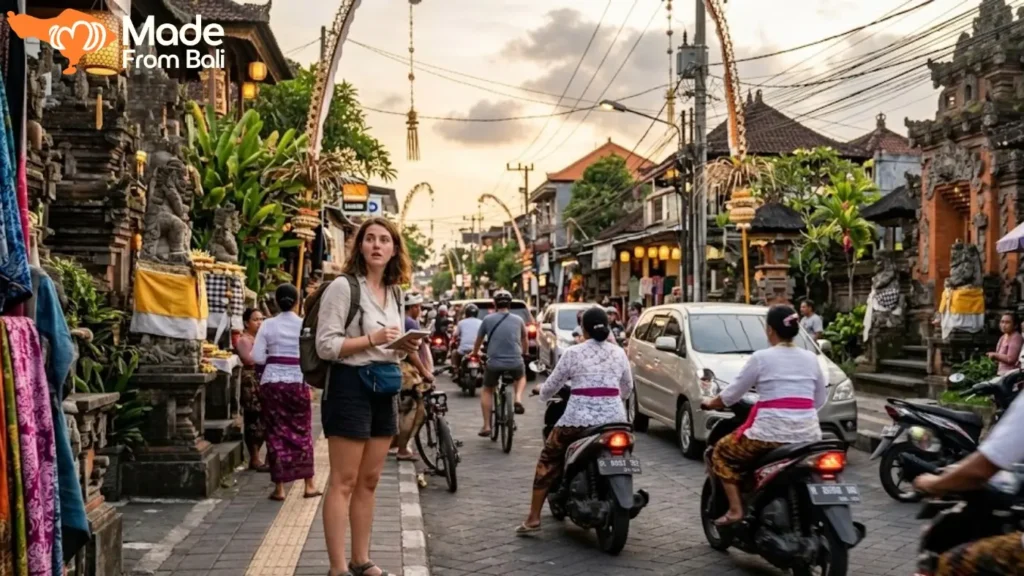
Most people arrive in Bali with a mental image built from Instagram reels and friends’ highlight stories. Emerald rice terraces. Cliffside temples at sunset. Empty beaches framed by white sand and turquoise water. What they do not expect is the complexity underneath all of that. Bali is not one destination with variations. It is closer to five or six very different travel experiences stacked together on a single island, and if you do not understand that early, you will spend your trip in a car between places rather than actually being in them.
The frustration that first-time visitors most often describe is not that Bali was disappointing. It is that the trip felt rushed, or that they picked the wrong area to base themselves, or that they saw the right things at the wrong time. These are planning problems, and they are entirely avoidable once you have a clearer picture of how the island is actually structured.
This guide is not a list of thirty places to add to your bucket list. It is a practical framework for understanding what Bali offers, how its different zones work in relation to each other, and how to build a first trip that feels complete rather than frantic.
Bali Is Not One Place and That Changes Everything About How You Plan It
When people say they are going to Bali, they are often referring to a stretch of the southern coastline covering areas like Kuta, Seminyak, and Canggu. But Bali the island is considerably larger and more varied than that, and the difference between staying in the wrong area and the right one for your trip type can be the difference between a memorable experience and a frustrating one.
The island is roughly divided into four zones that matter most for first-time visitors: South Bali, which includes the coastal strip from the airport all the way to the Uluwatu peninsula; Central Bali, which is essentially Ubud and the surrounding inland area; East Bali, which is quieter and less visited but increasingly relevant for travelers wanting more authentic experiences; and the Nusa Islands, which are technically separate islands accessible by boat from the Sanur area.
Understanding how these zones relate to each other geographically is the first and most important planning decision you will make.
Why Most First-Time Visitors Underestimate Travel Time Between Zones
Bali is a small island. On a map, the distance from Canggu to Ubud looks like something you could drive in twenty minutes. In practice, it takes one to two hours depending on the time of day, the route, and how cooperative the roads are. The island has no highway system connecting its major tourist zones. Traffic flows through the same narrow roads that were designed for a much smaller population, and tourist traffic has multiplied faster than road infrastructure has kept pace.
This matters for planning because a lot of first-time itineraries are built around the idea of doing one thing in the morning in one area and something else in the afternoon in another, with no accounting for what the road between them will actually feel like. A day trip from Seminyak to Ubud to see the rice terraces and come back in time for a sunset beach club sounds reasonable on paper. In reality, you will spend close to four hours of that day in a car if you are not careful about timing.
The practical implication is this: your base location should match where most of your planned activities are, and if you want to experience both the beach culture of South Bali and the cultural depth of Ubud, consider splitting your stay between two bases rather than trying to cover both from one location.
How to Choose Which Part of Bali Fits Your Trip Without Reading Every Article on the Internet
Rather than researching every area and getting more confused, start with two questions. First, what does the majority of your ideal day look like: beach and ocean, culture and nature, or a mix of both? Second, how many nights do you have?
If you have five nights or fewer and you primarily want beach time, sunsets, good food, and some nightlife, base yourself in South Bali, specifically in Seminyak or Canggu. If you want cultural immersion, temples, rice terraces, and a slower pace, base yourself in Ubud. If you have seven or more nights, the most satisfying structure for most first-time visitors is a split stay: three to four nights in South Bali and three to four nights in Ubud, with a logical day-trip structure built around each base.
The Nusa Islands work best as an add-on, not as a base for a first trip, and East Bali is more rewarding once you have some familiarity with how the island operates.
South Bali Is Usually Where Your Trip Starts, But Not Every Part of It Feels the Same
The airport sits in Denpasar, which places arriving visitors squarely in the southern part of the island. For most travelers, South Bali is the first thing they experience and often the dominant setting of the trip. What surprises many people is how different the individual areas within South Bali actually feel from each other, sometimes within just a few kilometers.
Understanding these internal differences helps you choose where to stay, where to spend your time, and what to realistically expect from each pocket of the south.
Kuta and Legian Are Convenient, But They Reward Visitors Who Know What They Are Actually There For
Kuta has a complicated reputation among experienced Bali travelers. It is loud, crowded, and commercially dense in a way that feels distinctly different from the rest of the island. The beach is wide and the waves are strong, which makes it genuinely popular with younger surfers and travelers who want an energetic atmosphere and easy access to budget accommodation, bars, and street food. It is not a destination for quiet evenings or cultural depth, and it was not designed to be.
If you are connecting through the south for a night or two before heading somewhere else, or if your travel group skews toward nightlife and you are budget-conscious, Kuta and Legian make logistical sense. If you are hoping for the version of Bali that feels more refined and less frenetic, move further up the coast.
Seminyak and Canggu Suit Travelers Who Want Beach Life With More to Do Around It
Seminyak sits north of Kuta and the shift in atmosphere is noticeable almost immediately. The streets are wider, the restaurant quality is higher, and the shopping moves from souvenir stalls to independent boutiques. Seminyak is where a lot of mid-range to high-end travelers base themselves for South Bali, and it earns that position because the combination of beach access, dining variety, and proximity to other areas like Kuta to the south and Canggu to the north makes it genuinely versatile.
Canggu, which lies further north again, has evolved rapidly over the past decade into a hub for digital nomads, surfers, and lifestyle travelers. It has a laid-back boho aesthetic, excellent cafes, strong surf breaks for beginners and intermediates, and a social scene centered around beach clubs and independent restaurants. Canggu is less formal than Seminyak and attracts a younger demographic on average, though that is changing as the area matures.
For first-time visitors who want beach culture paired with good food and some social energy without the intensity of Kuta, Seminyak or Canggu are the most reliable choices in South Bali.
Uluwatu Feels Different From the Rest of South Bali and That Is Exactly the Point
Uluwatu occupies the southern tip of the Bukit Peninsula, a limestone plateau that juts below the main body of South Bali. The landscape here is noticeably different: dramatic cliffs, hidden beach coves accessed by steep staircases, and a dry, open terrain that contrasts with the lush humidity of Ubud or northern Bali. The beaches in Uluwatu, including Padang Padang, Bingin, and Dreamland, are among the most photogenic on the island.
The surf here is powerful and consistent, which is why Uluwatu attracts an experienced surfing crowd. It also has a growing number of clifftop resorts and beach clubs that offer exceptional views without requiring surf skills to enjoy. The trade-off is location: Uluwatu sits at the far southern tip of the peninsula, which means getting to other parts of Bali from here requires more travel time than from Seminyak or Canggu. It works well as a few-day focus destination or a romantic retreat, but it is not the most practical base for exploring the whole island.
Ubud Is the Part of Bali That First-Time Visitors Either Love Immediately or Underestimate
Ubud sits roughly in the center of the island at higher elevation, surrounded by rice fields, jungle rivers, and a density of temples that reflects its role as Bali’s cultural and spiritual heart. Visitors who arrive expecting the same beach-resort energy of South Bali are sometimes caught off guard. Ubud moves more slowly. The streets are narrower and frequently congested. The air is cooler. And the concentration of cultural experiences, art markets, wellness retreats, and natural sites within a relatively compact area is genuinely impressive.
The visitors who tend to underestimate Ubud are those who visit it as a single day trip from South Bali. That approach is common but limiting. A day trip from Seminyak to Ubud means spending a large portion of daylight hours in transit, which compresses the actual time available to explore. Ubud rewards at least two or three nights based there.
The Rice Terraces Are Worth It, But What Time You Go Matters More Than Which One You Pick
The Tegalalang rice terraces are probably the single most photographed landscape in Bali. They are genuinely spectacular. They are also extremely popular, which means the experience of visiting them varies dramatically depending on when you arrive.
At 7am on a clear morning, the terraces are quiet, the light is soft and golden, and the surrounding sound is birds and running water rather than crowd noise and hawker calls. By 10am, the scene has shifted considerably. Tour buses begin arriving, the terraced walkways fill with visitors, and the experience becomes more about navigating the crowds than absorbing the landscape. The takeaway here is not to avoid Tegalalang but to arrive early and plan it as the first stop of the morning, not a midday excursion.
Other rice terrace options in the Ubud area, including the terraces around Jatiluwih further west, offer more space and a less commercially developed surrounding, though they require more travel time to reach. Jatiluwih also carries UNESCO World Heritage status and the landscape is broader and more expansive than Tegalalang.
Temples in the Ubud Area Reward Visitors Who Arrive With Some Context, Not Just a Camera
Bali has thousands of temples, and several of them are among the most visited sites on the island. Pura Tirta Empul, a water purification temple where Balinese Hindus participate in ritual bathing ceremonies, is one of the most significant. Pura Besakih, known as the Mother Temple, sits on the slopes of Mount Agung and serves as the largest and most sacred temple complex in Bali. Goa Gajah, the Elephant Cave, offers a more compact and accessible experience closer to central Ubud.
Visiting temples without any understanding of what they represent tends to leave people feeling like they looked at beautiful architecture without actually understanding what they were seeing. Even a basic awareness of the role temples play in Balinese Hinduism, specifically the concept of maintaining balance between the human, natural, and spiritual worlds, changes the quality of the visit significantly. A sarong and sash are required for temple entry regardless of your gender, and these are usually provided at the entrance for a small donation if you do not have your own.
Why Some Travelers Find Ubud More Memorable Than Any Beach on the Island
The answer is usually the combination of density and variety. Within a day’s reach of Ubud you have rice terraces, waterfalls, active volcanoes, sacred temples, traditional craft villages, cooking classes, yoga studios, healing practitioners, and a restaurant scene that quietly rivals any major city. That range is unusual and it concentrates a version of Bali that feels substantive rather than decorative.
Visitors who arrive with a beach-first mindset sometimes shift their preference mid-trip after spending time in Ubud. It is not that the beach areas are less valuable; it is that Ubud offers a different kind of richness that many travelers do not expect until they are inside it.
The Nusa Islands Are Worth Considering, But They Change the Shape of Your Whole Trip
The Nusa Islands, specifically Nusa Penida, Nusa Lembongan, and Nusa Ceningan, are accessible by fast boat from Sanur Harbor in South Bali. The crossing to Nusa Penida takes roughly 45 minutes; Nusa Lembongan is slightly closer. Adding the islands to a first Bali trip is increasingly popular, and for good reason. But the decision requires some honest thinking about what kind of experience you are looking for.
Nusa Penida Is Stunning and Physically Demanding and Both Things Are True at the Same Time
Nusa Penida has become famous for specific images that circulate widely on social media: the Kelingking Beach cliff viewpoint, the natural rock arch at Broken Beach, Angel’s Billabong. These sites are real and they are as dramatic as they look in photos. What the photos do not show is the infrastructure situation that surrounds them.
The roads on Nusa Penida are still largely unsealed or in poor condition. Getting to Kelingking Beach requires navigating steep, rocky paths that are challenging even for physically fit travelers. Many of the island’s most popular spots involve significant walking on uneven terrain in heat that can be intense by midmorning. Nusa Penida is absolutely worth the effort if you are prepared for it, but visitors who arrive expecting a polished day-trip destination sometimes find the logistics more demanding than anticipated.
The ideal way to visit Nusa Penida is to overnight there rather than treating it as a rushed day trip. That gives you the morning light at the viewpoints before the day-trip crowds arrive by boat, and it allows time to explore at a pace that actually lets you absorb the island’s landscape rather than rushing between photo spots.
Nusa Lembongan Is the Quieter Option and That Is Not a Weakness
Nusa Lembongan offers a meaningfully different experience from its larger neighbor. The island is smaller, the roads are manageable, and the overall vibe is significantly more relaxed. There are good snorkeling spots, a strong dive scene, and beach clubs that attract the kind of crowd that wants beautiful surroundings without the physical intensity of Nusa Penida.
For couples, older travelers, or anyone who wants island time without the hiking and rough roads, Nusa Lembongan is often the better fit. It is also a natural base for snorkeling with mola mola (ocean sunfish), which are seasonally present in the waters around the Nusa Islands between July and October.
Experiences That First-Time Visitors Commonly Miss Because They Are Not on the Top Lists
The famous sites in Bali are famous for good reason, and visiting them is entirely worthwhile. But first-time visitors who build their entire itinerary around the top-ten lists tend to return home feeling like they saw Bali’s highlights without experiencing much of its texture. A few specific experiences consistently surprise first-timers who include them, and they are worth knowing about before you finalize your plans.
Watching a Kecak Fire Dance at Uluwatu Before Sunset Is a Different Kind of Experience Than Most Activities in Bali
The Kecak dance is a traditional Balinese performance derived from the Hindu epic Ramayana, performed by a large circle of men chanting rhythmically in a pattern that creates a hypnotic, layered sound. The version performed at Uluwatu Temple in the late afternoon has a specific quality that the indoor or hotel-staged versions do not replicate: it takes place in an open-air amphitheater on the cliff edge, and the performance typically concludes just as the sun drops toward the horizon behind the ocean. The combination of the fire, the chanting, the cliff setting, and the sunset light creates something that is difficult to describe accurately and worth experiencing directly.
Tickets should be arranged in advance, particularly during peak season between July and August. Arrive at least 30 minutes before the performance starts to get a position with a clear sightline.
A Cooking Class in Ubud Teaches You Something About Bali That Sightseeing Cannot
Most Ubud cooking classes begin with a market visit in the early morning, which is itself a window into daily Balinese life. The wet markets operating between 6am and 8am are where local families buy fresh ingredients before the tourist day begins, and the combination of unfamiliar produce, spice vendors, and the pace of ordinary commerce provides a kind of cultural grounding that temples and rice terraces, for all their beauty, do not always offer.
The cooking class that follows builds on that context. Learning to make dishes like lawar, satay lilit, and black rice pudding from scratch, using the ingredients you just saw in the market, creates a connection between the food and the culture it comes from. Many visitors describe cooking classes as one of the most memorable mornings of their Bali trip, partly because it is interactive rather than observational.
Cycling Through the Village Roads North of Ubud Gives a Version of Bali That Disappears in Tourist Areas
Guided cycling tours that begin in the highlands north of Ubud and descend through village roads offer access to a quieter, more everyday version of the island. The route typically passes through small farming communities, past family temple compounds, and alongside agricultural land where the pace is entirely different from the main tourist corridors. You are not seeing a curated version of Balinese village life. You are passing through actual communities where people are going about their day.
The cycling itself is largely downhill, which makes it accessible to most fitness levels without being physically demanding. It typically takes around three to four hours including stops, and most tours combine it with a traditional breakfast before departure.
Getting Around Bali on Your First Trip Requires a Decision Most Visitors Do Not Think About Early Enough
Transport in Bali is not self-explanatory, and the decision you make about how to get around will shape the shape of your entire trip more than almost any other logistical choice. Bali does not have a public transport system in the conventional sense. There are no trains, buses do not connect tourist areas reliably, and the geography of the island means that most experiences require some form of private transport to reach.
What a Private Driver Actually Offers Compared to Booking Activities Separately
Hiring a private driver for the day is the most practical and often the most cost-effective way to explore Bali if you are covering multiple sites. A full-day driver in Bali typically means eight to ten hours of transport with a driver who will wait for you at each location, navigate the roads, help with parking, and often serve as an informal guide with local knowledge.
The cost for a full-day driver is generally reasonable when split between two or more people, and it compares favorably to the combined cost of multiple Grab rides between sites, particularly if those sites are spread across different zones. For first-time visitors unfamiliar with the roads and with no desire to ride a scooter, a trusted private driver removes most of the logistical friction from the day.
When booking a driver, arrange through your accommodation, a local tour provider, or a trusted recommendation rather than accepting offers from drivers who approach you uninvited near tourist sites. Price clarity in advance matters; confirm whether tolls and fuel are included in the agreed rate.
Why Grab Works in Some Parts of Bali and Becomes Unreliable in Others
Grab, the app-based ride service common across Southeast Asia, functions well in Denpasar, Seminyak, Kuta, Sanur, and parts of Canggu. In these areas, wait times are reasonable and the pricing is transparent. Outside these zones, coverage thins considerably. In Ubud, Grab operates but availability is more inconsistent and some drivers decline trips to less accessible locations. In Uluwatu and the Bukit Peninsula, Grab can be hit-or-miss depending on the time of day and specific pickup location.
The practical guidance is to use Grab for short urban hops within the main South Bali corridor and supplement it with arranged drivers or your accommodation’s transport options when traveling further afield.
The Scooter Question That Every First-Time Visitor Ends Up Asking
Renting a scooter in Bali is common and it offers a level of flexibility and spontaneity that no other transport option provides. It is also genuinely risky for riders without solid two-wheeled experience, especially in South Bali where the traffic density and road conditions require confident handling. Hospitals in Bali see a significant number of tourist scooter injuries annually, and Indonesian road rules and enforcement operate differently from what many international visitors are used to.
If you have regular experience riding motorbikes or scooters in traffic, and you hold an appropriate international license, riding in Bali outside the most congested South Bali corridors can be a rewarding way to explore. If you do not have that experience, the combination of traffic, road conditions, and the physical demands of navigating an unfamiliar environment makes it a considerable risk. This is one of those decisions where honest self-assessment matters more than what other travelers claim to have done without problems.
Timing Shapes the Quality of Almost Every Experience in Bali
When you go to Bali, not just on which day but at what time of year, what time of day, and where you are in relation to Bali’s seasonal patterns, directly affects what you will see, how crowded things will be, and how physically comfortable the experience is. Timing is one of the most undervalued planning variables among first-time visitors.
Dry Season, Wet Season, and the Shoulder Period in Between That Many Visitors Overlook
Bali’s dry season runs roughly from April through October, with July and August representing the busiest and most expensive period. The wet season runs from November through March, with January and February seeing the most consistent rainfall. These are useful reference points but they oversimplify the reality.
The shoulder months of April to June and September to October offer what is arguably the best combination of favorable weather and manageable crowd levels. Prices for accommodation are lower than peak season, the roads are less congested, and the experience at popular sites is significantly more pleasant. For most first-time visitors who have flexibility in their travel dates, these shoulder months are worth targeting.
Traveling during the wet season is not a disaster. Rainfall in Bali during the wetter months tends to be heavy but short, often concentrated in late afternoon or evening rather than all day. Many visitors complete their Bali trips during the wet season without significant disruption. The considerations are more about road conditions after rain, higher humidity, and the possibility of some outdoor activities being affected rather than the wholesale closure of the island to tourism.
How Traffic Patterns in South Bali Can Quietly Ruin an Otherwise Well-Planned Day
The South Bali traffic problem is not dramatic enough to make it into most travel guides, but it is consistent enough to be a genuine planning issue. The main corridors between Kuta, Seminyak, Canggu, and the roads leading toward Ubud or Uluwatu experience significant congestion during two reliable windows: mid-morning between roughly 9am and midday, and late afternoon between 4pm and 7pm.
The practical implication is that departures from your accommodation should ideally happen before 8am if you are heading to a site that requires any meaningful drive. Returning by 3pm or planning to stay in one area through the evening avoids the worst of the afternoon traffic. Day trips that require you to be at a distant site, complete it, and return within tourist hours often eat their entire time margin in transit.
The Difference Between Arriving at a Bali Sunrise Spot Early and Arriving When Everyone Else Does
A handful of Bali experiences are profoundly better in the early morning and noticeably diminished by the time the main tourist day begins. The Tegalalang rice terraces and Campuhan Ridge Walk in Ubud are two examples where the 6am to 8am window offers near-solitude and beautiful light compared to the crowded scenes that develop later. The sunrise trek up Mount Batur, an active volcano in the Kintamani area, is another: the pre-dawn departure and crater rim arrival at sunrise, with the surrounding calderas and lake emerging from the mist below, is a specific experience that cannot be replicated by arriving at a different time.
Organizing your trip around early morning activity and afternoon flexibility, rather than sleeping late and beginning the day at 10am, tends to produce a more rewarding Bali experience, particularly for the sites that are most popular.
Cultural Awareness in Bali Is Not a Formality, It Is Part of Having a Better Trip
Balinese Hinduism is not background decoration for a tropical holiday. It is a living, practiced tradition that shapes daily life across the island in ways that are visible at almost every turn. The incense and flower offerings placed at doorways and intersections each morning. The sounds of gamelan music from ceremony preparations. The temple flags lining the roads before religious events. These are not tourist amenities; they are the actual texture of Balinese life. Engaging with them thoughtfully produces a richer experience than treating them as photo opportunities.
What Temple Visits Actually Require From You and Why the Rules Exist
Temples in Bali are active places of worship, not historical museums. Visitors are generally welcome at many temples, but the expectations around dress and behavior exist because you are entering a space that holds genuine religious significance for the local community.
The basic requirements are:
- Wear a sarong that covers your knees, available at temple entrances for a small donation if you do not have your own
- Cover your shoulders; a light scarf or shawl works well
- Avoid entering inner temple sanctuaries unless explicitly guided to do so
- Speak quietly and avoid disruptive behavior near active ceremonies
- Women who are menstruating are traditionally asked not to enter certain temple areas, a notice that is usually posted at the entrance
These are not arbitrary rules. They reflect the community’s expectation that their sacred spaces will be treated with appropriate respect by visitors who are guests in that environment.
When You Happen to Encounter a Ceremony, What That Moment Is and How to Respond
Bali has an extraordinarily rich ceremonial calendar rooted in the Balinese Saka calendar, which means religious ceremonies and community processions happen throughout the year with some frequency. If you encounter a ceremony in progress, whether a temple festival, a cremation procession, or a community ritual along a village road, the appropriate response is to observe respectfully from a distance, avoid stepping into the procession or the ceremony space, and follow the lead of locals if in doubt about where to stand.
Cremation ceremonies in Bali are notably different from the solemn funerary events familiar to many Western visitors. They are considered celebrations of the soul’s journey onward, and observers are typically welcome to watch from a respectful position. This does not mean photographing freely or intrusively; reading the situation and behaving accordingly matters more than following a prescribed rule.
How to Put a First Bali Trip Together Without Overpacking the Itinerary
The temptation when planning a first Bali trip is to fill every day with activities in case you miss something. This instinct is understandable but counterproductive. Bali’s most rewarding moments are often the unplanned ones: stumbling onto a village ceremony, finding a small warung (local eatery) with remarkable food, lingering in a rice terrace at sunset because the light was too good to leave. An over-scheduled itinerary crowds these moments out and replaces them with the stress of staying on schedule.
A Realistic Framework for Five to Seven Days That Leaves Room for the Trip to Breathe
For a trip of five to seven days, a workable structure for most first-time visitors looks roughly like this:
- Days 1 to 2, South Bali: Arrive and recover from travel. Explore the area around your accommodation, visit a beach, walk through the local streets, and eat without a fixed plan. Use this time to adjust to the time zone and heat before committing to demanding activities.
- Day 3, South Bali day trip: Use a private driver to visit one major site in the surrounding area. Tanah Lot at sunset, the Uluwatu Temple and Kecak performance, or a beach day on the Bukit Peninsula all work well as single-day focuses without requiring long road time.
- Days 4 to 5, Ubud base: Relocate to Ubud in the morning, check in, and use the afternoon to walk the town. Day 5 is a full day for the rice terraces, a waterfall, or a temple visit in the morning and a cooking class or spa afternoon.
- Day 6, Ubud extended or island departure: Use the morning for Mount Batur if sunrise trekking interests you, or a cycling tour through the villages. Alternatively, travel to Sanur and take the boat to Nusa Lembongan for a night.
- Day 7, return: Build in buffer before departure. Bali’s airport traffic can be unpredictable and arriving stressed at the airport is an avoidable way to end a good trip.
This structure leaves gaps by design. The gaps are not problems; they are where the best memories usually happen.
The Difference Between a Bali Trip That Felt Rushed and One That Felt Complete
Travelers who return from Bali feeling like they missed things almost always did too much, not too little. The irony is consistent. A week covering four zones, two island day trips, five temples, a sunrise trek, and a series of beach clubs leaves people feeling like they ate a large meal too quickly. Technically present for all of it. Satisfied by almost none of it.
The trips that people describe most warmly tend to be the ones with fewer locations and more time in each. A week split between South Bali and Ubud, with two or three focused activities per day and space for unplanned discovery, produces the kind of experience that stays with people long after the photographs fade.
What Bali Gives You When You Stop Trying to See All of It at Once
There is something about Bali that resists the conventional tourism checklist approach, and the visitors who figure that out early have noticeably better trips. The island does not reward speed. It rewards attention. The detail of a temple gate carving. The sound of an offering bell in the early morning. The way the light moves across a rice terrace between 6am and 8am. These are not experiences you access by covering ground. They are experiences you access by slowing down long enough to be somewhere rather than just passing through it.
For a first trip, the goal is not to see everything Bali has. It is to return home knowing the island a little more honestly than you did before you arrived, with enough remaining curiosity to want to come back. Most people who visit Bali once eventually return. The ones who try to solve the whole island in a single trip are usually the ones who miss the part that makes it worth returning to.
REFERENSI
- Bali.com. Area and Destination Guide. https://bali.com/bali/destinations/
- Kura-Kura Bus Blog. Bali Travel Guide 2026: A Local Guide for First-Time Visitors. https://kura2bus.com/blog/bali-travel-guide-2026-a-local-guide-for-first-time-visitors/
- Bali Holiday Secrets. First Time in Bali: What You Need to Know. https://www.baliholidaysecrets.com/first-time-in-bali/
- Bali Untold. Area Guide: Where To Stay in Bali 2026. https://baliuntold.com/stay/
- Seek Sophie. Bali Map 2026: Your Essential Area-by-Area Guide. https://www.seeksophie.com/magazine/a/bali-map-area-guide
- Rachel Off Duty. What to Do in Bali: A One-Week Itinerary For First-Timers. https://racheloffduty.com/blog/what-to-do-bali-one-week-itinerary/
- Picky Your Trail. Common Bali Travel Mistakes 2026 and How to Avoid Them. https://pickyourtrail.com/blog/common-bali-travel
- The Honeycombers Bali. Where to Stay in Bali: Neighbourhood Guide. https://thehoneycombers.com/bali/bali-neighbourhood-guide-where-to-stay/