

Most people arrive in Ubud expecting something meaningful and leave wondering if they did it right. They visited the monkey forest, walked past a temple, caught part of a dance show, and bought a carved wooden mask from a market stall. It looked like culture. It felt like tourism.
That gap between the two is exactly what this guide addresses. Ubud holds some of the most genuinely immersive cultural experiences available anywhere in Bali, but accessing them well depends on things most travel content never mentions: timing, sequencing, visitor type, and a basic understanding of what you are actually walking into. A temple visit at 10 AM on a busy Saturday and a temple visit at 8 AM on a quiet Tuesday are not the same experience. A Kecak performance and a Legong performance are not interchangeable. A sarong and sash at the gate is not the same as understanding why the gate exists.
The information here is written to reduce uncertainty, not to sell you a highlight reel. If you are planning a trip to Ubud and want your time there to feel genuinely connected to what makes this town different from everywhere else in Bali, this is where to start.
Why Ubud Preserved Its Traditions While the Rest of Bali Changed
Understanding why Ubud feels different from Seminyak or Canggu is not just background knowledge. It explains why certain behaviors matter, why ceremonies happen so frequently, and why culture in Ubud is not a performance put on for tourists but a functioning part of everyday life.
The Geography and History Behind Ubud’s Cultural Identity
Ubud sits in the central highlands of Bali, roughly an hour’s drive inland from the beach towns of the south. That geographic distance from the coast matters more than it sounds. When international tourism began reshaping southern Bali in the 1970s and accelerated through the following decades, Ubud’s inland position gave it a natural buffer. Development arrived more slowly, and the community had more time to absorb it on its own terms.
The town’s name comes from the Balinese word ubad, meaning medicine, a reference to the healing plants that grow along the rivers and ravines surrounding the area. That association with healing and restoration has shaped how Ubud positioned itself over time, attracting artists, writers, and spiritual seekers rather than purely beach tourists. In the 1930s, Western painters and anthropologists began settling in the area, and the Ubud royal family actively encouraged artistic practice and cultural preservation. The collaboration between local Balinese artists and visiting European figures like Walter Spies and Rudolf Bonnet produced a distinctly Ubud style of painting that still defines the region’s galleries.
The result is a town where culture never had to be recreated for visitors. It was already there, in a continuous and unbroken form.
How Daily Spiritual Life Shapes Everything You See and Hear
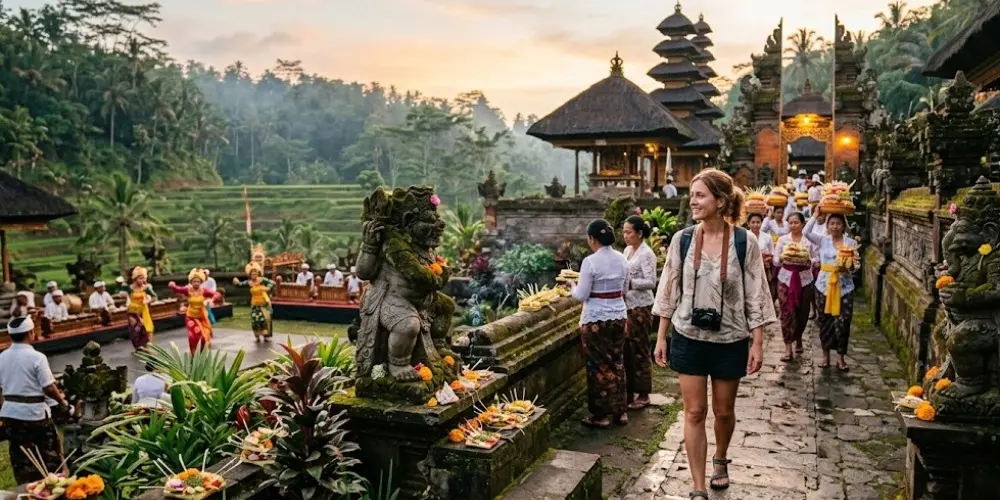
One of the most disorienting things for first-time visitors to Ubud is how much of daily life is visibly ceremonial. Small woven palm-leaf offerings called canang sari appear on doorsteps, in front of shops, at motorbike dashboards, and at the base of trees every single morning. Women in traditional dress carry elaborate towers of fruit and flowers on their heads through streets that also carry scooter traffic. Gamelan music drifts out of compound walls at unexpected hours.
This is not spectacle. It is practice. Balinese Hinduism, which blends Shaivite Hindu traditions with animist and Javanese Buddhist influences, operates around a concept called Tri Hita Karana, a philosophy of maintaining harmony between people, nature, and the divine. Ceremonies, offerings, and rituals are not occasional events. They are the mechanism through which that harmony is maintained daily.
This matters practically for travelers because it means you will encounter culture whether you plan to or not. The question is whether you understand what you are encountering. A procession that stops traffic for twenty minutes is not an inconvenience. A ceremony at a temple that means you cannot enter a particular courtyard is not a closed door. Once you understand the underlying logic, Ubud starts to read very differently.
The Experiences That Go Deeper Than the Standard Tourist Route
Ubud has no shortage of cultural activities listed in every travel guide. The challenge is not finding them. It is knowing which ones are genuinely immersive and which ones have been packaged so heavily for visitors that the cultural substance has been thinned out. A few experiences still deliver real depth, but they reward preparation.
Watching a Dance Performance Is One Thing, Choosing the Right One Is Another
Dance performances happen almost every night across multiple venues in Ubud, which sounds like a good thing until you realize they are not all the same experience. The setting, the story being told, the accompaniment, and even the length vary significantly. Going to whichever show happens to be nearby without knowing what you are choosing often results in a visually beautiful but emotionally blank experience where you watch skilled movement without understanding any of it.
The most commonly performed dances in Ubud are Legong, Barong, and Kecak. Each draws from a different narrative tradition and delivers a different atmosphere.
| Dance | Story Source | Music | Duration | Best For |
|---|---|---|---|---|
| Legong | Court poetry, Ramayana | Live gamelan orchestra | 60-90 minutes | Appreciating precision and elegance |
| Barong | Balinese mythology (good vs evil) | Gamelan with dramatic percussion | 60-75 minutes | Understanding Balinese spiritual symbolism |
| Kecak | Ramayana (Hanuman rescue) | Human choir only, no instruments | 45-60 minutes | Raw, visceral experience unlike anything else |
Ubud Palace, known locally as Puri Saren Agung, hosts performances in its central courtyard several evenings a week. The setting alone makes it memorable. Performances at Cafe Lotus and Arma Open Stage offer different atmospheres. Checking the weekly schedule in advance rather than arriving and picking whatever is showing that night is worth the small effort.
Kecak, Legong, and Barong Each Tell a Different Story
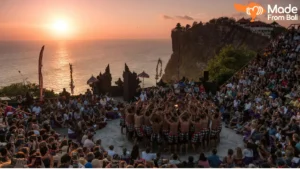
For first-time visitors who can only attend one performance, the Kecak fire dance tends to leave the deepest impression. The reason is unusual: it uses no instruments at all. Fifty or more men in black and white checkered cloth form concentric circles and create the entire musical score using synchronized vocal chanting. The sound builds into something that bypasses rational processing entirely. Scenes from the Ramayana are acted out at the center while the choir shifts rhythms around them.
Legong, by contrast, is about precision. The dancers are trained from childhood, and the movements of their fingers, eyes, and heads carry specific narrative meaning. Watching Legong without any context feels like watching a language you do not speak. Watching it after reading a brief summary of the story being told is a completely different experience. Many venues provide printed summaries at the entrance.
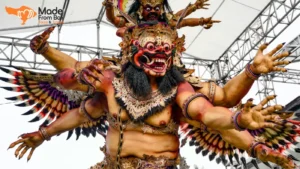
Barong focuses on the perpetual battle between good and evil forces in Balinese cosmology, with the lion-like Barong figure representing protective spiritual power against the witch figure Rangda. The performance often ends in a trance-like sequence where dancers turn their kris daggers against their own bodies without injury, a moment that is genuinely startling the first time you see it.
The Melukat Ritual at Tirta Empul Is Open to Visitors, but It Helps to Know What You Are Entering
Tirta Empul is one of the most visited temples in Bali and also one of the most misunderstood by tourists. The temple was founded in 962 AD around a sacred spring that Balinese Hindus believe was created by the god Indra. The main attraction for visitors is the melukat purification ritual, where participants move through a series of stone-carved water spouts in open pools, dipping their heads under each one in a sequence that follows specific spiritual meaning.
Tourists can participate. You do not need to be Hindu, and you do not need prior religious experience. What you do need is to understand that this is an active place of worship, not a spa treatment. The pools are shared with local worshippers who are there for deeply personal spiritual reasons.
Practical preparation for Melukat at Tirta Empul:
- Arrive before 9 AM. The temple gets very busy after 10 AM, and the experience in a crowded pool with tour groups is noticeably different from a quieter morning.
- Wear swimwear underneath your sarong. A special green sarong is used for melukat and is available at the temple.
- Small offerings called canang sari are typically included when visiting with a guide; if going independently, they can be purchased at the entrance.
- A local guide adds significant value here, not for logistics but for explanation. Understanding which spout is associated with which spiritual intention changes what the ritual means.
- Women who are menstruating are not permitted to enter the temple, following Balinese Hindu custom.
If Tirta Empul feels too crowded for a meaningful experience, Pura Mengening is a smaller temple roughly five minutes away that offers a similar purification ritual in a much quieter setting. It is genuinely underused by visitors and worth knowing about.
Temples in Ubud Reward Visitors Who Arrive at the Right Time
Ubud and the surrounding area contain hundreds of temples, from grand public sites to small family compound shrines you would walk past without recognizing. The most visited ones are popular for good reasons. The challenge is that their quality as experiences is highly dependent on when you arrive.
Why Timing Your Temple Visit Matters More Than Which Temple You Choose
The difference between arriving at Tirta Empul at 8 AM versus 11 AM is not just fewer people. It is a fundamentally different environment. Early morning, the light is softer, the temperature is genuinely cooler before midday humidity sets in, and the temple operates at a slower, more contemplative pace. By late morning, organized tour groups arrive in rotation, the parking area becomes chaotic, and the pools are at capacity.
This pattern applies broadly across Ubud’s major temples. The general rule is:
- 7:30 to 9:00 AM: quieter, cooler, better light, more space to observe
- 10:00 AM to 2:00 PM: peak tourist traffic, particularly for the most well-known sites
- 3:00 to 5:00 PM: some sites quieten again, though heat remains
For Goa Gajah, the Elephant Cave temple dating to the 9th century, the late morning window is actually more manageable than many assume because the site is large enough to absorb crowds reasonably well. The carved demon face entrance is still remarkable regardless of when you arrive, but the meditation niches and bathing fountains in the grounds are worth spending time with, which is harder to do when crowds are moving quickly through.
Quieter Alternatives Worth Knowing When the Popular Sites Feel Crowded
Pura Gunung Kawi, located about 30 minutes from central Ubud near Tampaksiring, is one of Bali’s most extraordinary temple complexes and consistently less crowded than Tirta Empul despite being equally significant. The main complex is reached via a descent of approximately 300 carved stone steps through dense tropical growth. At the bottom, ten memorial shrines carved directly into a cliff face stand roughly 7 meters tall, believed to have been dedicated to Balinese royalty around the 11th century. The physical commitment of getting there filters out casual visitors, and the atmosphere at the base is genuinely different from anything else in the region.
Pura Taman Saraswati in central Ubud, dedicated to the goddess of knowledge and art, is often overlooked as a serious cultural site because it sits adjacent to Cafe Lotus and has become associated with the famous lotus pond photographs. It is worth entering rather than photographing from outside. Evening dance performances are sometimes held here, with the lotus pond as backdrop.
What to Wear, What to Avoid, and What Happens If You Arrive During a Ceremony
Temple dress requirements in Ubud are consistent across sites. A sarong and sash wrapped around the waist are required. Most major temples offer sarong rental at the entrance if you do not have your own, though bringing a light sarong in your bag simplifies things considerably, especially if you plan to visit multiple sites in one day.
Shoulders should be covered, and clothing should not be revealing. This applies to all genders. Swimwear is not appropriate outside of the specific melukat bathing context at temples like Tirta Empul where it is worn under a ceremonial sarong.
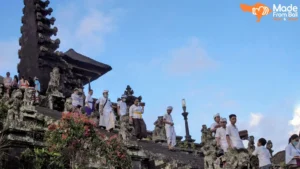
If you arrive at a temple during an active ceremony, the most important thing to do is slow down and observe before moving. Some areas within the temple grounds will be closed to non-worshippers. These closures are indicated by ropes, signs, or the direction of temple staff. Following those boundaries without questioning them is the correct response. You will not be turned away from the entire temple. You will simply be shown where visitors are welcome and where they are not.
Photography during ceremonies requires judgment rather than a fixed rule. Photographing the general scene from a respectful distance is usually acceptable. Pointing a camera directly at worshippers in prayer, or moving into restricted areas for a better angle, is not. If you are genuinely unsure, put the camera down for a few minutes and observe first.
Ubud’s Art and Craft Villages Are Not the Same as Its Art Markets
The Ubud Art Market on Jalan Raya Ubud is a legitimate and enjoyable place to shop. The surrounding craft villages are something else entirely. Conflating the two means missing one of the most distinctive things the region offers.
The Difference Between Watching an Artisan and Buying a Souvenir
The villages surrounding Ubud specialize in specific crafts that have been practiced there for generations. Mas, roughly 8 kilometers south of central Ubud, is known for wood carving. Celuk, further south toward Gianyar, is Bali’s silverwork center. Batubulan, on the road from Denpasar, is associated with stone carving and also hosts Barong dance performances in the morning hours.
Visiting these villages and watching craftspeople at work is a different category of experience from buying a finished product in a market. In Mas, workshops operate openly and visitors can watch carvers shaping figures from single pieces of wood, often using tools that have been in family use for decades. The smell of freshly carved wood, the concentration required for fine detail work, and the conversation available if you take time to engage rather than browse and leave are things a market cannot replicate.
The distinction between a genuine artisan workshop and a retail showroom disguised as one is worth understanding:
- A working workshop will have raw materials, sawdust or metal shavings, and craftspeople actively working, not just finished goods on display
- Prices in working workshops are often negotiable and sometimes lower than market prices for comparable quality
- If everything looks uniformly finished and identically displayed, you are likely in a retail space sourcing from multiple producers rather than watching craft being made
This does not mean retail spaces are bad. It means they are different, and choosing between them depends on whether you want a souvenir or an experience.
Which Villages Specialize in What, and How to Visit Without Rushing Through
The craft villages south of Ubud are often included in organized day tours as brief stops between other attractions. That format works for an introduction but not for real engagement. If artisan craft genuinely interests you, allocating a half-day specifically for one or two villages rather than passing through four in an hour will produce a completely different result.
A practical overview of the villages worth visiting:
- Mas: Wood carving. Best for watching skilled carvers and finding high-quality traditional figurines, masks, and architectural pieces. The work here ranges from tourist-grade to museum-quality. Ask to see pieces in progress rather than only viewing finished work.
- Celuk: Silverwork and goldsmithing. Family workshops often allow visitors to watch filigree and granulation techniques. Buying directly from a working silversmith rather than a large showroom usually produces better pricing and traceability.
- Batubulan: Stone carving and Barong performances. Morning Barong shows here are worth catching if you want to see the dance in a working village context rather than a tourist venue.
- Batuan: Painting village. Known for a distinctive style of dense, dark Balinese painting that developed in the 1930s. Less visited than Mas but genuinely distinctive in character.
Getting between these villages without a driver is difficult. Having a private driver who knows the region and can take you to working workshops rather than showrooms makes a significant practical difference.
Morning in Ubud Feels Different From Afternoon, and Evening Changes Everything
One of the most consistent mistakes travelers make in Ubud is treating it like a list of sites to check off rather than a place with a daily rhythm that rewards being followed. Ubud moves differently at 7 AM than it does at noon, and differently again at 7 PM. Aligning your plan with that rhythm instead of fighting it produces a day that feels genuinely full rather than rushed and incomplete.
How Locals Structure Their Day Around Offerings, Work, and Ceremony
Balinese daily life in Ubud begins with offerings. Before shops open, before traffic builds, before the tourist restaurants start serving breakfast, Balinese women and girls are placing canang sari at doorways, family shrines, and along footpaths. This happens at first light and again at midday. The smell of incense from morning offerings is one of the most immediately recognizable sensory markers of Ubud, and catching it fresh rather than as a fading afterthought is worth setting an early alarm.
Morning markets, called pasar, are active from roughly 5 AM to 8 AM before heat and tourist traffic arrive. The Ubud Traditional Market on Jalan Raya Ubud operates in two shifts. The early morning market is almost entirely local, selling fresh produce, spices, prepared food, and offerings supplies. By late morning, it transitions to the tourist-facing craft and textile market familiar from photographs. Both versions are interesting, but they are different experiences.
The Rice Terraces, the Ridge Walk, and the Light That Makes Them Worth It
Tegallalang Rice Terraces, approximately 8 kilometers north of central Ubud, is one of the most photographed landscapes in Bali. The terraces work on a traditional Balinese cooperative irrigation system called subak, which UNESCO recognized as a cultural landscape in 2012. The system is genuinely ancient and functionally elegant, channeling water from mountain streams through a network of canals managed collectively by local farming communities.
The terraces look best in early morning light. By 10 AM the sky typically flattens and the depth that makes the landscape so striking in photographs disappears. By 11 AM it is hot and busy with visitors doing swing photos and buying overpriced coffee with terraced views.
Campuhan Ridge Walk, closer to central Ubud, is a more accessible option for early mornings. The walk runs along a ridge between two rivers through grass and jungle, takes roughly 45 minutes to an hour at a relaxed pace, and gives a sense of the landscape surrounding the town without requiring transport. Starting by 7 AM means completing most of it before heat becomes an issue.
Where the Evening Dance Performances Take Place and How Early to Arrive
Evening performances in Ubud typically begin between 7 and 7:30 PM. Arriving 20 to 30 minutes early is worth doing, particularly at Ubud Palace, where the best viewing positions fill quickly. The courtyard setting at the palace means seating is on stone steps and low platforms, so comfort varies by where you sit. Front rows offer closeness to the performers but can feel overwhelming for the Kecak performance specifically, where the chanting choir surrounds you.
Performances run roughly an hour to an hour and a half. Tickets are sold at the venue and through tour operators; prices are modest and relatively consistent across venues. Evening in central Ubud after the performance offers a noticeably different street atmosphere than daytime, with warung restaurants filling up and the town taking on a quieter, more local character after the larger tour groups have departed.
Planning Honestly for Different Types of Travelers
Ubud suits a wide range of travelers but not always in the same way. What makes the experience genuinely rewarding shifts depending on who you are traveling with and what you are hoping to feel at the end of it.
What Solo Travelers Should Know Before Visiting Temples and Ceremonies
Solo travelers generally navigate Ubud comfortably. The town is walkable in its central area, transport options are readily available, and the culture of the region tends to be genuinely welcoming to independent visitors. A few practical points are worth knowing specifically for solo travel:
Visiting temples alone without a guide means relying on reading materials and signage for context. Many major temples provide some explanation at the entrance, but it tends to be brief. For sites like Tirta Empul where the ritual component matters, hiring a local guide for even a single morning provides context that changes the entire visit.
For women traveling alone, the temple rule about menstruation is practical rather than punitive in its original meaning, but it is worth being aware of before arriving. It is enforced on the honor system and not policed at the gate. The ubudhood cultural etiquette community resource explains this openly and without judgment.
Walking at dusk or after dark in central Ubud is generally safe, but the streets in the older neighborhood areas can be uneven and poorly lit. Good footwear for walking rather than sandals makes a difference on longer days.
Why Couples Often Find Ubud More Meaningful on a Second Full Day
A single day in Ubud can cover the highlights in a rushed way. Couples who have allocated two full days consistently report that the second day feels significantly better than the first, because the first day orients them and the second allows them to move at a pace that actually matches the place.
Day one typically covers the main sites: a temple, the art market, perhaps a rice terrace. Day two is when couples tend to find their own version of Ubud. A slow morning at a local warung. A cooking class that turns into a three-hour conversation about Balinese ingredients. A walk through a neighborhood where ceremonies are happening that no guidebook mentioned. That version of Ubud is harder to plan but easier to find when you are not trying to cover everything.
Small Groups and How a Private Guide Changes the Cultural Depth Available
For small groups of three to six people, a private guide or driver with genuine local knowledge changes the cultural access available in a way that is difficult to quantify but immediately noticeable. The difference is not primarily logistical. It is conversational.
A driver who has grown up in the Ubud area can explain why a particular road is blocked for a ceremony, identify what kind of ceremony it is, and sometimes know the family holding it. They can take a group to a local family compound during a celebration if the connection exists, or redirect a morning itinerary around a procession route in a way that turns a disruption into an experience. Made From Bali Tour & Travel designs cultural experiences in Ubud with exactly this kind of local knowledge built in, rather than offering fixed routes that treat the town as a backdrop.
The practical value for small groups is also budgetary. A private vehicle and guide shared across four to six people costs less per person than individual tour tickets for the same sites, and delivers significantly more flexibility and cultural depth.
Getting Around Ubud When Ceremonies, Traffic, and Timing Collide
Ubud traffic is a genuine planning consideration, not a minor footnote. The main roads through central Ubud, particularly Jalan Raya Ubud and the roads toward Tegallalang, can become significantly congested during peak morning hours and even more so when ceremonies are taking place. Understanding this before you plan your day prevents frustration and, more usefully, allows you to plan around it in ways that actually add to the experience.
Why Processions and Road Closures Are Part of the Experience, Not an Obstacle
Balinese ceremonies require physical movement through public space. Funeral processions, temple festivals, and odalan celebrations all involve groups of community members carrying offerings, playing gamelan, and moving through the streets in formal procession. Roads close, traffic stops, and everyone waits.
If you encounter this in a car or on a scooter, the correct response is to stop, turn off the engine, and watch. Honking is considered disrespectful and will not move anything faster. The procession will pass when it passes.
From a visitor perspective, encountering a genuine street procession is one of the most unexpectedly powerful cultural experiences available in Ubud. The sound of live gamelan in an open street, the colors of traditional dress, the physical weight of the offerings being carried, and the communal seriousness of the participants constitute something that no temple entrance fee produces. It happens on its own schedule, it costs nothing, and it is completely real.
The Galungan festival, which occurs every 210 days in the Balinese calendar, transforms Ubud’s main streets with tall decorated bamboo poles called penjor lining every road. If your visit coincides with Galungan or its companion celebration Kuningan ten days later, the visual and ceremonial intensity of the town increases considerably. Accommodation books out faster during these periods, and planning ahead is necessary.
What a Knowledgeable Local Driver Adds Beyond Just Getting You There
Getting from central Ubud to Tirta Empul, Tegallalang, Gunung Kawi, and back in a single day is logistically straightforward. What is harder to manage independently is the sequencing and timing that makes each stop worthwhile rather than merely visited.
A local driver who understands morning crowd patterns at each temple, knows which access roads avoid the main traffic congestion, and can adjust the schedule when a ceremony creates an unexpected delay adds something that maps and ride-booking apps cannot. They also function as a translating presence in situations where language or context would otherwise create confusion, whether that is negotiating at a craft village workshop, understanding ceremony protocols at a temple, or simply knowing which warung the locals actually eat at.
For a culturally focused day in Ubud, having that layer of local knowledge available is not a luxury. It is the difference between a day that checks boxes and a day that actually makes sense.
Bringing It Together Into a Day That Actually Makes Sense
Ubud’s culture is not concentrated in any single temple, performance, or market. It is distributed across the hours of a day, across the roads between the town and its surrounding villages, and across the interactions that happen when you slow down enough to notice what is actually going on around you.
A well-constructed cultural day in Ubud might look like this: begin before 8 AM with a walk through the morning market or along Campuhan Ridge, visit one major temple site early while it is quiet, spend midday in an artisan village or cooking class where the pace is slower and the engagement is more personal, return to central Ubud in the late afternoon for the rice terrace light or a walk through the neighborhoods near the palace, and end the day with an evening dance performance. That structure follows the natural rhythm of the place rather than fighting it.
What makes the difference between that day feeling like tourism and feeling like genuine cultural immersion is mostly attitude and information. Knowing why the offerings are placed where they are, understanding what the dancers are depicting, recognizing the sounds of different gamelan configurations, and being able to navigate a ceremony encounter with respect rather than confusion are not advanced skills. They are the result of a small amount of preparation and a willingness to pay attention.
Ubud does not require you to be a scholar of Balinese Hinduism to experience it meaningfully. It does reward travelers who arrive with enough context to engage rather than simply observe. That is what this guide is designed to provide, and it is what a thoughtful travel partner, whether a local guide, a knowledgeable driver, or a well-prepared companion, makes available to you on the ground.
References
- Bali Holiday Secrets. Private Melukat Ceremony Guide. https://www.baliholidaysecrets.com/private-melukat-guide/
- The Ridge Bali. Top Temples to Visit in Ubud: A Cultural Guide for Travelers. https://theridgebali.com/ubud-temple/
- UbudHood. Cultural Etiquette in Bali: Respecting the Local Culture. https://www.ubudhood.com/blog/cultural-etiquette-in-bali
- Short Stay Bali. Respecting the Sacred: Essential Bali Temple Etiquette Guide. https://shortstaybali.com/bali-temple-etiquette-guide/
- Merusaka. 10 Essential Bali Etiquette Tips You Need to Know Before You Go. https://merusaka.com/bali-cultural-experience/bali-etiquette-tips/
- The Honeycombers Bali. 21 Things to Do in Ubud for Bali First-Timers with Local Tips. https://thehoneycombers.com/bali/things-to-do-in-ubud/
- Rama Phala Resort. A Guide to Experiencing Authentic Balinese Culture in Ubud. https://ramaphala.thephala.com/a-guide-to-experiencing-authentic-balinese-culture-in-ubud/
- UNESCO. Subak System as a Manifestation of the Tri Hita Karana Philosophy of Bali. https://whc.unesco.org/en/list/1194/