

Bali has a reputation for being endlessly forgiving. Beautiful in every direction, warm in every season, welcoming at every budget level. That reputation is mostly earned. But here is the part that does not get said often enough: Bali is very easy to enjoy and surprisingly difficult to get exactly right, especially when you are investing in a premium trip and expecting the experience to match.
The travelers who leave Bali slightly underwhelmed are rarely the ones who chose a bad hotel or booked a poor restaurant. They are the ones who planned without understanding how the island actually works. They tried to cover too much ground. They booked experiences that looked extraordinary in photos but did not fit their pace. They let geography work against them instead of for them. They arrived expecting seamless luxury and encountered friction they were not prepared for.
This guide is built around that gap. Not around listing what exists in Bali, but around helping you understand how to put the pieces together so that the trip you plan is the trip you actually experience. Made From Bali works with travelers across every profile and budget level, and the patterns that separate exceptional Bali trips from disappointing ones are consistent enough to be mapped clearly.
Why So Many Well-Funded Bali Trips Still Fall Short of What They Could Be
Spending well does not automatically translate into a great trip. Bali has enough luxury infrastructure that even a loosely assembled itinerary can look impressive on paper. The problem usually reveals itself in the execution, when days feel rushed, distances feel longer than expected, and the experiences that cost the most somehow feel the least memorable.
The itinerary looked good on paper but the day felt rushed
The single most common complaint from luxury travelers in Bali is not about accommodation quality or service. It is about pace. An itinerary that visits a temple at 9am, a rice terrace at 11am, a lunch spot at 1pm, a waterfall at 3pm, and a sunset view at 6pm sounds thorough. What it actually produces is a day spent mostly in a car, arriving at each location already slightly tired, and leaving before anything sinks in.
Bali rewards slow engagement. The experiences that stay with travelers longest are almost never the ones completed most efficiently. A private morning walk through a rice field when the mist is still sitting at ankle height. A cooking class that stretches across three hours because the conversation with the host became part of the experience. A temple visit that coincided with a ceremony by accident and turned into something impossible to plan for. None of those happen when the schedule is too tight to allow them.
The practical fix is to build each day around one or two anchoring experiences rather than five or six attractions. Let the day breathe. The places you slow down in will matter more than the number of places you visit.
Choosing a beautiful hotel in the wrong area for your trip style
Bali’s regions have genuinely distinct personalities. A five-star resort in Nusa Dua and a five-star villa in Ubud are not interchangeable even if both offer impeccable service. The surrounding environment, the pace of life, the type of experiences within reach, and the mood of each area are completely different. Choosing accommodation based on property quality alone, without considering whether the area fits what you actually want from the trip, is one of the most expensive planning mistakes a luxury traveler can make.
If your version of a perfect Bali day involves culture, green landscapes, long walks, and spa recovery, Nusa Dua will leave you restless no matter how good the pool is. If you want beach access, sunset drinks, and a lively dinner scene, Ubud will feel quiet in a way that you were not prepared for. Area selection is not just a preference question. It is a structural decision that shapes every day of the trip.
Booking experiences in isolation instead of as a connected journey
Luxury experiences in Bali are genuinely exceptional when they are chosen with intention and sequenced intelligently. They feel surprisingly hollow when they are collected like items on a checklist. A helicopter tour, a private cooking class, a sunset dinner, and a spa afternoon are all wonderful. But a trip built around those experiences as isolated events, without a connective logic between them, tends to feel fragmented rather than curated.
The difference between a memorable trip and an impressive-sounding one is usually coherence. When experiences are chosen to build on each other, when the cultural context of one activity deepens your appreciation of the next, when the pace of the trip allows each experience to settle before the next begins, the result is something that feels genuinely designed rather than assembled.
What “Luxury” in Bali Actually Means Across Different Trip Styles
This is a question worth answering directly because the word luxury means very different things in Bali depending on context, budget, and traveler expectation. Unlike some destinations where luxury is defined almost entirely by price per night, Bali offers a range where the quality of experience and the quality of accommodation can move somewhat independently of each other.
Curated comfort versus true private exclusivity — the practical difference
At the curated comfort tier, a luxury Bali trip involves well-regarded boutique resorts or smaller villa properties, a private driver arranged for day trips, access to good restaurants and beach clubs, and a handful of premium experiences like spa treatments and guided temple visits. This tier typically ranges from around USD 300 to 700 per couple per night depending on area and season, and it represents the majority of what people describe when they say they are planning a luxury trip to Bali.
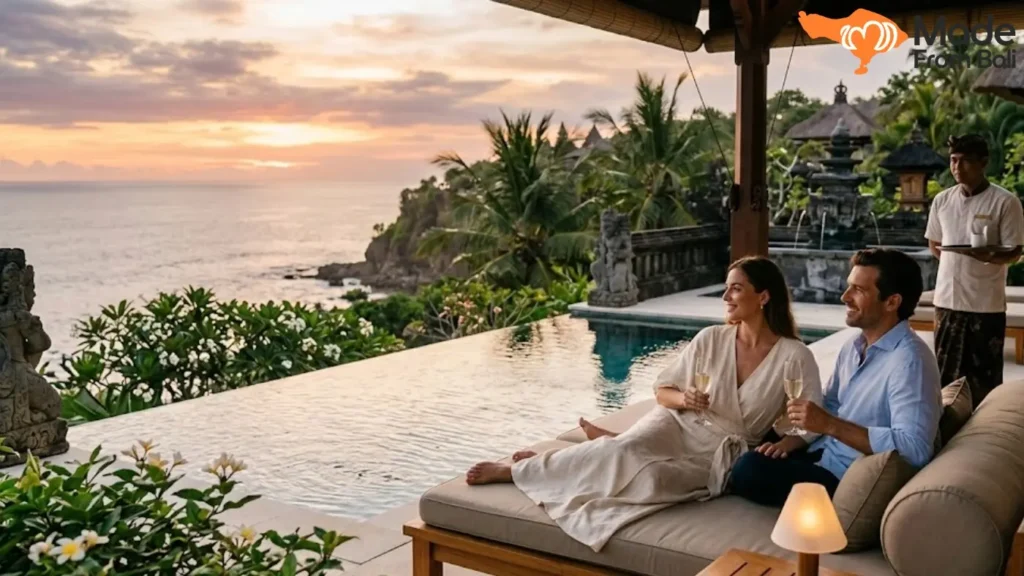
The private exclusivity tier is structurally different. A fully staffed private villa, a dedicated in-house concierge, a personal driver available throughout the trip, meals prepared privately, and bespoke experiences arranged specifically for the group. At this level, the distinction is not primarily about visible opulence. It is about the removal of any friction from the travel experience. You are not coordinating logistics. The trip responds to you, not the other way around.
Understanding which tier you are planning for matters because the decisions that follow are different. A curated comfort trip requires more active planning from you. A private exclusivity trip requires finding the right local partner to handle that planning on your behalf.
Where the ultra-premium tier starts and what it actually changes
Beyond the private villa standard, a tier exists in Bali that most travelers only encounter through reputation. This is where private helicopter transfers replace road transport between areas, where yacht charters take you to Nusa Penida on a vessel suited to a small private group rather than a tour boat, where in-villa dining is created by a private chef working to your specific dietary preferences, and where access to experiences like private temple blessings or exclusive cultural performances is arranged through relationships rather than booking platforms.
Pricing at this tier, as one Bali luxury travel provider notes, can reach USD 2,000 to 5,000 per couple per night for fully packaged arrangements. What changes at this level is not simply the quality of individual experiences. It is the complete elimination of the gap between what you imagine and what you encounter.
The experiences where spending more genuinely changes what you feel
Across all tiers, some categories respond meaningfully to spending more and some do not. A Bali sunset over the Indian Ocean from a cliffside view in Uluwatu is essentially the same experience whether you are sitting at a mid-range warung or a premium clifftop restaurant. The view does not change with price.
The experiences where a premium investment creates a genuinely different feeling include:
- Private spa treatments in nature settings. The difference between a hotel spa room and a riverside treatment pavilion surrounded by jungle is not subtle. The environment contributes to the restorative effect as much as the treatment itself.
- Private guided cultural experiences. A private guide at a temple ceremony or a private cooking class with a Balinese family at their home creates a depth of engagement that group tour formats cannot replicate.
- Private boat access to Nusa Penida. The difference between reaching Crystal Bay on a crowded speedboat transfer and arriving on a private yacht is the difference between a logistics experience and a genuine travel memory.
- Accommodation with staff who anticipate rather than respond. In a well-staffed private villa, your coffee is ready when you arrive at the terrace because your host noticed when you tend to wake up. This level of service is not available in any hotel regardless of star rating.
Matching the Right Area of Bali to the Trip You Actually Want
Bali is not one place. It is several distinct environments connected by roads that require more time than most mapping applications suggest. The island is roughly the size of a mid-sized region, and the physical distance between areas like Ubud and Uluwatu, while not extreme in kilometers, can translate to 90 minutes or more of travel during busy hours. Area selection is therefore not just a lifestyle preference. It is a logistical foundation for the entire trip.
Here is how the major areas map to traveler types honestly.
Ubud suits a very specific kind of luxury traveler — and not always who you’d think
Ubud is Bali’s cultural interior. It sits among rice terraces and rivers rather than beaches, and its pace is genuinely different from the southern coastal areas. Luxury travelers who do best in Ubud tend to prioritize immersion over stimulation. They want mornings with long breakfasts overlooking the jungle, afternoons in spa treatment rooms that feel like sanctuaries, and evenings at small restaurants where the food has intention behind it.
Ubud is particularly well suited to:
- Couples on honeymoon or anniversary trips who want romance rooted in scenery rather than nightlife
- Wellness-focused travelers building a trip around daily yoga, healing treatments, and retreat experiences
- First-time visitors to Bali who want to understand the island’s culture before experiencing its beaches
- Travelers with longer trips of ten days or more, who can afford to be in Ubud for three or four days before moving to a coastal area
What Ubud is less suited for: travelers who need easy beach access, those who want a social atmosphere with multiple dining and nightlife options in walking distance, and short-trip visitors who want to maximize the variety of experiences within a limited time.
One practical note that rarely appears in travel guides. Ubud’s roads, even in the central area, can be narrow and congested during peak morning and late afternoon hours. If your accommodation is slightly outside the main town center, which many of the best properties are, factor realistic transit time into every day plan.
Uluwatu rewards couples who are willing to commit to the cliffside pace
Uluwatu sits on Bali’s southwestern peninsula, on clifftops above the Indian Ocean. It is the area that produces the most dramatic visual experiences in Bali, from sunset views that extend across an open horizon to beaches tucked into cove formations accessible by cliff stairs. The luxury hospitality in Uluwatu is concentrated and serious. Several of the island’s most architecturally distinctive cliff-edge properties are here.
The important thing to understand about Uluwatu is that it requires a commitment to the area. The peninsula’s geography means that many of the most desirable properties are not close to each other or to other regions. A day trip from Uluwatu to Ubud is a full transit investment of roughly two hours each way. If your plan is to use a coastal base for island-wide day trips, Uluwatu is not the most efficient choice.
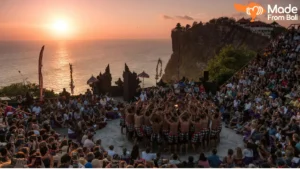
Where Uluwatu is unmatched is in what it offers to couples and small groups who are content to spend most of their days in a concentrated area. Beaches like Padang Padang and Bingin are beautiful in a way that requires no effort to appreciate. The kecak fire dance at Uluwatu Temple at sunset is one of the genuinely unique cultural experiences in Bali, and watching it from the clifftop seating area as the light changes over the ocean is something that photographs cannot fully capture.
Seminyak and Canggu for travelers who want energy, not just serenity
Seminyak is Bali’s most developed luxury beach area. It has a density of high-quality restaurants, beach clubs, boutique hotels, and lifestyle infrastructure that makes it function almost like a resort town with genuine character. For luxury travelers who do not want to choose between a beautiful environment and the option of a varied and active social scene, Seminyak balances those needs better than anywhere else on the island.
Canggu sits just north of Seminyak and shares the energy but with a younger, slightly more relaxed creative character. The surf culture is present without being dominant. The beach club scene is excellent. The restaurant quality has risen considerably in recent years. Canggu suits travelers who want comfort and quality but prefer a setting that does not feel overtly curated for luxury tourism.
Both areas benefit from relatively central positioning on the island’s southwest coast, which makes day trips to Ubud, Tanah Lot, or Uluwatu more manageable than attempting those trips from either extreme.
Nusa Dua and Jimbaran when ease and privacy carry more weight than atmosphere
Nusa Dua is Bali’s most controlled luxury environment. It is a planned resort enclave with well-maintained roads, beach access, and some of the island’s largest international five-star hotels. For families, for travelers who find Bali’s organic energy slightly overwhelming, and for visitors who want a high-quality resort experience without managing the complexity of Bali’s less structured areas, Nusa Dua delivers reliably.
Jimbaran, immediately adjacent, is calmer and more local in character. It is known primarily for its bay seafood dining tradition, where restaurants set tables directly on the beach at low tide and grill fresh seafood while the sun sets. This is not a sophisticated fine dining experience in the conventional sense, but it is genuinely specific to the place in a way that many luxury experiences in Bali are not. For couples who want one evening that feels unmistakably Balinese without being formal, Jimbaran bay dinner is frequently the one they remember most clearly.
When North Bali makes more sense than the south for crowd-sensitive visitors
North Bali rarely appears in luxury travel guides because it lacks the resort infrastructure of the south. That is also precisely why it suits certain travelers better than anywhere else on the island. The area around Lovina, Munduk, and the volcanic interior offers a version of Bali that most visitors never encounter: uncrowded roads, genuine village life, a slower pace that is not performed for tourism, and natural environments that feel genuinely undisturbed.
For luxury travelers who have already visited the south and are returning for a second or third trip, or for those whose primary priority is distance from crowds rather than access to resort amenities, a base in North Bali combined with carefully arranged private accommodation and local guidance can produce the most personally meaningful trip of all the options available.
Experiences That Stay With Travelers Long After the Resort Pool Does
The experiences that tend to be described most vividly when people talk about their Bali trips are almost never the most expensive ones. They are the ones with the strongest sensory and emotional presence, the ones where the setting, the timing, and the engagement came together in a way that felt unrepeatable. Understanding which experiences carry that quality in Bali, and how to access them at a level that matches a luxury traveler’s expectation, is more useful than any ranked list.
Private cooking classes as a cultural entry point, not just a box to tick
Cooking classes are so common in Bali’s tourist offering that they risk being dismissed as a standard activity. The version worth doing is not the one run from a tourist kitchen in central Ubud. It is the one arranged at a Balinese family’s home, led by someone who cooks these dishes daily, uses ingredients from their own garden, and explains the cultural meaning behind the food alongside the technique.
This experience works at a luxury level when it is arranged privately, when the group is small (ideally two to four people), and when it includes a morning market visit before the cooking begins. The market component transforms the activity from a cooking lesson into an understanding of how Balinese food culture actually functions. The ingredients are not abstract. They come from specific vendors who have specific names and specific family relationships to the person teaching you.
A private cooking class of this quality typically runs three to four hours and leaves travelers with a substantially more layered understanding of Balinese culture than most temple visits manage to provide.
Sunrise on Mount Batur — who it actually suits and what to expect honestly
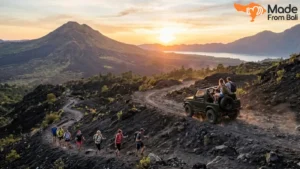
Mount Batur is one of Bali’s most recommended experiences and also one of its most misrepresented ones. The honest description: it is a two-hour pre-dawn hike on volcanic terrain, starting around 4am, to reach a summit at approximately 1,700 meters above sea level. The payoff is a sunrise viewed from an active volcano with Bali’s landscape below you. On a clear morning, the view extends across the caldera lake, the surrounding mountains, and the ocean in the distance.
The experience suits travelers who are moderately fit and have no significant issues with early mornings or uneven terrain. It does not suit travelers who are unaccustomed to physical exertion, those with knee or joint sensitivities, or those for whom disrupted sleep meaningfully affects the rest of the day.
At a luxury level, the difference between a basic Batur trek and a well-arranged one comes down to the guide, the timing, and the post-summit arrangement. A private guide who has done the route hundreds of times knows the clearest weather windows, moves at the pace that suits you, and can arrange a warm breakfast at the summit rather than the standard cold egg and banana. The physical challenge does not change. But the experience of it does.
Spa and wellness in Bali at the level where it becomes genuinely restorative
Bali has more spa options per square kilometer in its tourist areas than almost any destination in the world. The range from tourist massage parlor to genuine restorative retreat is enormous, and the pricing does not always accurately signal where on that range a given property falls.
The experiences that luxury travelers consistently describe as transformative share a few characteristics. The setting is natural rather than interior. A treatment room open to a river, a bamboo pavilion surrounded by jungle, or an outdoor space where you are bathed in the sounds of the environment throughout. The treatments draw on Balinese traditional practice rather than offering a generic international spa menu. And the duration is long enough to allow a real state change. A two-hour treatment is not twice as good as a one-hour treatment in a simple linear sense. It occupies enough time that the nervous system actually shifts, which is the point.
Some of the most respected wellness properties in Bali, particularly in the Ubud area, offer multi-day wellness programs that combine movement, treatment, and dietary support into a structured experience. For travelers making wellness the primary purpose of the trip rather than a component of it, this format delivers results that a single afternoon spa booking cannot.
Watching Kecak dance at Uluwatu when the timing and setting work together
The kecak fire dance is one of Bali’s most photographed performances, which has made it easy to dismiss as a tourist set piece. The version at Uluwatu Temple at sunset is worth reassessing. The performance takes place on an open-air clifftop stage. The backdrop is the Indian Ocean. The performance begins as the sun approaches the horizon, and the shift in light across the 45 minutes of the show creates a visual context that is genuinely impossible to replicate in a conventional theater setting.
Arrive at least 30 minutes before the performance begins to secure a good position in the elevated seating area. The front rows have the clearest sightline to the stage but place you closer to the monkeys that inhabit the temple grounds. They are bold and will take unsecured items from bags or hands without hesitation. This is not a minor inconvenience. Secure your belongings properly and keep bags closed throughout.
At a luxury level, a private car and driver arranged to arrive just before sunset and depart immediately after the performance ends is the difference between a smooth memorable evening and one that ends in a crowded car park negotiating transport.
Yacht and boat experiences around Nusa Penida — what makes the difference
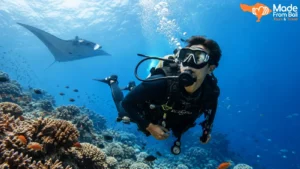
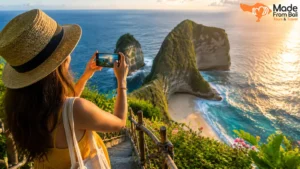
Nusa Penida is Bali’s most visually dramatic nearby island, accessible by boat from Sanur or Padang Bai. The most photographed location, Kelingking Beach, involves a steep and strenuous descent that is not suitable for everyone. Crystal Bay offers genuinely spectacular snorkeling with manta ray sightings that are more consistent here than almost anywhere else accessible to day-trippers from Bali.
The difference between a standard group speedboat transfer to Nusa Penida and a private yacht or premium boat charter is substantial enough to affect the entire character of the day. Group speedboats run to fixed schedules, carry larger numbers of passengers, and prioritize efficiency over experience. A private charter moves at your pace, allows you to choose which locations to prioritize, includes snorkeling stops at locations the group boats do not stop at, and provides an on-water environment that is genuinely comfortable rather than merely functional.
For couples or small groups, the cost of a private charter divided across the group often represents a meaningful but not extreme premium over the equivalent cost of individual group tickets, especially once the quality difference is factored in.
How Bali’s Geography Can Work For or Against a Luxury Itinerary
Bali is an island of about 5,780 square kilometers. That is compact by most geographic standards. But Bali’s road network, combined with the density of traffic in and between its tourist areas, means that distance in time bears very little relationship to distance in kilometers. Understanding this before you plan is one of the most practical things this guide can offer.
Traffic between areas is a real planning variable, not a minor footnote
The road between Seminyak and Ubud is approximately 35 kilometers. During off-peak hours in the early morning, that journey takes around 45 minutes. During peak traffic, which in Bali’s southern corridor runs from roughly 8:30am to 11am and again from 4pm to 7pm, the same journey can take 90 minutes or longer. For a traveler who has planned a full day of activities across different areas, the difference between those two journey times can collapse an entire afternoon.
This is not unique to Bali but it is more pronounced here than in many island destinations because the road infrastructure has not kept pace with tourism growth. The practical implication is that your itinerary should be planned around traffic timing as actively as it is planned around the experiences themselves. An early departure, typically before 7:30am, gets you ahead of the congestion window and often gets you to major sites before the crowds build. This single adjustment transforms the experience of many Bali destinations more than almost any other planning decision.
Grouping experiences by location rather than category saves more than time
The most common itinerary mistake in Bali is organizing days by category rather than geography. “Cultural day: temple in the morning, rice terraces in the afternoon, traditional dance in the evening” sounds logical. But if those three experiences are spread across different areas of the island, the day involves two or three significant transit movements that consume both time and energy.
A geographically grouped approach looks different. On a day based in and around Ubud, you might visit a temple in the Ubud area early in the morning, stop at Tegallalang rice terraces before 10am when the light is still soft and the visitors are fewer, have lunch at a restaurant overlooking the Campuhan ridge, and attend an afternoon cultural performance in town. Every experience is excellent. Every transit is short. The day feels complete rather than exhausting.
Grouping by area also gives your private driver the ability to move you through the sequence in the most efficient order, which is different from the order that makes intuitive sense on a map. A good driver knows that approaching certain sites from the north saves 20 minutes over approaching from the south. That knowledge is operational and local, and it only exists in a human guide.
Why the private driver is a trip-quality decision, not just a transport decision
A private driver in Bali is frequently described as a logistics solution. The honest framing is different. A good private driver is one of the highest-leverage choices you make for a Bali trip, and the difference between a mediocre driver and an excellent one shapes the quality of entire days rather than just individual journeys.
The practical rate for a private driver in Bali runs from approximately IDR 700,000 to IDR 1,100,000 for a full day of up to ten hours. This typically covers fuel, parking, and hotel pickup and drop-off. At the higher end of that range, and through reputable providers, what you gain is not just better driving. You gain someone who monitors traffic conditions and adjusts routes in real time, who knows which warung stops are genuinely exceptional rather than tourist-convenient, who understands what a temple ceremony involves and can prepare you before you arrive, and who can reorganize a day’s plan thoughtfully when something is not working.
The difference between this and rideshare apps or organized group transport is not subtle. It is the difference between managing the logistics of your own trip and having the logistics managed for you by someone with better information than you have.
Rainy Season, Dry Season, and What Actually Changes for Luxury Travelers
Bali’s climate conversation in most travel guides is reductive. The advice is almost universally to visit during the dry season, roughly April through October, and to avoid the wet season, roughly November through March. The fuller picture is more nuanced and more useful for luxury travelers who have more flexibility to optimize their timing.
The months where Bali is at its quietest and most negotiable
Bali’s high season peaks in July and August, with a secondary peak around the Christmas and New Year period. During these windows, the island is at its most crowded, the most popular properties are fully booked, and flexibility in accommodation is limited without booking six months or more in advance. The dry season months of May, June, and September offer most of the weather advantages of July and August with meaningfully lower visitor density.
The wet season, particularly January and February, represents Bali’s quietest period. For luxury travelers, this translates to stronger negotiating position with accommodation providers, better availability at short notice, and public sites and roads that feel noticeably less congested. The rain itself, contrary to common assumption, is rarely the all-day downpour that the word “wet season” implies. Most rain falls in afternoon showers, often intense but brief, followed by clear evenings.
Experiences that are genuinely affected by rain — and those that are not
It is worth separating rain impact by experience category rather than applying a blanket assessment.
Experiences significantly affected by wet season conditions:
- Snorkeling and diving visibility around Nusa Penida and Amed can be reduced during heavy rain periods
- Mount Batur sunrise treks have a higher chance of cloud cover that obscures the summit view
- Waterfall visits, while visually more dramatic in wet season due to higher flow, involve more slippery terrain and access paths
Experiences that are not meaningfully affected or are enhanced:
- Spa and wellness retreats become more immersive in wet season when the surrounding environment is lush and the sound of rain on a jungle treatment pavilion creates an atmosphere that the dry season cannot replicate
- Cultural visits to temples and ceremonies are unaffected. Balinese religious life does not pause for weather
- Restaurant and beach club experiences at well-designed venues accommodate afternoon rain without disrupting the overall experience
- Rice field landscapes are most visually verdant and layered in texture during and after the wet season
When the shoulder season makes a luxury trip better, not just cheaper
May and early June represent what is arguably Bali’s optimal travel window for luxury travelers. The dry season has begun. The crowds of July and August have not yet arrived. Villa and resort rates are typically 15 to 25 percent lower than peak season pricing for equivalent properties. The most popular beaches are accessible without the midday congestion that July visitors encounter. And the island has a quality of light in this period, particularly in the early morning hours, that photographers and landscape-focused travelers consistently describe as exceptional.
September carries similar advantages on the back end of peak season. The crowds begin to thin from mid-September, rates start adjusting downward, and the dry weather typically holds through late October.
Cultural Depth Is Often the Difference Between a Good Bali Trip and an Unforgettable One
Bali is the only Hindu-majority island in Indonesia. Its cultural and spiritual life is not a backdrop to tourism. It is an active, living practice that shapes how Balinese people structure their days, their calendars, their architecture, and their relationship to the physical environment. For luxury travelers willing to engage with this rather than simply observe it from a distance, the return on that engagement is disproportionately large.
Temple etiquette goes further than wearing a sarong
Temple dress requirements are the most widely communicated piece of cultural guidance for Bali visitors. Covered shoulders and legs are required, and a sarong and sash are either provided at the entrance or can be worn from accommodation. This baseline is well understood.
What is less commonly explained is that respectful temple behavior involves more than clothing. Certain inner temple areas are restricted to those actively participating in worship. Being present during a ceremony is a privilege, not a right, and the appropriate response is quiet observation from a respectful distance rather than positioning for photographs. If a priest or local guide indicates that a particular area is not open to visitors at that time, the correct response is immediate, gracious withdrawal.
Temples in Bali are active spaces, visited by local communities daily, not preserved sites maintained exclusively for tourism. Approaching them with that understanding, as active places of worship that you are invited to observe rather than attractions you have come to see, changes how you carry yourself within them in a way that is appreciated and noticed.
Galungan and Nyepi — what travelers should know before choosing dates
Bali’s Hindu calendar produces two major observances that luxury travelers should be aware of when selecting travel dates.
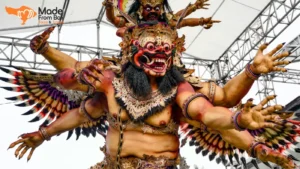
Galungan, which occurs roughly every 210 days according to the Balinese Pawukon calendar, is a ten-day celebration marking the victory of dharma over adharma. During this period, Balinese villages are decorated with penjor, tall bamboo poles arcing over roads with hanging offerings, and the island has a visual and atmospheric quality that is genuinely beautiful and not encountered at any other time. Visiting Bali during Galungan is one of the most immersive cultural experiences available to any traveler.
Nyepi is Bali’s Day of Silence, typically falling in March. On this day, the entire island observes complete silence. No vehicles, no lights, no activity outside private accommodation. The airport closes. Travelers already in Bali spend the day within their accommodation. For some luxury travelers, a day of complete enforced stillness within a beautiful private villa or resort is appealing rather than inconvenient. For those with fixed travel connections, it requires careful planning around departure and arrival logistics.
How private cultural experiences can be arranged without feeling staged
The concern that many luxury travelers have about arranged cultural experiences, that they will feel performative or produced for a tourist audience, is legitimate when applied to mass-market formats. A Kecak dance arranged for a group of forty visitors in a hotel courtyard carries that quality. A private temple blessing arranged through a local family or a reputable local operator carries an entirely different character.
Private cultural arrangements that tend to feel genuine rather than staged include:
- A small-group or private offering-making session with a Balinese woman who makes offerings daily as part of her own practice and is willing to share the process
- A visit to a family compound during Galungan, when the ceremonial context is real and your presence is as an invited guest rather than a ticketed visitor
- A private music or dance lesson with a practitioner who performs regularly in community settings, not just for tourists
- A early-morning market tour led by someone who shops there for their own household rather than a professional guide following a fixed route
The quality of the arrangement depends heavily on the local partner organizing it. Providers who have genuine community relationships can access these experiences. Those operating primarily through online booking platforms typically cannot.
What to Realistically Budget When Planning a Premium Bali Trip
Budgeting for a luxury Bali trip is complicated by the enormous range of what “luxury” can cost depending on your definition, your area choices, and the time of year you travel. The following framing is designed to help you think about where the cost goes and where it is worth going.
Where the cost difference between good and exceptional actually lives
The gap between a good Bali trip and an exceptional one is rarely about the total number of experiences booked. It is about the quality tier of a small number of key decisions.
The three decisions that carry the most weight in determining overall trip quality are:
- Accommodation. The difference between a well-regarded boutique hotel and a genuinely excellent private villa with staff is not purely a comfort question. It changes the pace and flexibility of your entire trip. At the curated comfort tier, solid resort options in south Bali range from USD 200 to 500 per night. Private villas with staff begin around USD 500 and can reach considerably higher for multi-bedroom properties in premium locations.
- Private transportation arrangement. A dedicated private driver for the full duration of the trip is a meaningful quality investment. The cost for a full day with a reliable, experienced English-speaking driver is in the range of IDR 700,000 to IDR 1,100,000. Over a ten-day trip, this represents a modest daily expense relative to the impact it has on how every day functions.
- Two or three anchor experiences. Rather than booking ten moderate experiences, investing in two or three genuinely exceptional ones, a private yacht charter, a properly arranged multi-hour cultural experience, a full-day private wellness session, creates stronger memories and a more coherent trip narrative than the alternative.
What to prioritize spending on and where value remains strong regardless of budget
Bali retains genuine value even at budget-conscious points within the luxury range. Food quality at highly regarded local restaurants and warungs is excellent and inexpensive relative to equivalent quality in Europe, Australia, or the United States. Temple entry fees are nominal. Many of the most beautiful landscapes in Bali, rice terraces, volcanic mountains viewed from the road, coastlines, are encountered in transit and cost nothing to experience.
Where spending more consistently produces better results:
- Private versus group boat experiences to Nusa Penida or surrounding islands
- Spa treatments in setting-focused properties versus hotel spa facilities
- Accommodation with genuine outdoor living space versus accommodation where your relationship with the outdoor environment is primarily through a window
- A locally knowledgeable guide for at least one significant cultural site visit versus self-guided access
Where standard options remain strong regardless of budget:
- Warungs and mid-range local restaurants for at least some meals, particularly for Balinese cuisine, which is often better represented at these levels than at premium restaurants targeting international palates
- Tanah Lot, Uluwatu, and Tegallalang, where the experience is defined by the landscape and timing rather than by what you spend at the entrance
Booking timelines that protect the experiences you care most about
For peak season travel, roughly July, August, and December, the most sought-after villa properties in Bali fill six to nine months in advance. A property that is fully booked in late June when you begin looking may have had availability in February when you were still deciding. The practical implication is that accommodation booking for peak season luxury travel should happen as soon as travel dates are confirmed, well before flights in some cases.
Experiences and private charters have more flexibility than accommodation but specific providers with strong reputations can be fully committed during peak periods. If there is a specific experience that is central to your trip, for example a particular wellness practitioner, a specific boat charter operator, or a private cultural arrangement with a known family or provider, confirm and book that first before building the rest of the itinerary around it.
For shoulder season and wet season travel, lead times are considerably more forgiving. The same properties that require six-month advance booking in peak season can typically be confirmed four to eight weeks ahead in May or September.
Planning a Bali Luxury Trip That Feels Designed, Not Assembled
The clearest sign of a well-planned Bali luxury trip is that it does not feel planned at all. Days move with a rhythm that matches what you wanted from the trip. Experiences connect to each other in ways that deepen rather than distract. The logistics are handled by people who understand the island better than any amount of research can produce. And at the end of it, you are not simply glad you went. You are already thinking about when you will return and what you will do differently because you now understand what Bali actually rewards.
That outcome does not happen by chance and it does not happen by booking independently from a list of highly rated attractions. It happens when the planning accounts for how the island actually works, when area selection matches traveler type, when days are paced to allow experiences to breathe, when geographic logic is applied to the itinerary before aesthetic preference, and when the right local expertise is involved from the beginning rather than consulted after something goes wrong.
Made From Bali works with travelers at every point in that process, from initial area selection through to day-by-day itinerary logic, private experience arrangement, and on-the-ground support throughout the trip. The practical knowledge that shapes the difference between a good trip and an unforgettable one is not available in any single guide. But knowing what questions to ask, and knowing that the answers matter, is the most valuable thing to leave this page with.
Bali is genuinely one of the world’s exceptional travel destinations. It rewards the people who understand it. Start there.