


Most people searching for romantic things to do in Bali end up with the same forty-item list: spa, floating breakfast, Bali swing, sunset dinner, repeat. The problem is not that those experiences are bad. The problem is that a list without context is almost useless when you are actually trying to plan a trip. Should you base yourself in Ubud or Uluwatu? Does it matter what time you arrive at Tanah Lot? Is a sunrise hike actually romantic, or is it just exhausting before 5am? These are the questions that determine whether your time in Bali feels genuinely special or just busy.
Bali has real romantic depth, but it rewards couples who plan with a little more intention. The island is large enough that two experiences in different areas on the same day can turn your afternoon into a traffic-filled headache. It is also seasonal enough that timing your trip wrong means fighting crowds at every scenic spot. And it is varied enough that the experiences suited to one type of couple can feel completely wrong for another.
This guide is built around those practical realities, not just a catalog of things that exist. Whether you are planning a honeymoon, a first trip together, or a quiet anniversary escape, the goal here is to help you leave Bali having felt something, not just having seen everything.
The Part Most Travel Articles Skip
There is a version of a Bali couple’s trip that looks beautiful in photos and feels exhausting in real life. Two temples, a rice terrace, a sunset spot, and a dinner reservation in two different areas of the island, all on one day. By the time the candlelit dinner arrives, one of you is checking the time and neither of you has the energy for conversation. This is not a rare outcome. It happens to couples who planned thoughtfully but missed two fundamental things: where they are based, and when they move.
Your Area Base Changes Everything Before You Book a Single Activity
Bali is often talked about as if it is a single destination, but it functions more like several very different islands layered together. Ubud sits inland, surrounded by jungle, rice fields, and river valleys. Uluwatu and the Bukit Peninsula hang off the southern tip with limestone cliffs and Indian Ocean views. Seminyak and Canggu run along the west coast with beach clubs, upscale restaurants, and a social energy that suits couples who like their evenings animated. Sanur sits quietly on the east coast with calm water and a slower pace. Each area has its own romantic character, and choosing the wrong base for your style can make even the best experiences feel like obligations.
Couples who want nature, stillness, and cultural depth tend to find Ubud deeply satisfying. Couples who want luxury poolside mornings, good cocktails at sunset, and a refined restaurant scene gravitate toward Seminyak or the Bukit. Couples who value space, privacy, and being somewhere that does not feel like a tourist hub often end up preferring Sanur or, if they go further east, Candidasa. None of these is objectively better. The right base is the one that matches your version of romantic.
A practical note: trying to cover two different regions in a single day always costs more time than expected. Traffic between Canggu and Uluwatu during late afternoon, when both areas are peaking, can stretch what looks like a 40-minute drive into close to two hours. That context should be built into planning from the beginning.
When You Go Matters as Much as Where You Go
Bali’s dry season runs roughly from May through October, with July and August at peak density. During those two months, popular sunrise spots fill up early, sunset viewpoints get crowded an hour before dusk, and any experience that requires advance booking needs to be arranged well ahead. The romantic atmosphere at a clifftop temple at 6pm in August is a meaningfully different experience from the same spot in early June.
For couples who want a more intimate feel, May, June, and September hit a useful balance. The weather is generally good, the landscape is green, and the island has not yet reached its busiest rhythm. Shoulder season in Bali is not a compromise. For many couples, it is genuinely the better choice.
The wet season, roughly November through March, carries a different kind of appeal. Rain in Bali tends to arrive in the afternoon and pass by evening. Mornings are often clear and calm. Crowds thin noticeably, accommodation prices drop, and the island’s natural landscape intensifies in color. Couples who value space over weather perfection often find the wet season far more pleasant than they expected.
Experiences That Feel Romantic Because They Are, Not Because They Look Good in Photos
Some Bali experiences photograph beautifully and feel slightly hollow in person. Others look modest on Instagram and turn out to be genuinely memorable. Knowing the difference before you arrive is worth more than any activity list.
A Private Sunset Dinner Beats Every Busy Restaurant View
Bali has no shortage of restaurants positioned around a sunset. The cliff bars of Uluwatu, the beach clubs of Seminyak, the rice terrace cafes of Ubud all sell the view as part of the experience. And many of them are genuinely lovely. But the most consistently romantic dining experiences in Bali tend to happen in settings with actual privacy: a private terrace at your villa, a secluded garden table at a smaller restaurant, a candlelit outdoor setup arranged in advance through a local tour provider.
When a restaurant is handling two hundred covers during golden hour, the table feels less like yours and more like a seat in a very scenic queue. When you have reserved something more intimate, or when a local operator has arranged a dedicated setup, the evening has room to breathe. Many tour providers in Bali, including those who specialize in curated couple experiences, can arrange private dining setups with local catering at locations that most travelers never find on their own.
A few things worth knowing before booking any romantic dinner in Bali:
- Call or message ahead, not just to reserve a table but to ask specifically about romantic setup options. Most quality restaurants will accommodate flower arrangements, candles, or a preferred seating area if asked in advance.
- Factor in travel time from your activity. If you have a sunset activity in Uluwatu and a dinner reservation in Seminyak, the transfer window is tight on a busy evening.
- Private pool villas often offer in-villa dining. For some couples, an evening meal served at their own pool beats any restaurant, especially for honeymoons or anniversaries.
Couple’s Spa in Bali Deserves More Than a Passing Mention
Balinese massage is genuinely different from what most travelers encounter at hotel spas back home. The technique combines deep thumb pressure, long kneading strokes, and gentle joint stretching in a way that is both therapeutic and deeply relaxing. For couples, a shared treatment in a well-designed spa environment is one of the experiences in Bali that almost everyone leaves talking about.
The quality range is wide, though. A couple’s treatment at a roadside spa for a low price will feel very different from an experience at a property like the Sacred River Spa at the Four Seasons Sayan, where you cross lotus ponds to reach a private outdoor spa villa. Both are technically couple’s massages. The experience of arriving, settling in, and being treated is almost incomparable between the two.
For couples who want this to feel special rather than routine, a few things improve the experience significantly:
- Book at a spa that offers a private room for two, not a shared treatment area with other couples nearby.
- Look for packages that include a flower bath, which Bali does particularly well. The floral scent, the warm water, and the setting create an atmosphere that feels genuinely Balinese rather than generic luxury.
- Ask about add-ons: a warm oil scrub before the massage, a body wrap, or a traditional Lulur treatment extends the experience and makes it feel more complete.
- Time it for late morning or early afternoon, not the end of the day when fatigue can make the treatment feel less intentional.
The Floating Breakfast Situation (And What to Actually Expect)
The floating breakfast has become one of Bali’s most recognized couple experiences, and it is worth being honest about what it involves. Trays of food float in a private pool, usually at a villa or resort. You photograph it from inside the pool, eat some of it in the water, and then probably eat the rest at the edge because tropical fruit and pool water have a complicated relationship.
It sounds slightly ridiculous when described plainly. But couples who do it consistently report that it is more fun than expected, mostly because of the shared absurdity of the experience. It is playful rather than deeply romantic, and it photographs incredibly well, which is part of its appeal.
The practical details matter here. A floating breakfast is typically arranged through your accommodation. If your villa does not offer it directly, a local operator can usually set it up. The food quality varies, and the experience is better in a genuinely private pool than at a resort pool visible to other guests. Morning timing works best, ideally before 9am when the light is softer and the temperature is manageable.
Bali Activities That Change Depending on Which Type of Couple You Are
No two couples experience Bali the same way, and the experiences that feel transformative to one pair can feel completely wrong for another. Rather than presenting every activity as universally romantic, it is more useful to think about which experiences suit which kind of couple.
If You Both Want Nature and Silence More Than Nightlife
Bali’s natural landscape is extraordinary, and couples who are drawn to it tend to find the island genuinely romantic in a way that goes beyond anything curated. A walk through Sidemen Valley in East Bali, a morning in the terraced rice fields around Jatiluwih, or a quiet afternoon at a waterfall in the north of the island gives this kind of couple exactly what they came for.
The experiences that tend to work best for nature-seeking couples in Bali:
- Jatiluwih Rice Terraces (UNESCO-listed, with walking paths that feel genuinely open and spacious compared to the busier Tegallalang area near Ubud)
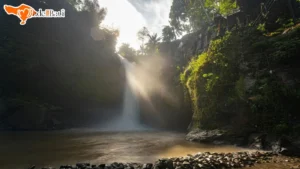
- SingSing Waterfall near Lovina in North Bali, where the atmosphere is calm, crowds are rare, and swimming beneath the falls with a partner is quietly spectacular
- Sidemen Valley, where the landscape is dramatic, the pace is slow, and very few other tourists appear during a typical morning
- Tirta Gangga Water Palace in East Bali, a royal water garden with ornamental pools and carved stone paths that feels genuinely unlike anything else on the island
For this type of couple, the most important planning note is transport. These locations require time to reach, especially from South Bali. A private driver who understands routing, timing, and local road conditions makes these days work. Without one, the logistics of getting between remote spots take up mental energy that should be going toward enjoying the experience.
If Culture and Local Life Matter More Than Luxury
Some couples come to Bali for the culture and find that the more they engage with it, the more meaningful the trip becomes. Attending a Kecak fire dance performance at Uluwatu with actual context about what you are watching is different from showing up and standing in the back. Visiting a village ceremony during Galungan, Bali’s most important cultural festival, when the entire island decorates its roads with tall bamboo poles called penjor, is something that only happens twice a year and changes the atmosphere of the island completely.
Nyepi, the Balinese Day of Silence, falls in March or April and shuts the entire island down for 24 hours. The island goes dark, the streets are empty, and the silence is absolute. Couples who happen to be in Bali during Nyepi often describe it as one of the most unusual and unexpectedly intimate experiences they have ever had anywhere.
For culture-curious couples, a private cooking class is also worth more than its price. Learning to make Balinese dishes together, ideally with a morning market visit first to understand the ingredients, creates a shared experience that is both practical and memorable. Several Ubud-based providers offer private classes that include the market visit, the cooking session, and a meal together at the end.
If Slow Mornings and Good Food Are the Whole Point
Not every couple needs a packed itinerary. Some of the most genuinely romantic time in Bali happens in private pool villas with a long breakfast, good coffee, and nowhere to be. Bali’s villa culture is exceptional for this. A private pool villa with attentive staff, a well-designed outdoor space, and access to in-villa dining can make a slow morning feel more romantic than any activity.
For couples who prioritize food, Bali’s restaurant scene has developed to a level that rivals major cities. Seminyak and Canggu have the highest concentration of excellent restaurants, ranging from refined Indonesian cuisine to international fine dining. Ubud has its own cluster of exceptional places, usually in more dramatic natural settings. A dinner at a restaurant where the kitchen opens onto a rice terrace or a river valley does not require any further activity to make it memorable.
The key for this couple type is to resist over-scheduling. Bali’s beauty is partly in its pace, and couples who try to see everything often miss the experience of actually being somewhere.
Sunrise on Mount Batur Is Not for Every Couple (But Here Is Who It Suits)
Mount Batur is an active volcano in Bali’s highland center, and hiking to its summit for sunrise is one of the most talked-about experiences on the island. It is worth being genuinely honest about what this involves before deciding whether it belongs on your itinerary.
The Physical Reality Versus the Photographs
The hike starts around 2am. You arrive at the base in the dark, begin climbing with a headlamp or guide’s torch, and reach the summit in roughly two hours. The path is steep in places, involves loose volcanic rock, and requires moderate fitness. It is not technically difficult, but it is not a casual walk either. By the time you reach the summit, you are tired, possibly cold (highland Bali is significantly cooler than the coast), and waiting in the dark with other hikers.
Then the sun comes up over the volcanic caldera, the mist rolls through the valley below, and the sulfuric steam from the crater’s edge catches the early light. For couples who make it, the experience is often described as one of the most visually striking things they have ever seen. The shared effort of getting there is also part of what makes it feel significant.
This experience suits couples who are both comfortable with physical activity, enjoy adventure as a shared language, and are willing to sacrifice a full night’s sleep for something genuinely spectacular. It does not suit couples who are light sleepers, have limited mobility, or who would rather feel well-rested than triumphant at 6am.
The Descent Is Where Most Couples Say It Was Worth It
Most accounts of Mount Batur focus on the summit. What rarely gets mentioned is the descent, which takes place in full daylight as the valley comes alive below you. The views on the way down are clearer and more detailed than anything visible in the pre-dawn darkness on the way up. Many couples describe this part as more beautiful than the sunrise itself, and it tends to generate the conversation and shared energy that makes the whole experience feel like a real shared story rather than just a checked activity.
A guide is required for this hike and is arranged through local operators. Most guides speak good English, are experienced with different fitness levels, and can adjust pace as needed. Bring layers for the summit, proper footwear, and water.
Uluwatu at Sunset Is Iconic But Timing Changes the Experience Completely
Uluwatu Temple sits on a cliff edge on Bali’s southern tip, roughly 70 meters above the Indian Ocean. At sunset, it is one of the most photographed places on the island. It is also one of the most congested between 5pm and 7pm during peak months. Both things are true, and knowing which version you will encounter depends entirely on when you arrive and how you structure the visit.
The Kecak Fire Dance Works Best When You Arrive Early Enough to Sit Well
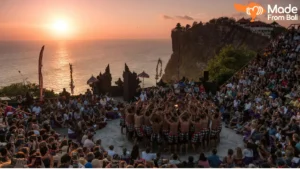
The Kecak dance performance at Uluwatu happens daily at sunset, typically starting around 6pm, and takes place in an open-air amphitheater overlooking the ocean. The performance itself is genuinely spectacular. A chorus of men creates a rhythmic chanting sound that builds and shifts as the story of the Ramayana unfolds, culminating in a fire element that lights the stage as the sun drops behind the horizon.
The problem is seating. The amphitheater fills up, and couples who arrive close to the start time end up at the back or sides, which significantly changes the experience. Arriving 45 minutes before the performance starts gives you the pick of seating, time to settle, and a view of the stage and the ocean simultaneously. This is the difference between watching a performance and being genuinely moved by one.
Tickets are available at the site. Monkeys at Uluwatu are persistent and occasionally take belongings, so securing anything loose in a bag before entering is a practical necessity rather than an overstatement.
The Cliff Walk Before the Show Is the Part People Miss
The temple complex at Uluwatu includes a walking path along the cliff edge that most visitors skip because they arrive too close to the performance time. This walk, ideally done in the hour before sunset, offers unobstructed views of the Indian Ocean from the clifftop, passing through temple courtyards and past stone carvings that date back centuries. Walked slowly with a partner, this is one of the genuinely underrated couple experiences in Bali.
The combination of the cliff walk followed by well-positioned Kecak performance seats, then dinner at one of the restaurants near Uluwatu’s base afterward, makes for a complete and naturally paced evening. It does not need to be rushed, and it does not need anything else added to it.
Ubud as a Romantic Base Is a Different Mood Entirely
Ubud does not sell romance through views of the ocean. It sells it through something slower and more textured: the sound of frogs at night, river valleys that appear suddenly when you round a corner, a morning market that smells of incense and fresh flowers, and a general sense that the island has a spiritual weight here that it does not quite have elsewhere. For some couples, this is exactly what they came for. For others, it is too quiet.
Rice Terrace Walks That Feel Personal Rather Than Crowded
The Tegallalang Rice Terraces near Ubud are beautiful and very well-known, which means they also come with cafes, swing operators, and a fair number of people during peak hours. The experience is still worthwhile, but it is worth going early, ideally before 8am, when the light is at its most interesting and the number of other visitors is manageable.
A better alternative for couples who want the rice terrace experience without the crowds is the Jatiluwih area, around two hours from Ubud but well worth the drive. The terraces there are UNESCO-listed, genuinely vast, and dramatically less visited. Walking the paths between the paddies in the morning, with Mount Batukaru visible through the mist above, is the kind of experience that feels entirely removed from the tourist circuit.
Within Ubud itself, the Campuhan Ridge Walk is a 45-minute to one-hour path along a ridge above two rivers, through tall grass and past small shrines. It is accessible on foot from central Ubud, free of charge, and most beautiful in the early morning before the heat builds. For couples who want a quiet shared walk rather than a formal activity, this delivers exactly that.
A Cooking Class for Two Is Genuinely One of Bali’s Best Shared Experiences
Balinese cooking is built around a deeply layered spice base called a base genep, which typically includes galangal, turmeric, lemongrass, shallots, garlic, chili, and a handful of other aromatics ground together before anything else touches the pan. Learning to build this base, and then cook several dishes around it, gives couples an understanding of Balinese food that makes every meal afterward more interesting.
Private cooking classes in Bali are available at several Ubud properties and typically include a morning visit to a local market before the cooking session begins. The market component is worth the early start: watching the interaction between vendors and local cooks, handling unfamiliar ingredients, and beginning the day with something active and sensory before settling into the slower rhythm of the kitchen is a genuinely good couple’s morning.
Some options worth knowing:
- Kamandalu Resort in Ubud offers a private class that includes the market visit and a cocktail-making session afterward.
- The Maya Sanur runs a class from its rooftop gazebo with ocean views, with the option to focus on desserts for couples with a specific interest.
- Several independent operators in Ubud offer private classes in traditional compound kitchens that feel more authentically local than resort settings.
River Valley Walks and What Makes Ubud Feel Slow in the Right Way
Ubud is built on the edge of a river gorge, and the valley below the town center is something most visitors never see because it requires a short walk down steep stone steps that are not particularly well-signposted. The valley floor is filled with rice paddies, small shrines, irrigation channels, and the sound of water moving through stone channels that have been there for centuries. Walking here in the morning or late afternoon, with no particular destination, is what Ubud feels like at its best.
The Tjampuhan Hotel and Spa has a riverside path accessible to non-guests that moves through the valley and past natural pools in the river. It is not a curated activity. There is no entrance fee and no guide. It is simply a place to walk slowly with a partner and be in the landscape, which is sometimes the most romantic thing Bali offers.
Lesser-Known Corners That Couples Who Return to Bali Tend to Discover
Most first-time visitors to Bali spend their time in the south and in Ubud, which makes sense. The infrastructure is better, the options are wider, and the familiarity is reassuring. But couples who return to Bali, or who plan their first trip with a longer stay and a little more ambition, often find that the island’s quieter edges are where its most lasting impressions live.
East Bali Moves at a Pace That the South Cannot Match
The east of Bali, roughly the area around Candidasa, Amed, and Tirta Gangga, receives a fraction of the visitors that Seminyak or Ubud handles on a typical day. The landscape is drier and more dramatic than the lush south, with Mount Agung visible from most of the coastal road and the sea a shade of blue that feels almost Mediterranean rather than tropical. The towns are quieter, the restaurants are simpler, and the overall rhythm of life here is slower in a way that feels earned rather than performed.
For couples who find the south of Bali slightly overwhelming, East Bali is the correction. It is also the location of Tirta Gangga, a former royal water palace with ornamental pools, stepping stone paths over fish-filled ponds, and gardens that were designed for exactly this kind of quiet, aimless wandering. Entry costs a small fee, crowds are light outside of weekends, and the combination of the water architecture and the surrounding mountain landscape is unlike anything else in Bali.
Sidemen Valley and Why Some Couples Say It Was Their Favorite Day
Sidemen is a small village in the foothills of Mount Agung, roughly an hour and a half from Ubud, with a valley view that consistently surprises visitors who have not seen photographs of it before. The rice paddies cascade down in layered terraces from the mountain above, the village is unhurried, and the few guesthouses and villas here tend to be genuinely peaceful.
A morning in Sidemen typically involves a slow walk through the rice fields, passing farmers at work and small temples half-hidden in the vegetation, with Mount Agung framed above the valley when the clouds allow it. There are no major organized activities here, no swing operators, no queue for a photograph. It is simply a place, and for couples who prioritize feeling present over being busy, that is precisely its value.
Getting to Sidemen from South Bali takes commitment. The drive is long, and the road into the valley is narrow. A private driver who knows the route makes this kind of day possible. Without one, the logistics are discouraging enough that most couples skip it entirely, which is their loss.
Common Planning Mistakes That Quietly Ruin the Romantic Atmosphere
Most romantic trips to Bali do not go wrong because of bad luck. They go wrong because of specific planning decisions that seem reasonable in advance and create friction on the ground. Knowing what these are before you book is the most practical thing this article can offer.
Trying to Fit Too Many Areas Into One Day
Bali’s major areas are spread across an island that has significant traffic, limited road capacity in popular zones, and no expressway between the north and south. A day that includes a morning in Ubud, a lunch in Seminyak, and a sunset in Uluwatu looks achievable on a map and routinely takes two and a half to three hours of driving time across the middle section alone.
The couples who report the most positive experiences in Bali tend to structure their days around a single area, moving within it rather than between regions. A full Ubud day. A full Uluwatu afternoon and evening. A slow Seminyak morning followed by a nearby beach. This approach feels less ambitious on paper and significantly better in practice.
Underestimating How Much Traffic Shapes the Mood
Bali’s traffic is not dangerous or particularly chaotic compared to other Southeast Asian destinations. But it is slow, consistent, and remarkably good at consuming the thirty-minute window between a spa treatment and a dinner reservation. The areas most affected are Canggu (constant congestion throughout the day), Seminyak during late afternoon, and the access roads to Uluwatu between 4pm and 7pm when sunset crowds converge on a small number of routes.
The practical solution is to build more time into transitions than feels necessary, avoid scheduling anything time-sensitive immediately after an activity in a different area, and use a private driver who understands local traffic patterns well enough to route around the worst of it. A good local driver is not simply transport. On a logistically complex day, they are the difference between a romantic evening and a stressed one.
Booking Experiences Without Considering the Crowd Hours
Several of Bali’s most photographed experiences feel dramatically different depending on when you arrive. The Tegallalang Rice Terraces between 10am and 2pm during peak season can feel more like a theme park than a landscape. The same location at 7am, when most visitors are still at breakfast, feels genuinely beautiful and personal. Tanah Lot at high tide at peak hour means you are looking at waves crashing against a rock surrounded by other people doing the same thing. At low tide, earlier in the day, you can walk the causeway out toward the temple and stand close to the base.
The rule worth applying: for any experience that involves a viewpoint, a temple, or a natural landmark, ask what time it is most crowded and plan to arrive at least an hour before that window. Local operators and private drivers with real Bali experience generally know this without being asked.
What Rainy Season Means for Couples Planning a Romantic Trip
Bali’s wet season is one of the most misunderstood travel periods on the island. Many couples avoid it based on the assumption that rain ruins an outdoor trip. The reality is more nuanced, and for some couples, the wet season offers a version of Bali that is genuinely more romantic than its dry-season counterpart.
The Experiences That Work Better When It Rains
Rain in Bali during the wet season rarely lasts all day. Mornings are typically clear and often beautiful, with mist clinging to the highlands and the landscape at its most intensely green. Afternoons bring heavier showers, usually between 2pm and 5pm. Evenings often clear again.
This pattern makes certain activities work particularly well in the wet season:
- Couple’s spa days are a natural fit. A long afternoon treatment while rain sounds on the roof is about as pleasant as Bali gets.
- Cooking classes work well in the morning before rain arrives, with the afternoon reserved for something indoor.
- Ubud and the highlands look their most dramatic when clouds move through the valleys. The landscape is alive with color and movement in a way that the dry season does not replicate.
- Private villa time is genuinely better in the wet season, when the sound of rain on a pool-side garden and a long, unhurried dinner at your own outdoor terrace feels like something you could not have bought during peak season.
Why Some Couples Prefer the Wet Months on Purpose
The wet season offers something the peak months cannot: genuine space. Restaurants are easier to book at short notice, popular viewpoints have room to breathe, and the overall atmosphere of the island is calmer. For couples who find crowded environments draining, this matters considerably.
Accommodation prices are also lower, often significantly so, which means the budget that would have gone toward a mid-range villa in August covers something considerably more private and well-located in November or February. For honeymoons or anniversary trips where the accommodation experience matters, this is a meaningful practical consideration.
The one thing the wet season requires is flexibility. An activity that depends on clear views from a clifftop or a sunrise from a volcanic summit is at the mercy of cloud cover. Having a backup plan for each outdoor activity, ideally something indoor and genuinely enjoyable rather than a consolation, is the difference between a wet-season trip that adapts well and one that feels like a series of disappointments.
How to Plan a Bali Couple’s Trip That Actually Feels Like One
The romantic experiences that couples remember from Bali are rarely the ones that were most planned or most expensive. They tend to be the ones that had enough space around them to actually happen: a slow morning at a villa before a day with one well-chosen activity, a dinner that was not rushed because the travel time was accounted for, a walk through a rice valley that was not squeezed between two other commitments.
Planning a couple’s trip to Bali well means resisting the impulse to fill every hour. Bali rewards presence more than efficiency. The couples who see fewer things but experience them fully tend to leave more satisfied than the ones who covered every item on a list.
A few principles worth holding onto when building a couple’s Bali itinerary:
- Choose a base area that matches your style, not just the one with the most Instagram coverage. The right area makes daily logistics easier and means the island works for you rather than against you.
- Anchor each day around one primary experience, whether that is a hike, a spa day, a cooking class, or a specific area, and let the rest of the day flow around it.
- Give sunsets the time they deserve. The light in Bali during the last hour before dark is something worth stopping for. Build it into the day rather than rushing toward it.
- Use a local transport partner who knows the island well enough to route intelligently, suggest timing adjustments, and handle logistics so you are not spending the drive between activities looking at Google Maps.
- Build in at least one unscheduled day, especially on longer trips. The morning you have nowhere to be in Bali is often the one you end up loving most.
Made From Bali works with couples to design itineraries that are built around these principles: area logic, timing intelligence, and experiences that are chosen because they fit you rather than because they appear on every list. If you want help building something that feels genuinely considered rather than generic, the team is a good place to start.
Bali is not difficult to visit. But a couple’s trip that actually feels romantic, rather than just ticking boxes in a beautiful setting, takes a small amount of the right thinking upfront. The experiences are here. The question is always which ones, in which order, at which time of day, from which place you call home for the week.