

Every travel article about Melasti Beach seems to open with the same line. Stunning. Breathtaking. A must-visit. And while none of that is technically wrong, it does not actually help you decide whether this beach deserves a spot in your Bali itinerary or whether your time would be better spent somewhere else on the Bukit Peninsula.
The honest answer is that Melasti Beach is genuinely worth visiting for most travelers, but the experience you get depends heavily on when you go, how you get there, what the tide is doing, and what you are expecting when you arrive. For some visitors, it becomes the highlight of their entire trip. For others who arrive at the wrong time without knowing what to expect, it feels like a crowded parking lot with a pretty view.
This guide is written to give you the full picture before you decide, not just the highlights reel.
The Kind of Beach This Actually Is (Before You Build Expectations)
Melasti Beach sits at the bottom of a limestone cliff in Ungasan, on the southern tip of Bali’s Bukit Peninsula. It is not a hidden cove, and it is not a wild, untouched stretch of sand. It is a well-developed beach, roughly one kilometer long, with a mix of public beach access and a row of beach clubs lining the back of the sand. There are toilets, showers, food stalls, sun lounger rentals, and enough infrastructure to make it genuinely comfortable.
What sets it apart from most beaches in Bali is the physical drama of its setting. The cliffs that frame the beach are not modest. They are tall, carved limestone formations that surround the beach on three sides and give the whole place a feeling of being enclosed inside something much larger than itself. The water, when conditions are right, is a shade of turquoise that does not feel exaggerated in the photos.
But understanding this beach also means understanding that it holds two very different kinds of visits under the same name.
Why the Drive Down Matters More Than People Expect
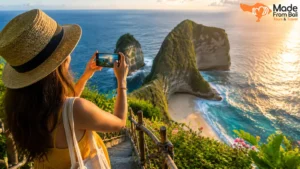
Before you even set foot on the sand, Melasti delivers something most beaches cannot. The road leading down to the beach was literally carved through a limestone hillside, and descending it, whether by scooter, car, or on foot, is an experience that many visitors describe as one of the more memorable parts of the whole stop.
The cliff walls rise steeply on either side as the road curves downward, framing a view of the ocean that keeps opening up as you descend. It is dramatic in a way that feels earned. Travelers who skip the walk and go straight by vehicle often miss the texture of the moment. If you have the option to walk at least part of the way down, it is worth doing once. Just keep in mind that you will be walking back up when you leave, and the midday heat makes that considerably less enjoyable.
Public Beach or Beach Club: Two Very Different Visits at the Same Location
This is something that most articles gloss over but that genuinely changes your experience. Melasti Beach is not a single type of destination. It operates as two parallel environments running along the same stretch of sand.
The public beach section gives you open access to the sand and water. There is a nominal entrance fee of approximately IDR 10,000 to IDR 20,000 per person, which can fluctuate slightly depending on current local pricing. You pay at the ticketing gate near the top before you descend. From there, you can rent a sun lounger from local vendors for around IDR 50,000 to IDR 150,000 for a pair with an umbrella, buy food and drinks from beachside warungs, and spend the day without any further obligation.
The beach club experience is a different calculation entirely. Venues like La Palmilla, White Rock, Klive, Sundays Beach Club, Tropical Temptation, and Minoo Beach Club offer pools, full bar and dining menus, daybeds, and in some cases infinity pool access with ocean views. Most require a minimum spend rather than a fixed entry fee. Depending on the venue and the day, that minimum can sit anywhere from IDR 200,000 to several times that amount. If you are planning a beach club day, check the current minimum spend at your chosen venue before you arrive, as these change and are not always advertised clearly online.
The reason this distinction matters is that your budget expectations, your crowd experience, and the overall atmosphere of your visit will differ significantly depending on which version of Melasti you are showing up for.
What Swimming at Melasti Really Looks Like
Melasti is frequently described as one of the better swimming beaches on the Bukit Peninsula, and for good reason. A natural coral reef sits roughly 100 meters offshore and causes incoming waves to break before they reach the sand. By the time the water reaches swimmers, it has calmed down considerably. The seabed is sandy rather than rocky, which makes it gentle underfoot and safe for children. On a good day, the water clarity close to shore is genuinely impressive.
But there is an important condition that most articles mention only in passing: the tide determines whether you can actually swim.
How the Reef Changes Everything Depending on When You Arrive
At high tide, the conditions at Melasti are exactly as described. The water is calm, relatively deep close to shore, and comfortable for swimming. At low tide, the same reef that protects swimmers becomes exposed or very shallow, making swimming difficult and in some areas impractical. Walking across the reef without shoes is uncomfortable, and the water near the shore can become murky as the tide retreats.
If swimming is your main reason for visiting, checking the tide forecast before you go is not optional. Bali tide tables are widely available online, and planning your arrival to coincide with an incoming or high tide makes a meaningful difference to what you can do in the water. The morning window between roughly 8:00 and 11:00 tends to combine favorable tide conditions with cooler temperatures and thinner crowds, which is why experienced Bali travelers consistently recommend arriving early.
The Flag System and Where It Is Actually Safe to Swim
Melasti Beach uses a flag system to designate safe swimming zones, similar to many other managed beaches in Bali. Swimming is permitted only in marked areas, and the boundaries are set based on reef position, current conditions, and lifeguard coverage. This is not a formality. The designated zones exist because the areas outside them can present currents or reef proximity that is not obvious from the surface.
Pay attention to where the flags are positioned when you arrive, and note that the safe swimming zone may shift slightly depending on the tide and the day. Families with young children should choose the shallower, more sheltered sections of the designated zone rather than heading toward the edges.
When Melasti Shines and When It Does Not
Timing a visit to Melasti is more nuanced than most guide articles suggest. The standard advice is “visit during dry season” and “arrive in the morning,” which is accurate but incomplete. There are layers to this that actually affect how enjoyable the experience is.
Weekday Mornings vs Weekend Afternoons Are Almost Different Beaches
On a weekday morning between Monday and Thursday, arriving at Melasti before 9:00, you will often find the beach spacious, relatively quiet, and easy to move around. Sun loungers are available without negotiation pressure, the path down from the parking area feels relaxed, and the water has the calmness that makes the turquoise color most visible.
On a Saturday afternoon during Indonesian school holidays, the same beach can feel overwhelmed. The cliff road becomes congested with scooters and cars, parking at beach level fills quickly and latecomers are directed to spots significantly further up the hill, and the beach itself fills up enough that finding a good position requires arriving earlier than you might expect.
This is not a reason to avoid Melasti. It is a reason to plan your visit deliberately. If you are combining Melasti with other Uluwatu stops on a flexible schedule, putting it first thing in the morning and moving on before midday gives you the best version of the beach. Weekend visits are not ruined by crowds, but the experience is noticeably different from a quiet weekday session.
What Happens to the Beach During Rainy Season
Bali’s wet season runs roughly from November through March, with the heaviest rainfall and wind typically falling in January and February. During this period, the west wind pattern pushes ocean debris toward Melasti’s shoreline, and the beach can accumulate plastic waste and organic matter that significantly reduces the visual appeal and cleanliness that makes it so attractive during dry season.
This is not unique to Melasti. Much of south Bali’s coastline faces the same issue due to broader ocean circulation patterns and Indonesia’s ongoing waste management challenges. But it is worth naming honestly because articles almost never do. If you are traveling during the wet season and a clean, photogenic beach is a priority, either plan to visit immediately after a period of beach cleaning maintenance, or set your expectations accordingly. The water itself can also carry more sediment during heavy rain periods, reducing visibility for swimmers.
Dry season visits from April through October offer the most consistent conditions, with October and April sitting at the gentler shoulders of each season.
The Sunset Question Most Visitors Do Not Ask Until They Arrive
Melasti Beach faces roughly south. This matters more than it might seem if you are planning a visit specifically around sunset.
Because the beach is enclosed by limestone cliffs on its eastern and western sides, the western horizon, where the sun actually sets, is partially obstructed. You can see the light change and the sky color beautifully during golden hour. The cliff faces catch warm light in a way that is genuinely lovely and makes for striking photography. But the dramatic, full-horizon sunset drop that many travelers associate with Bali’s best sunset views is not what Melasti delivers.
If a classic Bali sunset over open water is your goal, Uluwatu Temple provides a far more unobstructed western view from its clifftop position, and the Kecak Fire Dance at Uluwatu is timed to coincide with sunset specifically because of that view. Tanah Lot, further north, offers a similar open-horizon experience.
What Melasti does offer in the late afternoon is genuinely worth experiencing, just on its own terms. The golden hour light on white sand and turquoise water, with the cliff walls glowing warm, is a beautiful environment for photography and evening relaxation. Some beach clubs at Melasti position their seating specifically to maximize this angle. Coming in expecting a different kind of beauty, rather than a direct sunset view, means you will appreciate it for what it actually is.
Melasti or Pandawa: Choosing the Right Beach for Your Trip
This comparison gets almost no attention in the existing content about Melasti Beach, which is strange because it is one of the most practical questions travelers on the Bukit Peninsula actually face. Pandawa Beach is the other major white sand beach in the same general area, and choosing between them, or understanding whether you need to visit both, is a real planning decision.
Here is how they actually compare on the factors that matter most:
| Factor | Melasti Beach | Pandawa Beach |
|---|---|---|
| Swimming suitability | Excellent when tide is high; reef creates calm water | Variable; waves can be stronger, less reef protection |
| Beach club presence | Strong, multiple mid to high range options | More limited beach club infrastructure |
| Crowd character | Mix of international and domestic tourists, beach club visitors | Higher proportion of domestic tourists, more family day-trip atmosphere |
| Access drama | Cliff road descent is part of the experience | Similar cliff road with carved statues, equally scenic |
| Water sports options | Limited, primarily swimming focused | More water sport vendors operating on the beach |
| Amenities | Good public facilities plus beach clubs | Adequate public facilities, more warung-style food options |
| Best suited for | Couples, beach club days, photography, family swimming | Families wanting more activity options, local cultural atmosphere |
Neither beach is strictly better. They offer meaningfully different experiences, and if your itinerary allows a day in the Uluwatu area, visiting both in sequence is practical since they are close to each other.
Who Gets More Out of Melasti
Melasti suits travelers who want a visually striking beach with reliable swimming conditions and the option to elevate the experience through a beach club. Couples who want a beach day with atmosphere, first-time Bali visitors who want an immediately impressive beach without significant hiking or difficult access, and families with younger children who need genuinely calm water all tend to leave Melasti satisfied.
The beach also works well as an anchor stop in a longer Uluwatu day. Because it is accessible and has reliable facilities, it makes a comfortable early stop before moving on to Uluwatu Temple, the Kecak Dance, and dinner at Jimbaran.
When Pandawa or Another Uluwatu Beach Makes More Sense
Travelers who want a more active, water-sport-oriented beach day will find Pandawa more accommodating. Those seeking a genuinely quiet, uncrowded beach with minimal infrastructure would be better served by Nyang Nyang Beach or Gunung Payung Beach, both of which require more effort to access but reward it with significantly fewer visitors. Surfers will not find what they are looking for at Melasti and should head instead to Padang Padang or Bingin Beach.
Getting There Without the Frustrations Other Visitors Encounter
Most travel guides describe how to get to Melasti Beach in general terms: hire a driver, take a scooter, use Grab or Gojek. What they frequently leave out is the practical detail that changes how smoothly the journey actually goes.
What Actually Happens When You Take Grab or Gojek
Ride-hailing apps work well for getting to the general area, but there is a specific friction point worth knowing about before you go. Grab and Gojek drivers are typically directed to drop passengers at the hilltop checkpoint area near the ticketing gate, not at beach level. From the checkpoint, you still need to descend the cliff road, either by walking or by arranging onward transport.
Some drivers, particularly those familiar with the route, are willing to continue further down toward the beach area if the passenger requests it and offers a small additional tip. Whether this is possible depends on the driver, traffic conditions, and the time of day. On busy weekends, the access road becomes congested enough that even drivers who would normally go further are unable to do so easily.
The practical implication: if you are relying on Grab or Gojek, build in a few extra minutes for the walk, wear comfortable shoes rather than sandals you cannot walk in, and do not schedule your arrival too tightly if you have a beach club booking with a time-dependent reservation.
For the return trip, ride-hailing pickup is most straightforwardly arranged from the hilltop area near the ticket gate. Most apps route the pickup there naturally. If you ask for a pickup from a point further down the road, drivers may encounter the same congestion issue.
Scooter, Private Driver, or Rideshare: What Works for Different Situations
Each transport option has a genuinely different fit depending on your group and travel style.
- Scooter rental gives you the most flexibility, the best experience of the cliff road descent, and no dependency on drop-off logistics. It works well if you are already comfortable riding in Bali traffic, which is lighter in the Uluwatu area than in Seminyak or Canggu. The road down to the beach is steep and winding in sections, so cautious riders should take it slowly.
- Private driver is the most practical option if you are combining Melasti with other Uluwatu stops in a single day. A full-day driver handles parking, waiting, and onward routing without you needing to coordinate between multiple ride-hailing requests. Most Bali drivers offering full-day hire charge in the range of IDR 500,000 to IDR 700,000 for eight to ten hours.
- Grab or Gojek works reasonably well for a straightforward visit if you understand the checkpoint drop-off reality and plan for it. It is the most budget-conscious option for solo travelers or couples making a single stop.
The Cultural Side of Melasti That Goes Beyond Beach Days
The beach is named after a Balinese Hindu purification ritual, and this connection is more than a historical footnote.
The Melasti Ceremony and What It Means for Your Visit Timing
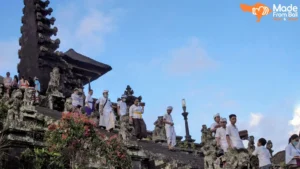
The Melasti ceremony is a significant ritual that takes place annually in the days before Nyepi, Bali’s Day of Silence, which falls on a different date each year according to the Balinese Saka calendar. During the ceremony, local communities carry sacred objects, offerings, and temple paraphernalia down to the beach in large processions to be purified in the ocean. The rituals are deeply meaningful for the Balinese Hindu community and draw large numbers of participants from surrounding villages and beyond.
For travelers, this creates two different scenarios. If you happen to be in Bali during the Melasti ceremony period, visiting the beach on a ceremony day means encountering a genuinely moving and visually extraordinary cultural event. The processions, the offerings, the white-dressed participants, and the ocean prayers create something very different from a regular beach day. Some travelers who witness it by coincidence describe it as the most memorable thing they saw in Bali.
The practical side: beach access for leisure swimming and sunbathing is restricted or unavailable during ceremony days, and the surrounding roads can become significantly congested. If you want to witness the ceremony, plan for it deliberately. If you are prioritizing a relaxed beach day, check whether any major ceremony activity is scheduled during your visit window. Nyepi date can be looked up through Bali’s official tourism calendar for any given year.
The Kecak Dance at Melasti vs Uluwatu Temple
Both venues offer Kecak Fire Dance performances, and the choice between them involves a real tradeoff worth understanding.
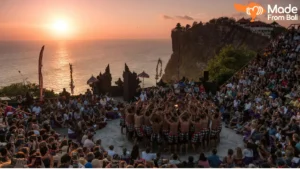
The Uluwatu Temple Kecak is the more famous of the two, set at the clifftop temple with a sunset backdrop that is genuinely spectacular when conditions are right. It is also the more crowded performance. Seating fills early, monkey encounters are common in the temple grounds, and the atmosphere can feel more managed and less intimate than visitors sometimes expect.
The Melasti Beach Kecak performance draws fewer tourists and offers a more relaxed viewing experience. The venue is newer, the parking situation is easier to navigate, and the crowd is generally smaller. The setting is not as iconically Balinese as Uluwatu’s clifftop, but the performance itself is equally authentic and considerably easier to photograph without obstacles.
If you are visiting Melasti Beach in the late afternoon and are staying in the Uluwatu area for the evening, adding the Melasti Kecak is a natural and low-effort extension of the day.
How to Plan a Practical Day Around Melasti Beach
Melasti works best as part of a considered Uluwatu day rather than as an isolated standalone visit, particularly if you are traveling from Seminyak, Kuta, or areas further north. The drive from Seminyak takes approximately one hour without traffic and can stretch to ninety minutes or more with it. Building a single-destination trip around that kind of transit time is inefficient when there are multiple worthwhile stops in the same area.
Pairing Melasti with Other Uluwatu Stops Without Feeling Rushed
A practical Uluwatu day that includes Melasti Beach without feeling rushed typically follows a loose sequence based on geography and timing.
Starting at Melasti Beach between 8:00 and 9:00 in the morning allows for swimming in the calmer morning conditions, a beach club brunch if that is part of the plan, and departure before the midday heat and crowd peak. From there, Padang Padang Beach is a short drive for those wanting to see Bali’s most famous small beach, and Uluwatu Temple can follow in the early afternoon when it is less congested than it becomes closer to the Kecak performance time.
If the Kecak Dance is on the itinerary, factoring in a late afternoon arrival at either Uluwatu Temple or Melasti for the performance, followed by the short drive to Jimbaran for a seafood dinner on the beach, creates a full and well-paced day that covers the southern Bukit Peninsula without feeling forced.
Travelers staying in Uluwatu itself can run this itinerary in any order with more flexibility. The shorter distances from accommodation make it practical to return to the beach for a late afternoon swim after exploring inland stops.
Costs to Know Before You Go
Planning a Melasti Beach visit without understanding the full cost picture leads to surprises at the gate or at the beach club cashier. Here is a realistic breakdown:
- Entrance fee: Approximately IDR 10,000 to IDR 20,000 per person, paid at the hilltop ticketing gate before descent. Children may be charged a lower rate.
- Parking: Approximately IDR 5,000 for scooters and IDR 10,000 for cars, paid separately from the entrance fee at the parking area.
- Sun lounger rental: Typically IDR 50,000 to IDR 150,000 for a pair with umbrella. Negotiation is common. Starting prices quoted by vendors are usually higher than the final agreed amount.
- Beach club access: Most clubs do not charge a flat entry fee but require a minimum food and beverage spend. This varies by venue and day, ranging from around IDR 200,000 per person at more casual venues to considerably more at premium options during busy periods. Always confirm the current minimum before choosing a venue.
- Kecak Dance performance: If attending the Melasti Kecak, a separate ticket is required. Pricing is set by the venue and is generally in the range of IDR 100,000 to IDR 150,000 per person, though this should be confirmed locally as it changes.
- Food and drinks on the public beach: Warungs and food stalls sell meals, cold drinks, and snacks at prices broadly similar to other tourist beach areas in south Bali.
So, Is Melasti Beach Worth Adding to Your Itinerary?
For the majority of travelers visiting the Bukit Peninsula, yes, Melasti Beach is worth the visit. The setting is genuinely impressive, the swimming conditions are among the most reliably calm on the southern coastline when timed correctly with the tide, the infrastructure makes a day there comfortable and flexible, and the cliff road descent alone is a more distinctive arrival experience than most Bali beaches offer.
What separates a satisfying visit from a disappointing one is mostly about expectation and timing. Arriving early on a weekday during dry season, checking the tide before you go, choosing between the public beach and beach club experience based on your budget and preference, and understanding that the sunset view is beautiful but not a wide-horizon drop, these decisions shape what you actually experience.
Melasti is not the right choice if you want a secluded, back-to-nature beach with no development. It is also not the right choice if swimming is your priority and the tide is running out when you arrive. And it is not the beach to choose if you are staying in Canggu with only two hours to spare and heavy afternoon traffic between you and the Bukit Peninsula.
But if you are spending time in the Uluwatu or southern Bali area and want a beach that combines visual drama, comfortable facilities, reliable swimming conditions, and the option to make a full day of it, Melasti earns its reputation. Come with the right expectations, time it reasonably, and it tends to deliver.
References
- Bali Untold. Melasti Beach Review and Visitor Guide. https://baliuntold.com/things-to-do/beaches/melasti-beach/
- Insight Bali. Melasti Beach Complete Guide. https://insightbali.com/melasti-beach/
- Hungry Pursuit. Melasti Beach Visitors Guide. https://hungrypursuit.com/melasti-beach-visitors-guide/
- Water Sports Bali. Melasti Beach Ungasan Entrance Fee and Location Guide. https://www.water-sports-bali.com/melasti-beach-ungasan-entrance-fee/
- Bali Holiday Secrets. Best Beaches in Uluwatu. https://www.baliholidaysecrets.com/best-beaches-in-uluwatu/
- Torn Tackies. Best Beaches in Uluwatu. https://www.torntackies.com/best-beaches-in-uluwatu/
- Finns Beach Club. Melasti Beach Bali Ultimate Visitor Guide 2026. https://finnsbeachclub.com/guides/melasti-beach-bali/
- Bali Backpacker. Melasti Beach Pantai Melasti Guide. https://bali-backpacker.com/melasti-beach-pantai-melasti-a-beach-for-ceremonial-place-that-turns-into-a-tourist-destination/