

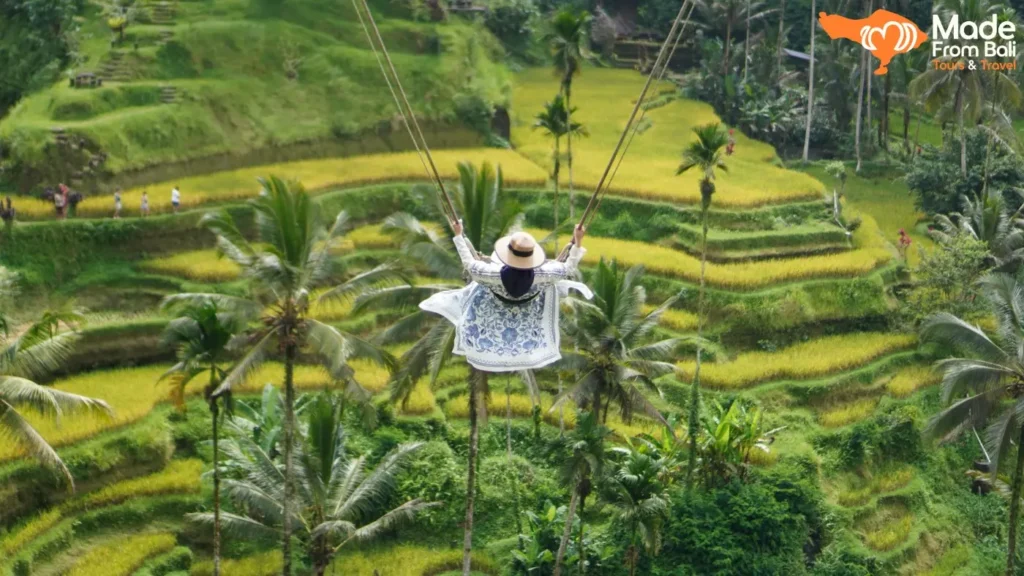
Almost everyone who plans a Bali trip sees the same photo before they arrive. Someone mid air, legs stretched out, rice terraces or jungle canopy stretching below them. It looks simple. Pay a ticket, sit down, swing out, get the shot. The reality has more moving parts than that single frame suggests, and most of the confusion first time visitors run into has nothing to do with the swing itself. It comes from not knowing that “Bali swing” isn’t one place, one price, or one experience. It’s a whole cluster of independently run venues, each with different harnesses, different crowd patterns, and different logistics to actually reach them.
Skip that homework and you can still have a great morning. But you can just as easily end up stuck in a queue for an hour, paying more than you expected once the add ons show up, or arriving at a venue that doesn’t suit your group at all. This guide walks through what the experience actually involves, how the major venues differ, and the parts of the visit, timing, weather, and transport, that almost nobody explains clearly before you go.
Why Every Bali Swing Photo Looks The Same But The Visit Rarely Does
Photos are cropped tight for a reason. A photographer frames out the queue of other visitors waiting their turn, the staff member holding the safety rope, and whatever the weather actually looked like that morning. That’s not dishonest, it’s just how travel photography works everywhere. But it means the mental picture most people bring to Bali doesn’t include the parts of the visit that actually shape how the day feels.
The swing itself is a relatively recent phenomenon. It started around 2017 as a single rope tied between two trees outside Ubud, and within a year it had become one of Bali’s most photographed activities. By now there are more than a dozen commercial operators within a thirty minute drive of central Ubud alone, plus a smaller cluster in North Bali near the twin lakes. Ticket prices across all of them range from around IDR 50,000 for a basic platform to close to IDR 500,000 for the highest adrenaline swings at the larger parks. That spread matters, because it tells you something the photos never will: this is not one attraction with one price tag, it’s an entire small industry, and picking the wrong entry point in that industry is the most common reason people leave disappointed.
There Isn’t Just One Bali Swing And That’s Where Most Planning Goes Wrong
A lot of first time visitors search “Bali swing” expecting to land on a single official venue, book it, and be done. In practice, the name has become generic, similar to how people say “Kleenex” for any tissue. There’s an original operator that most people mean when they say “the” Bali Swing, but there are also several large, well run parks that offer a comparable or even more varied experience, plus a scattering of smaller, independently owned platforms that vary a lot in quality.
Understanding roughly where these venues sit geographically makes the rest of the planning much easier, because location determines both your travel time and which other activities you can realistically combine with the swing.
| Area | Typical venues | Distance from central Ubud |
|---|---|---|
| Tegalalang | Alas Harum, Aloha Ubud Swing, Tegalalang Rice Terrace swings | 15 to 20 minutes |
| Bongkasa | Real Bali Swing (the original), Bali Swing Bongkasa Pertiwi | 20 to 30 minutes |
| North Bali | Wanagiri Hidden Hills, near the twin lakes | Around 90 minutes |
The Tegalalang Cluster Where Most Ubud Swings Sit
Tegalalang is the area most people picture when they imagine a Bali swing, mostly because it sits right beside the Tegalalang Rice Terrace, one of Bali’s most visited landscapes. Alas Harum is the largest operation here. It isn’t just swings, it combines the ride experience with a zipline, a sky bike obstacle course, coffee tasting, and photo installations like the Dancing Bridge, all inside one ticketed complex. Its Super Extreme Swing, positioned around 25 meters above the ground, is usually the one people mean when they talk about the most intense option in the area.
A short distance away sits Aloha Ubud Swing, which leans more toward variety than adrenaline. It typically offers somewhere between five and seven different swing types ranging from about 10 to 60 meters, along with several themed photo nests, a ship prop, and a bridge. Because it’s built specifically around photo opportunities rather than raw thrill, it tends to suit visitors who care more about the shot than the height.
The two standalone swings directly inside Tegalalang Rice Terrace itself are the cheapest and simplest version of the experience. You pay a smaller fee for a set number of swings out over the valley, and you don’t get the extra attractions the larger parks offer. It’s a reasonable choice if you’re already visiting the rice terrace and want to add the swing without a separate trip.
North Bali’s Wanagiri Hidden Hills Trades Jungle For Lake Views
Wanagiri Hidden Hills sits near Bali’s twin lakes, Danau Buyan and Danau Tamblingan, about ninety minutes from Ubud. Instead of jungle or rice terrace scenery, the backdrop here is water and mountain, which gives the photos a noticeably different feel from anything in the Tegalalang cluster.
What’s worth knowing before you go is that Wanagiri isn’t one company, it’s a strip of small, independently run platforms sitting next to each other along the same stretch of road. Some are well built with proper harnesses and clear safety information posted. Others are simpler bamboo and rope setups where the low price, often just IDR 50,000 to 100,000 per platform, reflects the lack of a real safety system rather than a good deal. This is the one area in Bali’s swing scene where checking the setup in person before you commit actually matters more than checking a website in advance.
Bongkasa And The Quieter Venues Off The Main Tourist Loop
Bongkasa Pertiwi, home to Real Bali Swing, is generally considered the original commercial swing that started the whole trend. It’s set slightly off the main Ubud to Tegalalang road, surrounded by deeper jungle and the Ayung River gorge, and tends to feel less crowded and more private than the Tegalalang parks, largely because it isn’t stacked right next to a major tourist landmark. Because it sits a bit further off the beaten path, getting there comfortably usually means arranging your own transport rather than relying on shared shuttle services.
Smaller operators like Zen Hideaway also sit in this quieter category. These tend to be lower cost, simpler in scope, and better suited to travelers who want the experience without the crowd energy of the bigger parks.
How The Harness Actually Works And What’s Worth Checking Before You Sign The Waiver
Every Bali swing visit starts the same way. You sign a liability waiver, staff check your weight against the posted limit, and you’re fitted into safety equipment before you’re allowed near the platform. What varies significantly is the quality of that equipment, and this is where a bit of upfront knowledge genuinely changes your risk exposure.
At the established, larger operators, including Real Bali Swing, Alas Harum, Bali Swing Bongkasa, and Aloha Ubud, the standard setup includes a full body harness with both chest and leg straps, not just a strap across your waist. There are usually two independent attachment points, a primary clip on the harness and a separate backup line, so a single point of failure doesn’t mean a fall. These operators also carry liability insurance, which is part of why the waiver exists in the first place.
Cheaper, smaller, or roadside platforms sometimes use a simple lap strap or seatbelt style restraint instead. It’s not automatically dangerous, but it offers less protection if something goes wrong, and it’s worth knowing which type you’re getting before you climb on rather than after.
Indonesia doesn’t have a national safety regulator specifically overseeing adventure swings the way countries like Australia do. In practice, that means the responsibility for checking equipment quality sits with you as the visitor, not with a government inspection sticker. A few quick checks before boarding go a long way:
- Ask whether the harness is full body or a single strap, and look at it yourself rather than taking a verbal answer at face value
- Check whether there’s a visible backup line separate from the main clip
- Confirm the posted weight and age limits actually match your group before you pay
- Notice whether staff walk you through hand position and seating instructions, which established operators do as standard practice, and less careful ones sometimes skip
Weight limits vary by venue and by swing type, generally somewhere between 100 and 150 kilograms for a single rider and up to 200 kilograms for tandem swings, with minimum age requirements typically set around five to seven years old depending on the swing’s height. Health related exclusions are also standard at reputable venues, usually covering pregnancy, recent spinal surgery, uncontrolled cardiovascular conditions, severe vertigo, and recent ear surgery. If any of that applies to you or someone in your group, it’s worth messaging the venue directly before you travel rather than finding out at the platform.
Matching The Swing To Your Trip Instead Of Picking The Prettiest Photo
Once you understand that these are genuinely different venues rather than interchangeable versions of the same thing, the next useful step is matching one to how you’re actually traveling. A couple chasing a specific photo has different priorities than a family with a seven year old, and both are different again from someone traveling solo on a tight schedule.
Traveling As A Couple
Real Bali Swing in Bongkasa tends to work best for couples specifically because of its tandem swing inventory and the palm canopy and river gorge backdrop, which photographs well without other visitors constantly in frame given the venue’s quieter setting. Alas Harum’s Cretya area, which combines swings with an infinity pool and rice paddy views, is another strong option if you want a more resort feeling setting rather than deep jungle. Both venues typically rent flowy dresses on site, usually in the range of IDR 50,000 to 100,000, if you’d rather not bring your own outfit.
Traveling With Younger Kids
Age and weight limits are the deciding factor here more than anything else. Real Bali Swing generally accepts children from around five years old on its smaller swings, while Alas Harum’s larger extreme swings typically require a minimum age closer to seven. Aloha Ubud Swing is worth considering specifically for families, since it’s built around a relaxed pace with multiple bird nests and photo spots rather than a single high adrenaline centerpiece, which suits kids who want to explore rather than sit through long queues for one big swing. Whichever venue you pick, closed toe shoes are usually required at the platform itself, so flip flops that work fine for the rest of your Bali day won’t be allowed for the actual ride.
Traveling Solo And Prioritizing Photos
Aloha Ubud Swing is frequently recommended for solo travelers, largely because it’s designed around photo variety rather than needing a partner to make the experience feel complete. Staff push the swing and control its height for you, so you’re not relying on a travel companion to operate anything. Several venues also offer an optional add on photographer service, often somewhere around 10 to 15 US dollars, where someone follows you around the venue taking photos for the day. It’s a practical option if getting a good shot without a friend behind the camera is part of why you’re going.
Traveling On A Tight Budget
If cost is the main constraint, Wanagiri Hidden Hills and the standalone Tegalalang Rice Terrace swings are the cheapest legitimate options, generally in the IDR 50,000 to 150,000 range depending on how many swings you use. Most venues, including the larger parks, also offer an entrance only ticket for visitors who want to walk through and take photos without actually riding, usually around 5 to 10 US dollars, which can be worth it if one person in your group wants to swing and another doesn’t.
What A Bali Swing Ticket Actually Costs Once The Add-Ons Are Counted
The headline price you see advertised is rarely the full amount you’ll actually spend. Almost every venue structures pricing in tiers, and the extras, transport, lunch, dress rental, photography, can add up quickly if you don’t know they exist beforehand.
| Venue | Base entry or photo only | Full swing package | Common extras |
|---|---|---|---|
| Real Bali Swing (Bongkasa) | Around 10 USD | Around 35 USD, often includes lunch and shuttle pickup | Hotel pickup instead of meeting point, roughly 6 USD extra |
| Alas Harum | IDR 50,000 to 100,000 for the grounds | IDR 200,000 to 400,000 for swing packages, up to around IDR 500,000 for the Super Extreme Swing | Zipline, sky bike, and coffee tasting sold separately |
| Aloha Ubud Swing | Around 10 USD | Around 35 USD, typically includes lunch, drinks, and insurance | Dress rental, photographer service |
| Tegalalang Rice Terrace swings | Not applicable, entry is per ride | Around 13 to 15 USD for a set number of swings | Locker, sarong, and water sometimes bundled in |
| Wanagiri Hidden Hills | Around 5 USD for one swing and one nest | Around 10 USD for full access to all swings and nests | Varies by individual operator on the strip |
A few practical notes worth knowing before you commit to a package. At the larger parks like Alas Harum, the entrance fee and the swing package are usually sold separately, so the number you see advertised at the gate isn’t necessarily what you’ll pay to actually ride anything. At Real Bali Swing and Aloha, the higher priced full packages tend to bundle in lunch and drinks, which can make them reasonable value if you were planning to eat nearby anyway. And dress rental, while optional, is common enough that budgeting an extra IDR 50,000 to 250,000 for it isn’t unusual if you want the flowing dress look for photos.
Arriving Before 9am Changes More Than People Expect
Most tour groups and shuttle services don’t leave Ubud until after breakfast, which means the bulk of daily visitors start arriving at swing venues somewhere between 9 and 10 in the morning. If you show up at opening time instead, typically around 8am, you’re arriving ahead of that wave, and the difference is noticeable within the first half hour.
Queue times at the most popular individual swings can stretch to close to an hour once the venue fills up, based on repeated visitor reports at the busier Ubud locations. Arriving early means shorter waits at each swing station, which matters more than it sounds like on paper. A two hour visit at a quiet venue can easily become a four hour visit once you’re queuing repeatedly for the swings you actually came for.
Early arrival also affects the photos directly, not just the wait. Morning light in Bali tends to be softer and less harsh than midday sun, and an empty platform means your shot won’t have three other tourists visible in the background waiting their turn. If photography is a meaningful part of why you’re going, the timing of your arrival probably matters more than which specific venue you choose.
How Rainy Season Changes The Terraces, The Ground, And The Photos
Bali’s wet season runs roughly from November through March, and it changes the swing experience in ways that are easy to overlook when you’re booking from home. The upside first: rice terraces genuinely look more vivid and green after rain, so photos taken during or shortly after wet season can look noticeably better than the drier, dustier terraces you’ll see mid year.
The practical downsides are worth planning around. Paths leading to some swings, particularly the ones at Tegalalang that walk you down into the rice terrace itself, can get muddy and slippery after rain, which is part of why closed, grippy footwear is usually required rather than optional at the platform. Bali’s rain pattern tends to follow a fairly predictable shape even in wet season, with mornings more often dry and afternoon showers arriving later in the day. That’s another reason the early arrival advice above matters even more during wet season specifically, since a morning visit is more likely to avoid rain entirely than an afternoon one. Heavier rain or lightning can also lead operators to pause swing operations temporarily for safety, so building a little flexibility into a wet season itinerary is worth doing rather than assuming the swing will run exactly on schedule.
Getting There Is Often The Part Travelers Underestimate
Almost every guide to Bali swings focuses entirely on what happens once you arrive. Very few explain what it actually takes to get there, and that gap causes more frustration on the day than anything about the swing itself.
Why Tegalalang Traffic Gets Heavier By Late Morning
The road running through Tegalalang village, where several of the biggest swing venues sit, is narrow and shared with a constant stream of tour buses heading to the rice terrace itself. Roadside parking on both sides of that narrow road eats into the already limited space, and by late morning, once the day’s tour groups are in full flow, that stretch of road regularly slows to a crawl. A trip that takes fifteen minutes at 7:30am can easily take three or four times as long by 11am. This is one of the biggest reasons the early arrival advice from earlier in this guide matters just as much for the drive there as it does for the queue once you arrive.
Why A Private Driver Beats Waiting On A Shared Shuttle Schedule
The original Bali Swing operates a free shuttle from a meeting point near Ubud Palace, but it only departs at fixed times, typically around 9am, 11am, 1pm, and 3pm. That schedule sounds convenient until you realize it directly conflicts with the early arrival strategy that actually gets you shorter queues and better light. If you want to be at the platform by 8am, the shuttle simply can’t get you there, since its first departure is an hour after that window closes.
This is where the shape of your transport plan matters as much as which venue you pick. A private driver lets you set your own departure time, arrive before the crowd rather than with it, and adjust the day if weather or traffic shifts your plan. At Made From Bali, this is essentially what our drivers do every week, routing guests through Tegalalang and Bongkasa on a schedule built around beating the queues rather than fitting around someone else’s timetable, which is a small logistical detail that ends up shaping the whole visit far more than people expect going in.
Pairing A Swing With Tegalalang Rice Terrace Or A Waterfall In One Day
Because several swing venues sit right beside other well known Ubud attractions, it’s genuinely realistic to combine a swing with one or two more stops in a single day, as long as you budget the time honestly rather than assuming everything moves quickly.
A workable structure for a half day that includes a swing looks something like this:
- Arrive at your chosen swing venue by 8am, before the tour bus crowd builds up. Budget two to three hours here if you’re doing a full package with multiple swing types, or closer to 45 to 90 minutes for a single standalone swing like Tegalalang.
- Walk through Tegalalang Rice Terrace afterward if your swing venue is nearby, allowing roughly an hour to explore the terraces properly and account for the walking involved.
- Head to a second stop such as Tegenungan Waterfall or, if you chose Alas Harum, use its own on site rice terrace and coffee tasting area rather than adding a separate drive.
- Plan to be finished by early afternoon, both to avoid the worst of any wet season rain and to leave time for the drive back before Ubud’s late afternoon traffic builds up again.
Trying to cram three separate venues into one morning almost always backfires once queues and drive time are factored in honestly. Two well timed stops with breathing room between them tend to produce a far better day than three rushed ones.
What To Wear And What Actually Holds Up Through A Full Day Of Photos
Most swing venues have two competing requirements at once: you want to look good in photos, and the platform staff need you in gear that’s actually safe to swing in. Flowing dresses photograph beautifully and are genuinely the most common outfit choice, with white and pastel tones showing up best against the green rice terrace or jungle backdrop. Most larger venues rent these on site for a reasonable fee if you don’t want to bring your own.
Footwear is where the photo instinct and the safety requirement clash most directly. Sandals or bare feet look better in photos, but closed, grippy shoes are required at the platform itself at nearly every established venue, particularly after rain when paths can get slippery. A common workaround visitors use is switching to sandals for photos at fixed photo spots away from the swing itself, then putting closed shoes back on before boarding.
A few smaller practical details make the day noticeably smoother:
- Loose jewelry or anything that can fall during the swing motion is worth leaving at your hotel rather than risking losing it mid air
- Sun protection matters more than people expect, since a lot of time at these venues is spent waiting outdoors between swings
- A light cover up or sarong is useful both for sun protection and for visiting any nearby temples on the same day trip
Small Mistakes That Turn A Two Hour Visit Into A Four Hour Wait
Most of the frustration people report after a Bali swing visit traces back to a handful of avoidable decisions rather than anything wrong with the venues themselves.
- Arriving at the same time as everyone else. Sleeping in and arriving at 10 or 11am means walking straight into the busiest window of the day at almost every popular venue.
- Not checking weight or age limits before traveling. Being turned away at the platform after arriving is a frustrating way to lose part of a day, and it’s entirely avoidable with a quick message to the venue in advance.
- Assuming the advertised price is the final price. Entrance fees and swing packages are often sold separately, and add ons like transport, dress rental, or extra activities can roughly double what you expected to pay if you don’t check the breakdown first.
- Choosing a roadside swing purely because it’s the cheapest option nearby. The lowest prices in areas like Wanagiri sometimes reflect a genuinely simpler and less safe setup rather than just a better deal.
- Wearing flip flops or sandals expecting to swing in them. Most venues will ask you to change into closed shoes at the platform, and not having a pair with you means either buying some on site or skipping that particular swing.
- Trying to fit three venues into one morning. Underestimating drive time and queue time is the single biggest reason ambitious itineraries end up feeling rushed rather than enjoyable.
Making Sense Of Which Bali Swing Actually Fits Your Trip
The Bali swing experience genuinely lives up to the photos, but only when the parts around it, the venue you pick, the time you arrive, and how you actually get there, line up with how you’re traveling. A couple chasing a quiet, photogenic morning wants a different venue and a different arrival time than a family managing a seven year old’s energy levels, and both are different again from a solo traveler trying to get a great shot without a queue in the background.
None of that requires overthinking. Pick a venue based on who you’re traveling with and what backdrop actually matters to you, confirm the harness type and weight limits before you go, and treat your arrival time as seriously as your venue choice, since showing up before 9am does more for the experience than almost anything else on this list. If getting the timing right on your own feels like one more thing to coordinate on top of everything else in a Bali itinerary, that’s exactly the kind of logistics a private driver handles as a normal part of the day, leaving you to focus on the part that actually matters, which is the swing itself.