

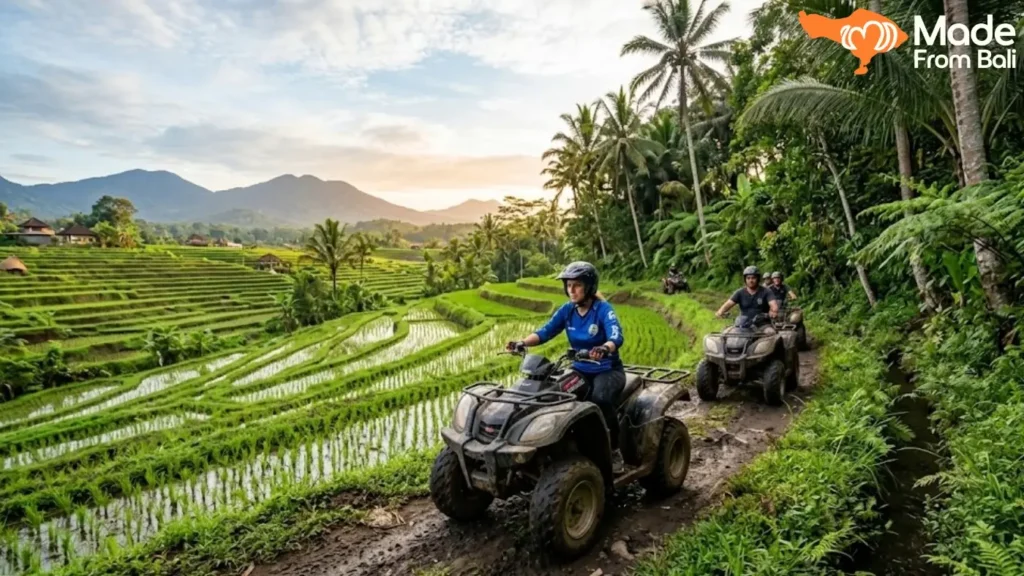
There is a particular moment on a Bali ATV ride that no booking page ever warns you about. You are halfway through a narrow jungle track, the engine humming beneath you, mud spraying up from the wheels ahead, and you look to your left to find a perfectly terraced rice field glowing green in the morning light. Nobody told you it would look like that. Nobody told you the contrast between the rawness of the ride and the calm beauty of the landscape would feel so striking.
That gap between what people expect and what they actually experience is exactly why this guide exists. Most articles about ATV rides in Bali are little more than product descriptions dressed up as travel content. They tell you there is a jungle. They tell you it is exciting. They mention a price range and a duration, then leave you to figure out the rest. If you have ever tried to seriously plan an ATV session in Bali using those sources, you already know how little they actually help.
This guide covers the experience honestly and in full. You will understand what the terrain is actually like, how to decide whether an ATV ride suits your group, what happens from the moment you arrive at the track to the moment you leave, and how to choose an operator you can genuinely trust. By the end, you will have everything you need to make a confident decision and show up prepared.
Why Bali Became One of Southeast Asia’s Best Places for ATV Adventures
Bali’s geography does most of the work. The island sits on a volcanic spine that runs east to west, creating a dramatic elevation shift from the flat southern coast up through the terraced highlands of Ubud and into the cooler volcanic belt near Kintamani. That terrain, and the dense agricultural and forested landscape that covers it, gives ATV operators something genuinely remarkable to work with.
In many destinations, ATV trails wind through scrubland or dry open ground. Bali’s tracks move through active rice farming land, thick jungle canopy, narrow canyon walls, bamboo groves, and at certain points, purpose-built tunnels carved through hillside. The variety within a single ride is unusual. You are not doing laps of the same field. You are moving through a landscape that changes meaningfully as you go.
There is also a cultural layer that makes riding here different. The rice terraces in Bali are not decorative. They are working agricultural systems, many of them managed through the traditional subak irrigation cooperative that UNESCO has recognised as a cultural heritage practice. When your ATV track winds past those fields, you are riding through a landscape that has been farmed continuously for over a thousand years. That context does not make the ride less fun. It makes it more interesting.
Practically speaking, the concentration of ATV operators in areas like Ubud means the infrastructure is well developed. Tracks are maintained, guides are experienced, and the competition between operators has driven standards up. For a first-time rider, Bali is one of the more forgiving and well-organised places in Asia to try the activity.
The Different Terrain You’ll Actually Ride Through
Not all Bali ATV packages cover the same ground. The type of terrain you ride through depends heavily on which area you are in and which operator you book with. Understanding the differences before you book is genuinely useful, because the terrain shapes the entire experience.
Rice Terrace and Plantation Routes
These are the most visually rewarding routes and the most commonly photographed. Tracks run along the edges of working rice paddies, passing through banana and coconut plantations, occasionally dipping into narrow channels between field walls where the path is just wide enough for the vehicle. The ground is relatively flat on the terrace sections but often soft and slightly uneven. After rain, these sections become slippery and muddy underwheel, which some riders love and others find more challenging than expected.
Ubud sits at the centre of Bali’s most celebrated rice terrace landscape. Routes in this area frequently pass through the Tegalalang vicinity or surrounding villages where farming is still active. You will see local farmers at work, water buffalo, and traditional stone shrines woven into the field boundaries. The pace on these sections tends to be slower and more deliberate, which suits first-timers and those who want time to absorb the scenery.
Jungle and River Canyon Tracks
Once the route moves away from open farmland and into forested terrain, the character of the ride changes completely. Tree cover closes in, the light drops, the air becomes cooler and heavier with moisture, and the track narrows. River canyon sections involve descending into shallow valley cuts where the trail follows the edge of a natural waterway. Some operators build tracks that cross or run alongside small rivers, meaning you may be riding through moving water at points.
These sections demand more concentration. The terrain is uneven, roots and rocks break the surface, and the gradient shifts frequently. For riders who want to feel the physical side of ATV riding rather than just the scenic side, jungle and canyon tracks deliver that. Most providers describe their routes as a mix of open and forested terrain, so you rarely get one without the other, but asking specifically how much of the route is jungle versus open field is worth doing before you commit.
Underground Tunnel Routes
Several operators in the Ubud area include a tunnel section as a signature feature of their course. These are actual excavated tunnels, typically cut through volcanic hillside, wide enough for the ATV to pass through with reasonable clearance on each side. The ride through them is dark, close, and unexpectedly atmospheric. Some tunnels run for thirty to fifty metres, some are longer.
This is often the section riders mention most clearly when they describe their experience afterward. It is a genuine contrast to everything else on the route, and the novelty of it holds up even for people who have ridden ATVs elsewhere. If this feature matters to you, it is worth checking explicitly whether the operator’s course includes it, since not all packages do.
Mixed Terrain Packages
Most full-length packages, typically running ninety minutes to two hours of actual ride time, combine elements of all the above. You begin on accessible terrain that lets you calibrate to the vehicle, move through rice terrace sections, enter jungle, and finish with a more challenging or dramatic section depending on the operator. The best packages are sequenced this way deliberately. The gradual increase in terrain complexity mirrors the rider’s growing comfort with the machine.
Shorter packages that run forty-five to sixty minutes tend to stick to one or two terrain types and skip the more demanding sections. They are a reasonable option for younger children or people with limited mobility, but they give an incomplete picture of what Bali ATV riding can actually be.
How to Know If an ATV Ride in Bali Is Right for You
This is the question most booking platforms sidestep entirely, which is why people sometimes arrive underprepared or occasionally realise mid-experience that this was not quite what they had in mind. Honest pre-trip self-assessment saves a lot of frustration.
Couples and Honeymooners
ATV riding in Bali works well for couples for a straightforward reason: the experience is shared and physically present in a way that most tourist activities are not. You are not watching something from a distance. You are doing something together, navigating the same terrain, dealing with the same mud, stopping at the same viewpoints. Couples who want an active memory from their Bali trip consistently rate ATV rides highly.
Most operators offer two options: riding your own individual ATV, or tandem riding where one person drives and the other sits behind. Tandem is often preferred by couples where one person is less confident operating a vehicle. It is worth confirming whether the tandem option requires the passenger to hold on actively or whether back support is provided, as this affects comfort over longer ride durations.
Solo Travelers and Small Groups
Solo riders tend to be grouped with other solo travellers or small parties by operators, so the experience rarely feels lonely. Groups are typically led by a guide at the front and have a second guide at the rear for larger parties. For solo travellers who want a more independent pace, some operators offer private guide arrangements for an additional cost.
Small groups of four to six people get a particularly good experience because the convoy is manageable, the guide can give more individual attention, and stops for photos are easier to coordinate. Larger group bookings above eight to ten people can feel more rushed and logistically slower at transition points.
Families With Children
Age and weight restrictions vary between operators, but a general baseline across most reputable providers is that children must be at least eight years old and meet a minimum height requirement around 120 centimetres to ride their own vehicle. Children below this threshold can usually ride as tandem passengers with an adult on the same ATV.
Families considering this activity should be honest about the child’s temperament. ATV riding involves vibration, noise, occasional sharp bumps, and sections where mud may spray upward. Children who are physically adventurous and comfortable with those sensations typically love it. Children who are noise-sensitive or easily startled may find certain sections distressing. The tunnel sections, specifically, can feel disorienting for younger children because of the darkness and the echo of the engine inside the enclosed space.
First-Timers With No ATV Experience
The majority of riders in Bali have never operated an ATV before. Operators design their experiences with this in mind. Automatic transmission vehicles are standard across most Bali ATV providers, which removes the gear-shift learning curve entirely. The safety briefing covers throttle control, braking, and basic turning. Most tracks are designed so that the early sections allow riders to practice on predictable terrain before anything more demanding.
First-timers should not be deterred. The main adjustment is managing speed impulse: the tendency to over-accelerate and then brake sharply rather than maintaining smooth, moderate speed. Within fifteen to twenty minutes of the start, most riders have found their rhythm.
Physical Requirements and Who Should Sit This One Out
Physical requirements are real and worth checking honestly before booking. Most operators set a maximum weight limit between 100 and 120 kilograms, which relates to vehicle performance on inclines and engine strain. Standard requirements across reputable providers are as follows:
- Minimum age: typically 8 years old to operate independently, with some operators setting this at 10
- Maximum weight: usually 100 to 120 kilograms depending on the vehicle
- Pregnancy: all reputable operators exclude pregnant riders due to vibration and jolt risk
- Serious heart or back conditions: riders with these conditions should consult a doctor and inform the operator before booking
- Alcohol: operators will refuse to permit intoxicated riders; this is a genuine safety measure, not a formality
People with recent knee injuries, hip replacements, or spinal issues should think carefully. The ride is not violent, but it is not smooth either. Sustained vibration and sudden jolts on uneven terrain are part of the experience.
Where in Bali Are ATV Rides Offered
Geography shapes the experience significantly. Choosing where to ride is not just about convenience; it is about what kind of landscape and atmosphere you want.
Ubud Area
Ubud is the centre of Bali’s ATV industry for good reason. The combination of active rice terraces, dense jungle, natural rivers, and elevation change within a relatively small geographic area allows operators to build genuinely varied routes. Most of the well-established operators, including those offering tunnel and canyon sections, are based within fifteen to twenty minutes of central Ubud.
Staying in or near Ubud makes logistics easy. If you are based in south Bali, the drive up is typically forty-five to sixty minutes depending on traffic and your starting point, and most reputable operators include hotel pick-up and drop-off in their packages.
Kintamani and the Volcanic Belt
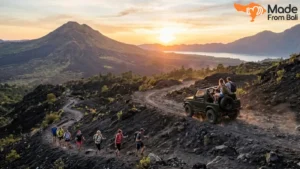
ATV operations near Kintamani sit at higher elevation, often offering routes that include views of Mount Batur and the surrounding volcanic landscape. The terrain here tends to be drier, rockier, and more open than the jungle-heavy routes around Ubud. The visual reward is different: less lush green, more raw volcanic drama.
This area suits riders who want a more arid and exposed terrain experience or who are combining their ATV session with a Kintamani volcano viewpoint visit on the same day. It is less commonly recommended as a standalone ATV destination compared to Ubud, but the landscape is genuinely striking.
Seminyak and South Bali Options
ATV operations in the south are more limited in terrain quality. The landscape around Seminyak, Kuta, and Canggu is predominantly flat and built-up, which means routes here typically run through open scrubland or agricultural land with fewer natural features. They are primarily convenient for travellers staying in the south who do not want to make the journey to Ubud.
If your stay is entirely based in the south and the travel time to Ubud feels impractical, south Bali ATV sessions are a reasonable compromise. But for anyone with a full day available and even moderate interest in the activity, the Ubud operators offer a meaningfully superior experience.
What Actually Happens on the Day
This is the section most booking pages skip completely. Knowing the full day sequence in advance removes uncertainty and lets you focus on enjoying the experience rather than figuring out logistics in real time.
Arriving at the ATV Center
If your package includes hotel pick-up, a driver will collect you at a time agreed the day before. Arrival at the ATV centre typically involves a short registration process where you sign a liability waiver, confirm your booking, and fill in a basic health questionnaire. This takes about ten minutes. You are then shown to a changing area where lockers are provided for valuables and personal items.
Most operators supply wetsuits or full-coverage shirts, helmets, gloves, goggles, and sometimes body protectors depending on the package level. You change into what is provided, store your belongings, and join your group at the staging area.
Safety Briefing and Gear Setup
The briefing is conducted by a guide, usually in English and occasionally also in Mandarin, Indonesian, or another language depending on the group composition. It covers: how to start and stop the vehicle, throttle sensitivity, how to brake effectively on downhill sections, what to do if the vehicle tips or stalls, and group riding rules including maintaining safe following distance and not overtaking the lead guide.
This is not a formality. Pay attention. The briefing takes ten to fifteen minutes and covers everything that will make the difference between a comfortable ride and an anxious one. First-timers who absorb the briefing generally adapt quickly on the track. Those who half-listen often spend the first twenty minutes correcting bad habits they picked up in the first five.
The Ride Itself From Start to Finish
The ride begins on a practice section immediately outside the facility, sometimes in a small open courtyard or along a flat entry trail. This is where you calibrate your throttle response and get a feel for braking. Within a few minutes, the guide leads the group out onto the main course.
Ride duration is usually quoted as total time including the practice section and photo stops, rather than pure moving time. A ninety-minute package typically involves sixty to seventy minutes of actual riding spread across the full route, with the rest consisting of stops. This is not a criticism of how operators structure it; the stops are part of the experience. Guide-facilitated photo stops at particularly scenic viewpoints are a standard inclusion and genuinely worth it.
The physical effort is moderate. Your arms absorb most of the vibration feedback from the terrain, your core works to stabilise your position on uneven ground, and your legs maintain steady contact with the footrests during bumpy sections. It is not exhausting in the way that cycling or hiking is, but most riders feel it in their forearms and lower back by the time the route finishes.
Rest Points, Photo Stops, and Local Interactions
Depending on the operator and route, there are typically two to four deliberate stopping points across the ride. These are chosen for scenic value or for practical reasons like regrouping before a more demanding section. At some stopping points, local vendors may approach with drinks or snacks, which is common in rural Bali and not something operators control. Brief interactions are friendly and there is no obligation to purchase.
Some routes pass through or adjacent to small villages, and local children sometimes wave or call out to passing riders. This is a normal and pleasant part of the experience, not a staged encounter. The villages are real working communities, and the ATV track passing through them is simply part of the local landscape at this point.
After the Ride
Finishing the ride, you return to the ATV centre where outdoor shower facilities are usually available. Mud is a genuine outcome of most sessions, particularly during or after rain, so the shower is useful rather than optional. Changing facilities are provided. Most operators include a meal or light refreshments in the package, typically served in an open-air dining area overlooking the surrounding landscape.
This post-ride period is where you will also receive any photos or videos taken by guides or operator cameras during the session, if you have purchased that option. If you want footage of your ride, confirming the photo and video package at the time of booking is important as it is not always included as standard.
What to Wear and Bring to Your ATV Session
This is one of the most practically underserved areas in competitor content. The advice is usually limited to “wear comfortable clothes and closed shoes” and leaves it there. Real preparation is more specific than that.
Clothing That Actually Works on the Track
Operators provide wetsuits or full-coverage protective shirts for most sessions, so you will not be in your own clothing for the majority of the ride. However, what you wear underneath and to and from the activity matters. The practical approach is:
- Wear clothes you do not mind getting muddy, regardless of what protective layer is provided
- Sports shorts or lightweight trousers that sit comfortably when seated for extended periods
- A secure sports bra or compression undershirt if relevant, as vibration over longer rides is real
- Avoid loose clothing, especially around the lower legs, where fabric can catch or ride up
- Remove jewellery, particularly rings and bracelets, before the ride; vibration and grip on handlebars can make them uncomfortable and occasionally cause minor abrasion
Long hair should be tied back and tucked inside the helmet. This is not a suggestion. Loose hair and moving vehicle air do not work well together, and untucked hair makes fitting a helmet properly much harder.
What the Operator Provides
Most reputable operators in Bali provide the following as standard:
- Full-face or open-face helmet
- Goggles
- Gloves
- Wetsuit or full-coverage top
- Boots or shoe covers in some cases
What they typically do not provide is personal sunscreen, insect repellent, a waterproof bag for your phone, or a personal towel for after the ride. Apply sunscreen before you leave your accommodation, not at the ATV centre. Skin exposure during an outdoor ride at Bali’s latitude adds up faster than most travellers expect.
Camera, Phone, and What to Leave Behind
This deserves direct advice rather than generalities. Taking your phone on a Bali ATV ride is possible but requires a practical approach:
- A secure armband case or chest mount is far more reliable than holding a phone in your hand or putting it in a loose pocket
- Mud spray is real; if your phone is not waterproof, a waterproof pouch is a worthwhile two-dollar purchase before the trip
- Most operators allow GoPro-style action cameras mounted to helmets, but confirm this in advance as some operators have restrictions on helmet-mounted equipment due to liability concerns
- The operator’s own photo and video package, if available, is often the cleanest option for capturing the ride since their team knows the best visual moments on the route
Leave your wallet, hotel key cards, and any non-waterproof electronics in the locker. The lockers at reputable centres are secure. There is no need to carry valuables on the track.
Pricing, Duration, and What Your Package Should Include
Price confusion is one of the most common complaints among people who have booked Bali ATV rides through online platforms. Understanding what drives price differences and what a complete package actually looks like removes that confusion.
Typical Price Ranges in 2025 and 2026
Prices for ATV rides in Bali vary depending on route length, inclusions, and the operator’s positioning. As a general reference:
| Package Type | Duration | Approx. Price Range (USD) |
|---|---|---|
| Short/Beginner Package | 45-60 minutes | $30 to $45 per person |
| Standard Package | 90 minutes | $45 to $65 per person |
| Extended Package | 2+ hours | $65 to $90 per person |
| Combined ATV + Activity | Varies | $70 to $120 per person |
Prices through international booking platforms like Klook, Viator, and GetYourGuide tend to sit at the higher end of these ranges due to platform commission. Booking directly with a reputable local tour provider, or through a trusted Bali-based travel company, typically results in better value for the same or equivalent experience.
What a Good Package Covers Versus What Gets Added On
A properly structured ATV package should include: hotel pick-up and drop-off, safety gear, guide throughout the ride, and a post-ride meal or refreshments. These are not extras. If any of these are listed as additional costs at the time of booking, the advertised price is misleading.
Items that are legitimately optional and priced separately include: photo and video documentation of your ride, upgraded route options, combination with other activities like white-water rafting, and private guide arrangements. These add genuine value and are worth considering depending on your preferences.
Booking Direct Versus Booking Through Platforms
Both options work, but they serve different needs. International platforms offer easier comparison, consolidated reviews, and a familiar payment interface. Direct booking with a local provider or Bali-based travel company often provides better flexibility, more accurate information about current track conditions and availability, and the ability to customise the experience more easily. For groups or travellers with specific requirements, direct communication with a provider before booking consistently produces better outcomes.
How Bali’s Seasons Affect ATV Conditions
Bali has two distinct seasons: the dry season running roughly from April through October, and the wet season from November through March. Both are worth understanding before you book.
Riding in the Dry Season
Dry season conditions produce firm, defined tracks, good visibility across the rice terrace sections, and consistent weather. Morning sessions in the dry season are particularly good: the air is cooler, the light is better for photographs, and the tracks are at their most manageable. This is the optimal time to ride, and demand is correspondingly higher, particularly from July through September when international tourist volumes peak.
What to Expect in the Wet Season
Wet season ATV riding is a genuinely different experience. Tracks become muddy, some sections become significantly more slippery, and the visual conditions change as cloud cover and humidity affect visibility. Jungle sections take on a different quality in the rain: darker, louder, and more dramatic. The rice terraces are at their most intensely green in the wet season because the fields are either freshly planted or in active growth.
Operators adjust route sections during periods of heavy rain, closing sections that become genuinely unsafe and substituting alternative terrain. This is normal practice and responsible management, not a failure of service.
Is It Worth Going When It Rains
Yes, with adjusted expectations. Many riders who have experienced Bali ATV rides in both seasons describe the wet season version as more raw and memorable, even if less consistently photogenic. The mud spray, the density of the jungle in wet conditions, and the physical engagement required on slippery terrain are all amplified. If you are someone who enjoys an experience rather than a clean photo of one, wet season riding has a genuine appeal.
The one scenario worth avoiding is booking on a day when Bali is experiencing sustained heavy rainfall rather than typical wet-season showers. Checking local forecasts the day before and being willing to reschedule if conditions are severe is always sensible. Good operators will suggest rescheduling rather than run you through genuinely dangerous conditions.
How to Choose an ATV Operator You Can Actually Trust
The quality gap between operators in Bali is real. A well-run ATV operation feels completely different from a poorly managed one, and the difference is not always visible in the booking page or the photos.
What to Look for in Terms of Safety Standards
The fundamentals of a trustworthy operation are not complicated to assess. Look for:
- Vehicle maintenance visible at the site: clean, well-maintained ATVs with functional brakes and lights, not machines held together with cable ties
- A structured safety briefing delivered before every group departs, not skipped or rushed
- A guide-to-rider ratio that allows meaningful supervision; one guide for ten or more riders with no rear guide is insufficient
- Helmets that fit properly and are checked by staff before the ride, not handed over and assumed to fit
- A clear and honest explanation of what happens if a vehicle breaks down or a rider is injured during the session
Questions Worth Asking Before You Book
Direct questions to an operator before booking tell you a great deal about how they operate. Useful questions include:
- What is the current condition of the track route?
- What is your policy if rain makes sections unsafe on the day?
- What is the guide-to-rider ratio for my group size?
- Is the tunnel section included in this specific package?
- What does the post-ride meal include and where is it served?
An operator who answers these questions with specificity and without deflection is an operator who is confident in what they are delivering. Vague or dismissive responses to practical questions are worth noting.
Red Flags to Avoid
Certain patterns consistently appear in poorly reviewed ATV operations. Be cautious of:
- Prices significantly below market rate with no explanation of what is excluded
- No mention of safety briefing in the booking confirmation
- Operator who cannot confirm current trail conditions when asked
- Absence of any customer review history or reviews that feel generic and unverifiable
- Pick-up and drop-off excluded from a package described as all-inclusive
Mistakes Travelers Make When Booking ATV Rides in Bali
Experience and observation across Bali’s adventure tourism industry reveal consistent patterns in what goes wrong for travellers. Understanding these beforehand costs nothing and saves real frustration.
Underestimating the physical demand is the most common error. First-timers often arrive expecting a gentle tourist ride and are surprised by how engaged their body needs to be across the full duration. This is not a problem unless you have existing physical vulnerabilities you have not disclosed. Arriving aware of the physical component means you can pace yourself effectively rather than fighting the vehicle from the start.
Assuming all packages with the same listed duration are equivalent is another frequent mistake. A ninety-minute package with a well-maintained route, an experienced guide, and genuine terrain variety is a different product from a ninety-minute session on a shorter loop with minimal guide engagement. Price is one indicator of quality, but reading specific reviews for the exact operator rather than general ATV-in-Bali reviews is far more useful.
Not checking inclusions before arrival leads to unexpected costs or disappointment on the day. Arriving to find that the post-ride meal is not included in your package, or that the tunnel section requires an upgrade, after you have already committed to the booking, is an easily avoidable frustration.
Booking through a platform and then not communicating with the actual operator is a missed opportunity. Once your booking is confirmed, contacting the operator directly to confirm pick-up logistics, ask about current track conditions, and clarify any questions takes five minutes and consistently produces a smoother experience.
Forgetting to tip guides is not a grievous error, but it is worth mentioning. ATV guides in Bali work physically demanding shifts and their service significantly shapes the quality of your experience. A tip of fifty to one hundred thousand rupiah per person is appropriate for a well-led session and is genuinely appreciated.
Pairing Your ATV Ride With Other Activities for a Full Day Out
ATV rides typically occupy two to three hours of a Bali day including travel, the session itself, and post-ride time. The remaining hours of the day are a genuine planning opportunity, and the right combination of activities depends on your base location and energy level after the ride.
White-water rafting on the Ayung River is the most naturally compatible pairing with an Ubud-based ATV session. Several operators offer combined ATV and rafting packages precisely because they suit each other: the ATV ride is better in the morning when energy is high and the light is good for the terrain scenery, and the rafting trip works well in the late morning to early afternoon. Both are physical, both are in the same general area, and the two experiences contrast pleasantly.
An afternoon visit to Tegalalang Rice Terrace after a morning ATV ride gives the landscape a different texture when you encounter it on foot. Having ridden through agricultural terrain at speed in the morning and then walked through a ceremonially maintained terrace in the afternoon gives you a fuller sense of the landscape’s different registers.
For couples, combining an ATV session with a spa treatment or sunset dinner in Ubud in the evening creates a natural day arc: active and physical in the morning, restorative in the afternoon, atmospheric in the evening. This pattern consistently produces satisfied and memorable travel days.
If you are staying in south Bali and making the drive up to Ubud for the ATV session, the journey itself makes sense only if the day is full enough to justify the travel time. Building a complete Ubud day around the ATV session, rather than treating it as a standalone excursion, is the more rewarding approach.
Making the Most of an ATV Ride in Bali
The difference between a good ATV experience in Bali and a genuinely memorable one usually comes down to a few specific choices made before and during the session.
Book morning sessions when possible. The combination of cooler air, better light for the landscape, and lower peak-hour traffic on rural roads all favour morning departures. Most operators run first sessions starting between 8am and 9am. These fill faster than afternoon sessions, particularly during peak season, so booking with reasonable advance notice is practical.
Communicate honestly with your operator about your group’s physical condition and experience level. This is not about managing liability. Guides who know they have a first-timer in the group watch differently and pace the group accordingly. Guides who assume everyone is experienced may move through terrain transitions at a pace that is uncomfortable for those who are still adjusting. Honest communication at the start produces a better-guided session.
Resist the impulse to film constantly. Action camera footage from ATV rides is almost always shakier and less coherent than it appears in the viewfinder, and the effort of managing a camera throughout the ride takes your attention away from the experience itself. Decide in advance to either use the operator’s photo package, use a helmet cam that runs without supervision, or simply ride and absorb the experience directly. The last of these often produces the strongest memory.
Arrive having eaten a light meal. Riding on a completely empty stomach over extended terrain, particularly in Bali’s heat and humidity, contributes to fatigue and occasionally nausea on the more intense sections. Arrive having eaten something, and eat the post-ride meal provided rather than skipping it. Most operators serve the meal as a genuine part of the experience, often in a setting with a good view, and it rounds the session out well.
The practical reality of a well-planned Bali ATV ride is that very little needs to go wrong. The terrain is extraordinary, the operators who run good programmes know exactly what they are doing, and the experience delivers in ways that most tourists genuinely do not anticipate. The preparation is the part that makes the difference between arriving ready and arriving hoping for the best.