

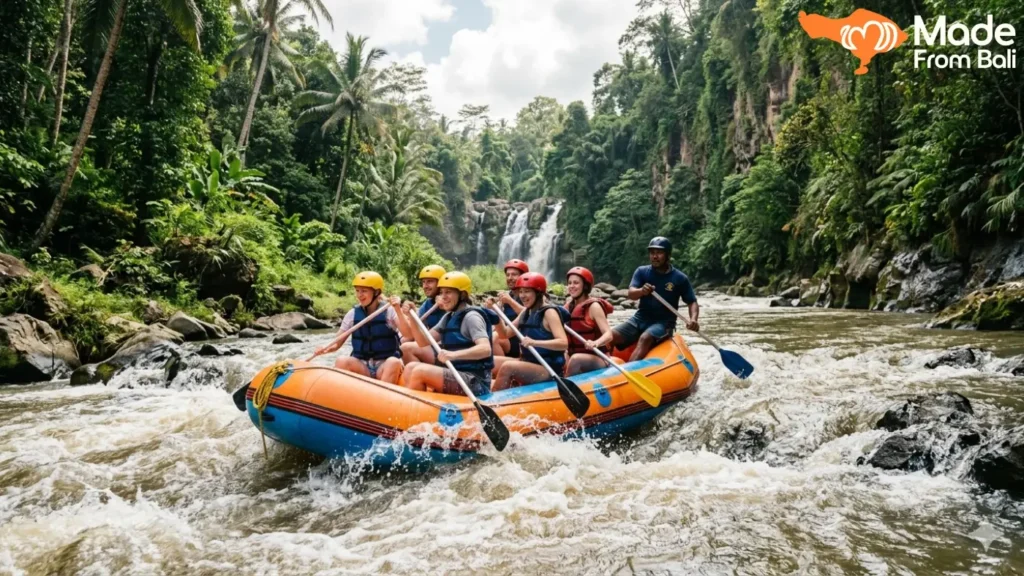
Rafting in Bali is one of those activities that sounds straightforward until you actually start planning it. Two main rivers, dozens of operators, varying difficulty claims, and a wide range of prices that do not obviously correspond to quality. Travelers who choose the wrong river for their fitness level end up either bored by an overly calm experience or surprised by rapids more challenging than expected. Those who book with an operator primarily on price sometimes discover on the morning of the activity that the safety briefing was cursory, the equipment was worn, and the guide-to-raft ratio was less than reassuring.
None of this needs to happen. Bali’s rivers are genuinely excellent for rafting, the operators who do this well are identifiable, and the decision between the two main rivers becomes straightforward once you understand what each one actually offers. This guide gives you the honest version: what each river feels like from inside the raft, how the difficulty levels translate from grades into real experience, what a safe operator looks like, and what a typical rafting day involves from pickup to return. By the end, the only question remaining is when you want to go.
Why Bali Is One of the Best Places in Southeast Asia for River Rafting
Bali’s popularity as a rafting destination is not a marketing construct. The island’s geography creates river conditions that are genuinely excellent for the activity, and the combination of accessible logistics, spectacular scenery, and reliable water flow makes it one of the most consistently rewarding places in the region to be on a raft.
The Geography Behind the Rivers and What It Creates
Bali’s rivers originate in the central volcanic highlands, where the mountains receive some of the highest rainfall in the region and feed a network of rivers that drop sharply through gorges and valleys as they descend toward the coasts. This volcanic highland origin produces several characteristics that make Bali’s rivers well-suited to rafting: a consistent gradient that creates naturally varied rapids, clear water from highland sources, and river corridors cut through jungle vegetation and ancient agricultural terraces that provide extraordinary scenery at every turn.
The rivers run year-round because the central highlands retain moisture even through the dry season. Water levels change seasonally, which affects the character and difficulty of each river, but neither the Ayung nor the Telaga Waja becomes unraftable in normal conditions. This year-round accessibility makes Bali a rare destination where rafting planning is not constrained by narrow seasonal windows.
What Makes Bali Rafting Different From Other Destinations
The scenic dimension of Bali rafting is what most operators mention and few adequately describe. The Ayung River in particular runs through a gorge whose walls are carved with ancient Balinese reliefs and punctuated by water temples built centuries ago, a combination of natural and cultural heritage that makes the river corridor a genuinely unique environment. Looking up from the raft at stone carvings emerging from the jungle vegetation, with rice terraces visible on the rim of the gorge above, produces a visual experience that has no equivalent on most rafting rivers elsewhere in the region.
The Telaga Waja runs through a different kind of landscape: deeper jungle, steeper gradients, and a more viscerally exciting environment whose appeal is more immediately adrenaline-focused and less culturally layered. Both rivers justify Bali’s reputation for rafting, but they justify it in different ways for different reasons.
The Ayung River and Who It Suits Best
The Ayung is Bali’s most popular rafting river, and it earns that status through a combination of consistent conditions, spectacular cultural scenery, and a difficulty level that makes it genuinely accessible to first-time rafters without being boring for more experienced paddlers. It runs through the Ubud area of the central highlands and forms the basis of most one-day Ubud activity packages that combine rafting with other cultural experiences.
What the Ayung Run Feels Like From Start to Finish
The Ayung run covers approximately 9 kilometers from the put-in point to the take-out, and the full experience on the water takes roughly two hours at normal water levels. The run begins with a series of warm-up rapids that give first-timers the opportunity to find their paddling rhythm and get comfortable with the guide’s commands before the more engaging sections begin. These early rapids are gentle enough to generate laughter rather than anxiety and establish a relaxed but attentive atmosphere in the raft.
The mid-section of the Ayung includes the rapids that give the river its Grade 2-3 classification. In practical terms, this means moments of genuine excitement, water spraying over the bow, everyone paddling actively, and the raft moving fast through narrow channels between rock formations. These sections are energetic without being technically demanding, and the transition back to calmer water after each rapids section gives the group time to recover before the next. For most travelers who have not rafted before, the Ayung’s pattern of calm, rapids, calm is the ideal introduction to the activity.
The final section calms significantly and gives the raft time to drift through some of the most visually striking parts of the canyon before reaching the take-out point. This is when most groups relax, look around properly, and realize how extraordinary the surrounding landscape is.
The Cultural Scenery Along the Canyon
The Ayung gorge is not simply a picturesque canyon. It is a living cultural landscape that has been continuously maintained by the communities above it for centuries. The stone reliefs carved into the canyon walls are the most frequently mentioned visual element, and they are genuinely striking: large-scale stone carvings depicting mythological scenes from Balinese Hindu traditions, emerging from the rock face as if the jungle has only partially reclaimed them.
Water temples appear at several points along the canyon, their structures partly visible through the vegetation and their function as active sacred sites in the subak irrigation system that UNESCO recognized as a world heritage cultural landscape. The rice terraces that climb the canyon walls above the river are part of this same system, and looking up at them from the raft gives a perspective on their scale and engineering that is impossible to appreciate from land.
This cultural layer is what distinguishes the Ayung from most comparable rafting rivers in Southeast Asia, and it is the reason that the Ayung run consistently produces the most memorable photographs, not because the rapids are the most dramatic, but because the environment around the raft is extraordinary at every point.
Who the Ayung River Is Right For
The Ayung is the right choice for the following traveler profiles:
- First-time rafters: The Grade 2-3 classification means real rapids without technical challenge, making it ideal for those with no previous rafting experience who want excitement without anxiety.
- Families with children: Most operators permit children from age five or six on the Ayung, and the family-friendly rapid pattern makes it manageable for mixed-age groups. Confirm the specific operator’s age policy before booking.
- Older travelers: The Ayung’s relatively calm character makes it suitable for travelers who want the experience and the scenery without the physical intensity of a more demanding river.
- Anyone combining rafting with cultural sightseeing: The Ayung’s location near Ubud and its cultural landscape make it a natural pairing with temple visits, rice terrace walks, or other Ubud area activities on the same day.
- Non-swimmers: Life jackets are mandatory and effective on the Ayung’s relatively calm water, and most operators accommodate non-swimmers with a clear safety briefing on raft entry and exit procedures.
The Telaga Waja River and What It Offers
The Telaga Waja River in the Karangasem regency of east Bali is the choice for travelers who want more from their rafting experience than the Ayung provides. It is shorter, steeper, more technically demanding, and considerably more exciting in the sections that define its character. The scenery is different from the Ayung: denser jungle, narrower channels, and a more wild and remote feeling that suits the river’s character.
How Telaga Waja Differs From the Ayung in Difficulty and Character
The Telaga Waja runs at a Grade 3-4 classification, and the practical difference from the Ayung’s Grade 2-3 is significant. Grade 3 rapids require active paddling and demand attention from everyone in the raft. Grade 4 sections involve powerful water movement, technical navigation, and moments where the guide’s commands matter considerably more than they do on the Ayung’s calmer stretches.
In practice, this means the Telaga Waja experience involves genuine adrenaline rather than pleasant excitement. The raft moves faster. The spray over the bow is more substantial. The moments where everyone paddles hard to navigate through a channel are more frequent and more physically engaging. The period of calm between rapids sections is shorter, which means the intensity builds across the run rather than alternating predictably with extended quiet stretches.
The river runs approximately 13 kilometers from put-in to take-out, longer than the Ayung, and the full water time is typically two and a half to three hours. The jungle corridor along the Telaga Waja is less culturally marked than the Ayung but more visually dramatic in terms of the natural landscape, with steep canyon walls, dense vegetation, and the sense of moving through genuinely remote terrain despite being relatively accessible from east Bali’s main roads.
The Rapids Sequence and What to Expect on the Water
The Telaga Waja’s rapids are not randomly distributed. The river builds through the run, with the most demanding sections occurring in the middle and later portions after the group has had enough time on the water to develop confidence with the raft and the guide. This progressive structure is intentional and means that first encounters with the river’s more technical character happen after some comfort has been established.
The significant rapid sections on the Telaga Waja involve navigating through rock formations where the current accelerates and the raft must be positioned precisely. The guide handles the steering, but the group’s paddling response to commands directly affects how smoothly the raft moves through these sections. Active engagement with the paddling makes a genuine difference on this river in a way that it does not on the Ayung, where passive participation is effectively possible.
There are sections on the Telaga Waja where the canyon narrows and the river drops through short but intense chutes that produce the kind of ride most travelers associate with proper white water rafting. These sections are the defining experience of the river and what draws people to Telaga Waja specifically after hearing that the Ayung is more scenic and less challenging.
Who Should Choose Telaga Waja Over the Ayung
The Telaga Waja is the better choice for:
- Travelers who have rafted before and want a more technically engaging experience than the Ayung provides
- Adventure-seekers whose priority is the adrenaline dimension of rafting rather than the scenic or cultural elements
- Groups of friends traveling together who want an activity that produces shared excitement rather than shared appreciation
- Physically confident travelers who are comfortable with sustained physical engagement and occasional moments of genuine intensity
- Those staying in east Bali near Candidasa or Amed, for whom the Karangasem location is geographically more convenient
The Telaga Waja is not recommended for non-swimmers without extensive rafting experience, very young children, or travelers whose primary interest is the scenery and cultural landscape. The river’s character prioritizes excitement over contemplation, and choosing it for the wrong reasons produces a different experience than expected.
Choosing Between the Two Rivers
The river choice question is the one travelers ask most consistently, and it deserves a direct answer rather than a diplomatic “both are great” response. The right choice depends entirely on what you want from the experience and who is in your group.
An Honest Comparison for Different Traveler Types
| Factor | Ayung River | Telaga Waja River |
|---|---|---|
| Difficulty grade | Grade 2-3 | Grade 3-4 |
| Run length | Approx. 9 km | Approx. 13 km |
| Water time | Around 2 hours | 2.5 to 3 hours |
| Scenery character | Cultural, terraced, ancient carvings | Jungle, wild, more remote |
| Best for | Beginners, families, cultural interest | Experienced, adventure-seekers |
| Minimum age (typical) | 5 to 6 years | 12 years |
| Suitable for non-swimmers | Yes, with life jacket | Less recommended |
| Location | Ubud area | East Bali, Karangasem |
| Intensity pattern | Calm and rapids alternating | Builds progressively, more sustained |
If the group includes first-timers, children, or older travelers, choose the Ayung. If everyone in the group is physically confident and wants more than pleasant excitement, choose the Telaga Waja. If you are genuinely uncertain, the Ayung is the safer default because it can surprise experienced rafters positively, whereas the Telaga Waja can overwhelm first-timers in ways that make the experience less enjoyable.
How Seasonal Water Levels Affect Each River
Bali’s seasons divide roughly into dry (April to October) and wet (November to March), and each season produces different conditions on both rivers.
In the wet season, water levels on both rivers rise significantly. Higher water means faster currents, more powerful rapids, and a more intense experience overall. The Ayung, which is Grade 2-3 in normal conditions, can approach Grade 3-4 at peak wet season water levels. The Telaga Waja’s already demanding Grade 3-4 sections become more challenging, and responsible operators will adjust their approach or, in extreme conditions, suspend operations for safety reasons.
In the dry season, lower water levels on the Ayung can occasionally reduce the intensity of some rapids, though the cultural scenery and the core experience remain intact. The Telaga Waja is less affected by low water because its gradient is steeper and the current remains strong even at reduced levels.
For most travelers, the dry season represents the safest and most consistently enjoyable conditions on both rivers. For experienced rafters specifically seeking maximum intensity, the wet season on the Ayung or early wet season on the Telaga Waja offers genuinely exciting conditions that are unavailable during the drier months.
What a Typical Bali Rafting Day Looks Like
Understanding how a rafting day actually unfolds, from the moment of pickup to the return to your accommodation, removes the planning uncertainty that causes unnecessary anxiety. The experience is more structured and more comfortable than many first-time rafters expect.
From Pickup Through Briefing to the River
Most Bali rafting operators include hotel pickup from south Bali and Ubud area accommodations as part of the package. Pickup times are typically between 7:00 and 9:00am depending on the operator and your accommodation location. The drive to the put-in point takes between thirty minutes and ninety minutes depending on which river and where you are staying.
On arrival at the operator’s base, the sequence before reaching the water involves:
- Registration and waiver: Basic paperwork confirming participant details and health status. Operators should ask about relevant medical conditions. If they do not, this is worth noting.
- Equipment fitting: Helmet and life jacket fitting by staff. Quality operators ensure the life jacket is snug and correctly positioned rather than simply handing over equipment. This step typically takes ten to fifteen minutes.
- Safety briefing: A mandatory session covering paddle commands, body position in the raft, what to do if you fall out, and emergency signals. This briefing should be thorough enough that participants feel genuinely prepared. A two-minute briefing is insufficient. A quality operator spends fifteen to twenty minutes on safety instruction.
- Walk to the put-in: Most access points involve a descent of stairs or a path to the river level. This descent is sometimes steep and warrants comfortable footwear.
The Run Itself and How Long It Takes
Once on the water, the guide leads the group through the river using paddle commands that the safety briefing has prepared everyone for. Forward, back, stop, and hold are the primary commands, and responding to them promptly and in unison is what makes the raft move safely through rapids sections.
On the Ayung, the guide typically maintains a conversational atmosphere during the calm sections, explaining features of the canyon, pointing out wildlife, and managing the group’s energy between rapids. On the Telaga Waja, the focus is more concentrated on the paddling itself given the greater frequency of active sections.
Most groups find that the experience on the water passes faster than expected. Two hours is a short time when the environment is extraordinary and the activity is engaging. The end of the run typically arrives at a take-out point where the raft is pulled up, life jackets and helmets are returned, and the group makes a final ascent back to the operator’s facility for the post-river lunch.
Post-River Lunch and the Return to Your Accommodation
Lunch at the operator’s facility is included in most Bali rafting packages and is typically a buffet of Indonesian and Western dishes served in an open-sided structure near the river facility. The quality ranges from basic to genuinely good depending on the operator. The meal is an important recovery moment after the physical activity, and traveling in wet clothes through a buffet line is a universal rafting experience that somehow never stops being slightly amusing.
After lunch, the return transfer to accommodations is included in most packages and follows the same route as the morning pickup in reverse. Total day time from pickup to return is typically five to seven hours depending on the river and the accommodation location. Planning the day around an afternoon departure and a free evening works well for most travelers.
Safety Standards and What to Look For in a Rafting Operator
The safety anxiety behind most Bali rafting searches is legitimate and worth addressing with specifics rather than reassurances. The activity is inherently safe when conducted by a responsible operator with appropriate standards, and those standards are identifiable before you commit to a booking.
The Equipment and Briefing Indicators That Matter
Equipment condition is the most immediately visible indicator of operator quality and is assessable before you get on the water. When you arrive at the put-in, pay attention to:
- Life jacket condition: Buckles should function, foam should not be compressed or degraded, and the fit should be adjustable. A fraying life jacket with stiff foam is not one that will perform correctly in the water.
- Helmet condition: Helmets should fit securely without excessive movement. Cracks or significant damage are visible and important.
- Raft condition: Rafts should be firm and properly inflated. Visible patching is not automatically alarming but extensive patching on structural sections warrants attention.
- Paddle condition: Paddles should be intact and appropriately sized for the group.
The safety briefing is the second indicator. A thorough briefing covers: what paddle commands mean, how to position your body in the raft for stability, what to do if the raft capsizes (which is uncommon but possible), how to float safely in moving water if you fall out, and how to re-enter the raft. Operators who deliver this information clearly and allow time for questions are demonstrating respect for participant safety. Operators who rush through it or omit sections are not.
Questions to Ask Before You Book or Launch
These questions can be asked at the booking stage and provide useful information about operator quality before money changes hands:
- What is the guide-to-raft ratio? One guide per raft is the minimum standard. Some operators use additional safety kayakers for the more technically demanding sections of the Telaga Waja.
- Are guides certified? River guide certification programs exist in Indonesia and certify guides in rescue techniques, first aid, and river navigation.
- What is the operator’s emergency protocol? A credible answer includes communication equipment, first aid capability at the put-in and take-out, and a clear procedure for handling medical situations on the river.
- What happens in the event of unusually high water levels or unsafe conditions? A responsible operator cancels or modifies the run. An operator who runs regardless of conditions is prioritizing revenue over safety.
What Responsible Bali Rafting Operators Actually Do
Quality rafting operators in Bali share a set of practices that distinguish them from lower-standard alternatives:
- They ask about participant health conditions before the day, not just on a form at registration
- They match group size to appropriate raft capacity rather than overcrowding rafts to reduce operating costs
- They provide wet shoes or sandals rather than allowing participants to raft in flip-flops
- Their guides are positioned in the raft consistently, not alternating based on who is available that morning
- They can describe their emergency procedure specifically when asked
- Their post-activity facility is maintained, not improvised
Made From Bali’s approach to rafting bookings reflects these standards. The operator partnerships used are selected based on safety record and equipment quality rather than commission rate, and the transparency about what each river involves is built into the booking process rather than discovered on the day.
What to Wear and Bring on the River
The preparation for a rafting day is simpler than most travelers make it, but the specific items that matter are worth understanding because the wrong choices create avoidable discomfort.
Clothing, Footwear, and What Gets Wet
Everything you wear on the raft will get wet. This is not a possibility but a certainty, and preparing for it is the most important practical step before the day.
The most important clothing guidance for Bali rafting:
- Avoid cotton: Cotton absorbs water and stays cold against the skin. Synthetic quick-dry fabrics are dramatically more comfortable when wet and dry significantly faster between rapids and calm sections.
- Wear a swimsuit underneath: A swimsuit under quick-dry shorts and a light synthetic top is the standard and most comfortable configuration. Board shorts or rashguards are ideal.
- Bring a change of clothing: Having dry clothes to change into after the run for the return journey makes the post-river portion of the day considerably more comfortable.
- Footwear: Secure sandals with straps or closed sport shoes that can get wet. Flip-flops are hazardous because they come off in the water. Many operators provide river shoes, which is worth confirming at booking.
Valuables, Cameras, and What to Leave Behind
The raft is wet, moving, and occasionally in rapid water. Managing valuables requires deliberate planning rather than improvisation at the put-in point.
- Leave phones in the vehicle or secure locker: Phones in raft pockets, even in supposedly waterproof cases, are frequently submerged in ways that defeat the waterproofing. Most rafting facilities have secure storage.
- Action cameras on helmets: A GoPro or similar device mounted securely on the helmet is the practical way to photograph the experience. Handheld cameras are manageable on the Ayung’s calmer sections but problematic on the Telaga Waja.
- Waterproof pouches: Small waterproof pouches for essential items like a locker key or a small amount of cash are worth having. Most operators provide a waterproof bag for the raft that accommodates group items.
- Prescription glasses: A strap to secure glasses to your head prevents losing them in the water. Contact lenses are preferable to glasses for the water sections.
Physical Requirements and Who Should Not Raft
Bali rafting has inclusive physical requirements for the Ayung and more specific ones for the Telaga Waja.
For the Ayung, most operators permit participants from around age 5 or 6 upward, with a maximum weight limit typically around 100 to 120 kilograms. Non-swimmers are accommodated with the life jacket and a briefing on what to do if they enter the water. Those with serious heart conditions, back problems, or recent surgery should consult with a doctor before participating and inform the operator at the briefing stage.
For the Telaga Waja, the minimum age is typically 12 years or older, and non-swimmers are not recommended. The more sustained physical engagement of this river and the greater intensity of the rapids make it unsuitable for participants whose health or physical condition is a significant consideration.
Mistakes First-Time Rafters in Bali Consistently Make
Experience with how first-time rafters approach the activity reveals a consistent set of avoidable errors that affect the quality of the experience in ways that are entirely preventable with prior knowledge.
The most common and consequential mistakes include:
- Wearing cotton clothing: This is the most universal error and the one most immediately regretted. Cotton against wet skin in the cool highland air at the start of the run is uncomfortable from the first splash and does not improve throughout the day.
- Bringing a phone on the raft without proper waterproofing: The splash pattern in a raft is unpredictable. Phones in standard pockets, even in a case, frequently end the day unusable.
- Mentally checking out during the safety briefing: The briefing feels like a formality. The moment when someone falls out of the raft and is in the water is not the right time to discover that they did not register what to do. The safety briefing is the most important ten to twenty minutes of the day.
- Choosing an operator based purely on price: The lowest price in Bali rafting almost always reflects a corresponding reduction in equipment quality, guide experience, or safety protocol. The difference in price between a responsible operator and a low-cost alternative is rarely significant relative to the overall cost of a Bali trip, and the safety and experience difference is genuine.
- Underestimating the Telaga Waja: Travelers who have rafted occasionally and self-assess as comfortable with Grade 2 water sometimes choose the Telaga Waja assuming that Grade 3-4 is only marginally more demanding. The intensity difference between Grade 2-3 and Grade 3-4 is not marginal, and arriving on the Telaga Waja without appropriate expectations creates an experience that is more stressful than enjoyable.
- Skipping the lunch or leaving early: The post-river lunch is a recovery period, a social moment, and part of what makes the rafting day a complete experience rather than just an activity. Travelers who skip it to rush to the next thing consistently report that the day felt incomplete.
Getting Into the River Ready for What Bali Actually Delivers
Rafting in Bali is one of the most reliably satisfying activities available on the island, and its consistency is precisely because the rivers are genuinely excellent and the activity, when managed by a responsible operator, delivers on every expectation. The Ayung offers something that few rivers in Southeast Asia can match: a long, scenic, culturally extraordinary corridor that happens to contain enough rapids to make the activity genuinely engaging. The Telaga Waja offers what dedicated white water enthusiasts come to Bali specifically for: a technically demanding run through dense jungle with the kind of rapids sequence that produces the feeling of actually having done something physically significant.
The preparation described in this guide, choosing the right river, assessing the operator’s safety standards, wearing the right clothing, managing valuables appropriately, and attending properly to the safety briefing, takes less than thirty minutes of thought and transforms the probability of a great day from uncertain to near-certain. Bali’s rivers deliver when you show up ready for them.