

Most people arrive in Tanjung Benoa expecting a simple choice between jet ski, parasailing, or banana boat. What actually greets them is a long stretch of beach lined with dozens of operators, overlapping price boards, staff waving them toward different booths, and a menu of ten or more activities that all sound similarly fun. That gap between expectation and reality is where most of the day’s stress comes from, not the water itself.
This matters because a Tanjung Benoa day usually sits inside a much shorter Bali trip, often just one morning or afternoon carved out of a packed itinerary. Spend that window comparing prices on the spot, unsure which operator to trust, and the actual water time shrinks fast. Skip the planning entirely, and it’s easy to overpay for something a booth two doors down offers for a third of the price.
None of this means Tanjung Benoa is a trap. It genuinely is one of the most convenient places in Bali to try several water activities in one sitting, with calm water, professional equipment, and operators who run this beach every single day. The difference between a great day and a rushed, overpriced one usually comes down to knowing what’s actually happening behind the pricing, the queues, and the activity list before you show up. That’s what this guide walks through.
Why So Many Operators Crowd The Same Stretch Of Beach
Anyone who has driven along Jalan Pratama in Tanjung Benoa has seen it: booth after booth, banner after banner, all selling roughly the same list of activities within a few hundred meters of each other. It looks chaotic at first glance, but there’s a straightforward reason this specific stretch became Bali’s water sports center rather than, say, Kuta or Uluwatu.
Tanjung Benoa’s Bay Shape Is The Real Reason This Became Bali’s Water Sports Hub
Tanjung Benoa sits on a narrow peninsula that forms the eastern edge of Benoa Bay. Because the bay is enclosed rather than facing the open ocean, the water here stays noticeably calmer than the surf beaches on Bali’s west and south coasts. There’s little to no swell, the waves that do reach the shore are gentle, and the seabed slopes gradually instead of dropping off sharply.
That combination matters more than it sounds. Jet skis, parasailing boats, and towed inflatables all need flat, predictable water to operate safely. A beach like Uluwatu or Padang Padang, prized by surfers precisely because of its swell, would be dangerous and impractical for the same activities. Tanjung Benoa’s sheltered geography is the reason operators clustered here decades ago, and it’s still the reason the area works well for beginners and non-swimmers today.
More Operators Also Means More Price Variation Than First Timers Expect
A dense cluster of competing businesses might sound like good news for pricing, and in some markets it would push prices down through competition. Tanjung Benoa doesn’t quite work that way, mainly because most visitors don’t comparison shop in person before they arrive. They see one booth, get a quote, and either accept it or feel too awkward to walk away and check the next one.
That dynamic leaves room for wide price spreads on identical activities within a short walk of each other. Some operators set higher opening prices for walk-in guests who haven’t done any research, while others compete for online bookings with clearly listed, pre-agreed rates. Neither approach is automatically dishonest, but it does mean the price you’re quoted often depends more on how you arrive than on which operator you’re standing in front of. This becomes a lot clearer once you understand how the booking process actually works, which the pricing section further down covers directly.
Grouping The Activities By What Kind Of Experience You’re Actually Chasing
Most guides list Tanjung Benoa’s activities as a flat menu: jet ski, parasailing, banana boat, sea walker, and so on, one after another, with little to distinguish them beyond a short description. That’s not particularly useful when you’re standing on the beach with a couple of hours and a limited budget, trying to pick two or three out of twelve.
A more useful way to think about it is by the kind of experience each activity actually delivers, since most travelers only have time for one category before moving on to the rest of their day.
Jet Ski, Flyboard And Wakeboard Sit In The Fast And Physical Category
These are the activities built around speed, balance, and a bit of physical effort. Jet skiing in Tanjung Benoa is almost always done with an instructor riding alongside or guiding from a second jet ski, both for safety reasons and because most operators’ insurance doesn’t cover unsupervised solo riding. You still get to control the throttle and steer, but it’s a guided experience rather than a free-for-all.
Flyboarding uses a water-propelled board that lifts the rider several meters above the surface, and it genuinely does have a learning curve. First-timers usually spend a good chunk of their session finding balance before they get any real height. Wakeboarding, being towed behind a boat while standing on a board, demands similar core strength and quick reflexes.
This group suits travelers who want an adrenaline hit and don’t mind a short instructional period before the fun really starts. It’s less suited to anyone prone to seasickness, anyone with limited upper body strength, or younger children, since most operators set minimum age and weight requirements for these specific rides.
Parasailing, Banana Boat, Donut And Flying Fish Work Better As Group Fun
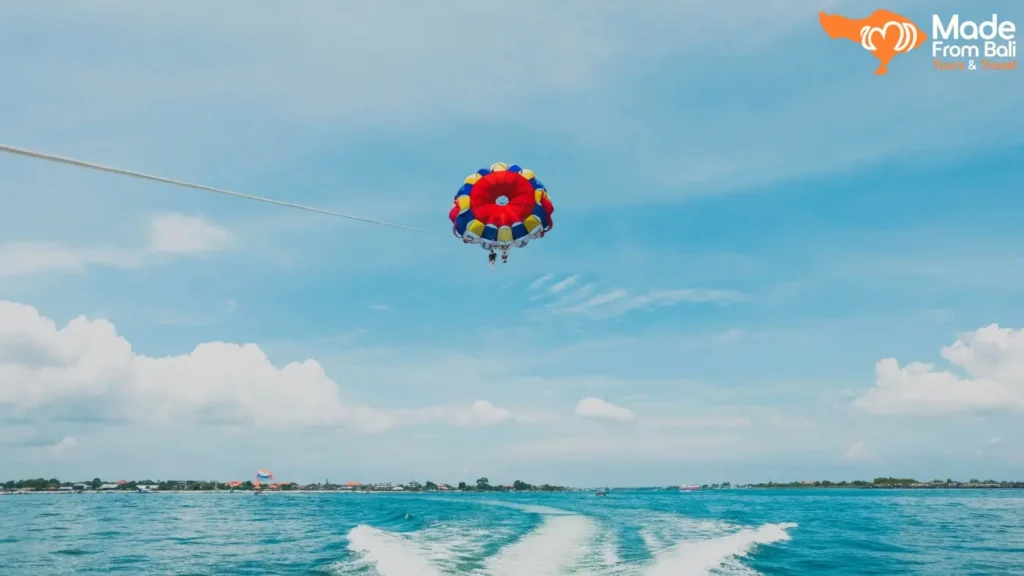
This cluster shares one key trait: they’re built for shared laughter rather than individual skill. Parasailing lifts one to three people into the air behind a speedboat, using a parachute-style canopy, and despite the height it’s actually one of the calmer experiences on this list since there’s no real physical exertion involved and, on most rides, no water contact at all.
Banana boats and donut boats are the opposite kind of fun, low to the water, bumpy, and usually ending with everyone getting tipped into the sea at some point, which is half the appeal. Flying fish sits somewhere in between, using an inflatable that can briefly lift off the water at higher speeds for a bit more of a thrill than a standard banana boat ride.
These activities work particularly well for families with older kids, groups of friends, and anyone who wants a fun photo and a good story rather than a technical challenge. They’re also the easiest activities to combine into a single package, since operators are used to running them back to back for groups.
Sea Walker, Snorkeling, Diving And The Glass Bottom Boat Suit A Slower Pace
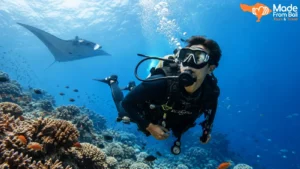
The last group trades adrenaline for a look at what’s underwater, and it’s the category most beginners underestimate. The sea walker uses a weighted helmet connected to a surface air supply, letting you walk along the seabed while breathing normally, without needing any swimming ability at all. It’s genuinely one of the few water activities in Tanjung Benoa that non-swimmers can do without hesitation.
Snorkeling and diving depend heavily on water visibility, which can vary from one day to the next depending on tide and recent weather, so it’s worth setting realistic expectations rather than picturing postcard-clear water every time. The glass bottom boat, often bundled with a stop at a nearby turtle conservation area, is the most passive option on the list, better suited to elderly travelers, very young children, or anyone who wants to see marine life without getting in the water at all.
That turtle island stop deserves its own honest look before you add it to a booking, which the next section covers directly.
Why The Same Parasailing Ride Can Cost Three Times More Depending On Who You Ask
This is the part of planning a Tanjung Benoa day that causes the most frustration after the fact, usually once travelers compare notes with other guests at their hotel and realize they paid significantly more for the exact same ride. It’s not random. There’s a fairly consistent pattern behind it.
Counter Prices And Online Prices Rarely Match
Displayed prices on booths along the beach function more like an opening offer than a fixed rate. Operators know that walk-in guests, particularly first-time visitors without a local contact or prior research, are less likely to question a quote or walk away to check elsewhere. That’s why counter prices for the same combination of activities can run noticeably higher than what’s available through advance booking, whether that’s an online listing or a message sent directly to an operator beforehand.
| Aspect | Walk-in counter price | Pre-arranged price |
|---|---|---|
| Starting point | Often set high as an opening figure | Usually closer to the operator’s real rate |
| Room to negotiate | Present, but requires confidence to push back | Limited, since the price is already agreed |
| Risk of add-on upsells | Higher, especially for photo or video packages | Lower, since inclusions are usually listed upfront |
| Predictability | Low until you actually negotiate | High before you even arrive |
None of this means every counter price is inflated or every operator is trying to overcharge. It simply means the number on the sign is a starting point, not the final word, and treating it as fixed usually costs more than it needs to.
Negotiating Is Normal Here, Not Rude
For travelers used to fixed retail pricing back home, negotiating over a water sports package can feel uncomfortable, almost like haggling over something that should just have one honest price. In Tanjung Benoa, it’s a completely normal part of how the transaction works, and operators expect it rather than taking offense to it.
A simple, direct approach tends to work better than an aggressive one. Asking something like “what’s your best price if I do parasailing and jet ski together” usually gets a more useful answer than negotiating each activity separately, since operators are typically far more flexible on bundled pricing than on single rides. It’s also worth remembering that a legitimate operator won’t drop below their actual running cost no matter how much you push, so a price that doesn’t move much isn’t necessarily a bad deal. It might just already be close to fair.
What The Waiting Time Between Activities Actually Feels Like
Marketing photos of parasailing and jet skiing tend to show constant motion, which sets an expectation that the whole session is nonstop action. In practice, a much larger share of the time is spent preparing than actually riding, and that gap catches a lot of first-time visitors off guard when they’re trying to plan how much of their day this will take.
A Typical Session Runs Longer On Preparation Than On The Activity Itself
A single activity, from arrival at the booth to walking away afterward, usually follows a fairly predictable sequence.
- Check-in and payment confirmation, where staff match your booking or quote against your group.
- Safety briefing and gear fitting, covering life jackets and any activity-specific equipment.
- Waiting in queue, which can stretch considerably longer during busy midday hours when several boats are cycling through guests.
- The activity itself, which for something like parasailing might genuinely last only a few minutes in the air, even though the surrounding process takes far longer.
- An offer for photos or video footage, usually presented as a paid add-on right after the ride ends.
- Rinsing off and changing, using facilities that range from basic to fairly well equipped depending on the operator.
For a single activity, this whole cycle can easily take thirty to forty five minutes, and that number multiplies if you’re doing two or three activities back to back. Planning a Tanjung Benoa visit as a quick one hour stop tends to lead to disappointment. Blocking out a half day, especially if you’re combining several activities, gives a far more realistic picture of what the visit actually involves.
The Turtle Island Add-On Deserves A Closer Look Before You Book It
Many bundled water sports packages in Tanjung Benoa include an optional stop at a nearby turtle conservation area, reached by glass bottom boat. It’s marketed as a chance to see and sometimes interact with sea turtles, and for many visitors it sounds like a natural, feel-good addition to the day.
The reality is more mixed than the brochures suggest. Some travelers who’ve visited these turtle stops have described small, concrete holding pools rather than an open sanctuary setting, along with an experience that feels more like a quick photo stop than genuine marine conservation work. There have also been accounts of a “donation” being presented as effectively mandatory once guests have already arrived on the island, which understandably leaves some visitors feeling misled about what they signed up for.
This isn’t meant to say every operator’s turtle island stop is run the same way, since conditions and management can genuinely differ between them. It’s meant to set an honest expectation before you book. If a turtle island visit is included by default in a package, it’s worth asking a few direct questions first: whether it’s optional to skip, what the enclosure setup actually looks like, and whether any additional fee is charged on-site beyond what was already paid. Going in with clear expectations, rather than assuming it will match a promotional photo, tends to prevent the most common disappointment travelers report afterward.
Morning Sessions Change The Experience More Than Most People Realize
Timing affects a Tanjung Benoa water sports day more than most visitors plan for, and it’s one of the easiest adjustments to make since it costs nothing extra to simply choose an earlier slot.
Dry Season Months Still Have Better And Worse Days For Water Sports
Bali’s dry season, roughly April through October, generally offers calmer seas and clearer skies, making it the more reliable stretch of the year for water sports overall. That said, sea and wind conditions can still shift from one day to the next regardless of season, and weather-sensitive activities like parasailing, flyboarding, and flying fish are the first to be paused when conditions turn unfavorable on any given day.
Within a single day, morning hours, roughly between eight and eleven, tend to offer the calmest water and the most comfortable temperatures before the midday heat and afternoon crowds build up. Operators typically run from around nine in the morning until mid afternoon, and booking a morning slot doesn’t just mean better conditions. It usually means shorter queues too, since most tour groups and later risers tend to arrive after ten.
Who Tanjung Benoa Actually Works Well For
Not every traveler needs the same combination of activities, and matching the right pick to your group avoids the most common source of regret, which is choosing based on what looks exciting in photos rather than what actually suits the people doing it.
| Traveler type | Activities worth prioritizing | Why it fits |
|---|---|---|
| Families with young kids | Glass bottom boat, sea walker, gentle banana boat | Low physical demand, minimal swimming skill required |
| Couples wanting one splurge activity | Parasailing, private jet ski session | Memorable, photogenic, doesn’t require a full day |
| Solo travelers with limited time | A single fast-paced activity like jet ski or flyboard | Delivers a strong experience without needing a group |
| Groups of friends | Banana boat, donut boat, flying fish combined | Shared, chaotic fun that works better with more people |
| Travelers with older parents or limited mobility | Glass bottom boat, sea walker | Passive or low-effort options that still feel included |
Non Swimmers Have More Options Here Than They Might Assume
A surprising number of travelers assume they need to be confident swimmers to try anything in Tanjung Benoa, and end up skipping the beach entirely as a result. That’s rarely necessary. Life jackets are mandatory on nearly every towed activity, including banana boat, donut boat, and parasailing, and the sea walker specifically requires no swimming ability at all since it uses a surface-fed air supply. Jet skiing and flyboarding are the exceptions, since both involve enough time in open water that basic water comfort genuinely helps, even with an instructor present.
Health Conditions That Rule Out Certain Rides
Operators generally screen for a standard set of health concerns before allowing guests onto more physically demanding rides. It’s worth disclosing these honestly rather than downplaying them, since the restrictions exist for real safety reasons rather than arbitrary rule-making.
- Pregnancy, which rules out most motorized and high-impact activities
- Heart conditions or high blood pressure
- Recent surgery or unhealed injuries
- Epilepsy or a history of seizures
- Age, height, or weight below an activity’s minimum requirement, which varies by operator and ride
If you’re unsure whether a specific condition affects eligibility, asking staff directly before paying is far more useful than finding out mid-briefing that a particular activity isn’t available to you.
A Few Practical Things Worth Sorting Out Before You Go
Beyond choosing activities and timing, a handful of smaller logistics tend to make or break how smooth the day actually feels once you’re there.
- Bring swimwear already on under your clothes, along with a full change of dry clothing for afterward
- Reef-safe sunscreen matters here, since you’ll likely be in and out of the water for hours under direct sun
- Carry a mix of cash and card, since not every smaller operator accepts card payments smoothly
- A waterproof phone pouch is worth the small cost if you want your own photos rather than paying for the operator’s package
- Confirm exactly what’s included in a quoted price before paying, including whether photos, insurance, and transport are part of it or billed separately
What Refund And Reschedule Policies Usually Look Like When Weather Turns
Because several activities depend directly on wind and sea conditions, it’s common for operators to pause or cancel weather-sensitive rides on short notice for safety reasons. What happens next varies by operator, but the general pattern usually involves one of a few outcomes: waiting for conditions to improve, switching to a different available activity, rescheduling for another day, or a partial refund for the affected portion of a booking.
Refund windows tend to be more generous the earlier you ask. Many operators allow cancellations or changes up until the evening before a booking, sometimes with a small administrative fee, but same-day refunds after an activity has already started are rarely offered. If you’re prepaying online, it’s worth checking this policy directly with the operator before booking, rather than assuming standard consumer refund rules automatically apply.
How A Private Driver Changes The Way This Day Usually Goes
Choosing which operator to trust is arguably the single biggest source of stress in a Tanjung Benoa day, more than deciding between jet ski and parasailing. Arriving without a plan means walking past dozens of near-identical booths, unsure which one offers a fair price or reliable equipment, often while staff on both sides of the street are actively trying to wave you in.
This is one area where having a private driver who already knows the area changes the day more than people expect. A driver who regularly brings guests to Tanjung Benoa usually already knows which operators run properly maintained equipment, keep to their quoted prices, and handle weather cancellations fairly, simply from having seen how different guests’ days have gone over time. That local knowledge removes a lot of the guesswork that comes with picking blind off the street.
It’s also worth being aware that some drivers in Bali receive a referral commission for bringing guests to specific vendors, which isn’t inherently dishonest but can sometimes influence where a guest gets dropped off rather than which operator is genuinely the best fit for them. This is exactly the kind of situation where working with a driver whose service is built around transparency, rather than commission-driven recommendations, makes a real difference. Made From Bali’s team operates on that basis, with clearly stated pricing and no hidden costs across its tours and transfers, which extends naturally to how a Tanjung Benoa day gets planned and arranged. Beyond the operator question, there’s also the simple practical benefit of not needing to negotiate transport separately or worry about a taxi meter running while conditions delay an activity. A private driver can wait, adjust the schedule around weather, and move on to the next part of your Bali day without added stress.
Putting A Tanjung Benoa Water Sports Day Together That Actually Works For You
Once you strip away the marketing photos and the crowded booths, planning a Tanjung Benoa water sports day comes down to a fairly small set of decisions. Pick two or three activities based on the kind of experience your group actually wants, whether that’s fast and physical, shared group fun, or a slower underwater look. Aim for a morning slot to get calmer water and shorter queues. Ask about combined package pricing rather than accepting the first counter quote, and confirm upfront exactly what’s included before any money changes hands.
Treat the turtle island stop as optional rather than automatic, and go in with realistic expectations if you do add it. Budget more time than you think you’ll need, since preparation and queuing usually take longer than the activities themselves. And if the whole process of comparing operators, negotiating prices, and getting there and back feels like more hassle than you want to deal with on holiday, arranging it through a local driver who already knows the area removes most of that uncertainty in one step.
Handled this way, Tanjung Benoa delivers exactly what draws so many travelers to it in the first place: a genuinely varied, well-organized stretch of water sports in one of the calmest, most accessible bays in South Bali, without the overpriced surprises that show up in so many after-the-fact reviews.