


Most people start planning a Bali beach trip the same way. They open a list of “best beaches in Bali,” pick the ten that look the most photogenic, and try to fit them into three days. It rarely works out the way it looks on paper. Bali’s beaches are spread across the island in clusters that are close together within themselves but far apart from each other, and the time lost moving between clusters is usually the thing nobody accounts for until they are sitting in traffic on day one, watching the afternoon disappear.
This matters because three days is not a small amount of time, but it is also not enough to treat Bali’s coastline as one continuous strip you can drive along in any order. Get the sequencing wrong and you spend more hours in a car than on sand. Get it right and three days is genuinely enough to experience three very different sides of Bali’s coast, from dramatic limestone cliffs to wide open surf beaches to calm, swimmable bays.
What follows is a route built around how Bali’s roads and beach zones actually work, based on routes our drivers run regularly out of South Bali. It groups beaches by how close they really are to each other, gives you a realistic day by day plan, and flags the mistakes that quietly eat into people’s trips. By the end, you should be able to either follow this plan directly or adjust it with a clear sense of what tradeoffs you are making.
Three Days Sounds Like Plenty Until You Look At The Map
Three days feels generous when you are scrolling through beach photos at home. It feels a lot shorter once you are actually on the ground and realize that Bali is not a small, easily looped island when it comes to road travel. The south coast alone stretches from Canggu in the west to Nusa Dua and Sanur in the east, with the Bukit Peninsula’s cliffs sitting further south again. None of these are a quick hop apart.
The map distances look deceptively short because Bali itself is a small island. What the map does not show is single lane roads through villages, constant motorbike traffic, narrow cliffside access roads with no shoulder, and tourist buses queuing at popular spots during peak hours. A 20 kilometer drive that looks like fifteen minutes on a map can easily take 45 minutes to an hour, especially between 4pm and 7pm when half of South Bali is heading toward sunset spots at the same time.
Why Distance On Google Maps Does Not Match Real Drive Time In Bali
Google Maps in Bali is usually accurate about the route, but it consistently underestimates time during high traffic windows, and it has no way of knowing about local conditions like a temple ceremony closing a road, a beach access lane jammed with parked scooters, or a market spilling into the street during the day. Drivers who work these routes daily build in buffer time automatically. Visitors relying purely on an app’s estimated time often do not, and that gap is where a day starts to fall apart.
There is also a difference between driving time and total transit time. The app tells you how long the drive takes. It does not tell you how long it takes to find parking near Bingin Beach, walk down a set of stone stairs carved into a cliff, or wait for a break in motorbike traffic to cross a narrow beach access road. On a beach hopping day, these small frictions add up faster than people expect, particularly if you are stopping at three or four spots rather than one.
A more realistic way to plan is to take the app’s estimated time and treat it as the floor, not the ceiling. If Maps says 25 minutes between two beaches, assume 35 to 45 during the day and closer to an hour during the evening sunset rush. That single adjustment prevents most of the rushed, frustrated afternoons that show up in traveler reviews.
What Three Days Realistically Lets You Cover
Three days is enough to properly experience two to three coastal zones, provided you do not try to crisscross between them repeatedly. It is not enough to comfortably cover the whole south coast plus Nusa Penida plus East Bali, even though plenty of itineraries online suggest exactly that.
A workable way to think about it is this. Each day should center on one zone, with maybe one short detour if it sits genuinely close to that zone’s beaches. Trying to combine, for example, a Bukit Peninsula morning with a Canggu sunset on the same day usually means spending two or more hours in a car for the sake of saying you visited both, which defeats the point of a relaxed beach trip in the first place.
This is the structural decision that shapes everything else in this guide. Instead of ranking individual beaches, the rest of this itinerary groups them into three zones and assigns one zone per day, which is the approach that actually holds up once you are dealing with real roads instead of a map.
Grouping Beaches By Zone Beats Chasing A Best Of List
Ranking beaches by how nice they look in photos is how most “best beaches in Bali” content gets written, and it is also why those lists rarely translate into a usable itinerary. A beach that ranks high on a best of list might be 90 minutes away from the other beach that also ranks high, which is fine for a single day trip dedicated to that one spot, but unworkable if you are trying to string several together.
Zoning solves this by asking a more useful question. Instead of “which beach is best,” it asks “which beaches sit close enough together that visiting several of them in one day does not eat your whole afternoon in transit.” Bali’s south coast splits naturally into three such zones, each with a distinct character.
| Zone | Character | Typical drive time within zone |
|---|---|---|
| South Bukit cluster | Limestone cliffs, surf breaks, dramatic views | 10 to 25 minutes between beaches |
| Southwest cluster | Wide open sand, surf towns, beach clubs | 10 to 30 minutes between beaches |
| Calmer east cluster | Reef protected bays, flatter water, family friendly | 15 to 25 minutes between beaches |
Moving between any two of these clusters typically takes 45 minutes to over an hour depending on traffic, which is exactly why the itinerary below assigns one cluster per day rather than mixing them.
The South Bukit Cluster Uluwatu Padang Padang Bingin Melasti
The Bukit Peninsula is the southernmost tip of Bali, and its beaches sit at the bottom of dramatic limestone cliffs rather than along flat, open coastline. Padang Padang, Bingin, Melasti, and Dreamland all fall within roughly a 20 minute drive of each other, which makes this cluster the easiest to chain together in a single day.
The tradeoff is physical access. Several of these beaches require walking down narrow stone stairs or steep paths cut into the cliff face, and there is little to no shade once you reach the sand. This is a real consideration for anyone traveling with young children, older relatives, or limited mobility, not a minor footnote. The reward is some of the most striking scenery on the island, with turquoise water against pale cliffs and excellent surf for those who ride.
The Southwest Cluster Canggu Seminyak Kuta Batu Bolong
This stretch covers Bali’s most developed beach corridor, running from Kuta up through Seminyak and into Canggu. The character here is completely different from the Bukit cliffs. Beaches are wide, flat, and easy to walk onto directly from the road, with no stairs or steep paths involved.
What this cluster trades in dramatic scenery, it makes up for in convenience and amenities. Surf schools, beach clubs, cafes, and sunset bars line the coast almost continuously, which makes it the most practical zone for travelers who want a beach day that also includes easy food, drinks, and people watching without much planning. Traffic within Canggu itself has become noticeably heavier over the past few years as the area has grown, so expect short distances to occasionally take longer than they should during midday and early evening.
The Calmer East Cluster Sanur Nusa Dua Pandawa
Sanur, Nusa Dua, and Pandawa sit on the calmer side of Bali’s south coast, protected by offshore reefs that keep the water noticeably flatter than the surf beaches further west. This is the cluster best suited to actually swimming rather than just looking at the ocean, and it is the one most commonly recommended for families with younger children or anyone who finds big swell intimidating.
The pace here is slower in general. Beach clubs exist but feel less party focused than Canggu’s, and the overall atmosphere leans toward resort relaxation rather than surf culture. If your first two days have been active, this cluster works well as a deliberately lower key finish rather than another high energy day.
Day One Starting In The South Bukit Cliffs
Starting with the Bukit cluster makes sense for most itineraries because it sets a strong first impression and because its beaches benefit from an early start before tour groups and tour buses arrive in the late morning. If your accommodation is anywhere in South Bali, this cluster is also typically the most convenient starting point logistically.
A realistic version of day one looks like this:
- Arrive at Padang Padang Beach by 8am to 8:30am, while the morning light is good and before the crowd builds.
- Spend the late morning at Bingin Beach, roughly a 15 to 20 minute drive away, for a slower lunch with a view.
- Head to Uluwatu Temple by mid to late afternoon, allowing extra buffer time for traffic.
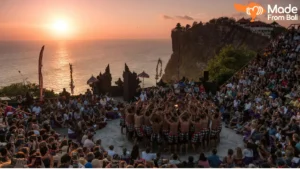
- Stay for the Kecak fire dance and sunset, then plan for a slower drive back as everyone leaves at once.
Morning At Padang Padang Before The Tour Buses Arrive
Padang Padang gets noticeably busier from around 11am onward, when day tour groups and tour buses start arriving in larger numbers. Visiting between 8am and 10am gives you a much quieter beach, softer light for photos, and a far easier time finding parking near the entrance stairs, which fill up quickly once the crowds arrive.
The beach itself is small, tucked into a narrow gap in the cliffs, which is part of its appeal but also why it feels crowded faster than larger beaches once visitor numbers climb. If swimming is part of your plan, mornings also tend to have calmer water before onshore wind picks up later in the day.
Why Bingin Suits A Slower Lunch Stop
Bingin has a more laid back, less touristy feel than Padang Padang, with warungs and small cafes built into the cliffside offering food with an ocean view. It works well as a midday stop precisely because it does not have the same crowd pressure, so there is no rush to see it and move on the way there sometimes is at busier beaches.
Getting down to Bingin involves a steeper set of stairs than some other Bukit beaches, which is worth knowing in advance if you are traveling with anyone who has difficulty with steps. Once you are down, the beach itself is sheltered and pleasant, with tide pools forming at certain times that are worth checking out if you have small children or simply enjoy exploring rock pools.
Ending The Day At Uluwatu Temple For Sunset
Uluwatu Temple sits at the very edge of the Bukit cliffs and is one of the most reliable sunset spots on the island, which is exactly why it gets busy in the late afternoon. Arriving by 4:30pm to 5pm, rather than right at sunset, gives you time to explore the temple grounds and find a good viewing position before the largest crowds arrive.
The Kecak fire dance performance held here at sunset is genuinely worth the timing, but it also means a large number of people leaving the same small road network at roughly the same time afterward. Building in extra time for the return drive, rather than assuming it will take the same length as the trip there, prevents the evening from ending in frustration rather than satisfaction.
Day Two Moving To The Canggu And Seminyak Stretch
Switching zones on day two means accepting a longer transfer, typically 45 minutes to over an hour depending on your starting point and the time of day. It is worth treating this as a half travel day rather than trying to pack in a full beach schedule immediately on arrival.
What Changes When You Switch From Cliffs To Open Sand
The most noticeable shift moving from the Bukit cluster to Canggu or Seminyak is how you physically interact with the beach. There are no stairs to descend here. You walk directly from the road or a beachfront cafe onto flat, open sand, which makes this stretch considerably easier for anyone who found the Bukit cluster’s stairs and paths tiring the day before.
The water also behaves differently. Canggu and Kuta have stronger, more consistent shore break, which is part of why this area is such a popular spot for learning to surf, but it also means the swimming experience feels rougher than the calmer water in the Bukit’s sheltered coves or the reef protected east coast.
Fitting In A Surf Lesson Without Losing The Afternoon
A common mistake is underestimating how much of the day a surf lesson actually takes once you include the briefing, gear setup, and the lesson itself. Most beginner lessons run for around two hours of water time, but plan for closer to three hours total once you account for getting set up beforehand and rinsing off and changing afterward.
Booking a lesson for the morning, rather than squeezing it in around midday, tends to work better for two reasons. The water is usually calmer earlier in the day before onshore wind builds, and it leaves your afternoon genuinely free for a relaxed lunch and time at a beach club, rather than rushing from the water straight into your next stop.
Choosing Between A Beach Club Sunset And A Quiet Stretch Of Sand
Canggu and Seminyak’s beach clubs are a different experience from simply sitting on the sand, and it is worth deciding in advance which one actually fits what you want from the evening. Beach clubs offer comfortable seating, food and drink service, and music, but they also come with cover charges or minimum spends at the more popular venues and a noticeably busier, louder atmosphere as sunset approaches.
If you would rather have a quieter, simpler sunset without a bill at the end of it, a regular stretch of beach with a beanbag rental from a local vendor gives you essentially the same view for a fraction of the cost. Neither choice is wrong. The point is to decide before you arrive, rather than wandering between venues at 5:30pm trying to choose while the sun is already going down.
Day Three Slowing Down On Calmer Water
By day three, most travelers have done two active, fairly full days, and the calmer east cluster works well partly because it does not demand the same pace. This is the day to treat as genuinely optional in its intensity. You can fill it completely or scale it back to a half day, and either approach works depending on how you are feeling.
Why Nusa Dua And Sanur Feel Different From Day One And Two
Both Nusa Dua and Sanur sit behind protective offshore reefs, which means the water reaching the shore is noticeably calmer than the open swell hitting Canggu or the Bukit cliffs. This matters practically, not just aesthetically. Calmer water means easier, safer swimming, particularly for anyone uneasy in stronger surf or traveling with children who are still building water confidence.
The atmosphere also shifts toward something closer to resort relaxation. Large hotel properties line much of Nusa Dua’s coastline, and the beach itself feels more manicured and maintained than the wilder, more rugged stretches you likely saw on day one. Sanur, slightly further north, has a quieter, more local feel with a long beachfront promenade that is genuinely pleasant for an easy morning walk before the heat sets in.
A Good Half Day For Families Or Anyone Tired From Two Active Days
If your group includes young children, anyone managing fatigue from the previous two days, or simply travelers who prefer a slower pace, day three works well shortened to a half day. A late morning arrival, a few hours of calm water swimming, and an early lunch before heading back for an afternoon rest is a perfectly reasonable way to close out a three day beach trip without forcing in one more full schedule.
This is also a sensible day to consider adding a short water activity if your group has not done one yet, since the calm, reef protected water here suits activities like snorkeling or gentle banana boat rides far better than the rougher surf beaches from the previous two days.
Choosing Between A Private Driver A Scooter Or Taxi Apps
How you get between beaches affects the trip almost as much as which beaches you choose, and this decision matters more for a beach hopping itinerary than it does for a typical sightseeing day, simply because you are carrying wet gear, swimwear, and sandy bags between multiple stops rather than staying in one place.
| Transport option | Best suited for | Main tradeoff |
|---|---|---|
| Private driver | Multiple stops, sunset timing, groups, no parking hassle | Higher cost than self driving, fixed schedule with the driver |
| Scooter | Confident, experienced riders, solo or couple, flexible budget | Tiring with beach gear, riskier on cliff roads, no shelter from rain or heat |
| Taxi or ride hailing apps | Single point to point trips, simple days | Limited availability in remote cliff areas, no waiting between stops |
What Actually Slows Down A Beach Hopping Day
The single biggest time loss on a self driven beach hopping day is not the driving itself. It is parking and walking. Cliff beaches like Bingin and Padang Padang have limited, often informal parking areas that fill up quickly, forcing you to park further away and walk longer than expected, sometimes carrying boards, bags, or beach gear down uneven stairs in the process.
A private driver removes this entire layer of friction because they drop you directly at the beach access point and wait or return at an agreed time, rather than you needing to find, pay for, and remember where you left a scooter or rental car. For a single beach visit, this difference barely matters. Across three days and multiple stops per day, it adds up to a meaningful amount of saved time and reduced hassle.
Why Drivers Familiar With Cliff Roads Matter More Than People Expect
The roads leading down to several Bukit beaches are narrow, steep, and occasionally shared with oncoming traffic on blind corners, conditions that catch out scooter riders who are not used to them, particularly during or after rain when the surface gets slippery. Drivers who run these routes regularly know which corners require extra caution, which access roads turn into bottlenecks at certain times of day, and which alternate routes avoid the worst of the late afternoon sunset traffic toward Uluwatu.
This kind of route familiarity is not something a map app provides, and it is the main practical advantage of booking a private driver for a multi day beach itinerary rather than self navigating the whole route. It is also worth factoring in if your trip includes any night driving, since lighting along several beach access roads, particularly around the Bukit Peninsula, remains limited after dark.
Mistakes That Quietly Ruin A Three Day Beach Plan
Most of the planning mistakes that derail a beach hopping trip are not dramatic. They are small underestimations that compound across three days, and they tend to follow a similar pattern across different travelers.
- Mixing beaches from different zones on the same day, which turns what should be a relaxed beach day into a day spent mostly in transit, with each beach visit cut short to make up for lost time.
- Arriving at sunset spots without a buffer for traffic, which means missing the actual sunset while still stuck on the access road, after having planned the entire day around reaching it on time.
- Underestimating stairs and walking at cliff beaches, which catches out travelers who assumed every beach would be as easy to reach as a flat, open stretch of sand like Kuta or Seminyak.
- Booking activities too close together, leaving no buffer between a surf lesson ending and the next stop starting, which turns a relaxed schedule into a rushed one over small margins.
- Skipping a buffer day or half day, which leaves no room to adjust if weather, fatigue, or simply enjoying one spot more than expected changes your plans partway through.
Mixing Beaches From Different Zones On The Same Day
This is the single most common planning error in beach hopping itineraries found online, largely because lists of “top beaches in Bali” rank by appeal rather than by location. Following such a list literally, in ranked order, often means driving from the Bukit Peninsula to Canggu and back within the same day, which can consume three or more hours of pure transit time out of a single day.
The fix is straightforward once you see it. Pick beaches from the same zone for each day, and treat moving between zones as its own separate transition, ideally timed for travel days or the start or end of your stay in a particular area, not squeezed into the middle of an already planned beach day.
Arriving At Sunset Spots Without A Buffer For Traffic
Sunset is the single most predictable traffic spike in South Bali, because thousands of people across multiple beach areas are converging on a handful of well known viewpoints within the same one hour window. Uluwatu Temple, Tanah Lot, and several Canggu beach clubs all experience this same daily pattern.
Planning to arrive exactly at sunset time, with no margin, is planning to arrive after the best light has already passed, having spent the final twenty minutes stuck in a queue of cars and motorbikes all trying to reach the same spot. Building in 30 to 45 minutes of buffer before your planned sunset viewing time is a simple adjustment that solves this almost entirely.
Underestimating Stairs And Walking At Cliff Beaches
Travel content describing Bukit Peninsula beaches often shows the finished view without mentioning what it takes to get there. Padang Padang’s stairs descend through a narrow rock crevice. Bingin’s path is steep and uneven in places. Melasti’s road winds down the cliff face itself, dramatic to look at but demanding if you are walking rather than driving.
None of this is a reason to avoid these beaches, since the views genuinely are worth the effort for most travelers. It is a reason to check ahead if your group includes anyone with mobility concerns, knee or back issues, or young children who will need to be carried part of the way, and to factor in extra time and energy for the climb back up, which always takes longer than the way down.
Matching Each Day To Who You Are Traveling With
A three day plan built around zones still leaves room to adjust pace and intensity depending on who you are traveling with, and being honest about this upfront prevents a schedule that looks good on paper but exhausts half the group by day two.
Couples Solo Travelers And Small Groups Tend To Pace Differently
Couples and solo travelers generally have more flexibility to extend a stop they are enjoying or skip one that is not delivering, since there is no need to coordinate around differing energy levels or interests within a larger group. This makes the itinerary above easy to follow closely or adjust on the fly.
Small groups of friends often want to combine more activity into the southwest cluster day, particularly around surf lessons or beach club time, since that zone naturally supports a livelier, more social pace. Families traveling with children generally benefit from front loading easier, flatter beaches like the calmer east cluster or parts of the southwest cluster, and treating the more demanding Bukit Peninsula stairs as optional depending on how the group is managing energy by that point in the trip.
First Timers Versus Travelers Who Have Done This Route Before
First time visitors to Bali tend to benefit most from following the zone based structure closely, since the main risk for a first timer is not knowing yet how Bali’s geography and traffic actually behave, and therefore underestimating transit time between unfamiliar areas. Sticking to one zone per day removes most of the guesswork.
Returning visitors who already know the island’s rhythm sometimes prefer to skip the more touristed Bukit cluster entirely in favor of lesser known beaches further along the Bukit Peninsula or a day trip toward East Bali’s quieter coastline instead. If this describes you, the zone logic in this guide still applies, it just means substituting different beaches within a similar structure rather than following the exact route described above.
Bringing This Itinerary Together For Your Own Bali Trip
A three day beach hopping trip in Bali works best when it respects how the island’s geography actually behaves, rather than how a ranked list of beaches makes it look on a screen. Pick one coastal zone per day, build in real buffer time around sunset and peak hours, and be honest with your group about how much walking, stairs, and activity each day actually involves.
The route outlined here, Bukit cliffs on day one, the Canggu and Seminyak stretch on day two, and calmer eastern beaches on day three, reflects how these areas are actually connected by road, not just how they look next to each other on a map. Whether you choose to navigate it yourself by scooter, rely on ride hailing apps for point to point trips, or arrange a private driver who already knows these routes and their daily traffic patterns, the same underlying structure applies. Plan by zone first, choose your transport second, and the three days tend to take care of themselves.
If you would rather not manage the navigation and timing yourself, a private driver familiar with South Bali’s beach routes can run this exact structure for you, adjusting pickup times around sunset traffic and beach access points without you needing to plan the logistics from scratch.