

Most travelers staying in Canggu eventually reach the same point. The beach clubs are great, the cafe scene is genuinely good, and the surf keeps some people busy for days. But at some point, you start wondering what else Bali has to offer beyond the stretch of coast you’ve been calling home. That’s exactly when day trips start appearing on the itinerary.
The problem isn’t a lack of options. If anything, it’s the opposite. Search for day trips from Canggu and you’ll find lists with anywhere from nine to seventeen destinations, most described in similar terms, most leaving you with more tabs open than before you started. What that kind of content rarely helps with is the actual decision: which trip fits the time you have, the energy you’re bringing, and the kind of experience you’re actually after.
That’s what this guide is designed to do. Rather than adding another destination list, it walks through the most worthwhile day trips from Canggu with honest context about what each one involves, who it tends to suit, and what to keep in mind before you leave the villa. Made From Bali has helped travelers plan these exact routes, and the practical details throughout this article come from knowing how these trips actually unfold on the ground, not just on a map.
Why Canggu Works Particularly Well as a Base for Day Trips
Not every area in Bali gives you the same flexibility when it comes to day trips. Seminyak is slightly more central but boxed in by Kuta’s traffic bottleneck to the south and Canggu’s congestion to the north. Ubud puts you close to the highlands but farther from the coast. Canggu sits in a position that opens up surprising reach in multiple directions without the worst of the gridlock affecting other southern Bali bases.
The Geographic Advantage Most Travelers Don’t Think About
From Canggu, you can head north toward the highlands of Bedugul and Kintamani, west toward Tanah Lot and the rice terrace regions of Tabanan, south toward the cliffs of Uluwatu and the Bukit Peninsula, or east toward Ubud and eventually across toward Sanur for the Nusa Penida ferry. Each direction offers something genuinely different in terms of landscape, activity, and atmosphere.
What this means practically is that no two day trips from Canggu need to feel similar. You could spend Monday watching the sunrise above a volcanic crater, Tuesday afternoon wandering the art markets of Ubud, and Wednesday watching the ocean from Uluwatu’s temple cliffs at sunset, each experience feeling like it belongs to a completely different island.
The other advantage Canggu has over Kuta or Seminyak is that early departures are cleaner. Getting out of Canggu before 7:30 AM means you’re moving against the flow of delivery traffic and well ahead of the mid-morning congestion that builds up around the Canggu Shortcut and the routes heading into Denpasar.
What to Realistically Expect from the Roads
Bali’s roads reward early starters and punish late ones. This isn’t a minor detail. The difference between leaving Canggu at 7:00 AM and 9:30 AM for a destination like Ubud can mean arriving in 75 minutes versus sitting in stop-start traffic for well over two hours. That time difference shapes the entire day.
A few things worth knowing before any day trip:
- The Canggu Shortcut is the narrow back route many drivers use to avoid the main Kuta-Seminyak road. It works well in the early morning and becomes unreliable from late morning onward.
- Peak hours in the afternoon run roughly from 4:00 PM to 7:00 PM, which is exactly when most day trips are trying to return to Canggu. Building this into your timing prevents a beautiful day from ending in a frustrating two-hour crawl home.
- Google Maps is useful but imperfect in Bali. Local drivers know road behavior at specific times in ways that apps don’t fully capture. This is one of the more practical reasons a knowledgeable private driver genuinely improves the day trip experience rather than simply being a convenience.
- Grab and Gojek work in most areas but have real limitations for day trips. Certain locations, including Sanur Harbour for the Nusa Penida ferry, don’t allow online taxi pickups, which can create problems on the return if you haven’t arranged transport in advance.
Departure timing guidance is included within each destination section below, since the ideal window varies depending on which direction you’re heading.
Ubud Is the Most Popular Choice for a Reason, But Not Everyone Finds It What They Expected
Ubud consistently tops day trip lists from Canggu, and with good reason. It represents a genuine contrast to coastal Bali: cooler temperatures, a different pace, lush jungle surroundings, and a cultural density you won’t find anywhere near the beach clubs. A well-structured Ubud day trip from Canggu can comfortably include a rice terrace walk, a temple visit, lunch in the hills, and time in the art market area before heading back.
What some travelers don’t anticipate is how different central Ubud actually feels compared to the quieter village areas surrounding it. The main streets around Monkey Forest Road and Hanoman Street are busy throughout the day, with traffic, tour groups, and vendors that can feel overwhelming if you were expecting something serene. The real Ubud experience often lies slightly outside the tourist center, in the quieter rice terrace walks, the family compound temples, and the local warungs tucked off the main roads.
What the Drive Actually Looks Like Depending on When You Leave
The drive from Canggu to Ubud covers roughly 30 to 35 kilometers depending on your exact starting point and destination within Ubud. In clear traffic, that’s around 60 to 75 minutes. But traffic between Canggu and Ubud is shaped by multiple bottlenecks, including the congested routes through Denpasar’s suburbs and the increasingly busy road through Sukawati.
Leaving Canggu before 7:30 AM gives you the smoothest journey and means arriving in Ubud before the bulk of day visitors from other areas. Leaving at 9:00 AM or later frequently extends the drive to 90 minutes or more, and you’ll arrive when the main sites are already filling up. For a day trip that includes Tegallalang Rice Terrace, arriving early also means fewer crowds and significantly better light for anyone who cares about photographs.
How to Structure the Day So It Doesn’t Feel Rushed
One of the common mistakes with Ubud day trips is trying to cover too many locations. With the drive time from Canggu, attempting six or seven stops creates a day that feels like a series of parking lots rather than experiences.
A realistic and satisfying structure looks something like this:
- Depart Canggu by 7:00 to 7:30 AM to beat traffic and arrive fresh.
- Tegallalang Rice Terrace works well as a first stop, especially in the morning light before the main crowd arrives around 10:00 AM.
- Tirta Empul Water Temple is one of the more spiritually significant temple experiences available on a day trip, where locals come to purify themselves in spring-fed pools. It’s meaningful in a way that’s difficult to convey through description alone.
- Lunch in Ubud center at one of the many open-air restaurants overlooking greenery gives the day a natural midpoint rest.
- Monkey Forest or the Art Market depending on preference. The forest is genuinely entertaining if you’re prepared for assertive monkeys; the art market suits anyone who wants Balinese crafts, textiles, or souvenirs.
- Depart by 3:00 to 3:30 PM to avoid the late afternoon traffic building on the return route.
This structure leaves time to breathe at each stop rather than rushing through checkboxes.
Who Gets the Most Out of an Ubud Day Trip
Ubud day trips from Canggu tend to work best for first-time visitors to Bali who haven’t experienced the highland side of the island yet. The contrast between Canggu’s beach culture and Ubud’s cultural and natural character is significant enough that a single day creates a genuinely rounded picture of what Bali offers.
It also suits couples looking for a combination of scenery and cultural depth, and travelers who enjoy markets, art, and local food. It’s less suited to travelers who want physical adventure, prefer quiet and remote landscapes, or have already spent time in Ubud on a previous trip.
Uluwatu Feels Like a Different Island Once You Arrive
Heading south from Canggu toward the Bukit Peninsula, particularly down to Uluwatu, involves passing through Kuta and Jimbaran before the landscape opens up dramatically. The Bukit is drier, hillier, and oceanically exposed in a way that feels almost nothing like Canggu. The air is saltier, the clifftops are dramatic, and the beaches tucked into limestone coves are some of the most photographed in Bali.
Uluwatu’s centerpiece is the clifftop temple perched above a 70-meter drop into the Indian Ocean, but the surrounding area offers much more than a single landmark. Beaches like Padang Padang, Suluban (Blue Point), and Thomas Beach each have a distinct character and are worth exploring with enough time in the day.
Timing the Kecak Dance and Sunset Without the Scramble
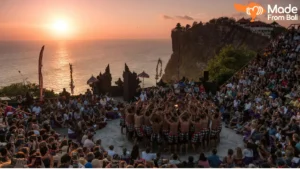
The Kecak Fire Dance performed at Uluwatu Temple at sunset is one of those Bali experiences that genuinely lives up to its reputation, but the logistics around it require some planning. Tickets are sold at the temple entrance and have a fixed price, but the viewing area fills up quickly. Arriving at least 45 minutes before the performance starts, typically at 6:00 PM, gives you a reasonable position. Arriving just before showtime means watching from behind other visitors rather than from a position where you can actually see the stage and the ocean backdrop together.
The sunset timing at Uluwatu is worth thinking about separately from the dance. On clear days, the light over the ocean in the 30 minutes before sunset is exceptional, and spending that time at one of the clifftop viewpoints or beach bars near the temple means you experience the color before it fades, rather than being focused entirely on the dance until it ends in the dark.
After the performance, most travelers head down to Jimbaran for seafood dinner on the beach before the drive back to Canggu, which adds a satisfying endpoint to the day.
Which Beaches Are Worth Adding Along the Way
If you’re already making the drive to Uluwatu, building in one or two beach stops on the Bukit adds texture to the day without significantly extending the timeline.
- Padang Padang Beach is a well-known surf spot with a narrow entrance through the rocks. It’s photogenic and relaxed in the morning before the day crowd arrives.
- Suluban Beach (Blue Point) has an atmospheric cave-like entrance leading down to a small bay popular with surfers. The bar above the rocks offers ocean views that are worth the stop even if you don’t go down to the beach itself.
- Thomas Beach is quieter and less visited than Padang Padang, suitable if you want somewhere to swim or read without noise.
Factor in roughly 20 to 30 minutes per beach stop depending on how much time you want to spend, and avoid trying to cover all three on the same day alongside the temple and sunset. Two beach stops plus the Kecak Dance makes for a full and satisfying day without feeling rushed.
Whether Uluwatu and Tanah Lot Should Ever Share the Same Day
This comes up regularly. Tanah Lot is also a clifftop ocean temple in the south of Bali, and travelers sometimes ask whether both can be visited in a single day trip from Canggu. The honest answer is that they can be done together in terms of distance, but they probably shouldn’t be.
Both are ocean temple experiences. Both are best at sunset. Combining them means you either rush Uluwatu or skip Tanah Lot’s best hour, or you spend the day driving between two places that offer a similar emotional experience without the contrast that makes each individual trip worthwhile. They work much better on separate days, ideally with different pacing.
Tanah Lot Is Closer Than Most Travelers Realize
Of all the day trips from Canggu, Tanah Lot is the one that most people over-plan for, partly because it appears on every Bali itinerary and feels like it must be a major expedition. In reality, Tanah Lot is roughly 30 to 40 minutes from most parts of Canggu depending on traffic, making it entirely manageable as a late afternoon trip rather than a full day out.
The temple itself sits on a rocky islet just offshore, surrounded by ocean. At low tide, it’s possible to walk across to the base. At high tide, it becomes a proper island. The approach through the coastal market area is touristy but not unpleasant, and the clifftop walk around the complex gives a full view of the temple from multiple angles as the light changes.
Morning Visits vs Sunset Crowds
Tanah Lot at sunset is undeniably beautiful, but it’s also when every tour bus in South Bali seems to arrive simultaneously. The complex gets genuinely crowded in the hour before sunset, the parking area becomes chaotic, and the experience can feel more like a crowd event than a temple visit.
Going in the late morning, between 9:00 AM and noon, gives you the temple in calmer light with significantly fewer visitors. The atmosphere is more relaxed, the surrounding market stalls are less aggressive, and you can take your time walking the cliff paths without navigating around large tour groups. If sunset is specifically what you’re after, arriving no later than 5:00 PM and heading to the southern clifftop viewpoints rather than the main temple approach puts you in a better position than most of the crowd.
Pairing Tanah Lot with Other West Bali Stops
Because Tanah Lot doesn’t require a full day, it pairs naturally with other stops in the same westward direction from Canggu.
- Taman Ayun Temple in Mengwi is about 20 minutes inland from Tanah Lot and is one of the most architecturally significant temples in Bali, surrounded by a moat and well-maintained grounds. It sees far fewer visitors than Tanah Lot and gives a quieter, more contemplative temple experience.
- Jatiluwih Rice Terraces, while a longer drive further north, can be included on the same route if you start early enough. Jatiluwih is a UNESCO-listed landscape with terraced rice fields that stretch across the hillside in a way Tegallalang can’t match in scale, and without Tegallalang’s commercial intensity.
A Tanah Lot plus Taman Ayun combination works well as a half-day trip. Adding Jatiluwih converts it into a proper full day heading through the Tabanan Regency.
Nusa Penida Requires a Full Day, and Choosing a Side Matters
Nusa Penida is frequently described as a day trip from Canggu, which is technically accurate but slightly misleading. The island is far larger than most people expect before they arrive. It’s the biggest of the three Nusa Islands, covering an area roughly twice the size of the Bukit Peninsula, and its road conditions are significantly rougher than mainland Bali. Trying to cover the whole island in a day will leave you feeling like you spent most of it in a car.
The single most useful piece of planning advice for a Nusa Penida day trip from Canggu is this: choose either the west side or the east side of the island, not both.
West Nusa Penida vs East Nusa Penida on a Single Day
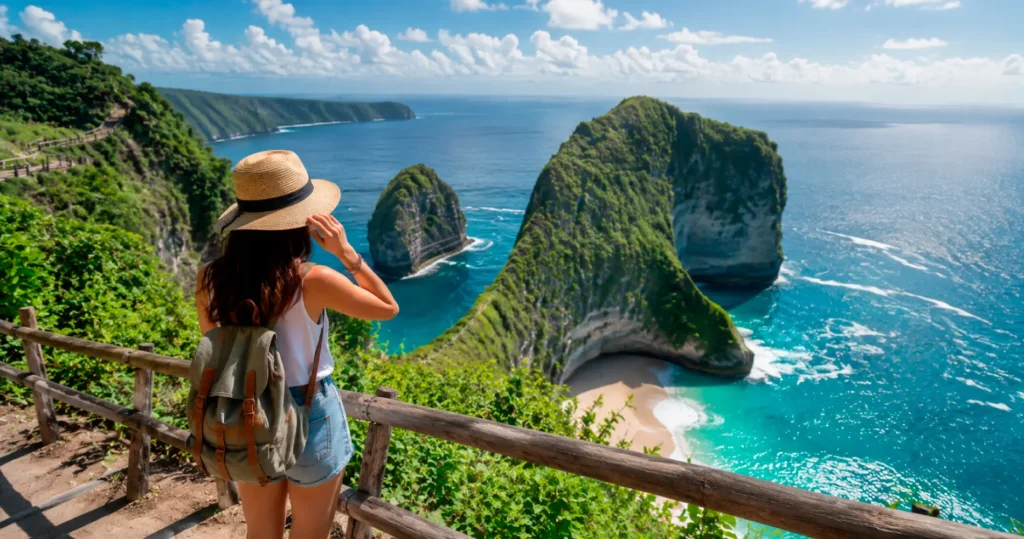
The west side of Nusa Penida holds the island’s most photographed locations. Kelingking Beach, with its dinosaur-shaped cliff and turquoise bay below, is the image most people associate with Penida. Angel’s Billabong and Broken Beach are nearby and can be visited consecutively. Crystal Bay is on the same side and is one of the better swimming spots on the island. A focused west side itinerary covers these four locations comfortably in a day without feeling frantic.
The east side is less visited and has a different character. Diamond Beach and Atuh Beach are both stunning and require walking down steep staircases to reach the sand. Teletubbies Hill and the Thousand Islands viewpoint offer elevated panoramas of the coastline. The east side roads are rougher than the west and take longer to navigate, but the trade-off is encountering far fewer visitors.
Both sides are genuinely worthwhile. The west is better for first-time visitors to Penida because it concentrates the most iconic viewpoints. The east suits returning visitors or those specifically looking for a quieter, less photographed experience.
Getting There from Canggu and What the Sanur Harbour Process Looks Like
To reach Nusa Penida from Canggu, you first need to get to Sanur Harbour on the southeast coast of Bali, which takes approximately 60 minutes by car in normal traffic. From Sanur, fast boats run regularly throughout the day to Nusa Penida, with the journey taking around 30 to 45 minutes depending on the operator and sea conditions.
There are a few practical things to know about Sanur Harbour before you arrive:
- Online taxis (Grab and Gojek) are not permitted to pick up passengers at the harbour. This means you need a private driver for both the morning drop-off and the afternoon return. Attempting to book a Grab from the harbour at the end of the day typically results in the driver canceling or failing to show up, leaving you negotiating with local taxi drivers at inflated prices.
- Ferries can be booked in advance online, which is strongly recommended during peak season between July and September. Walk-up tickets are usually available outside peak months but it’s never worth the risk on a day when you’ve already invested an hour getting to the harbour.
- For a comfortable day trip, aim to catch the 7:30 AM or 8:00 AM ferry. This gives you maximum time on the island and ensures you’re back at the harbour for a late afternoon return ferry, typically the 5:00 PM service.
Once on Nusa Penida, the standard approach is to arrange a local driver at or near the harbour to take you around the island. Some organized day tours include this, which removes the negotiation step and can be worthwhile if you’re traveling independently and want a cleaner experience.
Why Some Travelers Prefer Nusa Lembongan as an Alternative
Nusa Lembongan, the smaller island adjacent to Penida, is a genuinely different experience. It’s smaller, easier to navigate, quieter overall, and less visited than Penida. The beaches are calmer, the snorkeling is good around the mangroves and Dream Beach area, and the island has a relaxed atmosphere that’s closer to what some people imagine Penida to be before they arrive.
If you’re traveling with someone who finds the rough Penida roads uncomfortable, prefers swimming and snorkeling over viewpoint hikes, or simply wants a more peaceful island day, Lembongan is worth considering seriously as an alternative rather than an afterthought. Both islands are accessible from Sanur on similar ferry routes.
Mount Batur Is Worth the Early Start, But the Weather Changes Everything
A Mount Batur sunrise trek from Canggu is one of those experiences that looks straightforward on paper and involves considerably more logistics in practice. This isn’t a reason to skip it. Many people consider it one of the best things they did in Bali. But going in with realistic expectations makes the difference between a meaningful adventure and a disappointing early morning.
The departure time from Canggu for a Batur sunrise trek is typically around midnight to 1:00 AM. The drive to the trailhead in Kintamani takes roughly two hours from Canggu, and the hike itself takes approximately two hours to the summit. Reaching the top before dawn requires doing the math backward from around 6:00 AM.
The Sunrise Trek vs the Jeep Alternative
The standard route to the Mount Batur summit involves hiking with a guide along a well-worn path through volcanic terrain. It’s classified as a moderate hike, meaning it requires reasonable fitness but doesn’t need any technical climbing experience. Most travelers who are accustomed to moderate walking manage it without difficulty. The physical reward of watching the sunrise from 1,717 meters above sea level, with Lake Batur and the surrounding calderas spread below, is something that’s difficult to replicate by other means.
The jeep alternative takes a 4WD vehicle up a different route to a point near the rim where sunrise views are accessible without the hike. It’s a legitimate option for travelers who want the Batur experience without the two-hour climb, and it suits people who are less mobile, traveling with older family members, or simply want a more relaxed version of the experience. The views are genuinely good from the jeep route as well, though the physical element of the hike does add something to the sense of accomplishment.
A comparison of both approaches:
| Factor | Sunrise Trek | 4WD Jeep Tour |
|---|---|---|
| Physical effort | Moderate, 2-hour hike | Low, vehicle-based |
| Summit access | Full summit | Near-rim viewpoint |
| Sunrise quality | Excellent from the top | Very good from lower elevation |
| Time on mountain | 4 to 5 hours including descent | 2 to 3 hours |
| Best suited to | Fit travelers seeking the challenge | Families, mixed groups, relaxed visitors |
| Cost | Lower (guide fee plus entrance) | Higher (vehicle and guide included) |
What Happens to the Experience When the Summit Is Clouded Over
This is the detail most day trip articles skip. Mount Batur’s summit sits inside a caldera that generates its own weather patterns, and during the rainy season between November and March, cloud cover at the summit is frequent. Many travelers who do the sunrise trek during this period reach the top to find themselves above a cloud layer rather than looking down at one, which means no visible sunrise and limited visibility.
The trek is still a worthwhile physical experience even in these conditions, and the heat from volcanic vents in the rock is striking regardless of cloud. But if a clear-sky sunrise is the specific objective, the dry season between April and October, particularly between June and August, offers significantly more reliable conditions. No operator can guarantee weather, but timing the trip during the dry season meaningfully improves the probability.
Combining Kintamani with Bedugul on the Same Route
After a Mount Batur sunrise, most people descend and head back to Canggu by mid-morning. But the drive back south passes close to the Bedugul lake district, and combining both on the same day is a popular option for travelers who want to make the most of the early start.
The lakes at Bedugul, particularly Lake Bratan with the Ulun Danu Bratan Temple on its shore, are around 45 minutes from the Batur trailhead area. Visiting on the way back adds a genuinely different landscape to the day, transitioning from volcanic crater to cool mountain lakes within a single morning. By the time you reach Bedugul at 9:00 or 10:00 AM after the sunrise trek, the morning light is still good and the temple area is quieter than it will be by midday.
Bedugul and the Lake Temple Suit Travelers Who Want Highland Calm Over Crowds
Bedugul as a standalone day trip from Canggu is often overlooked in favor of more dramatic destinations, and that’s part of what makes it appealing. The drive from Canggu takes around 90 minutes heading north through the mountains, and the landscape transformation along the route is gradual but striking. By the time you reach the lake district, the temperature has dropped noticeably and the air feels different.
The Ulun Danu Bratan Temple, partially submerged at the edge of Lake Bratan depending on water levels, is the visual anchor of the area and one of the more photographed temples in Bali. It’s genuinely beautiful, particularly in the morning before the tour buses arrive. Arriving by 8:30 or 9:00 AM gives you the best light and the most peaceful experience.
What Makes the Drive Up Worth Taking Slowly
The mountain road from southern Bali to Bedugul passes through a series of shifting landscapes, from the coast through agricultural flatlands, then steeply up through forested mountain terrain. Many travelers rush through this in a private car and miss the fact that the journey itself is part of the experience.
A few points along the drive reward a brief stop. The road passes market areas selling local highland produce including strawberries, passion fruit, and vegetables that grow in the cooler elevation. There are also elevated viewpoints looking back south toward Bali’s coast on clear days. Asking your driver to slow down or pull over briefly on the way up costs nothing and adds texture to the experience.
Strawberry Farms, Botanic Gardens, and the Parts Most Tours Skip
Beyond the lake temple, the Bedugul area has a Botanic Garden that covers a large area of highland forest and is significantly less visited than most tourist sites in southern Bali. It’s a genuinely peaceful place to walk, especially for travelers who enjoy greenery and a slower pace. The garden has a canopy walk in some sections and good birdwatching for those who are interested.
The strawberry farms in the Bedugul area, particularly around Candi Kuning market, allow visitors to pick their own fruit in season. It’s a simple activity but one that feels authentically local rather than staged, and the fresh strawberries with local cream sold at roadside stalls afterward are worth stopping for.
Bedugul as a day trip suits travelers who want natural beauty without physical exertion, couples looking for a scenic but relaxed day, and anyone who has already done the more well-known Bali experiences and wants something quieter and slightly unexpected.
Sekumpul Waterfall Is One of Bali’s Best Experiences, But It Is Not a Casual Trip
Sekumpul Waterfall in North Bali is regularly described as one of the most impressive waterfalls in all of Southeast Asia, and that reputation is justified. A cluster of seven separate falls drops into a steep jungle valley, and the combination of scale, greenery, and sound when you reach the base is unlike anything available closer to Canggu.
What the glowing reviews don’t always communicate clearly is how much effort the trip involves. Sekumpul is not a roadside attraction. Getting there requires a long drive, a descent into a valley on a narrow jungle path, and river crossings before you reach the falls. Coming back up means reversing all of that. Treating it as an easy day trip is one of the more common planning mistakes travelers make.
How Long the Journey Takes and Why an Early Departure Matters
The drive from Canggu to Sekumpul covers roughly 70 to 76 kilometers heading north, but the mountain roads are winding, steep in sections, and shared with local traffic on the main north-south route through Bedugul. The journey typically takes between 2.5 and 3.5 hours depending on departure time and traffic conditions.
Leaving Canggu no later than 6:00 AM is strongly advisable. This gets you out of southern Bali’s traffic before it builds and puts you on the mountain roads during the quietest window of the morning. Arriving at the Sekumpul car park by 8:30 to 9:00 AM allows you to start the descent before the tropical heat peaks and before the midday crowd arrives. The waterfalls are busiest between 11:00 AM and 2:00 PM, and the descent combined with the return ascent takes approximately 1.5 to 2 hours.
A realistic timeline for a Sekumpul day trip from Canggu looks like this:
- 5:30 to 6:00 AM: Depart Canggu.
- 8:30 to 9:00 AM: Arrive at car park, arrange guide if desired, begin descent.
- 10:00 to 11:00 AM: Time at the falls.
- 12:00 PM: Complete return ascent, change out of wet clothes (bring dry options).
- Optional lunch stop in the Bedugul area on the way back south.
- 3:30 to 4:00 PM: Back in Canggu, ahead of evening traffic.
The Physical Reality of Getting Down to the Falls
The path from the car park to the falls is steep and involves approximately 100 steps in the steeper sections, along with narrower jungle paths, tree root terrain, and stream crossings near the base. Trail conditions vary depending on recent rainfall. During or after heavy rain, some crossings require wading through ankle-to-calf-deep water.
This is not extreme hiking by any measure, but it is categorically different from a casual temple walk. Proper footwear matters significantly. Sandals or flip-flops make the descent uncomfortable and the stream crossings slippery. Closed-toe shoes with grip are the practical choice. Local guides are available at the car park for a small fee and are genuinely useful at Sekumpul specifically, where the trail has branches and the guides know the safest crossing points.
Rainy Season Makes the Falls More Impressive, Not Less
Most travelers assume dry season is the best time for waterfall visits. For Sekumpul, this is only partially true. During the dry season (April to October), the falls are beautiful but the volume of water is lower. During the wet season (November to March), the falls run at full force with multiple streams combining into a far more dramatic display.
The trade-off is that the trail becomes muddier and the stream crossings deeper after heavy rainfall. But for travelers whose schedule places them in Bali during the wet season, Sekumpul in January or February, visited on a morning after rain, is arguably more impressive than the same falls in August. The key is checking whether overnight rain was heavy enough to make crossings unsafe, something a local driver or guide can advise on before you descend.
How to Choose Based on What Kind of Traveler You Are
The list of day trips from Canggu is long enough that having options isn’t the problem. The challenge is narrowing it down based on what you’re actually looking for. The destinations above suit different travel styles quite specifically, and spending a little time matching the trip to the traveler avoids the common experience of returning from a day out and feeling like it wasn’t quite right for the group.
If You Only Have One Free Day in Canggu
With only one day available, the choice comes down to what kind of contrast you want from your base.
If you want cultural depth and natural beauty without significant physical effort, Ubud is the most well-rounded option and the one that creates the sharpest contrast with Canggu’s beach atmosphere. It’s accessible, varied, and works for almost any travel style.
If you want something more dramatic and physically engaging, the Mount Batur sunrise trek is the most memorable single-day experience available from Canggu, though it requires the unusual departure time and some physical readiness.
If you want ocean drama and an iconic sunset experience, Uluwatu is the clearest choice, particularly if the Kecak Dance is on your list.
For island contrast with a full day to dedicate, Nusa Penida’s west side concentrates the most striking scenery into a manageable itinerary.
If You Have Two Days and Want Genuine Variety
Two free days open up pairings that create genuinely different experiences on consecutive days rather than similar ones back to back.
A strong two-day combination from Canggu:
- Day 1: Ubud (cultural, highland, green) heading east
- Day 2: Uluwatu and the Bukit beaches (clifftop, ocean, dry) heading south
Alternatively:
- Day 1: Mount Batur sunrise, then Bedugul on the return (volcanic + highland lakes in one long day)
- Day 2: Nusa Penida (island, ocean cliffs, beaches)
Avoid pairing Tanah Lot and Uluwatu on consecutive days, and avoid pairing Ubud and Bedugul on consecutive days, as both pairs share too similar a character to feel meaningfully different.
When a Private Driver Makes More Sense Than a Guided Tour
Both options have genuine value depending on the trip, and the choice isn’t simply about budget.
A private driver works best when you want flexibility in timing, prefer to make stops spontaneously, are comfortable navigating logistics at each destination yourself, and are visiting places where fixed tour schedules add unnecessary rigidity. Ubud, Uluwatu, Tanah Lot, and Bedugul all work very well with a private driver.
An organized guided tour adds real value when the logistics at the destination are genuinely complex. Mount Batur sunrise treks benefit from a guide who knows the trail and manages the pre-dawn logistics. Nusa Penida tours that include ferry tickets, local island transport, and a guide remove several friction points that independent travelers frequently encounter. Sekumpul is manageable with just a private driver and a local guide at the falls, but organized tours handle the early timing coordination for you.
The cost difference between the two options is often smaller than expected. A full-day private driver from Canggu typically costs in the range of USD 40 to 60 depending on distance and duration. Organized group tours for destinations like Nusa Penida and Mount Batur are priced per person and can be comparable or slightly higher but include more logistics. Made From Bali offers private tour arrangements across all of these routes, structured specifically to avoid the rigidity of group schedules while still covering the planning details that make a day trip run smoothly.
Practical Things That Affect Every Day Trip from Canggu
Some practical considerations apply regardless of which destination you choose, and having them sorted before the morning you depart makes the day noticeably smoother.
What to Bring, What to Wear, and What to Leave at the Villa
Packing for a Bali day trip involves balancing comfort, cultural appropriateness, and the practical realities of the destination. A few consistent recommendations:
- Comfortable walking shoes are important for any trip involving temples, terraces, or waterfalls. Sandals work for beach stops but create real problems on uneven or wet terrain.
- A sarong and sash are required for temple entry at most sacred sites. If you don’t have one, they’re available for rent or purchase at temple entrances, but carrying your own avoids both the cost and the scramble.
- Cash in Indonesian Rupiah is essential. Most entrance fees, local guides, and small food stalls operate on a cash-only basis. ATMs are available in Ubud and at Sanur but can be unreliable in more remote areas.
- Sunscreen and a hat matter more than many travelers expect, particularly on the Bukit Peninsula and Nusa Penida where shade is limited and UV intensity is high.
- A light waterproof layer is useful during the wet season on any highland or waterfall trip, where afternoon rain can appear quickly regardless of how clear the morning was.
- A dry bag or waterproof phone case is strongly recommended for Sekumpul and any Nusa Penida beach activity involving water.
Leave expensive jewelry, large amounts of cash, and unnecessary valuables at your accommodation. Petty theft is infrequent but not unknown, and keeping your day pack simple means you can move freely without constantly managing your belongings.
Entrance Fees, Cash, and Temple Etiquette in One Place
Entrance fees vary across destinations but the following gives a working reference for planning purposes. Prices in Bali can change, so treat these as approximate rather than fixed:
- Tegallalang Rice Terrace: Varies by access point, typically around IDR 15,000 to 50,000
- Tirta Empul Temple: IDR 50,000
- Uluwatu Temple (including Kecak Dance): IDR 100,000 to 150,000 per person
- Tanah Lot Temple: IDR 75,000
- Taman Ayun Temple: IDR 20,000
- Ulun Danu Bratan Temple: IDR 75,000
- Mount Batur (entrance to national park area): Included in most trek packages
- Nusa Penida sites: Varies by location, typically IDR 10,000 to 25,000 per site
- Sekumpul Waterfall: IDR 20,000 for viewpoint, higher for full descent access
At all Hindu temple sites, visitors are expected to wear a sarong covering the legs and a sash around the waist. Shoulders should be covered as well, or at minimum a scarf should be carried. Most temples enforce this at the entrance. Behavior inside temples should be respectful, including keeping voices low, not pointing feet toward shrines, and following any guidance from local priests or guides about restricted areas.
Planning a Day Trip That You Won’t Need to Rush Through
The travelers who return from Canggu day trips most satisfied tend to share a few things in common. They chose a destination that genuinely matched what they were looking for rather than defaulting to whichever option appeared most frequently on a list. They left early enough to avoid the traffic that shapes so much of the Bali day trip experience. They built in time to breathe at each stop rather than racing to collect locations. And they had transport arranged in advance so the end of the day didn’t involve logistical scrambling.
Canggu is an unusually good base precisely because it keeps so many different experiences within a single day’s reach. A volcanic crater at sunrise, a jungle waterfall, a clifftop ocean temple, a highland lake, a cultural city surrounded by rice fields: all of these are available without needing to change accommodation or spend more than a day getting there and back. The only real planning decision is which version of Bali you want to experience next.
If you’re ready to lock in a specific route and want local knowledge behind the arrangements, Made From Bali Tour & Travel organizes private day trips across all of these destinations, with drivers and guides who know the roads, the timing, and the details that make each trip better than it would be going in cold.
References
- Bali Untold. (2026). 9 Best Day Trips From Canggu. https://baliuntold.com/destinations/canggu/day-trips/
- Bali Holiday Secrets. (2025). 10 Best Day Trips from Canggu. https://www.baliholidaysecrets.com/day-trips-from-canggu/
- Bali Holiday Secrets. (2026). Canggu to Ubud: Routes, Costs and Best Options. https://www.baliholidaysecrets.com/canggu-to-ubud/
- Bali Holiday Secrets. (2026). Visiting Canggu Bali: Complete Travel Guide and Tips. https://www.baliholidaysecrets.com/canggu-bali-travel-guide/
- Bali Rescentre. (2026). Sekumpul Waterfall: Your Complete Guide. https://balirescentre.com/articles/sekumpul-waterfall/
- The Common Wanderer. (2026). Sekumpul Waterfall: A Complete Guide to Bali’s Best Waterfall. https://www.thecommonwanderer.com/blog/a-guide-to-sekumpul-waterfall-bali
- Sunshine Seeker. (2025). Sekumpul Waterfall in Bali: A Complete First-Timer’s Guide. https://www.sunshineseeker.com/destinations/sekumpul-waterfall-bali/
- Niv Travels. Nusa Penida Day Trip from Bali: Full Itinerary and Tips. https://www.niv.travel/posts/nusa-penida-day-trip-from-bali
- Go Live Go Travel. 10 Wonderful Places to Visit from Ubud or Canggu. https://www.golivegotravel.nl/en/asia-en/bali-places-to-visit-from-ubud-or-canggu/
- Gede Bali Transport. (2026). Best Time to Avoid Traffic in Bali: Local Travel Timing Tips. https://gedebalitransport.com/best-time-to-avoid-traffic-in-bali/
- The Forge Bali. (2026). Bali Traffic Guide: A Survivor’s Guide to the Island’s Busiest Roads. https://www.forgebali.com/blog/bali-traffic-guide