

Most travelers arrive in Ubud with a packed itinerary. Monkey Forest at nine, rice terraces by eleven, a waterfall after lunch. By three in the afternoon, they have seen a great deal and enjoyed very little of it. If that sounds familiar, or if you are planning a trip and want to avoid that exact feeling, this guide is for you.
Ubud has a completely different side that most travel content ignores. It is a place where you can sit with an excellent cup of coffee for three hours and feel like you spent the day well. Where a morning walk through empty green hills leaves you feeling more refreshed than a week of sightseeing. Where a pool overlooking rice terraces, a riverside sunset table, or a quiet warung tucked into a field path can genuinely be the best decision you make on your entire Bali trip.
The challenge is knowing how to find that version of Ubud, and how to keep it that way once you do. This guide will help you do both.
Not Every Part of Ubud Feels the Same When You Want to Relax
One thing that surprises a lot of first-time visitors is how different the various parts of Ubud actually feel. The central streets around Monkey Forest Road and Jalan Raya Ubud can be genuinely busy during peak hours, with scooters, tour vans, and tourist foot traffic all competing for the same narrow lanes. That version of Ubud is fine for a quick market stop or a temple visit, but it is not where you go to genuinely decompress.
The neighborhoods just outside the center are a completely different story. Knowing which area fits the kind of chill you are after makes a real difference in how your day feels.
Sayan and Kedewatan for Those Who Want River Views and Real Quiet
Sayan sits to the west of central Ubud, positioned above the Ayung River valley, and the difference in atmosphere is immediate. The road into Sayan narrows, the traffic thins, and the views open up over deep green jungle and the river below. It is the kind of place where you arrive feeling like a tourist and leave feeling like you briefly lived somewhere beautiful.
This is the neighborhood for couples who want a slow afternoon or a proper sunset. The Sayan Point restaurant and bar offers some of the best sunset views in the entire Ubud area, with the jungle and river as a backdrop and an atmosphere that stays genuinely quiet even on busy days. Sayan Valley restaurant, perched directly above the Ayung River on Jalan Raya Sayan, is worth planning a late afternoon visit around, particularly between five and seven in the evening when the light turns gold over the valley. With only a handful of tables facing the view, it rewards people who arrive without rushing.
Kedewatan, a short distance north, runs along the same river valley and carries a similar energy. The resorts up here tend to be larger and more private, but the public-facing side of Kedewatan, the roads that wind past jungle lodges and small cafes, has a rhythm that simply does not exist closer to town.
Penestanan for a Slower, More Creative Kind of Afternoon
Penestanan is the neighborhood that creative travelers tend to find and then spend the rest of their trip returning to. It sits on the western ridge just above central Ubud, reachable by a steep set of stairs from Jalan Raya Campuhan or a short scooter ride around the longer road. The neighborhood has a handful of outstanding cafes, a quietly alternative vibe, and enough visual interest in its lanes and gardens to make a slow walk genuinely rewarding.
The travelers who seem happiest in Penestanan are usually those who brought a book, found a table with a garden view, ordered something good, and stayed. The cafes here are generally smaller and more personal than the ones on the main strip. Fewer menus printed in eight languages, more handwritten daily specials. If you want to spend an afternoon somewhere that does not feel like it was designed entirely for tourists, Penestanan is a strong candidate.
Nyuh Kuning if You Want Nature Without Leaving Town
Nyuh Kuning borders the southern edge of the Sacred Monkey Forest and gets overlooked by most visitors who spend their Ubud time on the more famous northern end of Monkey Forest Road. That is precisely what makes it worth knowing. The village has leafy streets, eco-conscious cafes, and a pace that edges closer to how locals in Ubud actually live than to how the tourist center is designed to feel.
For solo travelers especially, Nyuh Kuning offers the rare combination of being genuinely quiet and still being walkable to everything central Ubud has. You are not sacrificing convenience. You are just choosing a different entry point into the day.
Tegallalang When You Want Rice Field Views with More to Do
Tegallalang sits about twenty minutes north of Ubud town and is home to some of the most recognizable rice terrace scenery in Bali. It is also where the majority of Ubud’s pool clubs have been built, which means it combines natural scenery with the option to actually sit in it, rather than just look at it from behind a fence. The trade-off is that Tegallalang gets tourist traffic, and some parts of the main road feel noticeably busier than the quieter neighborhoods described above. The key is choosing the right time of day and the right venue, which the pool club section below covers in more detail.
Jungle Pool Clubs in Ubud Are Not All the Same Experience
The phrase “pool club” in Ubud means something quite different from what it means on a beach in Seminyak or Canggu. There is no ocean. What you get instead is a pool carved into a hillside or jungle setting, usually with views over rice terraces or river valleys, and an atmosphere that tilts toward relaxed social rather than loud party. That said, not all of Ubud’s pool clubs deliver the same kind of day, and choosing the wrong one for your mood is an easy mistake to make.
Here is a straightforward comparison to help:
| Pool Club | Atmosphere | Best For | Honest Note |
|---|---|---|---|
| Cretya Ubud | Social, scenic, can get busy | First-timers, couples wanting views | Go before 10 AM or expect crowds |
| Tlaga Singha | More secluded, full retreat feel | Those wanting a full day escape | Located south of Ubud, needs transport |
| Folk Pool & Gardens | Casual, low-key, central | Walk-in visits near Monkey Forest | Quieter crowd, more accessible |
Cretya Ubud Is Worth It, but Going Early Makes a Difference
Cretya has three-tiered infinity pools that cascade down a hillside above Tegallalang’s rice terraces, and the view really is as good as it looks in photos. But the honest version of a visit to Cretya is this: the experience changes significantly depending on when you arrive. Those who get there when the gates open at 7 AM tend to describe a genuinely calm, almost private morning poolside experience. Those who arrive after noon on a weekend find a much busier scene, with limited sunbed availability and DJs picking up the energy toward the afternoon.
Entry costs around IDR 220,000 per person, which functions as a drink credit. Day beds and VIP areas carry a minimum spend starting from around IDR 3,000,000 for two people. If you are visiting just for the pool and the view, the general access is entirely sufficient. Arrive early, find a spot near the lower pool for more direct rice terrace sightlines, and plan to have breakfast or a long brunch there rather than fighting for space at the busiest hours.
One logistical note worth knowing: Cretya sits inside the Alas Harum complex, which charges an additional IDR 25,000 per person rice terrace fee on arrival. Keep small cash on hand for this.
Tlaga Singha Feels More Like a Full Day Retreat Than a Pool Club
Tlaga Singha, tucked into south Ubud near the Wos River, is a more complete experience than most pool clubs in the area. In addition to an infinity pool with river views, it has a cave-style swim-up bar, floating bamboo huts positioned above the water for lunch, a spa, and yoga classes if you feel like adding movement to your day. The overall atmosphere is polished and calm rather than social and buzzy.
It is the kind of place that works well when you want to genuinely check out for a full day rather than just pass a couple of hours poolside. Couples and small groups tend to get the most from it. The floating hut dining option is worth asking about when you book, as it fills up. Getting there requires a grab or a scooter since it is not walkable from central Ubud, but the distance is part of what keeps it feeling quieter.
Folk Pool and Gardens for a Low-Key Afternoon Near Monkey Forest
Folk Pool and Gardens sits on Monkey Forest Road, which makes it one of the easiest pool clubs in Ubud to reach on foot. It is also the most approachable in terms of crowd energy. Lush garden surroundings, no serious DJ setup, and a relaxed atmosphere with daybeds and teepee seating make it genuinely suitable for an afternoon of doing very little.
The pricing here is notably more accessible than Cretya or Tlaga Singha, with no steep minimum spend for regular access. If you are finishing a Monkey Forest visit and want to transition into a slow afternoon without committing to a full day somewhere, Folk Pool works naturally as a next stop.
Rice Field Cafes Are Some of the Best Seats in Ubud
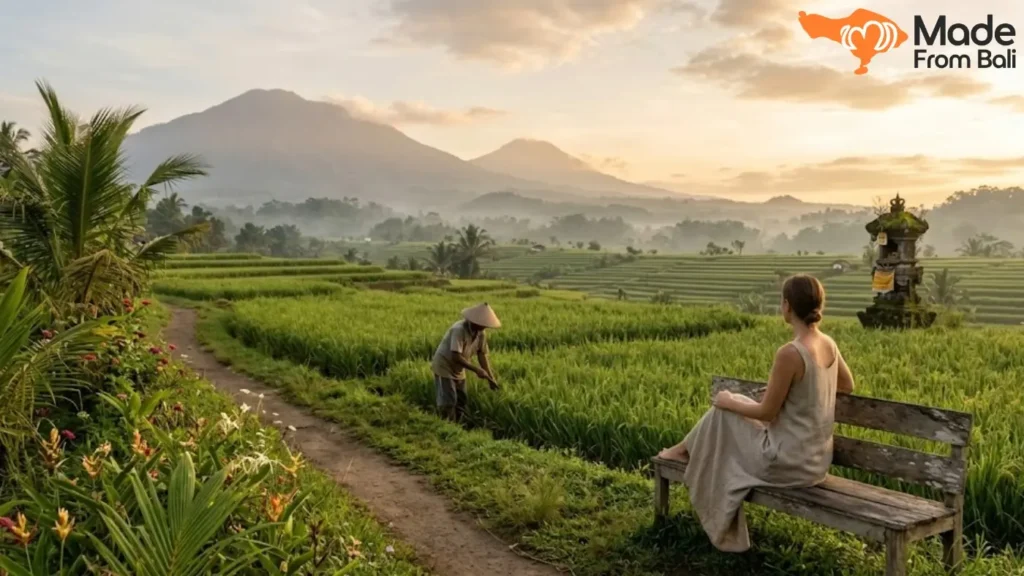
If pool clubs feel like too much of a production for what you want, rice field cafes might be the most underrated version of chilling in Ubud. The idea is simple: a table, a good drink, and an unobstructed view over terraced green fields while the air does something genuinely cooling around you. No entrance fees, no minimum spend, no DJ sets.
The reason rice field cafes vary so much in quality comes down to one thing: whether the view is actually from where you sit, or whether it is the photo on the menu. Some cafes market themselves with rice field imagery but seat most guests indoors or with partial sightlines. The ones worth seeking out are the ones where the view is built into the seating itself, not staged for marketing.
What Makes a Good Rice Field Cafe and What to Look For
The honest checklist for a rice field cafe visit in Ubud:
- The view is from the actual table. If you need to stand up, lean over a railing, or go to a specific corner to see the fields, the cafe has optimized for photos, not for your afternoon.
- The food and drinks are decent enough to justify the time. You will probably be there for two hours. Make sure there is something on the menu worth ordering beyond a mediocre coffee.
- The timing is right. Rice field cafes in Ubud look completely different in morning light versus midday. The soft green of early morning and the golden afternoon quality of light after three PM are both far more pleasant than the flat, harsh midday period between eleven and two.
- The crowd matches the atmosphere. Some popular rice field cafes have become so heavily trafficked that the peace and quiet you came for gets replaced by noise from photo-taking activity happening around you.
Sweet Orange Warung Along the Kajeng Walk Is Easy to Miss
The Kajeng Rice Field Walk is a quieter alternative to the more famous Campuhan Ridge Walk, and the warung at the end of it earns its place on any honest Ubud chill guide. Sweet Orange Warung sits embedded within the rice fields themselves, not adjacent to them. The walk to reach it takes about ten to fifteen minutes along a narrow path that most visitors either do not know about or do not have time for on packed itineraries, which keeps the crowd manageable.
It is simple in the way that works: a few tables, fresh drinks, natural surroundings, and no pressure to order something expensive or leave quickly. The kind of place you arrive at intending to stay twenty minutes and then find yourself still at an hour later.
Cafes Along Penestanan Offer a Quieter Alternative to Central Ubud
The cafes tucked into Penestanan’s lanes do not typically get included in major travel lists, which is exactly what keeps them feeling like discoveries rather than obligations. Cafe Vespa is one worth knowing. It is small, cozy, and unpretentious, with a menu that goes comfortably beyond what you might expect for a neighborhood spot: fresh juices including jamu (a local elixir of turmeric, ginger, and honey), vegan options that are actually interesting, and a seating setup that encourages staying rather than cycling through quickly.
The absence of Instagram fame has preserved something genuine here. You can show up on a weekday afternoon and have the terrace largely to yourself.
Coffee Spots Worth Sitting in for More Than One Cup
Ubud has an extraordinary concentration of good cafes. This is not an accident. The surrounding Kintamani highlands produce excellent coffee beans, local roasters have been developing craft coffee culture for over a decade, and the influx of international travelers has created demand that rewards quality. The result is that Ubud punches significantly above its size in terms of cafe experience.
The distinction worth drawing for anyone who wants to chill rather than visit: some cafes are good for a quick stop, and some are genuinely built for staying. The three below are the staying kind.
Seniman Coffee Studio for Single-Origin Indonesian Beans and Calm Vibes
Seniman sits on Jalan Sriwedari, a short street just off Jalan Raya Ubud that somehow manages to feel completely separate from the main road’s pace. The cafe has been roasting its own beans on-site for years, sourcing single-origin coffees from across Indonesia, and the coffee quality reflects that focus clearly. The Bali Kintamani light roast is consistently praised by coffee-oriented visitors, and the baristas are genuinely knowledgeable if you want guidance through the menu.
The setup includes both indoor seating and an outdoor deck area with upcycled furniture including rocking chairs, which communicates something accurate about the intended energy. The vibe is artsy and creative without being precious about it. Seniman opens at 7:30 AM, making it a strong option for those who want to start the day somewhere good before the town gets busy, and it stays open until 10 PM. There is fast WiFi and plug points if you want to work, but plenty of people simply sit there for hours without any agenda at all.
Clear Cafe for When You Want a Full Afternoon Without Moving
Clear Cafe on Jalan Hanoman occupies a different category: it is the cafe you go to when you want to arrive, settle in, and not think about moving for several hours. The interior design is warm and natural, the menu is extensive in the direction of health-conscious food without being restrictive, and the portions are generous enough that you will not feel like you need to go find lunch somewhere else afterward.
It serves as a natural retreat from the busier street activity immediately outside. A lot of travelers who discover Clear Cafe tend to return repeatedly throughout their stay in Ubud rather than treating it as a one-time visit. If you are the kind of traveler who has a “home base” cafe and comes back every day, Clear Cafe has a very high chance of becoming yours.
Sayuri Healing Food for Health-Conscious Travelers Who Want to Linger
Sayuri in Penestanan does not have a dramatic view or a famous Instagram presence. What it has is consistently good plant-based food, a rotating daily specials menu that gives regulars a reason to return, and an atmosphere that genuinely does not rush you. The Sunday raw lasagna has become something of a local legend among health-conscious long-stay visitors to Ubud.
For solo travelers especially, Sayuri has a welcoming kind of energy that does not make sitting alone feel awkward. It is a neighborhood cafe first and a tourist spot second, which in Ubud is a genuine rarity worth protecting.
Spa Time in Ubud Feels Different When Nature Is Part of the Setting
Ubud has more spas per square kilometer than almost anywhere else in Bali, and the quality range spans from excellent to forgettable. The difference between a good Ubud spa experience and a mediocre one often has less to do with the treatment itself and more to do with the setting it happens in. A Balinese massage in a room with no windows next to a busy street is a different experience from the same massage in an open pavilion surrounded by jungle sound.
The spa experiences worth seeking in Ubud are the ones where nature is structurally part of the treatment rather than just decorative. Spas built along river corridors, those with open-air pavilions where you can hear water moving below, and those with garden-integrated treatment rooms consistently deliver something the urban spa format cannot.
What Separates a Good Ubud Spa Experience from a Generic One
A few practical things to consider before booking:
- Open-air vs. enclosed rooms. If relaxation is the goal, an open-air treatment space with natural sound is significantly more effective than a sealed room with recorded nature sound.
- Booking in advance vs. walking in. The better spas in Ubud fill their best time slots early. Walking in at 2 PM on a peak season day often means taking whatever is left.
- Traditional Balinese herbs vs. generic product lines. Authentic Balinese treatments use locally sourced oils, herbal compresses, and specific massage techniques rooted in local tradition. Spas that use these tend to deliver a more contextually meaningful experience than those running standardized international treatments.
- Duration. A ninety-minute to two-hour treatment in the right setting gives the experience time to actually shift your state. A forty-five-minute express version often does not.
Sound Healing Is Worth Trying Even If You Are Skeptical
Sound healing sessions have become genuinely popular in Ubud, offered at several wellness venues including Pyramids of Chi on Jalan Raya Andong. The format involves lying down in a darkened space while Tibetan bowls, gongs, and crystal instruments are played around you. The effect is, for most people who try it regardless of prior spiritual interest, surprisingly effective at generating physical calm.
If you are skeptical, that is a reasonable position. The useful practical note is that the sessions fill quickly, particularly at reputable venues, and advance booking through their direct website or WhatsApp is worth doing a day or two before you plan to go.
Slow Mornings Work Differently in Ubud Than the Rest of Bali
One of the things that distinguishes Ubud from Bali’s coastal areas is what the mornings actually feel like. Beach areas in Canggu and Seminyak have good morning energy, but they do not have what Ubud has: mist sitting in the valley, cool air that feels genuinely different from the rest of the day, and a quietness that starts dissolving as soon as the tourist town wakes up. The early morning window in Ubud, roughly six to eight-thirty, has a quality that is worth planning around rather than sleeping through.
Campuhan Ridge Walk Before 8 AM Is a Different Place Entirely
The Campuhan Ridge Walk is a two-kilometer paved trail that starts near Pura Gunung Lebah temple just west of central Ubud and winds along a ridge above the Campuhan River valley. It is well known enough that by mid-morning it can feel genuinely busy with tourists and photo-taking activity. Before eight AM, it is a different place.
At that hour, the air is cool and carries some humidity from the night. The light is soft and directional. Local walkers doing their morning exercise are the primary company. The valley views to either side of the ridge are clear without the harsh midday flatness. There are no entrance fees. No booking required. The trail is completely free and open at all hours.
Getting there requires arriving at the trailhead area near the Campuhan bridge before the heat and the crowds build. From central Ubud, this is a short walk or a brief scooter ride. Wear shoes with actual grip since the paved stones can be slippery when damp. Bring water, because there are no shops on the ridge itself until you reach the small cafe cluster near Karsa Kafe at the far end of the trail. The full walk one way takes around twenty to twenty-five minutes at an easy pace, though most people slow down significantly because the views invite stopping.
The honest note: if you arrive at ten AM or later, the experience is still pleasant but noticeably different. Heat becomes a factor, the trail fills up, and the meditative quality of the early morning disappears. The walk is worth doing, but the timing genuinely matters.
A Floating Breakfast at a Jungle Villa Is Quieter Than It Looks Online
Floating breakfast photos dominate Ubud’s Instagram presence, and the reality is both more and less dramatic than the images suggest. The actual experience of having breakfast served on a tray in a private villa pool, surrounded by jungle or rice field views and morning quiet, is genuinely pleasant in a way that photographs cannot fully capture. The more accurate observation is that it is deeply calm rather than exciting. You are sitting in warm water, eating fresh fruit and local pastries, with nothing demanding your attention.
Several villas in the Kedewatan and Tegallalang areas offer this as a bookable option, and it works particularly well when positioned as the first thing in a slow morning rather than something you rush through to reach the next activity. It pairs naturally with an Ubud day where nothing else is scheduled until well after ten.
Matching the Right Spot to How You Actually Want to Spend the Day
The most common planning mistake in Ubud is not choosing the wrong places. It is choosing too many of them and losing the quality of each one in the process. The travelers who report the best Ubud experiences tend to be those who committed to one or two settings rather than moving through five of them.
The following is not a checklist. It is a decision framework for figuring out which type of Ubud day actually fits what you want.
If You Want Total Silence and Nature
The Campuhan Ridge Walk before 7:30 AM is the clearest recommendation. It is free, it is beautiful, and the early hour removes the noise that builds later. After the walk, Karsa Kafe at the northern end of the trail serves decent food and coffee in a garden setting that maintains a calm atmosphere through mid-morning. The combination of a quiet walk followed by a slow breakfast gives you a morning with no obligations and a genuine sense of having been somewhere.
Alternatively, the path to Sweet Orange Warung through the Kajeng rice fields delivers a similar feeling in a shorter, flatter format that does not require early rising in the same way.
If You Want Something Social but Still Relaxed
Cretya Ubud works well here if you arrive before ten. The early hours have a social-but-calm atmosphere that shifts toward party energy later in the day. Folk Pool and Gardens near Monkey Forest is a consistently lower-key social option where you can easily spend an afternoon without it feeling like an event. Seniman Coffee Studio draws a mix of travelers and longer-term Ubud residents in a genuinely relaxed setting that has social energy without being loud.
If You Are Traveling as a Couple and Want a Romantic Slow Day
Sayan is the natural neighborhood for this. A late afternoon arrival at Sayan Valley or Sayan Point between five and seven gives you the Ayung River valley sunset, which is one of the more genuinely beautiful things Ubud offers. Pair that with a spa session earlier in the day at a riverside venue in Kedewatan, and the combination covers both active relaxation and atmospheric dining without requiring significant travel between locations.
Tlaga Singha is also well-suited for couples who want a more complete resort-style day with pool access, spa, and the option to have a meal floating above the river.
If You Are Solo and Want to Stay in One Spot for Hours
Seniman Coffee Studio and Clear Cafe are both built for long stays. Both have WiFi, both have menus extensive enough that you can eat multiple times without leaving, and neither creates social pressure to move on. Sayuri in Penestanan works similarly for those who prefer a smaller, more neighborhood-scale setting.
The practical benefit of committing to one place for most of the day as a solo traveler is that it removes the decision fatigue that often accompanies moving between venues. You find your spot, you get comfortable, and you let the day come to you rather than chasing it.
Getting Between Chill Spots Without Turning It Into a Busy Day
One of the overlooked practical challenges of chilling in Ubud is that the spots worth visiting are not all in the same place, and getting between them without a scooter requires some planning. Central Ubud’s cafe and warung options are walkable from most accommodation in the town center. Sayan, Kedewatan, and Tegallalang require transport.
Grab operates reliably in Ubud and is the most straightforward option for travelers without a scooter. Prices to Sayan and Tegallalang from central Ubud are modest. The one friction point is availability during peak afternoon hours when many travelers are making similar moves, which can create a short wait.
If you are planning a day around a specific pool club in Tegallalang or a sunset dinner in Sayan, arranging transport in both directions in advance removes the uncertainty of waiting for a ride when you are ready to leave. Some travelers organize a private driver for a half-day precisely to handle this kind of flexible movement between chill spots without the stop-start of ride apps.
Made From Bali Tour and Travel can help with this kind of day planning. Rather than a fixed sightseeing itinerary, a half-day arrangement focused on two or three chill destinations with transport handled between them gives you the relaxed Ubud experience without the logistical friction of figuring it out from a phone while trying to decompress. Getting the logistics right is often the difference between a slow Ubud day that genuinely delivers and one that accidentally becomes another busy day in a different setting.
The best version of Ubud is the one where nothing feels urgent. The neighborhoods are quiet, the coffee is excellent, the view is actually from your seat, and the morning walk happened before anyone else was up. None of that requires a long checklist. It requires choosing fewer things and giving each of them enough time to actually work.
REFERENCES
- Bali Exception Real Estate Agency. Campuhan Ridge Walk Ubud: A Guide. https://baliexception.com/places-to-visit/campuhan-ridge-walk-ubud/
- Bali Holiday Secrets. Complete 2026 Guide to Campuhan Ridge Walk. https://www.baliholidaysecrets.com/campuhan-ridge-walk/
- Bali Untold. Our 7 Favourite Pool Clubs in Ubud. https://baliuntold.com/destinations/ubud/pool-clubs/
- Best Beach Clubs Bali. Cretya Pool Club Review. https://bestbeachclubsbali.com/reviews/cretya-pool-club-bali-review/
- Cretya Ubud. Official Website. https://cretyaubud.com/en/cretya-ubud
- Honeycombers Bali. Things to Do in Ubud. https://thehoneycombers.com/bali/things-to-do-in-ubud/
- Jared’s Detours. Cretya Ubud Review. https://www.jaredsdetours.com/cretya-ubud/
- Katie Caf Travel. 20+ Best Cafes in Ubud. https://www.katiecaftravel.com/best-cafes-in-ubud/
- ON Bali. Best Beach Clubs in Ubud. https://www.mynewsdesk.com/on-bali/blog_posts/best-beach-clubs-in-ubud-jungle-pools-cocktails-and-chill-vibes-122389
- Pickyourtrail. Campuhan Ridge Walk Ubud Trail Guide and Best Time. https://pickyourtrail.com/attractions/bali/campuhan-ridge-walk
- Sayan Valley Restaurant. Best Restaurants in Ubud and Sunset View. https://sayanvalley.com
- She Wanders Abroad. 13 Best Cafes in Ubud You Have to Try. https://shewandersabroad.com/best-cafes-in-ubud-bali/
- TripAdvisor. Seniman Coffee Studio Reviews. https://www.tripadvisor.com/Restaurant_Review-g297701-d2267545-Reviews-Seniman_Coffee_Studio-Ubud_Gianyar_Regency_Bali.html
- TripAdvisor. Sayan Point Reviews. https://www.tripadvisor.com/Restaurant_Review-g297701-d20937687-Reviews-Sayan_Point-Ubud_Gianyar_Regency_Bali.html
- Water Sports Bali. Top 10 Budget-Friendly Hangout Spots in Ubud. https://www.water-sports-bali.com/ubud-budget-friendly-hangouts-spots/